
Бетонды араласқан блок жасау машиналарының жетілдірілген нұсқаулығы: Түрлері, Артықшылықтары және Қалай таңдау керек
Кіріспе
Жаһандық құрылыс индустриясы үнемі дамуда, бұл тек берік және төзімді ғана емес, сонымен қатар тұрақты және қолдануға тиімді материалдарға деген өте қажеттілікпен қозғалады. Бұл өзгеріс аясында, қарапайымдылығы мен инновациясының тамаша үйлесімі үшін бір шешім біртіндеп орын алып келеді: бір-біріне құлыпталатын бетон блок. Бірақ шынымен де ойын өзгертетін нәрсе тек блоктың өзі ғана емес - бұл орында тиімді өндірісті мүмкін ететін арнайы машиналар. Құлыпталатын бетон блок өндіру машиналарына арналған толық нұсқаулыққа қош келдіңіз.бетонды араласқан блок жасау машиналары.
Бұл нұсқаулық келісімшарттаушыларға, құрылысшыларға, амбициялы кәсіпкерлерге және жоба менеджерлеріне арналған жан-жақты, бейтарап ақпарат көзі ретінде жасалған. Біз саланың терең біліміне, техникалық сипаттамаларға және практикалық қолдану тәжірибелеріне сүйене отырып, осы күшті технологияны анықтаймыз. Біздің мақсатымыз жалғыз: сізге машина түрлерінің, олардың нақты артықшылықтарының, маңызды таңдау критерийлерінің және сатып алу кезіндегі негізгі ескертулердің анық түсінігін беру, сіздің жобаңызға немесе бизнесіңізге тамаша хабардар шешім қабылдауға қабілетті ету. Бұл белгілі бір брендті насихаттауға емес, үздік тәжірибелер мен негізгі білімге бағытталған білім беру ресурсы болып табылады, сізге табысқа жету үшін қажетті объективті ақпаратты алуыңызды қамтамасыз етеді.
Бетонды араласқыш блок жасау машинасы деген не?
Осы машинаның негізінде құрғақ агрегаттар, құм және цемент қоспасын біріктіріп, ерекше қасиеті бар құрылымдық блоктарға айналдыратын дәлдікпен жасалған прес орналасқан: олар ерітіндісіз бір-бірімен бекінеді.
Негізгі функция және шығыс түсіндірілді
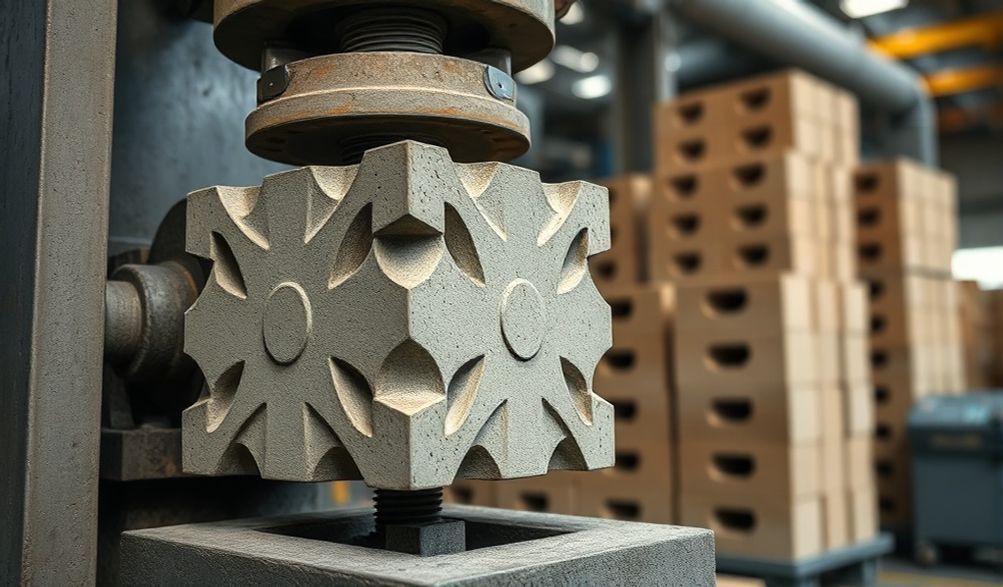
басты функциясыбетонды араластырып блок жасайтын машина"құрғақ қоспалы" бетонға үлкен қысымды қолданып, оны жоғарғы және бүйір жақтарында патенттелген тіл-ою, басқыш тәрізді немесе геометриялық үлгілері бар блоктарды қалыптастыратын қалыпқа тығыздау болып табылады. Бұл үлгілер жүйенің кілті болып табылады:
- Интерлок:Бір блоктың шығыңқы бөліктері (түймелері) көршілес блоктардың ойықтарына (саңылауларына) мықтап орналасады.
- Нәтиже:Тұрақты, механикалық түрде бекітілген қабырға немесе тротуар қабаты, оның беріктігі үйкеліс пен геометриядан туындайды, үш өлшемді пазл сияқты. Бұл дәстүрлі цемент ерітіндісімен байлаудың қажеттілігін жояды.
Негізгі жұмыс принципі
Дизайн әртүрлі болса да, негізгі процесс көптеген машиналарда бірдей және құрғақ құйма әдісін ұстанады:
- Тамақтандыру:Дайындалған құрғақ бетон қоспасы (гидратация үшін жеткілікті ылғалдылығы бар, бірақ "көлденеңдігі" жоқ) машинаның қалып қорабына немесе бункеріне беріледі.
- Тығыздау:Қоспа екі негізгі күшке ұшырайды:
- Діріл:Жоғары жиілікті тербеліс қоспаны шөктіреді, ауа қалталарын жояды және қалыптың бұрыштарының толтырылуын қамтамасыз етеді.
- Гидравликалық қысым:Содан кейін гидравликалық қашау қоспаға тоннамен өлшенетін орасан зор қысым жасап, оны тығыз, жоғары беріктіктегі массаға айналдырады.
- Қалыптау:Діріл мен қысымның бірлескен әсері қоспаны қалыптың нақты пішініне, оның ішінде күрделі өзара ілінісу үлгілеріне айналдырады.
- Атқылау:Жаңадан құрылған блок қалыптан көтеріліп немесе итеріліп, паллетке немесе жерге шығарылады, емдеуге дайын болады.
Бұл «құрғақ құю» әдісі дәстүрлі дымқыл бетон құюдан ерекшеленеді, себебі блоктарды бірден өңдеуге және жалпы құрылыс мерзімдерін жеделдетуге мүмкіндік береді.
Интерлоктық блоктарды және оларды дайындайтын машиналарды қолданудың негізгі артықшылықтары
Осы технологияға инвестиция салу тек машина сатып алу ғана емес; бұл сіздің құрылыс жобаларыңыз немесе бизнес үлгіңіз үшін артықшылықтар каскадын ашуды білдіреді.
Construction and Performance Benefits
- Unmatched Speed of Construction: Without the need to mix, apply, and wait for mortar to cure, block-laying productivity can increase by 200-300%. Walls rise significantly faster, accelerating project completion.
- Significant Cost Efficiency: Savings are realized across multiple fronts:
- Еңбек Reduced need for highly skilled masons.
- Материалдар: Elimination of mortar, sand, and cement for laying.
- Transport: On-site production cuts costs and breakage associated with transporting heavy finished blocks from a distant plant.
- Үстем беріктік және мықтылық: Properly made interlocking blocks have very high compressive strength. Their mechanical interlock creates a flexible structure that can handle shear forces and settlement better than rigid mortar-bound walls, making them ideal for retaining walls, pavements, and load-bearing applications.
- Inherent Sustainability: This technology supports green building in several ways:
- Material Use: Can incorporate industrial by-products like fly ash or recycled aggregates.
- Permeability: Certain designs allow for grass or water infiltration, reducing runoff.
- Reusability: Blocks can often be disassembled and reused elsewhere.
Operational and Business Advantages
- On-Demand, On-Site Production: Produce blocks exactly where they’re needed, when they’re needed. This provides ultimate control over inventory, quality, and logistics.
- Immense Design Versatility: By simply changing the mold, a single machine can produce a variety of block sizes, shapes (e.g., straight, corner, half), and even surface textures (split-face, rock-face, smooth). Color can be added to the mix or applied to the surface.
- Нақты Бизнес Мүмкіндігі: For entrepreneurs, a single semi-automatic or automatic machine can form the core of a profitable block manufacturing business, supplying blocks for local construction, landscaping, and infrastructure projects.
Types of Concrete Interlocking Block Making Machines
Choosing the right machine starts with understanding the landscape. They are primarily categorized by their operation method, mobility, and output.
Әрекет әдісі бойынша
- Қол машиналары:
- Олар қалай жұмыс істейді: Operated entirely by human labor using a lever mechanism to apply pressure. Feeding and block removal are manual.
- Ең жақсы: Very small-scale projects, DIY enthusiasts, community-led building initiatives, or pilot projects. Output is low (e.g., 100-500 blocks per day), but the cost of entry is minimal.
- Жартылай автоматты машиналар:
- Олар қалай жұмыс істейді: The core compaction process (vibration and hydraulics) is powered and automated. Operators manually feed raw material and remove finished blocks, often with the aid of a lever or button.
- Ең жақсы: Small to medium-sized businesses, contractors with multiple projects, and medium-volume production (e.g., 1,000 – 6,000 blocks per 8-hour shift). They offer an excellent balance between productivity, cost, and flexibility.
- Толық автоматты машиналар:
- Олар қалай жұмыс істейді: These are complete production lines. They feature automated systems for feeding raw material, mixing, conveying, compacting, curing, and even stacking/palletizing finished blocks. Controlled via PLC (Programmable Logic Controller).
- Ең жақсы: Large-scale commercial block yards and industrial production facilities requiring very high, consistent output (10,000+ blocks per day). They maximize output and minimize labor but require a substantial capital investment.
By Mobility and Setup
- Стационарлық өсімдіктер: These are fixed installations, often the foundation of a block manufacturing factory. They are designed for maximum output and are not intended to be moved frequently.
- Mobile/Portable Machines: Mounted on a trailer or skid frame, these units can be towed or transported directly to a job site. This is a massive advantage for large infrastructure projects (e.g., remote road construction, large retaining walls) where transporting blocks is impractical.
By Block Output Capacity
- Кіші көлемді: Up to ~2,000 blocks per day. Typically manual or small semi-automatic models.
- Орташа ауқымды: ~2,000 to 10,000 blocks per day. The domain of robust semi-automatic and smaller fully automatic machines.
- Large-scale Industrial: 10,000+ blocks per day. The exclusive realm of high-end fully automatic production lines and stationary plants.
Critical Factors to Consider When Choosing a Machine
Making the right choice requires a clear-eyed assessment of your needs against the machine’s capabilities. Here’s your practical checklist.
Project & Business Requirements
- Production Volume: Calculate your average daily and peak weekly block requirement. Choose a machine that can meet this with some capacity to spare—running a machine at 100% capacity constantly leads to wear.
- Block Specifications: List every block type you need (standard, corner, half-block, thickness). Ensure the machine and available molds can produce them all.
- Site & Resource Constraints:
- Ғарыш: Do you have a factory shed or just an open plot? Automatic lines need more covered space.
- Қуат: Is three-phase electrical power available, or do you need a diesel-powered option?
- Еңбек What is the skill level of your available workforce? A fully automatic machine may need an electrician/technician, while a semi-automatic needs diligent operators.
Machine Specifications & Features
- Қысым сыйымдылығы (Тоннаж): This is critical for block strength. Higher tonnage (e.g., 150 tons vs. 50 tons) produces denser, stronger blocks suitable for load-bearing walls. For garden walls, lower pressure may suffice.
- Mold Versatility & Changeover: How easy is it to change molds? Quick-change systems save hours of downtime when switching block types. Also, check the cost and availability of additional molds from the supplier.
- Автоматтандыру деңгейі: Honestly evaluate the trade-off. Higher automation means a higher upfront cost but lower long-term labor costs and more consistent output. Can your budget and operational style support it?
- Құрылыс сапасы: Inspect the robustness of the frame (solid steel is best), the quality of the hydraulic pump and cylinders, and the brand/durability of the vibrator motors. A heavier machine frame generally indicates better stability and longevity.
Supplier and Support Evaluation
This step is as important as evaluating the machine itself. Your relationship with the supplier will define your long-term success.
- Research Manufacturer Reputation: Look for companies with a long track record (10+ years is a good sign). Search for reviews, ask for a client portfolio, and try to speak to existing customers.
- Сатылғаннан кейінгі қызмет: Does the supplier offer installation, commissioning, and on-site operator training? What is their spare parts policy? A reliable local agent or service network is invaluable.
- Warranty & Documentation: Scrutinize the warranty terms. Clear, comprehensive operation and maintenance manuals in your language are a must-have.
Operational Best Practices and Maintenance Tips
Owning the machine is half the battle; operating it correctly ensures profitability and longevity. Here’s actionable guidance drawn from field experience.
Шикізатты дайындау
The quality of the block is determined here. Ensuring consistent moisture in the mix is often the difference between a perfect block and a cracked one.
- Араластыру дизайны: A typical mix might be 1 part cement, 3-6 parts well-graded aggregate (e.g., 3/8″ crushed stone), and 2-4 parts sharp sand. The exact ratio depends on desired strength and local materials.
- Ылғалдылық мөлшері: This is critical. The mix should be damp enough to hold its shape when squeezed in your hand (≈ 5-8% water by weight), but no free water should be visible. Too dry = weak blocks; too wet = blocks stick in the mold.
Routine Machine Operation Checklist
- Pre-Start: Check hydraulic oil levels, ensure all bolts are tight, clean the mold cavity and pallets.
- During Operation: Feed the hopper consistently but don’t overfill. Monitor the block ejection process—any sticking indicates a mold or mix issue. Listen for unusual noises from the hydraulics or vibrators.
- Shutdown: Clear all residual material from the mold and hopper. Park the machine in a safe position.
Essential Maintenance for Longevity
A simple, consistent maintenance routine prevents costly breakdowns.
- Күнделікті Clean the machine thoroughly. Check for loose parts.
- Апталық: Lubricate all moving parts as per the manual (pivots, guide rods). Inspect hydraulic hoses for leaks.
- Ай сайын: Check and tighten all major bolts and nuts on the frame and vibration table. Change hydraulic oil and filters as recommended by the manufacturer.
FAQ Section
Q: What is the typical cost range for an interlocking block machine?
A: The range is vast. A basic manual machine can start from \$3,000 – \$10,000. A quality semi-automatic machine typically ranges from \$15,000 to \$50,000. Fully automatic production lines can range from \$70,000 to well over \$300,000, depending on capacity and sophistication. Always factor in costs for molds, a mixer, and a pallet or curing rack system.
Q: Can these machines use recycled materials like crushed concrete or plastic?
A: Many can, especially robust machines with higher pressure. Crushed concrete is an excellent, sustainable aggregate. Some technologies allow for the inclusion of certain plastic fibers. However, the material must be clean, consistently sized, and its properties understood. Always consult with the machine manufacturer to validate your specific mix design.
Q: How much training is required to operate a semi-automatic machine?
A: Basic operational training is usually sufficient and is often provided by the supplier over a few days. The key is diligent adherence to the operational manual, understanding the raw material mix, and performing routine maintenance. Safety training around moving parts and hydraulics is non-negotiable.
Q: What is the difference between hydraulic and vibration pressure in these machines?
A: They serve complementary roles. Діріл (often from multiple high-frequency vibrators) consolidates the dry mix, causing particles to settle densely into every part of the mold. Гидравликалық қысым then applies a final, static, high-tonnage force that permanently compacts the mix, creating the final bond and achieving the high compressive strength of the block. The best machines effectively combine both.
Q: Are the blocks produced strong enough for load-bearing walls?
A: Absolutely. When produced with the correct cement content, proper mix design, and sufficient machine pressure, interlocking concrete blocks can achieve compressive strengths that meet or exceed ASTM C90 standards for concrete masonry units. For any specific load-bearing structural application, the block specifications should be reviewed and approved by a qualified structural engineer.
Қорытынды
Selecting the ideal бетонды араластырып блок жасайтын машина is a strategic decision that hinges on a clear assessment of your project needs, output goals, and operational budget. From manual presses for community projects to fully automated lines driving an industrial business, this technology offers a pathway to faster, more economical, and notably sustainable construction.
We encourage you to use this guide as your foundational framework for evaluation. Let it inform the questions you ask and the specifications you prioritize. Your final step should involve contacting multiple reputable suppliers with your detailed requirements. Request live demonstrations, ask for samples of blocks produced by their machines, and scrutinize their service commitments. By investing time in this due diligence, you’re not just purchasing a piece of equipment—you’re investing in the future efficiency and growth of your construction endeavors or business. This technology is more than a machine; it’s a tool for building modern, resilient infrastructure, one precisely interlocked block at a time.
<