Sistèm Trete ak Dosaj Matyè Premye
Fondasyon tout liy pwodiksyon ki gen siksè kòmanse ak sistèm jesyon matyè premyè sofistike ki fèt pou asire bon jan kalite materyèl ki rantre san varyasyon ak apwovizyòn otomatik. Enstalasyon modèn yo enkòpore plizyè silo depo pou materyèl siman, ki gen kapasite ant 50 ak 200 tòn, ak sistèm kontwòl nivo entegre ak deklancheman otomatik pou reyajisman. Sistèm manyen agrega yo anjeneral gen ladan tremye resepsyon, rezo convoyeur ak ekipman tamizaj ki otomatikman retire patikil twò gwo ak kontaminan. Pwosesis dozaj la sèvi ak tremye pèz presizyon ak yon presizyon nan ±0.5% nan pwa sib, kontwole pa sistèm dozaj òdinatè ki otomatikman ajiste pou kontni imidite ak varyasyon dansite materyèl yo. Liy avanse yo enkòpore swiv materyèl an tan reyèl ki kenbe nivo envantè optimal epi otomatikman jenere lòd acha lè yo rive nan limit predetèmine. Nivo otomatizasyon sa a nan tretman matyè premyè elimine varyasyon kalite nan sous la epi asire pwopòsyon melanj regilye 24/7, kèlkeswa ekspètiz operatè oswa nivo atansyon yo.
Melanje Teknoloji ak Transpò Materyèl
Kè konsistans nan pwodiksyon an depann sou teknoloji melanj ki melanje materyòl yo byen, pandan y ap kenbe rapò dlo-siman egzak ki enpòtan pou devlope fòs pwodwi yo. Liy pwodiksyon modèn yo itilize melanjè de aks ak kapasite ki soti nan 750 a 5,000 lit pou chak seri, ki gen lamè ki reziste a chire ak revètman ki kenbe efikasite melanj pandan tout lavi operasyonèl yo. Sistèm mezi dlo yo enkòpore kontè dlo ak presizyon ±1%, pandan ke sistèm avanse yo genyen detèktè imidite ki ajoute dlo otomatikman selon kontni imidite agrega yo. Tan sik melanj yo kontwole egzakteman ant 90 a 180 segonn selon karakteristik materyòl yo, ak kontwolè lojik pwogramab ki asire aksyon melanj idantik pou chak seri. Transpò materyòl soti nan melanjè a nan machin blòk la tipikman itilize sistèm convoyè senti ak rakèt ak kouvèti pou anpeche separasyon materyòl ak pèt imidite. Entegrasyon ant etap melanj ak moulaj la enkli sistèm tanpon ki asire operasyon machin kontinyèl menm pandan sik antretyen oswa netwayaj melanjè a.
Pwodiksyon Nwayo ak Sistèm Otomatik
Teknoloji Moulaj ak Mekanik Konpaksyon
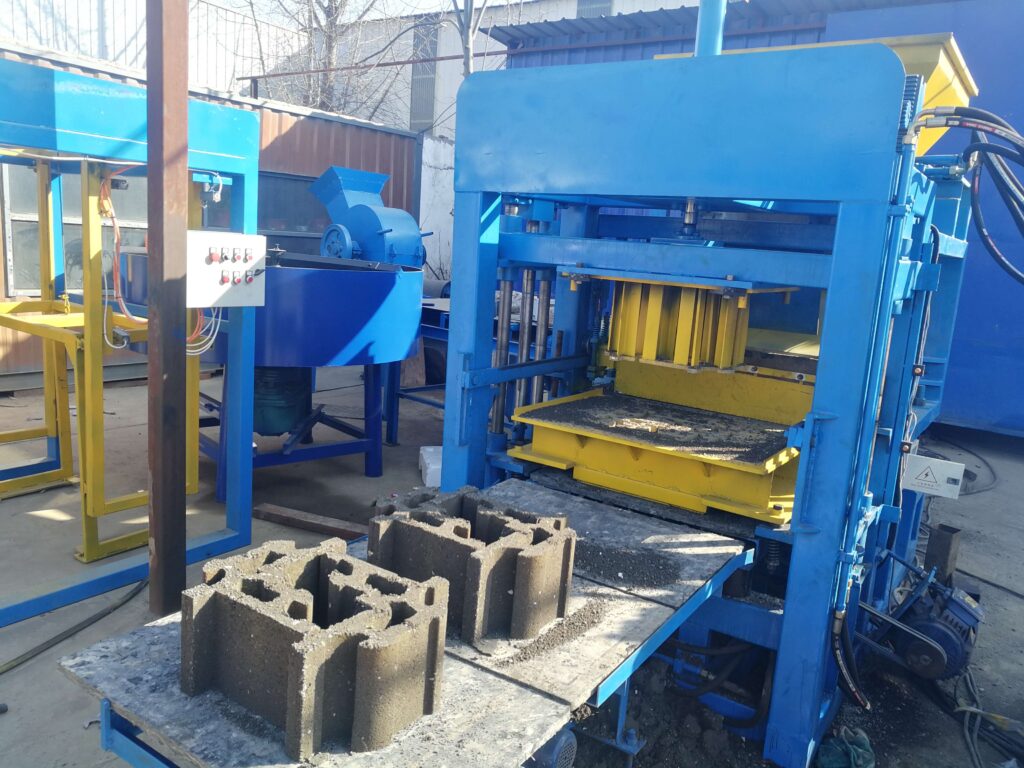
Modil santral pwodiksyon an gen machin blòk gwo kapasite ki fèt pou opere kontinyèlman ak minim sipèvizyon. Sistem sa yo itilize presyon idwolik ki soti nan 140 a 320 bar, konbine avèk vibrasyon gwo frekans nan 4,000 a 7,000 RPM, pou reyalize yon konpakte materyèl ak dansite pwodwi optimal. Machin modèn yo enkòpore sistèm mwad chanje rapid ki redwi tan chanje pwodwi a de plizyè èdtan a kèk minit, sa ki pèmèt yon orè pwodiksyon fleksib pou satisfè demann mache a. Sistèm sikilasyon pale yo otomatikman bay pale geri nan machin nan epi transpòte pwodwi ki fèk moule yo nan zòn geri san manyèl manipilasyon. Machin avanse yo genyen yon ajisteman otomatik wotè ki konpanse pou pye mwad ak varyasyon materyèl yo, asire dimansyon pwodwi konsistan pandan tout lavi operasyonèl ekipman an. Kapasite pwodiksyon pou liy konplè yo varye de 10,000 a 60,000 blòk estanda pou chak shift 8 èdtan, ak kèk sistèm espesyalize ki depase 100,000 inite chak jou gras a tan sik optimize ak aranjman tretman paralèl.
Jesyon Otoomatik ak Trete
Tretman apre fòme reprezante yon faz kritik kote otomatizasyon redwi siyifikativman domaj pwodwi ak egzijans pou travay. Paletizè robotik transfere ak prekosyon pwodwi vèt soti nan pale pwodiksyon yo nan etajè gerizon yo ak presizyon pozisyonèl nan ±2mm, anpeche domaj sou bor ak defòmasyon. Konfigirasyon sistèm gerizon yo varye soti nan gerizon atmosferik natirèl rive nan sistèm chanm konplete kontwole ki akselere devlopman fòs atravè jesyon tanperati ak imidite. Liy avanse yo enkòpore sistèm depo ak retrè otomatik pou etajè gerizon yo, optimize itilizasyon espas pandan y ap kenbe orè gerizon presi. Chanm gerizon kontwole klima yo kenbe tanperati ant 40-70°C ak imidite relatif pi wo pase 90%, diminye tan gerizon soti nan semèn rive nan èdtan pandan y ap asire devlopman fòs inifòm nan tout pil pwodwi a. Entegrasyon sistèm rekiperasyon enèji kaptire ak reutilize chalè ki soti nan divès etap pwosesis la, redwi egzijans enèji gerizon pa 30-50% konpare ak sistèm konvansyonèl yo.
Jesyon Kalite ak Optimizasyon Pwosesis
Sistèm Kontwòl Kalite Entegre
Pwodiksyon modèn yo enkòpore kontwòl kalite konplè nan plizyè etap nan pwosesis la, asire yon pwodiksyon ki konfòme yo oswa ki depase estanda yo. Sistèm mezi laser yo kontinyèlman kontwole dimansyon pwodwi yo ak yon presizyon rive nan ±0.2mm, epi yo deklanche ajisteman otomatik machin yo lè tolerans yo ap apwoche. Tèsè konpresyon yo pran echantiyon owaza nan kouran pwodiksyon an, mezire devlopman fòs konpresyon an epi bay done pou ajisteman melanj otomatik. Konsistans koulè a kontwole lè l sèvi avèk espèktrofotomèt ki detekte ti varyasyon koulè anvan yo vin gen enpòtans komèsyal. Done ki soti nan tout estasyon kontwòl kalite yo rantre nan yon sistèm egzekisyon fabrikasyon santral ki korele paramèt pwosesis yo ak kalite pwodwi a, sa ki pèmèt ajisteman prediktif ak amelyorasyon kontinyèl pwosesis la. Apwòch entegre sa a nan jesyon kalite a tipikman redwi to rejè pwodwi yo anba 0.5%, konpare ak 3-8% nan operasyon semi-otomatik, pandan y ap asire konfòmite regilye ak espesifikasyon kliyan yo ak egzijans regilasyon yo.
Zouti Analiz Pwosesis ak Optimizasyon
Tranfòmasyon dijital liy pwodiksyon yo pèmèt optimize ki baze sou done ki maksimize efikasite epi minimize depans operasyon yo. Sistèm jesyon enèji yo kontwole konsomasyon kouran atravè tout konpozan ekipman yo, idantifye opòtinite pou deplase chaj ak amelyore efikasite. Analiz pwodiksyon yo swiv itilizasyon ekipman yo, idantifye goulot epi optimize orè pwodiksyon yo pou maksimize kapasite pwodiksyon an. Sistèm antretyen prediktif yo analize vibrasyon, tanperati, ak done pèfòmans ekipman yo pou pwograme antretyen anvan avari rive, tipikman ogmante disponibilite ekipman yo de 8-15%. Sistèm avanse yo enkòpore algoritm entelijans atifisyèl ki analize kontinyèlman done pwodiksyon yo pou idantifye paramèt optimal machin yo pou diferan konbinezon materyèl ak kalite pwodwi yo. Zouti optimizasyon sa yo tipikman bay amelyorasyon 12-25% nan efikasite jeneral ekipman yo pandan y ap redwi konsomasyon enèji de 15-30% ak depans antretyen de 20-40% konpare ak liy pwodiksyon ki opere tradisyonèlman.
Enfòmasyon Estratejik ak Konsiderasyon Operasyonèl
Project Planning and Implementation Timeline
The successful deployment of an integrated production line requires meticulous planning and phased implementation. Site preparation typically requires 3-6 months for civil works including foundation construction, utility connections, and building modifications. Equipment installation and mechanical commissioning generally span 4-8 weeks, followed by 2-4 weeks for electrical and control system integration. Process optimization and production ramp-up typically require an additional 4-6 weeks to achieve design capacity and quality standards. The complete project timeline from order placement to full production generally ranges from 8 to 14 months, depending on line complexity and site conditions. Successful implementation requires detailed project management with clearly defined milestones, regular progress reviews, and contingency planning for potential delays in equipment delivery or regulatory approvals.
Staffing Requirements and Skill Development
While automated lines significantly reduce direct labor requirements, they create demand for higher-skilled technical personnel. A typical production line operates with 4-8 personnel per shift including a line supervisor, machine operator, quality technician, and maintenance support. Technical support teams typically include mechanical and electrical technicians with specialized training in hydraulic systems, programmable controllers, and automation technology. Comprehensive training programs spanning 4-8 weeks ensure operational proficiency, covering equipment operation, routine maintenance, troubleshooting, and safety procedures. Many operations implement continuous improvement programs that engage operational staff in identifying efficiency opportunities and process enhancements, leveraging their daily exposure to equipment performance and production challenges.
Konklizyon
Integrated brick and block production lines represent the current zenith of masonry manufacturing technology, delivering unparalleled levels of productivity, quality consistency, and operational efficiency. The strategic implementation of these systems transforms traditional masonry manufacturing from a labor-intensive craft to a technology-driven industrial process, creating sustainable competitive advantages through superior economics and product quality. The significant capital investment required is justified through dramatically reduced operating costs, minimal product rejection, and the ability to consistently meet the exacting requirements of modern construction projects. As construction methodologies continue to evolve toward greater precision and faster project timelines, the role of fully integrated production systems becomes increasingly vital for masonry manufacturers seeking to maintain market relevance and profitability. The ongoing digital transformation of these systems promises further improvements in efficiency, flexibility, and sustainability, ensuring their continued evolution as the manufacturing platform of choice for quality-conscious masonry producers worldwide.
Kesyon yo poze souvan (FAQ)
Q1: What are the typical space requirements for a complete production line installation?
A: Space requirements vary based on production capacity and configuration, but generally range from 2,000 to 8,000 square meters for the production facility itself. This includes areas for raw material storage (400-1,200 m²), production equipment (800-2,500 m²), product curing (600-3,000 m²), and finished goods storage (500-1,800 m²). Additional outdoor space is typically required for raw material stockpiles and ancillary facilities. The layout efficiency significantly impacts operational workflow, with optimized designs reducing material handling distances by 30-50% compared to conventional arrangements.
Q2: How does the operational cost structure differ between automated lines and conventional manufacturing?
A: Automated lines demonstrate fundamentally different cost structures: labor costs typically reduce from 25-35% of production cost to 8-15%; energy costs increase from 8-12% to 15-22% due to automation systems but with lower energy cost per unit produced; maintenance costs rise from 4-6% to 7-10% but with higher equipment availability; and raw material utilization improves by 8-15% through precise batching and reduced product damage. The overall production cost per unit typically decreases by 25-40% despite higher capital investment, creating compelling economic justification for automation.
Q3: What infrastructure utilities are required for optimal production line operation?
A: Key utility requirements include: electrical power ranging from 400-1,200 kVA depending on line capacity; water supply of 10-40 m³ per day with consistent pressure and quality; compressed air at 7-10 bar with sufficient volume for automation systems; and drainage capacity for process water and stormwater. Additional considerations include natural gas connections for curing systems where applicable, telecommunications infrastructure for data systems, and appropriate road access for material delivery and product shipment. Utility reliability significantly impacts production consistency, making backup power systems and water storage economically justified in many locations.
Q4: What environmental considerations and compliance requirements apply to modern production lines?
A: Environmental compliance typically addresses: air quality management through dust collection systems with 99.9% efficiency; water management through closed-loop systems that minimize consumption and discharge; noise control through acoustic enclosures and isolation systems; and waste management through material recycling and byproduct utilization. Modern systems typically incorporate sustainability features including energy recovery systems, water recycling, and the use of industrial byproducts as raw materials. Regulatory compliance generally requires environmental impact assessments, continuous emissions monitoring, and regular reporting to relevant authorities.
Q5: How does production line flexibility accommodate different product types and market demands?
A: Modern lines achieve remarkable flexibility through: quick-change mold systems that enable product changeovers in 15-45 minutes; programmable recipes that automatically adjust machine parameters for different products; modular material handling that accommodates various product dimensions and weights; and sophisticated production planning software that optimizes production sequences for efficiency. Advanced systems can simultaneously produce multiple product types through parallel processing arrangements or rapid changeover protocols. This flexibility enables manufacturers to maintain optimal inventory levels across product ranges while responding quickly to changing market demands and custom orders.