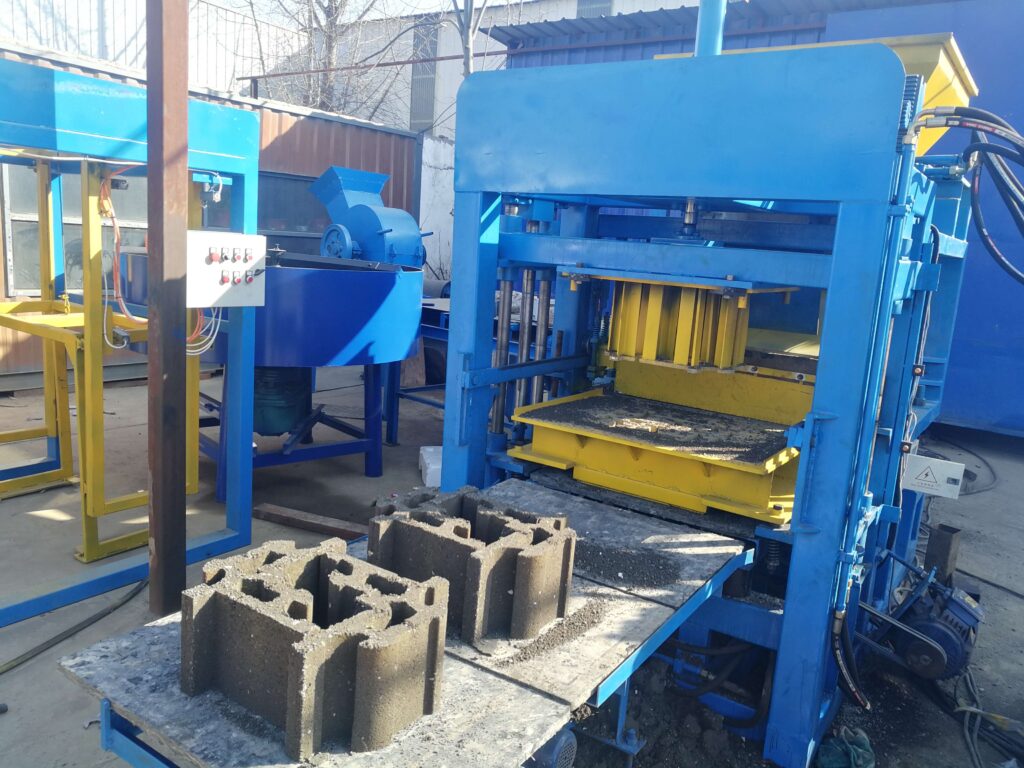
ระบบการแปรรูปวัตถุดิบและการจัดแบ่งส่วนผสม
รากฐานของสายการผลิตที่ประสบความสำเร็จใดๆ เริ่มต้นด้วยระบบการจัดการวัตถุดิบชั้นสูงที่ออกแบบมาเพื่อรับประกันคุณภาพของปัจจัยนำเข้าที่สม่ำเสมอและการจัดหาอัตโนมัติ การติดตั้งสมัยใหม่ประกอบด้วยไซโลเก็บวัสดุประสานซีเมนต์หลายแห่งที่มีความจุตั้งแต่ 50 ถึง 200 ตัน พร้อมระบบตรวจสอบระดับแบบบูรณาการและการกระตุ้นการเติมใหม่อัตโนมัติ ระบบการจัดการมวลรวมโดยทั่วไปรวมถึงถังรับวัสดุ เครือข่ายสายพานลำเลียง และอุปกรณ์คัดกรองที่กำจัดอนุภาคขนาดใหญ่เกินและสิ่งปนเปื้อนออกโดยอัตโนมัติ กระบวนการชั่งส่วนผสมใช้ถังชั่งน้ำหนักความแม่นยำสูงที่มีความถูกต้องภายใน ±0.5% ของน้ำหนักเป้าหมาย ควบคุมโดยระบบชั่งส่วนผสมด้วยคอมพิวเตอร์ที่ปรับเปลี่ยนอัตโนมัติตามความแปรผันของปริมาณความชื้นและความหนาแน่นของวัสดุ สายการผลิตขั้นสูงประกอบด้วยระบบติดตามวัสดุแบบเรียลไทม์ที่รักษาระดับสินค้าคงคลังให้เหมาะสมและสร้างใบสั่งซื้ออัตโนมัติเมื่อถึงเกณฑ์ที่กำหนดไว้ล่วงหน้า ระดับของระบบอัตโนมัตินี้ในการแปรรูปวัตถุดิบขจัดความแปรผันของคุณภาพที่แหล่งกำเนิดและรับประกันสัดส่วนการผสมที่สม่ำเสมอตลอด 24 ชั่วโมงทุกวัน โดยไม่ขึ้นกับความเชี่ยวชาญหรือระดับความใส่ใจของผู้ปฏิบัติงาน
การผสมผสานเทคโนโลยีและการขนส่งวัสดุ
หัวใจของความสม่ำเสมอในการผลิตอยู่ที่เทคโนโลยีการผสมที่สามารถผสมวัสดุได้อย่างทั่วถึง ในขณะที่ยังคงรักษาอัตราส่วนน้ำต่อปูนซีเมนต์ที่แม่นยำ ซึ่งมีความสำคัญต่อการพัฒนาความแข็งแรงของผลิตภัณฑ์ โดยไลน์การผลิตสมัยใหม่ใช้เครื่องผสมแบบเพลาคู่ที่มีความจุตั้งแต่ 750 ถึง 5,000 ลิตรต่อรอบการผสม พร้อมใบมีดและวัสดุบุผิวที่ทนทานต่อการสึกหรอ ซึ่งช่วยรักษาประสิทธิภาพการผสมตลอดอายุการใช้งาน ระบบการวัดน้ำประกอบด้วยเครื่องวัดการไหลที่มีความแม่นยำ ±1% ในขณะที่ระบบขั้นสูงยังรวมถึงเซ็นเซอร์วัดความชื้นที่ปรับการเติมน้ำอัตโนมัติตามปริมาณความชื้นในมวลรวม เวลารอบการผสมถูกควบคุมอย่างแม่นยำตั้งแต่ 90 ถึง 180 วินาที ขึ้นอยู่กับคุณลักษณะของวัสดุ โดยใช้ตัวควบคุมลอจิกที่ตั้งโปรแกรมได้เพื่อรับประกันการผสมที่เหมือนกันในทุกๆ แบทช์ การขนส่งวัสดุจากเครื่องผสมไปยังเครื่องอัดบล็อกมักใช้ระบบสายพานลำเลียงที่มีเครื่องขูดและฝาครอบ เพื่อป้องกันการแยกตัวของวัสดุและการสูญเสียความชื้น การบูรณาการระหว่างขั้นตอนการผสมและการขึ้นรูปยังรวมถึงระบบบัฟเฟอร์ที่รับประกันการทำงานของเครื่องอย่างต่อเนื่อง แม้ในช่วงบำรุงรักษาหรือทำความสะอาดเครื่องผสม
แกนการผลิตและระบบอัตโนมัติ
เทคโนโลยีการขึ้นรูปและกลศาสตร์การอัดแน่น
โมดูลการผลิตหลักมีเครื่องอัดบล็อกความจุสูงที่ออกแบบสำหรับการทำงานต่อเนื่องโดยต้องดูแลน้อยที่สุด ระบบเหล่านี้ใช้แรงดันไฮดรอลิกตั้งแต่ 140 ถึง 320 บาร์ ร่วมกับการสั่นสะเทือนความถี่สูงที่ 4,000 ถึง 7,000 รอบต่อนาที เพื่อให้ได้การอัดวัสดุและความหนาแน่นของผลิตภัณฑ์ที่เหมาะสม เครื่องจักรรุ่นใหม่มีระบบแม่พิมพ์เปลี่ยนเร็วซึ่งลดเวลาการเปลี่ยนผลิตภัณฑ์จากหลายชั่วโมงเหลือเพียงไม่กี่นาที ทำให้สามารถจัดตารางการผลิตอย่างยืดหยุ่นตามความต้องการของตลาดได้ ระบบการเคลื่อนย้ายพาเลทจะป้อนพาเลทสำหรับการบ่มเข้าไปในเครื่องโดยอัตโนมัติ และขนส่งผลิตภัณฑ์ที่เพิ่งขึ้นรูปไปยังพื้นที่บ่มโดยไม่ต้องใช้แรงงานคน เครื่องจักรขั้นสูงมีระบบปรับความสูงอัตโนมัติที่ชดเชยการสึกหรอของแม่พิมพ์และความแปรผันของวัสดุ เพื่อให้มั่นใจว่าขนาดผลิตภัณฑ์จะสม่ำเสมอตลอดอายุการใช้งานของอุปกรณ์ ความสามารถในการผลิตของสายการผลิตแบบครบวงจรอยู่ที่ 10,000 ถึง 60,000 บล็อกมาตรฐานต่อกะการทำงาน 8 ชั่วโมง โดยบางระบบพิเศษสามารถผลิตได้เกิน 100,000 หน่วยต่อวัน ผ่านการปรับปรุงเวลารอบการผลิตและการจัดเรียงการประมวลผลแบบขนาน
การจัดการการขนถ่ายและการบ่มอัตโนมัติ
การจัดการหลังการขึ้นรูปเป็นขั้นตอนสำคัญที่ระบบอัตโนมัติช่วยลดความเสียหายของผลิตภัณฑ์และความต้องการแรงงานได้อย่างมาก หุ่นยนต์ปาเลไทเซอร์เคลื่อนย้ายผลิตภัณฑ์ที่ยังไม่ผ่านการอบอย่างระมัดระวังจากพาเลทผลิตไปยังชั้นวางอบ ด้วยความแม่นยำตำแหน่งภายใน ±2 มม. เพื่อป้องกันความเสียหายที่ขอบและการบิดเบี้ยว การกำหนดค่าระบบการอบแตกต่างกันไป ตั้งแต่การอบในบรรยากาศธรรมชาติ ไปจนถึงระบบห้องควบคุมเต็มรูปแบบที่เร่งการพัฒนาความแข็งแรงผ่านการจัดการอุณหภูมิและความชื้น ไลน์การผลิตขั้นสูงรวมระบบจัดเก็บและเรียกคืนอัตโนมัติสำหรับชั้นวางอบ เพื่อเพิ่มประสิทธิภาพการใช้พื้นที่ ในขณะที่ยังรักษาตารางการอบที่แม่นยำ ห้องอบควบคุมสภาพอากาศรักษาอุณหภูมิระหว่าง 40-70°C และความชื้นสัมพัทธ์สูงกว่า 90% ลดเวลาการอบจากหลายสัปดาห์เหลือเพียงชั่วโมง ในขณะเดียวกันก็รับประกันการพัฒนาความแข็งแรงที่สม่ำเสมอทั่วทั้งกองผลิตภัณฑ์ การบูรณาการระบบกู้คืนพลังงานจะดักจับและนำความร้อนกลับมาใช้ใหม่จากขั้นตอนกระบวนการต่างๆ ลดความต้องการพลังงานสำหรับการอบลง 30-50% เมื่อเทียบกับระบบแบบดั้งเดิม
การจัดการคุณภาพและการปรับปรุงกระบวนการ
ระบบควบคุมคุณภาพแบบบูรณาการ
Modern production lines incorporate comprehensive quality monitoring at multiple process stages, ensuring consistent output that meets or exceeds relevant standards. Laser measurement systems continuously monitor product dimensions with accuracy to ±0.2mm, automatically triggering machine adjustment when tolerances are approached. Compression testers randomly select samples from the production stream, measuring compressive strength development and providing data for automatic mix adjustment. Color consistency is monitored using spectrophotometers that detect minute color variations before they become commercially significant. The data from all quality monitoring stations feeds into a central manufacturing execution system that correlates process parameters with product quality, enabling predictive adjustments and continuous process improvement. This integrated approach to quality management typically reduces product rejection rates to below 0.5%, compared to 3-8% in semi-automated operations, while ensuring consistent compliance with customer specifications and regulatory requirements.
เครื่องมือวิเคราะห์และปรับปรุงกระบวนการ
The digital transformation of production lines enables data-driven optimization that maximizes efficiency and minimizes operating costs. Energy management systems monitor power consumption across all equipment components, identifying opportunities for load shifting and efficiency improvement. Production analytics track equipment utilization, identifying bottlenecks and optimizing production schedules to maximize throughput. Predictive maintenance systems analyze equipment vibration, temperature, and performance data to schedule maintenance before failures occur, typically increasing equipment availability by 8-15%. Advanced systems incorporate artificial intelligence algorithms that continuously analyze production data to identify optimal machine parameters for different material combinations and product types. These optimization tools typically deliver 12-25% improvements in overall equipment effectiveness while reducing energy consumption by 15-30% and maintenance costs by 20-40% compared to conventionally operated production lines.
การนำกลยุทธ์ไปปฏิบัติและการพิจารณาด้านการปฏิบัติงาน
Project Planning and Implementation Timeline
The successful deployment of an integrated production line requires meticulous planning and phased implementation. Site preparation typically requires 3-6 months for civil works including foundation construction, utility connections, and building modifications. Equipment installation and mechanical commissioning generally span 4-8 weeks, followed by 2-4 weeks for electrical and control system integration. Process optimization and production ramp-up typically require an additional 4-6 weeks to achieve design capacity and quality standards. The complete project timeline from order placement to full production generally ranges from 8 to 14 months, depending on line complexity and site conditions. Successful implementation requires detailed project management with clearly defined milestones, regular progress reviews, and contingency planning for potential delays in equipment delivery or regulatory approvals.
Staffing Requirements and Skill Development
While automated lines significantly reduce direct labor requirements, they create demand for higher-skilled technical personnel. A typical production line operates with 4-8 personnel per shift including a line supervisor, machine operator, quality technician, and maintenance support. Technical support teams typically include mechanical and electrical technicians with specialized training in hydraulic systems, programmable controllers, and automation technology. Comprehensive training programs spanning 4-8 weeks ensure operational proficiency, covering equipment operation, routine maintenance, troubleshooting, and safety procedures. Many operations implement continuous improvement programs that engage operational staff in identifying efficiency opportunities and process enhancements, leveraging their daily exposure to equipment performance and production challenges.
สรุป
Integrated brick and block production lines represent the current zenith of masonry manufacturing technology, delivering unparalleled levels of productivity, quality consistency, and operational efficiency. The strategic implementation of these systems transforms traditional masonry manufacturing from a labor-intensive craft to a technology-driven industrial process, creating sustainable competitive advantages through superior economics and product quality. The significant capital investment required is justified through dramatically reduced operating costs, minimal product rejection, and the ability to consistently meet the exacting requirements of modern construction projects. As construction methodologies continue to evolve toward greater precision and faster project timelines, the role of fully integrated production systems becomes increasingly vital for masonry manufacturers seeking to maintain market relevance and profitability. The ongoing digital transformation of these systems promises further improvements in efficiency, flexibility, and sustainability, ensuring their continued evolution as the manufacturing platform of choice for quality-conscious masonry producers worldwide.
คำถามที่พบบ่อย (FAQ)
Q1: What are the typical space requirements for a complete production line installation?
ก Space requirements vary based on production capacity and configuration, but generally range from 2,000 to 8,000 square meters for the production facility itself. This includes areas for raw material storage (400-1,200 m²), production equipment (800-2,500 m²), product curing (600-3,000 m²), and finished goods storage (500-1,800 m²). Additional outdoor space is typically required for raw material stockpiles and ancillary facilities. The layout efficiency significantly impacts operational workflow, with optimized designs reducing material handling distances by 30-50% compared to conventional arrangements.
Q2: How does the operational cost structure differ between automated lines and conventional manufacturing?
ก Automated lines demonstrate fundamentally different cost structures: labor costs typically reduce from 25-35% of production cost to 8-15%; energy costs increase from 8-12% to 15-22% due to automation systems but with lower energy cost per unit produced; maintenance costs rise from 4-6% to 7-10% but with higher equipment availability; and raw material utilization improves by 8-15% through precise batching and reduced product damage. The overall production cost per unit typically decreases by 25-40% despite higher capital investment, creating compelling economic justification for automation.
Q3: What infrastructure utilities are required for optimal production line operation?
ก Key utility requirements include: electrical power ranging from 400-1,200 kVA depending on line capacity; water supply of 10-40 m³ per day with consistent pressure and quality; compressed air at 7-10 bar with sufficient volume for automation systems; and drainage capacity for process water and stormwater. Additional considerations include natural gas connections for curing systems where applicable, telecommunications infrastructure for data systems, and appropriate road access for material delivery and product shipment. Utility reliability significantly impacts production consistency, making backup power systems and water storage economically justified in many locations.
Q4: What environmental considerations and compliance requirements apply to modern production lines?
ก Environmental compliance typically addresses: air quality management through dust collection systems with 99.9% efficiency; water management through closed-loop systems that minimize consumption and discharge; noise control through acoustic enclosures and isolation systems; and waste management through material recycling and byproduct utilization. Modern systems typically incorporate sustainability features including energy recovery systems, water recycling, and the use of industrial byproducts as raw materials. Regulatory compliance generally requires environmental impact assessments, continuous emissions monitoring, and regular reporting to relevant authorities.
Q5: How does production line flexibility accommodate different product types and market demands?
ก Modern lines achieve remarkable flexibility through: quick-change mold systems that enable product changeovers in 15-45 minutes; programmable recipes that automatically adjust machine parameters for different products; modular material handling that accommodates various product dimensions and weights; and sophisticated production planning software that optimizes production sequences for efficiency. Advanced systems can simultaneously produce multiple product types through parallel processing arrangements or rapid changeover protocols. This flexibility enables manufacturers to maintain optimal inventory levels across product ranges while responding quickly to changing market demands and custom orders.