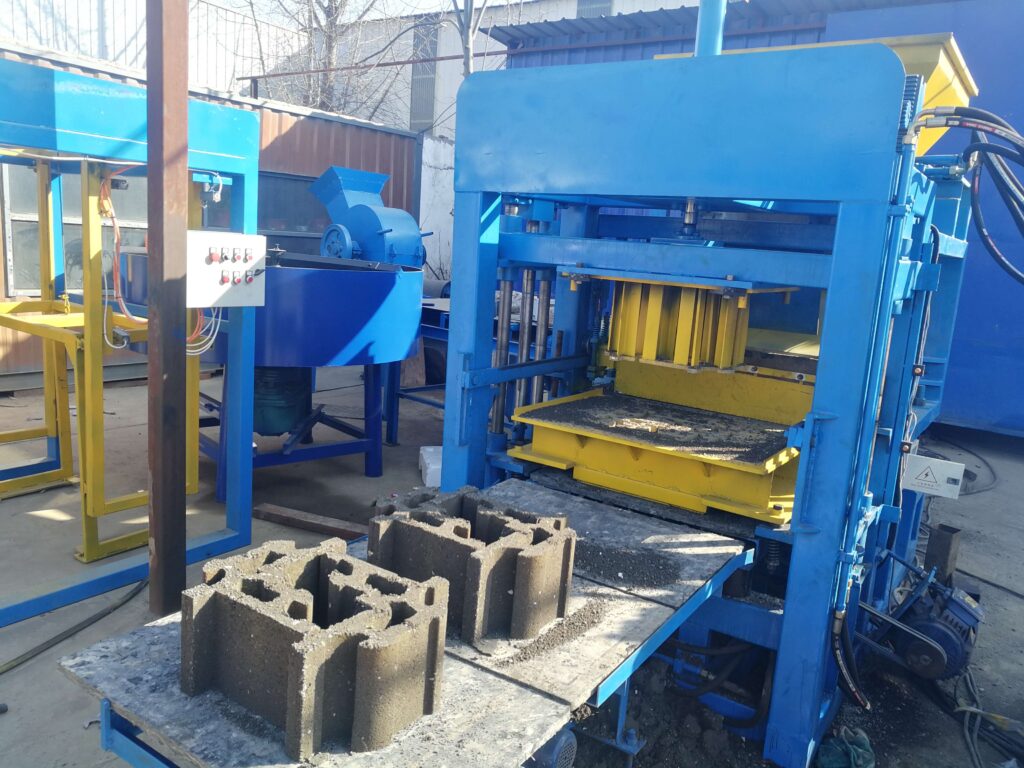
Sistem Pengolahan dan Pencampuran Bahan Baku
Landasan dari setiap jalur produksi yang sukses dimulai dengan sistem manajemen bahan baku canggih yang dirancang untuk memastikan kualitas input yang konsisten dan pasokan otomatis. Instalasi modern menggabungkan beberapa silo penyimpanan untuk bahan semen dengan kapasitas peringkat dari 50 hingga 200 ton, dilengkapi dengan pemantauan level terintegrasi dan pemicu pengisian ulang otomatis. Sistem penanganan agregat biasanya mencakup hopper penerima, jaringan konveyor, dan peralatan penyaringan yang secara otomatis menghilangkan partikel berukuran besar dan kontaminan. Proses penimbangan menggunakan hopper timbangan presisi dengan akurasi dalam ±0,5% dari berat target, dikendalikan oleh sistem penimbangan terkomputerisasi yang secara otomatis menyesuaikan variasi kadar air dan kepadatan material. Jalur produksi canggih menggabungkan pelacakan material waktu nyata yang menjaga tingkat persediaan optimal dan secara otomatis menghasilkan pesanan pembelian ketika ambang batas yang telah ditentukan tercapai. Tingkat otomatisasi dalam pengolahan bahan baku ini menghilangkan variasi kualitas di sumbernya dan memastikan proporsi campuran yang konsisten 24/7, terlepas dari keahlian atau tingkat perhatian operator.
Mencampur Teknologi dan Transportasi Material
Inti dari konsistensi produksi terletak pada teknologi pencampuran yang mencampur bahan secara menyeluruh sambil mempertahankan rasio air-semen yang tepat, yang kritis untuk pengembangan kekuatan produk. Jalur produksi modern menggunakan mixer poros ganda dengan kapasitas berkisar dari 750 hingga 5.000 liter per batch, dilengkapi bilah dan liner tahan aus yang mempertahankan efisiensi pencampuran sepanjang masa operasionalnya. Sistem pengukuran air menggabungkan flow meter dengan akurasi ±1%, sementara sistem canggih mencakup sensor kelembapan yang secara otomatis menyesuaikan penambahan air berdasarkan kandungan kelembapan agregat. Waktu siklus pencampuran dikontrol secara tepat dari 90 hingga 180 detik tergantung karakteristik bahan, dengan pengontrol logika terprogram yang memastikan aksi pencampuran identik untuk setiap batch. Transportasi bahan dari mixer ke mesin pembuat blok biasanya menggunakan sistem conveyor belt dengan scraper dan penutup untuk mencegah segregasi bahan dan kehilangan kelembapan. Integrasi antara tahap pencampuran dan pencetakan mencakup sistem penyangga yang memastikan operasi mesin berkelanjutan bahkan selama siklus perawatan atau pembersihan mixer.
Inti Produksi dan Sistem Otomasi
Teknologi Pencetakan dan Mekanika Pemadatan
Modul produksi pusat menampilkan mesin cetak blok berkapasitas tinggi yang dirancang untuk operasi berkelanjutan dengan pengawasan minimal. Sistem ini menggunakan tekanan hidrolik berkisar 140 hingga 320 bar, dikombinasikan dengan getaran frekuensi tinggi 4.000 hingga 7.000 RPM, untuk mencapai pemadatan material dan kepadatan produk yang optimal. Mesin modern dilengkapi sistem cetakan cepat-ganti yang mengurangi waktu pergantian produk dari beberapa jam menjadi beberapa menit, memungkinkan penjadwalan produksi fleksibel sesuai permintaan pasar. Sistem sirkulasi palet secara otomatis memasok palet pengeringan ke dalam mesin dan mengangkut produk baru dicetak ke area pengeringan tanpa penanganan manual. Mesin canggih dilengkapi penyesuaian tinggi otomatis yang mengkompensasi keausan cetakan dan variasi material, memastikan dimensi produk konsisten sepanjang masa operasional peralatan. Kapasitas produksi untuk lini lengkap berkisar 10.000 hingga 60.000 blok standar per shift 8 jam, dengan beberapa sistem khusus melebihi 100.000 unit per hari melalui pengoptimalan waktu siklus dan pengaturan pemrosesan paralel.
Penanganan dan Manajemen Penyembuhan Otomatis
Penanganan pasca-cetak merupakan fase kritis di mana otomatisasi secara signifikan mengurangi kerusakan produk dan kebutuhan tenaga kerja. Paletizer robotik dengan hati-hati memindahkan produk mentah dari palet produksi ke rak curing dengan akurasi posisi dalam ±2mm, mencegah kerusakan tepi dan deformasi. Konfigurasi sistem curing bervariasi dari curing atmosfer alami hingga sistem ruang terkontrol penuh yang mempercepat pengembangan kekuatan melalui pengelolaan suhu dan kelembapan. Lini canggih menggabungkan sistem penyimpanan dan pengambilan otomatis untuk rak curing, mengoptimalkan pemanfaatan ruang sambil mempertahankan jadwal curing yang tepat. Ruang curing terkontrol iklim mempertahankan suhu antara 40-70°C dan kelembapan relatif di atas 90%, mengurangi waktu curing dari minggu menjadi jam sekaligus memastikan pengembangan kekuatan yang seragam di seluruh tumpukan produk. Integrasi sistem pemulihan energi menangkap dan menggunakan kembali panas dari berbagai tahap proses, mengurangi kebutuhan energi curing sebesar 30-50% dibandingkan dengan sistem konvensional.
Manajemen Kualitas dan Optimasi Proses
Sistem Kontrol Kualitas Terpadu
Modern production lines incorporate comprehensive quality monitoring at multiple process stages, ensuring consistent output that meets or exceeds relevant standards. Laser measurement systems continuously monitor product dimensions with accuracy to ±0.2mm, automatically triggering machine adjustment when tolerances are approached. Compression testers randomly select samples from the production stream, measuring compressive strength development and providing data for automatic mix adjustment. Color consistency is monitored using spectrophotometers that detect minute color variations before they become commercially significant. The data from all quality monitoring stations feeds into a central manufacturing execution system that correlates process parameters with product quality, enabling predictive adjustments and continuous process improvement. This integrated approach to quality management typically reduces product rejection rates to below 0.5%, compared to 3-8% in semi-automated operations, while ensuring consistent compliance with customer specifications and regulatory requirements.
Process Analytics and Optimization Tools
The digital transformation of production lines enables data-driven optimization that maximizes efficiency and minimizes operating costs. Energy management systems monitor power consumption across all equipment components, identifying opportunities for load shifting and efficiency improvement. Production analytics track equipment utilization, identifying bottlenecks and optimizing production schedules to maximize throughput. Predictive maintenance systems analyze equipment vibration, temperature, and performance data to schedule maintenance before failures occur, typically increasing equipment availability by 8-15%. Advanced systems incorporate artificial intelligence algorithms that continuously analyze production data to identify optimal machine parameters for different material combinations and product types. These optimization tools typically deliver 12-25% improvements in overall equipment effectiveness while reducing energy consumption by 15-30% and maintenance costs by 20-40% compared to conventionally operated production lines.
Strategic Implementation and Operational Considerations
Project Planning and Implementation Timeline
The successful deployment of an integrated production line requires meticulous planning and phased implementation. Site preparation typically requires 3-6 months for civil works including foundation construction, utility connections, and building modifications. Equipment installation and mechanical commissioning generally span 4-8 weeks, followed by 2-4 weeks for electrical and control system integration. Process optimization and production ramp-up typically require an additional 4-6 weeks to achieve design capacity and quality standards. The complete project timeline from order placement to full production generally ranges from 8 to 14 months, depending on line complexity and site conditions. Successful implementation requires detailed project management with clearly defined milestones, regular progress reviews, and contingency planning for potential delays in equipment delivery or regulatory approvals.
Staffing Requirements and Skill Development
While automated lines significantly reduce direct labor requirements, they create demand for higher-skilled technical personnel. A typical production line operates with 4-8 personnel per shift including a line supervisor, machine operator, quality technician, and maintenance support. Technical support teams typically include mechanical and electrical technicians with specialized training in hydraulic systems, programmable controllers, and automation technology. Comprehensive training programs spanning 4-8 weeks ensure operational proficiency, covering equipment operation, routine maintenance, troubleshooting, and safety procedures. Many operations implement continuous improvement programs that engage operational staff in identifying efficiency opportunities and process enhancements, leveraging their daily exposure to equipment performance and production challenges.
Kesimpulan
Integrated brick and block production lines represent the current zenith of masonry manufacturing technology, delivering unparalleled levels of productivity, quality consistency, and operational efficiency. The strategic implementation of these systems transforms traditional masonry manufacturing from a labor-intensive craft to a technology-driven industrial process, creating sustainable competitive advantages through superior economics and product quality. The significant capital investment required is justified through dramatically reduced operating costs, minimal product rejection, and the ability to consistently meet the exacting requirements of modern construction projects. As construction methodologies continue to evolve toward greater precision and faster project timelines, the role of fully integrated production systems becomes increasingly vital for masonry manufacturers seeking to maintain market relevance and profitability. The ongoing digital transformation of these systems promises further improvements in efficiency, flexibility, and sustainability, ensuring their continued evolution as the manufacturing platform of choice for quality-conscious masonry producers worldwide.
Pertanyaan yang Sering Diajukan (FAQ)
Q1: What are the typical space requirements for a complete production line installation?
A: Space requirements vary based on production capacity and configuration, but generally range from 2,000 to 8,000 square meters for the production facility itself. This includes areas for raw material storage (400-1,200 m²), production equipment (800-2,500 m²), product curing (600-3,000 m²), and finished goods storage (500-1,800 m²). Additional outdoor space is typically required for raw material stockpiles and ancillary facilities. The layout efficiency significantly impacts operational workflow, with optimized designs reducing material handling distances by 30-50% compared to conventional arrangements.
Q2: How does the operational cost structure differ between automated lines and conventional manufacturing?
A: Automated lines demonstrate fundamentally different cost structures: labor costs typically reduce from 25-35% of production cost to 8-15%; energy costs increase from 8-12% to 15-22% due to automation systems but with lower energy cost per unit produced; maintenance costs rise from 4-6% to 7-10% but with higher equipment availability; and raw material utilization improves by 8-15% through precise batching and reduced product damage. The overall production cost per unit typically decreases by 25-40% despite higher capital investment, creating compelling economic justification for automation.
Q3: What infrastructure utilities are required for optimal production line operation?
A: Key utility requirements include: electrical power ranging from 400-1,200 kVA depending on line capacity; water supply of 10-40 m³ per day with consistent pressure and quality; compressed air at 7-10 bar with sufficient volume for automation systems; and drainage capacity for process water and stormwater. Additional considerations include natural gas connections for curing systems where applicable, telecommunications infrastructure for data systems, and appropriate road access for material delivery and product shipment. Utility reliability significantly impacts production consistency, making backup power systems and water storage economically justified in many locations.
Q4: What environmental considerations and compliance requirements apply to modern production lines?
A: Environmental compliance typically addresses: air quality management through dust collection systems with 99.9% efficiency; water management through closed-loop systems that minimize consumption and discharge; noise control through acoustic enclosures and isolation systems; and waste management through material recycling and byproduct utilization. Modern systems typically incorporate sustainability features including energy recovery systems, water recycling, and the use of industrial byproducts as raw materials. Regulatory compliance generally requires environmental impact assessments, continuous emissions monitoring, and regular reporting to relevant authorities.
Q5: How does production line flexibility accommodate different product types and market demands?
A: Modern lines achieve remarkable flexibility through: quick-change mold systems that enable product changeovers in 15-45 minutes; programmable recipes that automatically adjust machine parameters for different products; modular material handling that accommodates various product dimensions and weights; and sophisticated production planning software that optimizes production sequences for efficiency. Advanced systems can simultaneously produce multiple product types through parallel processing arrangements or rapid changeover protocols. This flexibility enables manufacturers to maintain optimal inventory levels across product ranges while responding quickly to changing market demands and custom orders.