1. Efikasite Pwodiksyon San Konparezon ak Kapasite Ekstansyon
Premye ak pi evidan avantaj machin blòk la se kapasite li pou transfòme ekonomi pwodiksyon an.
1.1. Gwo volim pwodiksyon ak debi ki konsistan
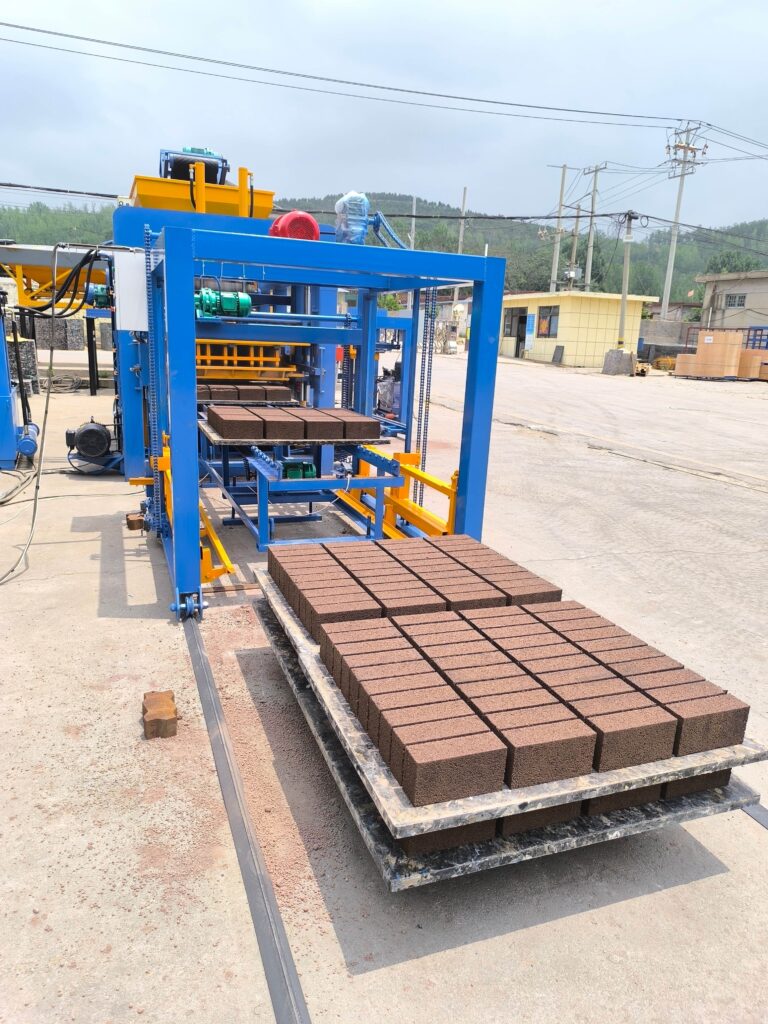
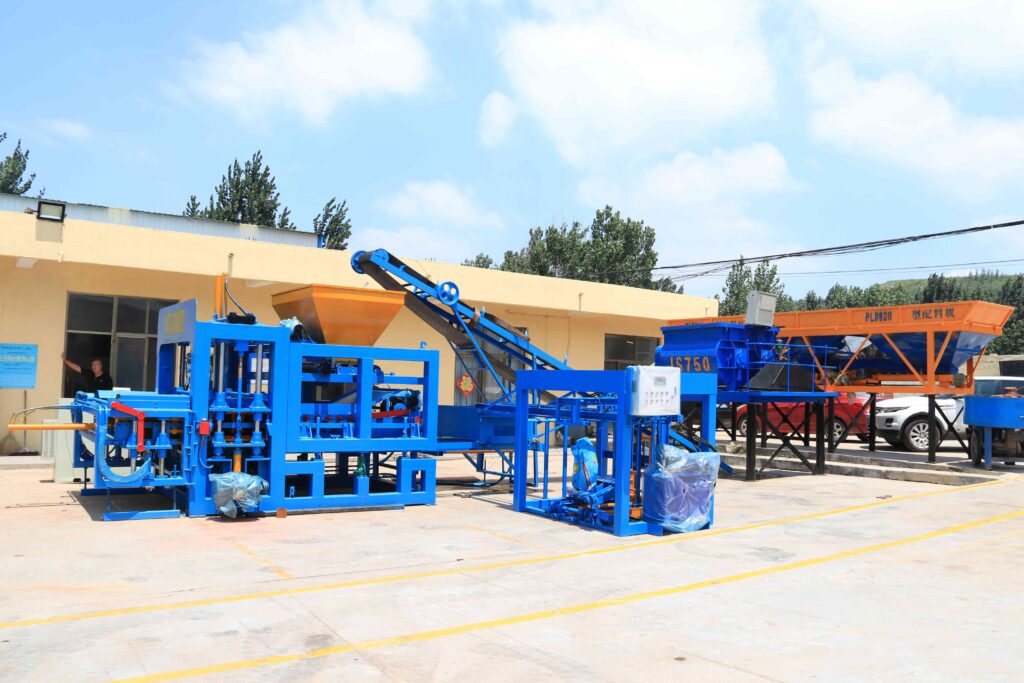
Machin blòk estasyonè modèn yo opere sou sik rapid, kontinyèl, kapab pwodui plizyè milye inite estanda pou chak èdtan. Pwodiksyon sa a nan gwo kantite senpleman pa reyalizab ak metòd manyèl oswa ki ba mekanize. Pou distribitè yo, sa tradui nan yon rezèv serye ak gwo-echèl ki kapab satisfè demann gwo pwojè enfrastrikti, devlopman rezidansyèl, ak konstriksyon komèsyal san yo pa ralanti travay la. Vitès machin nan dekobble pwodiksyon an anba limitasyon travay imen, asire ke kantite lòd ak dat limit yo ka satisfè avèk prediktibilite.
1.2. Optimizasyon Travay ak Rediksyon Depandans sou Konpetans
Automatizasyon ki genyen nan yon izin blòk diminye anpil bezwen travay dirèk pou chak inite pwodui. Byenke teknisyen kalifye nesesè pou antretyen machin ak kontwòl pwosesis, travay ki fatig tankou melanje, moule, ak manyen yo fèt pa sistèm nan. Sa diminye risk ki gen rapò ak mank travayè, ogmantasyon pri salè, ak varyasyon nan bon jan kalite travay. Pou yon manifakti k ap founi yon distribitè, kontwòl sou pri travay sa a kontribye dirèkteman nan estabilite pri ak fyab chèn ekipman.
1.3. Kapasite Operasyonèl 24/7
Avèk orè antretyen apwopriye, yon izin blòk machin ka opere san rèl. Sa maksimize retou sou envestisman kapital nan machin yo ak enstalasyon yo. Pou chèn ekipman an, sa vle di tan ki pi kout pou gwo lòd ak kapasite pou renouvle envantè deyò èdtan travay estanda, sa amelyore repons sèvis an jeneral.
2. Bon jan kalite pwodwi siperyè ak konsistan
Anplis kantite, machin yo asire yon nivo kalite ak inifòmite ki fondasyon pou pratik konstriksyon modèn yo.
2.1. Jeni Presizyon ak Presizyon Dimansyonèl
Chak blòk ki sòti nan yon mwazi bay la se prèske idantik. Machin yo aplike kantite vibrasyon presi ak kalibre, ansanm ak dè santèn tòn presyon idwolik, pou asire chak inite gen menm dimansyon, aliyman sant, ak kalite fas. Konsistans dimansyon sa a enpòtan anpil pou distribitè ak antreprenè. Li akselere vitès poze, redwi itilizasyon mòtye, minimize fatra koupaj sou teren an, e li esansyèl pou siksè nan masonri ranfòse ak sistèm mi prefabrike.
2.2. Pwopriyete Materyèl Kontwole ak Ranfòse
Pwosesis machin lan dirèkteman kontwole mezi pèfòmans kle yo.
- Fòs Konpresif:Rapò konpaksyon an wo ki reyalize pa vibrasyon ak presyon kreye yon matris pi dans, sa ki tradui dirèkteman nan yon fòs konpresif ki pi wo ak pi serye, ki kapab adapte pou aplikasyon espesifik (pa egzanp, blòk ki pote chaj kont blòk separasyon).
- Absòpsyon Dlo Ba:Blòk ki byen konpakse gen mwens espas vid, sa ki diminye to absòpsyon dlo. Sa amelyore dire, rezistans kont jèl ak degèl, ak lonjevite jeneral bilding yo—yon pwen vant kle pou itilizatè yo.
- Fini Sifas: The quality of the mold and the stripping process delivers uniform surface textures, whether smooth, split-face, or patterned. This aesthetic consistency is vital for architectural applications and veneer work.
2.3. Robust Quality Assurance Protocols
Automated production is inherently measurable. Parameters like vibration time, head pressure, and mix proportions are digitally controlled and logged. This allows for rigorous Statistical Process Control (SPC), where quality is assured in real-time during manufacturing, rather than being inspected only in the final product. For procurement specialists, this means partnering with suppliers who can provide verifiable data on product consistency, reducing project risk.
3. Material Innovation and Sustainability Leadership
Modern block machines are not passive molds; they are active enablers of the circular economy and sustainable construction.
3.1. Facilitating the Use of Alternative and Recycled Aggregates
Advanced machines are engineered to process a wide spectrum of raw materials. They can effectively incorporate high percentages of industrial by-products like fly ash, slag, and foundry sand, as well as post-consumer materials like crushed glass and processed construction & demolition waste. This capability allows manufacturers—and by extension, their distributors—to offer products with a significantly reduced carbon footprint and high recycled content, meeting green building certification demands (e.g., LEED, BREEAM).
3.2. Reducing Environmental Impact Through Process Efficiency
The production process itself is optimized for resource conservation.
- Minimal Water Usage: The “no-slump” or “dry-cast” method uses only the water necessary for cement hydration, drastically reducing consumption compared to wet-cast concrete methods.
- Rediksyon Dechè: Precision in batching and forming minimizes raw material waste. Off-spec blocks can often be crushed and reintroduced into the mix as aggregate, promoting a near-zero-waste cycle.
- Energy-Efficient Curing: While curing requires energy, modern low-pressure steam kilns are designed for heat recovery and efficiency, and the accelerated curing cycle itself is less energy-intensive over time than long-term air curing.
4. Strategic Business and Market Advantages
The benefits of block machinery extend into commercial strategy and market positioning for all links in the supply chain.
4.1. Unmatched Product Range and Customization Flexibility
By simply changing the mold, a single machine can produce an extensive catalog of products: standard hollow blocks, solid bricks, paving stones, retaining wall units, architectural screen blocks, and specialty shapes like insulated concrete forms (ICFs). This allows a manufacturer to respond swiftly to market trends and specific project requests. For distributors, this means being able to source a diverse portfolio from a single, reliable supplier, simplifying logistics and strengthening partnerships.
4.2. Enhanced Cost Competitiveness and Supply Chain Stability
The efficiencies of scale, labor optimization, and material usage translate into a lower cost per unit at the factory gate. This competitiveness is passed through the supply chain. Furthermore, localized production enabled by machinery reduces dependency on long-distance transportation of heavy materials, insulating the supply chain from fuel price volatility and logistics disruptions, and allowing for faster regional response.
4.3. Foundation for Digital Integration and Value-Added Services
The automated, data-rich environment of a block plant is the first step toward Industry 4.0 integration. Production data can be linked to order management and logistics systems. Perhaps more importantly, the precise digital specifications of machine-made blocks allow them to be seamlessly integrated into Building Information Modeling (BIM) libraries. Distributors and manufacturers who can provide these digital assets offer a significant value-add to architects and engineers, embedding their products directly into the digital construction workflow.
Konklizyon
The advantages of using a block machine are systemic and transformative. It is the critical differentiator between a commodity supplier and a strategic partner in construction. For the manufacturing side, it delivers the triad of efficiency, quality, and adaptability. For distributors, dealers, and procurement experts, these advantages materialize as reliable supply, superior product performance, enhanced sustainability credentials, and a robust platform for business growth. In a market that increasingly values precision, responsibility, and resilience, the block produced by advanced machinery is more than a building component; it is a testament to a modern, efficient, and forward-looking supply chain. Understanding and leveraging these advantages is essential for any stakeholder aiming to build a sustainable and profitable future in the construction materials industry.
FAQ (Frequently Asked Questions)
Q1: Doesn’t the high initial investment in block machinery negate the cost advantages?
A: While the capital expenditure is substantial, it must be analyzed as a long-term investment. The per-unit cost savings from labor efficiency, material optimization, and high-volume output typically lead to a strong return on investment (ROI) over the machine’s operational life. Furthermore, this investment creates a significant barrier to entry, ensuring stable market dynamics for established producers and their distribution networks.
Q2: How does machine-made block quality compare to traditionally cast or handmade masonry?
A: Machine-made blocks excel in consistency and engineering precision, which are paramount for structural performance and modern construction speed. While handmade products may have unique aesthetic variations, they cannot match the dimensional tolerance, uniform strength, and batch-to-batch reliability of machine production. For the vast majority of commercial, industrial, and residential applications, the engineered quality of machine-made blocks is a requirement, not a choice.
Q3: Are there limitations to the shapes and sizes that can be produced with a block machine?
A: The primary limitation is mold design and the machine’s stripping capability. While extremely complex, undercut shapes can be challenging, modern machinery is highly versatile. Through innovative mold design and adjustable machine parameters, a vast array of sizes, textures, and interlocking geometries can be produced. For truly unique, one-off architectural shapes, other methods may be used, but for standardized and even many custom specialty products, block machines are remarkably capable.
Q4: Can block machines operate effectively in regions with limited infrastructure or unstable power grids?
A: Yes, with proper planning. Plant design can incorporate robust power backup systems like generators. Furthermore, the choice of machine type matters. For remote locations, mobile block-making machines that produce blocks directly on the ground at the construction site are a viable solution, eliminating the need for extensive material transport and large, fixed infrastructure.
Q5: As a distributor, why should I prioritize partnering with suppliers who use advanced block machinery?
A: Such partnerships offer strategic security and growth potential. You gain assurance of: Supply Reliability (high, consistent output), Product Integrity (fewer returns and site issues), Competitive Pricing (scale efficiencies), Innovation Pipeline (ability to offer new, in-demand products like sustainable blocks), and Future-Readiness (alignment with digital construction trends). It is a partnership based on scalable capability, not just transactional supply.