1. Öndürişde deňsiz-täýsiz netijelilik we giňeldilip bilinýänlygy
Blok maşynlarynyň esasy we iň aýdyň artykmaçlygy, önümçilik ykdysadyýetini üýtgetmek ukybyndadyr.
1.1. Ýokary Göwrümli Çykyş we Yzygiderli Geçirijilik
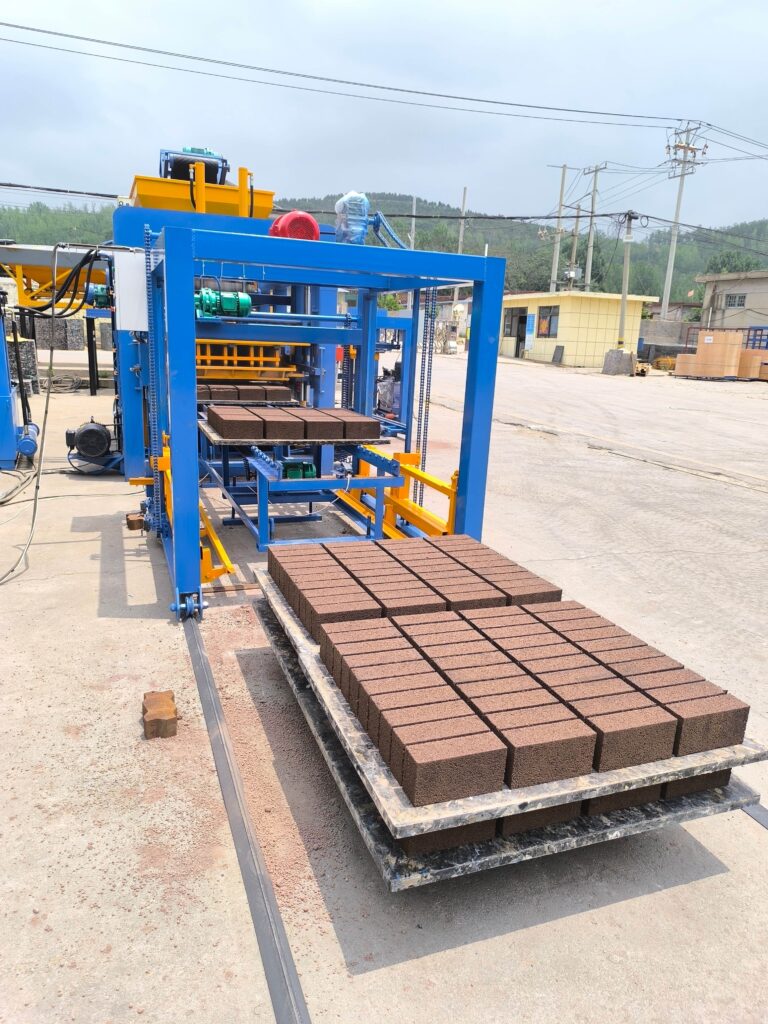
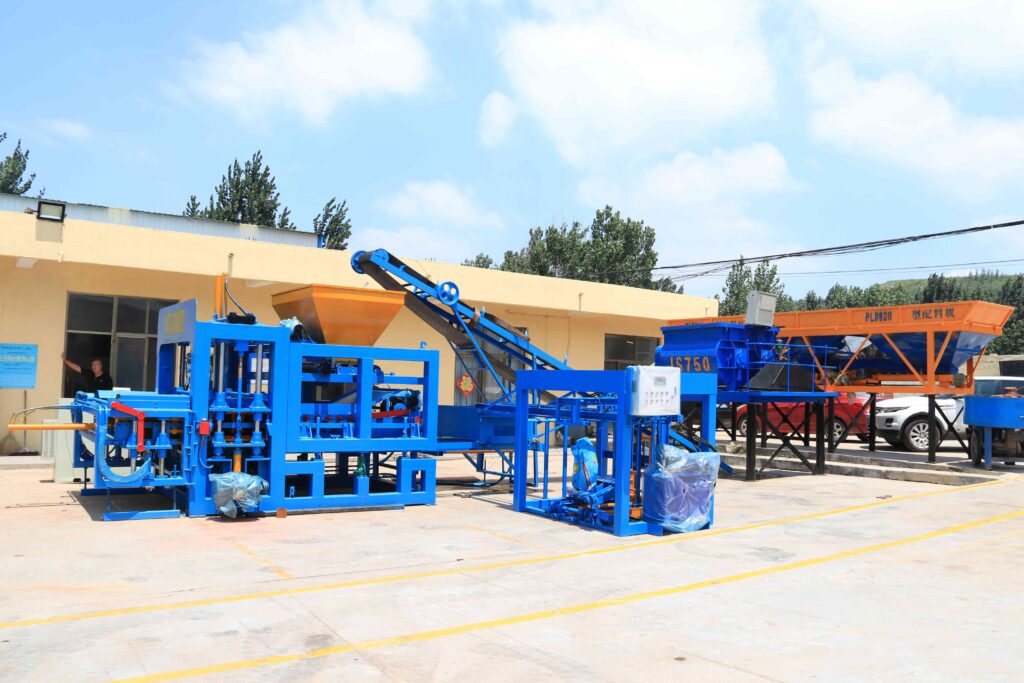
Döwürleýin işleýän häzirki zaman stasionar blok enjamlary sagatda müňlerçe standart önüm öndürip bilýär. Bu ýokary möçberli önümçilik el ýa-da pes mehanizirlenen usullar bilen mümkin däl. Satyjylar üçin bu, uly infrastruktura taslamalary, ýaşaýyş jaýlary we söwda gurluşyklarynyň talaplaryny kanagatlandyrmaga ukyply, ygtybarly we uly möçberli üpjünçiligi aňladýar. Enjamyň tizligi önümçiligi adam zähmetiniň çäklendirmelerinden aýyrýar, buyslaryň möçberlerini we möhletlerini çak edip ýerine ýetirip boljakdygyny üpjün edýär.
1.2. Zähmeti optimallaşdyrmak we ussatlyga baglylygy azaltmak
Blok zawodynyň awtomatlaşdyrylyşy, öndürilýän her birlik üçin gönüden-göni zähmet çykdajylaryny ep-esli azaldýar. Maşynlara hyzmat etmek we proses dolandyryşy üçin ökde hünärmenler zerur bolsa-da, garyşdyrmak, galyplamak we el bilen işlemek ýaly agyr işler ulgam tarapyndan ýerine ýetirilýär. Bu, işçi güýjüniň ýetmezçiligi, aýlyk haklaryň ýokarlanmagy we ussatlykda üýtgeşiklik bilen baglanyşykly töwekgelçilikleri azaldýar. Distribýutory üpjün edýän öndüriji üçin, zähmet çykdajylaryna gözegçilik bahanyň durnuklylygyna we üpjünçilik zynjyrynyň ygtybarlylygyna gönüden-göni goşant goşýar.
1.3. 24/7 Işleýiş Mümkinçiligi
Dogry tehniki hyzmat çalşyklary bilen, blok maşyn zawody üznüksiz işläp biler. Bu, maşyn we enjam serişdelerine edilen maýa goýumlaryndan iň ýokary girdeji getirýär. Üpjünçilik zynjyry üçin bolsa, uly sargytlar üçin gysga wagtly möhletleri we adaty iş wagtyndan daşary inventary täzelämek mümkinçiligini berýär, bu bolsa umumy hyzmat jogap bermek ukybyny ýokarlandyrýar.
2. Hasaply we yzygiderli önüm hilini üpjün etmek
Mukdaryň daşyndan, maşynlar häzirki zaman gurluşyk işleriniň esasyny düzýän hil we birdenligiň derejesini üpjün edýär.
2.1. Takykçylyk Inženerligi we Ölçeg Tygşylygy
Berlen galypdan her bir blok sanlyja birmeňzeş bolýar. Maşynlar takyk, kalibrlenen titreşiň mukdaryny we ýüzlerçe tonna gidrawlik basyşy ulanyp, her birligiň birmeňzeş ölçeglere, ýadro sazlaşygyna we ýüzüň hiline eýe bolmagyny üpjün edýär. Bu ölçegsel yzygiderlilik distribýutorlar we potratçylar üçin möhümdir. Ol düşemek tizligini çaltlandyrýar, garyş sarp edilişini azaldýar, ýerinde kesmek galyndylaryny peseldýär we güýçlendirilen kerpiç we deslapky taýýarlanan diwar ulgamlarynyň üstünligi üçin zerurdyr.
2.2. Materialyň häsiýetlerini gözegçilikde saklamak we güýçlendirmek
Maşyn prosesi gönüden-göni esasy işleýiş ölçeglerini dolandyrýar.
- Ыкмалык беркдиги:Sarsgyn we basyş bilen gazanylan ýokary dykyzlyk gatnaşygy, has dykyz matrisa döredýär, bu bolsa göni manyda ýokary we ygtybarly gyjyndyryjy güýje geçýär, ony aýratyn ulanmaklar üçin (meselem, agyr ýük göteriji vs. bölüji bloklar) sazlamak mümkin.
- Pes suw siňdiriş: Properly compacted blocks have reduced void spaces, leading to lower water absorption rates. This enhances durability, freeze-thaw resistance, and overall building longevity—a key selling point for end users.
- Ýüziniň öňü: The quality of the mold and the stripping process delivers uniform surface textures, whether smooth, split-face, or patterned. This aesthetic consistency is vital for architectural applications and veneer work.
2.3. Robust Quality Assurance Protocols
Automated production is inherently measurable. Parameters like vibration time, head pressure, and mix proportions are digitally controlled and logged. This allows for rigorous Statistical Process Control (SPC), where quality is assured in real-time during manufacturing, rather than being inspected only in the final product. For procurement specialists, this means partnering with suppliers who can provide verifiable data on product consistency, reducing project risk.
3. Material Innovation and Sustainability Leadership
Modern block machines are not passive molds; they are active enablers of the circular economy and sustainable construction.
3.1. Facilitating the Use of Alternative and Recycled Aggregates
Advanced machines are engineered to process a wide spectrum of raw materials. They can effectively incorporate high percentages of industrial by-products like fly ash, slag, and foundry sand, as well as post-consumer materials like crushed glass and processed construction & demolition waste. This capability allows manufacturers—and by extension, their distributors—to offer products with a significantly reduced carbon footprint and high recycled content, meeting green building certification demands (e.g., LEED, BREEAM).
3.2. Reducing Environmental Impact Through Process Efficiency
The production process itself is optimized for resource conservation.
- Minimal Water Usage: The “no-slump” or “dry-cast” method uses only the water necessary for cement hydration, drastically reducing consumption compared to wet-cast concrete methods.
- Çöplerini azaltmak: Precision in batching and forming minimizes raw material waste. Off-spec blocks can often be crushed and reintroduced into the mix as aggregate, promoting a near-zero-waste cycle.
- Energy-Efficient Curing: While curing requires energy, modern low-pressure steam kilns are designed for heat recovery and efficiency, and the accelerated curing cycle itself is less energy-intensive over time than long-term air curing.
4. Strategic Business and Market Advantages
The benefits of block machinery extend into commercial strategy and market positioning for all links in the supply chain.
4.1. Unmatched Product Range and Customization Flexibility
By simply changing the mold, a single machine can produce an extensive catalog of products: standard hollow blocks, solid bricks, paving stones, retaining wall units, architectural screen blocks, and specialty shapes like insulated concrete forms (ICFs). This allows a manufacturer to respond swiftly to market trends and specific project requests. For distributors, this means being able to source a diverse portfolio from a single, reliable supplier, simplifying logistics and strengthening partnerships.
4.2. Enhanced Cost Competitiveness and Supply Chain Stability
The efficiencies of scale, labor optimization, and material usage translate into a lower cost per unit at the factory gate. This competitiveness is passed through the supply chain. Furthermore, localized production enabled by machinery reduces dependency on long-distance transportation of heavy materials, insulating the supply chain from fuel price volatility and logistics disruptions, and allowing for faster regional response.
4.3. Foundation for Digital Integration and Value-Added Services
The automated, data-rich environment of a block plant is the first step toward Industry 4.0 integration. Production data can be linked to order management and logistics systems. Perhaps more importantly, the precise digital specifications of machine-made blocks allow them to be seamlessly integrated into Building Information Modeling (BIM) libraries. Distributors and manufacturers who can provide these digital assets offer a significant value-add to architects and engineers, embedding their products directly into the digital construction workflow.
Netije
The advantages of using a block machine are systemic and transformative. It is the critical differentiator between a commodity supplier and a strategic partner in construction. For the manufacturing side, it delivers the triad of efficiency, quality, and adaptability. For distributors, dealers, and procurement experts, these advantages materialize as reliable supply, superior product performance, enhanced sustainability credentials, and a robust platform for business growth. In a market that increasingly values precision, responsibility, and resilience, the block produced by advanced machinery is more than a building component; it is a testament to a modern, efficient, and forward-looking supply chain. Understanding and leveraging these advantages is essential for any stakeholder aiming to build a sustainable and profitable future in the construction materials industry.
FAQ (Frequently Asked Questions)
Q1: Doesn’t the high initial investment in block machinery negate the cost advantages?
A: While the capital expenditure is substantial, it must be analyzed as a long-term investment. The per-unit cost savings from labor efficiency, material optimization, and high-volume output typically lead to a strong return on investment (ROI) over the machine’s operational life. Furthermore, this investment creates a significant barrier to entry, ensuring stable market dynamics for established producers and their distribution networks.
Q2: How does machine-made block quality compare to traditionally cast or handmade masonry?
A: Machine-made blocks excel in consistency and engineering precision, which are paramount for structural performance and modern construction speed. While handmade products may have unique aesthetic variations, they cannot match the dimensional tolerance, uniform strength, and batch-to-batch reliability of machine production. For the vast majority of commercial, industrial, and residential applications, the engineered quality of machine-made blocks is a requirement, not a choice.
Q3: Are there limitations to the shapes and sizes that can be produced with a block machine?
A: The primary limitation is mold design and the machine’s stripping capability. While extremely complex, undercut shapes can be challenging, modern machinery is highly versatile. Through innovative mold design and adjustable machine parameters, a vast array of sizes, textures, and interlocking geometries can be produced. For truly unique, one-off architectural shapes, other methods may be used, but for standardized and even many custom specialty products, block machines are remarkably capable.
Q4: Can block machines operate effectively in regions with limited infrastructure or unstable power grids?
A: Yes, with proper planning. Plant design can incorporate robust power backup systems like generators. Furthermore, the choice of machine type matters. For remote locations, mobile block-making machines that produce blocks directly on the ground at the construction site are a viable solution, eliminating the need for extensive material transport and large, fixed infrastructure.
Q5: As a distributor, why should I prioritize partnering with suppliers who use advanced block machinery?
A: Such partnerships offer strategic security and growth potential. You gain assurance of: Supply Reliability (high, consistent output), Product Integrity (fewer returns and site issues), Competitive Pricing (scale efficiencies), Innovation Pipeline (ability to offer new, in-demand products like sustainable blocks), and Future-Readiness (alignment with digital construction trends). It is a partnership based on scalable capability, not just transactional supply.