1. Безпрецедентна ефективність виробництва та масштабованість
Основна і найочевидніша перевага блочного обладнання полягає в його здатності трансформувати економіку виробництва.
1.1. Високий обсяг виробництва та стабільна пропускна здатність
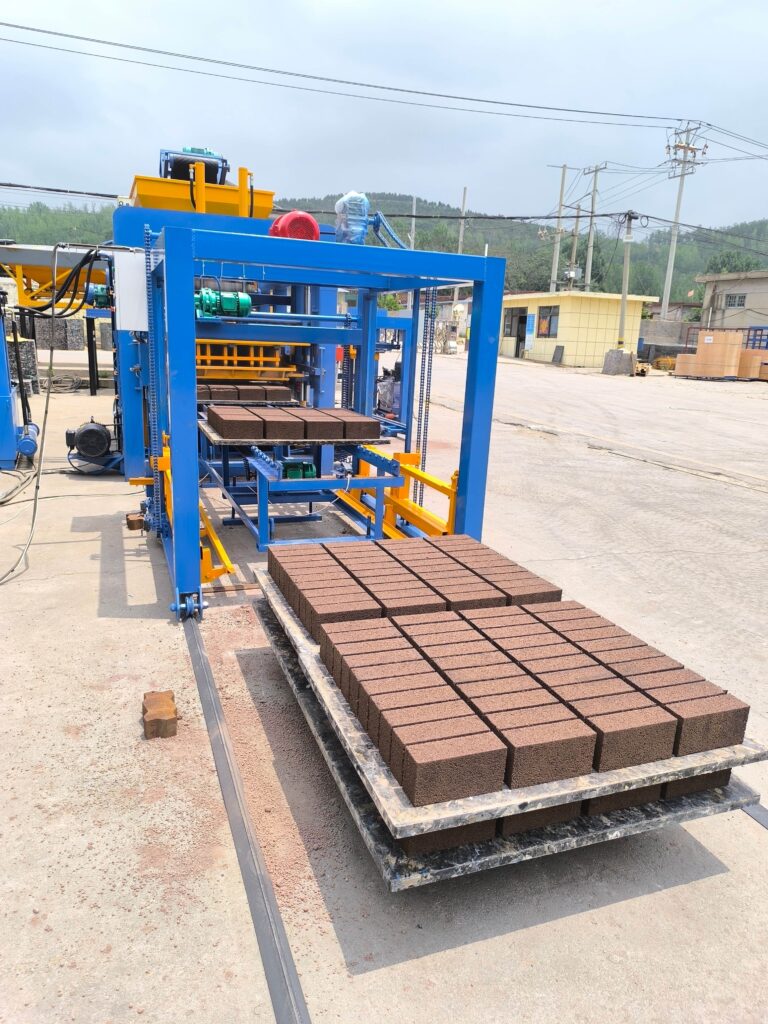
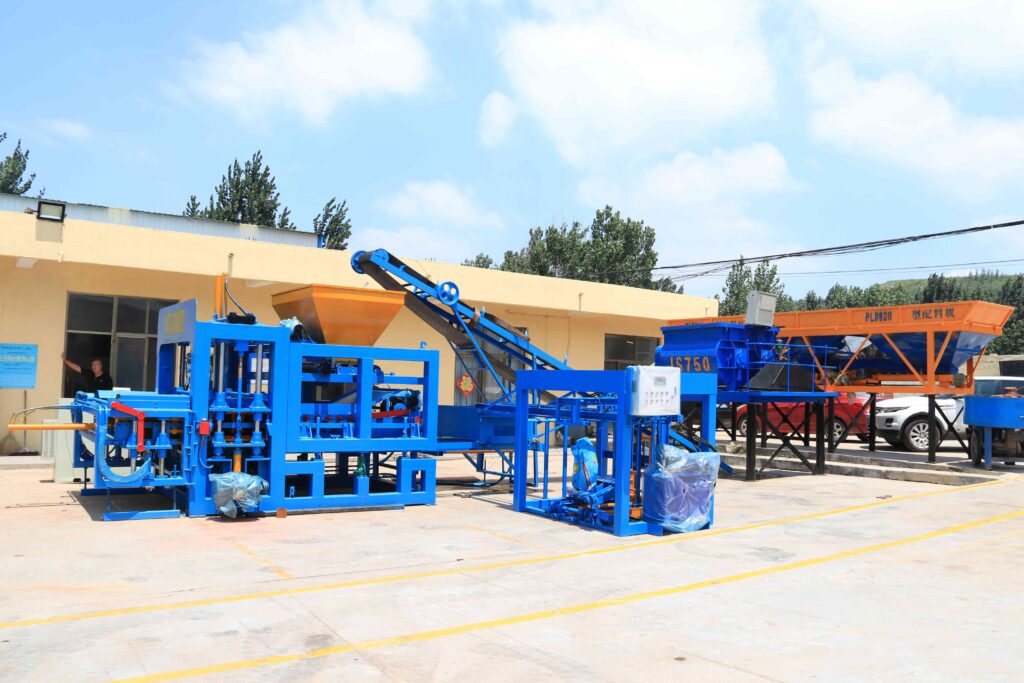
Сучасні стаціонарні блокові машини працюють у швидких безперервних циклах, здатних виробляти тисячі стандартизованих одиниць на годину. Такий високий обсяг виробництва просто недосяжний ручними або маломеханізованими методами. Для дистриб'юторів це означає надійне масштабне постачання, здатне задовольнити потреби великих інфраструктурних проектів, житлових масивів і комерційного будівництва без вузьких місць. Темп роботи машини усуває залежність виробництва від обмежень людської праці, гарантуючи передбачуване виконання обсягів замовлень і дотримання термінів.
1.2. Оптимізація праці та зниження залежності від кваліфікації
Автоматизація, притаманна блоковому заводу, значно зменшує потребу в прямій праці на одиницю продукції. Хоча для обслуговування машин і контролю процесів потрібні кваліфіковані техніки, важкі завдання зі змішування, формування та обробки виконуються системою. Це знижує ризики, пов'язані з дефіцитом робочої сили, зростанням заробітної плати та варіативністю якості роботи. Для виробника, який постачає дистриб'ютора, такий контроль над витратами на працю безпосередньо сприяє стабільності цін і надійності ланцюга поставок.
1.3. Потенціал цілодобової роботи
При правильному графіку обслуговування завод блокових машин може працювати безперервно. Це максимізує віддачу від капітальних інвестицій у обладнання та приміщення. Для ланцюга постачання це означає скорочення термінів виконання великих замовлень та можливість поповнення запасів у позастандартний робочий час, що підвищує загальну оперативність обслуговування.
2. Найвища та постійна якість продукції
Крім кількості, техніка забезпечує рівень якості та однорідності, що є основою сучасних будівельних практик.
2.1. Точне машинобудування та точність розмірів
Кожен блок з однієї форми є практично ідентичним. Машини застосовують точні, відкалібровані параметри вібрації та сотні тонн гідравлічного тиску, забезпечуючи однакові розміри, вирівнювання осердя та якість поверхні кожного елементу. Ця точність розмірів є критично важливою для дистриб'юторів та підрядників. Вона прискорює темпи укладання, зменшує витрати розчину, мінімізує відходи різання на місці та є необхідною для успіху армованої кладки та збірних стінових систем.
2.2. Контрольовані та покращені властивості матеріалів
Процес машинної роботи безпосередньо контролює ключові показники продуктивності.
- Міцність на стискання:Вібрація та тиск забезпечують високий коефіцієнт ущільнення, створюючи більш щільну матрицю, що безпосередньо перетворюється на вищу та надійнішу міцність на стиск, яку можна адаптувати для конкретних застосувань (наприклад, несучі блоки проти перегородкових блоків).
- Низьке водопоглинання:Правильно ущільнені блоки мають зменшені порожнини, що призводить до нижчих показників водопоглинання. Це підвищує довговічність, стійкість до заморожування-відтавання та загальну тривалість експлуатації будівлі — ключова перевага для кінцевих споживачів.
- Чистота поверхні:Якість форми та процес зняття забезпечують рівномірну текстуру поверхні, будь то гладка, розколота або візерункова. Ця естетична однорідність є важливою для архітектурних застосувань та облицювальних робіт.
2.3. Robust Quality Assurance Protocols
Automated production is inherently measurable. Parameters like vibration time, head pressure, and mix proportions are digitally controlled and logged. This allows for rigorous Statistical Process Control (SPC), where quality is assured in real-time during manufacturing, rather than being inspected only in the final product. For procurement specialists, this means partnering with suppliers who can provide verifiable data on product consistency, reducing project risk.
3. Material Innovation and Sustainability Leadership
Modern block machines are not passive molds; they are active enablers of the circular economy and sustainable construction.
3.1. Facilitating the Use of Alternative and Recycled Aggregates
Advanced machines are engineered to process a wide spectrum of raw materials. They can effectively incorporate high percentages of industrial by-products like fly ash, slag, and foundry sand, as well as post-consumer materials like crushed glass and processed construction & demolition waste. This capability allows manufacturers—and by extension, their distributors—to offer products with a significantly reduced carbon footprint and high recycled content, meeting green building certification demands (e.g., LEED, BREEAM).
3.2. Reducing Environmental Impact Through Process Efficiency
The production process itself is optimized for resource conservation.
- Minimal Water Usage: The “no-slump” or “dry-cast” method uses only the water necessary for cement hydration, drastically reducing consumption compared to wet-cast concrete methods.
- Зменшення відходів: Precision in batching and forming minimizes raw material waste. Off-spec blocks can often be crushed and reintroduced into the mix as aggregate, promoting a near-zero-waste cycle.
- Energy-Efficient Curing: While curing requires energy, modern low-pressure steam kilns are designed for heat recovery and efficiency, and the accelerated curing cycle itself is less energy-intensive over time than long-term air curing.
4. Strategic Business and Market Advantages
The benefits of block machinery extend into commercial strategy and market positioning for all links in the supply chain.
4.1. Unmatched Product Range and Customization Flexibility
By simply changing the mold, a single machine can produce an extensive catalog of products: standard hollow blocks, solid bricks, paving stones, retaining wall units, architectural screen blocks, and specialty shapes like insulated concrete forms (ICFs). This allows a manufacturer to respond swiftly to market trends and specific project requests. For distributors, this means being able to source a diverse portfolio from a single, reliable supplier, simplifying logistics and strengthening partnerships.
4.2. Enhanced Cost Competitiveness and Supply Chain Stability
The efficiencies of scale, labor optimization, and material usage translate into a lower cost per unit at the factory gate. This competitiveness is passed through the supply chain. Furthermore, localized production enabled by machinery reduces dependency on long-distance transportation of heavy materials, insulating the supply chain from fuel price volatility and logistics disruptions, and allowing for faster regional response.
4.3. Foundation for Digital Integration and Value-Added Services
The automated, data-rich environment of a block plant is the first step toward Industry 4.0 integration. Production data can be linked to order management and logistics systems. Perhaps more importantly, the precise digital specifications of machine-made blocks allow them to be seamlessly integrated into Building Information Modeling (BIM) libraries. Distributors and manufacturers who can provide these digital assets offer a significant value-add to architects and engineers, embedding their products directly into the digital construction workflow.
Висновок
The advantages of using a block machine are systemic and transformative. It is the critical differentiator between a commodity supplier and a strategic partner in construction. For the manufacturing side, it delivers the triad of efficiency, quality, and adaptability. For distributors, dealers, and procurement experts, these advantages materialize as reliable supply, superior product performance, enhanced sustainability credentials, and a robust platform for business growth. In a market that increasingly values precision, responsibility, and resilience, the block produced by advanced machinery is more than a building component; it is a testament to a modern, efficient, and forward-looking supply chain. Understanding and leveraging these advantages is essential for any stakeholder aiming to build a sustainable and profitable future in the construction materials industry.
FAQ (Frequently Asked Questions)
Q1: Doesn’t the high initial investment in block machinery negate the cost advantages?
А: While the capital expenditure is substantial, it must be analyzed as a long-term investment. The per-unit cost savings from labor efficiency, material optimization, and high-volume output typically lead to a strong return on investment (ROI) over the machine’s operational life. Furthermore, this investment creates a significant barrier to entry, ensuring stable market dynamics for established producers and their distribution networks.
Q2: How does machine-made block quality compare to traditionally cast or handmade masonry?
А: Machine-made blocks excel in consistency and engineering precision, which are paramount for structural performance and modern construction speed. While handmade products may have unique aesthetic variations, they cannot match the dimensional tolerance, uniform strength, and batch-to-batch reliability of machine production. For the vast majority of commercial, industrial, and residential applications, the engineered quality of machine-made blocks is a requirement, not a choice.
Q3: Are there limitations to the shapes and sizes that can be produced with a block machine?
А: The primary limitation is mold design and the machine’s stripping capability. While extremely complex, undercut shapes can be challenging, modern machinery is highly versatile. Through innovative mold design and adjustable machine parameters, a vast array of sizes, textures, and interlocking geometries can be produced. For truly unique, one-off architectural shapes, other methods may be used, but for standardized and even many custom specialty products, block machines are remarkably capable.
Q4: Can block machines operate effectively in regions with limited infrastructure or unstable power grids?
А: Yes, with proper planning. Plant design can incorporate robust power backup systems like generators. Furthermore, the choice of machine type matters. For remote locations, mobile block-making machines that produce blocks directly on the ground at the construction site are a viable solution, eliminating the need for extensive material transport and large, fixed infrastructure.
Q5: As a distributor, why should I prioritize partnering with suppliers who use advanced block machinery?
А: Such partnerships offer strategic security and growth potential. You gain assurance of: Supply Reliability (high, consistent output), Product Integrity (fewer returns and site issues), Competitive Pricing (scale efficiencies), Innovation Pipeline (ability to offer new, in-demand products like sustainable blocks), and Future-Readiness (alignment with digital construction trends). It is a partnership based on scalable capability, not just transactional supply.