1. Walang Kapantay na Kahusayan sa Produksyon at Kakayahang Palakihin
Ang pangunahing at pinakamalinaw na bentaha ng block machinery ay nakasalalay sa kakayahan nito na baguhin ang ekonomiya ng produksyon.
1.1. Mataas na Dami ng Output at Patuloy na Daloy ng Produksyon
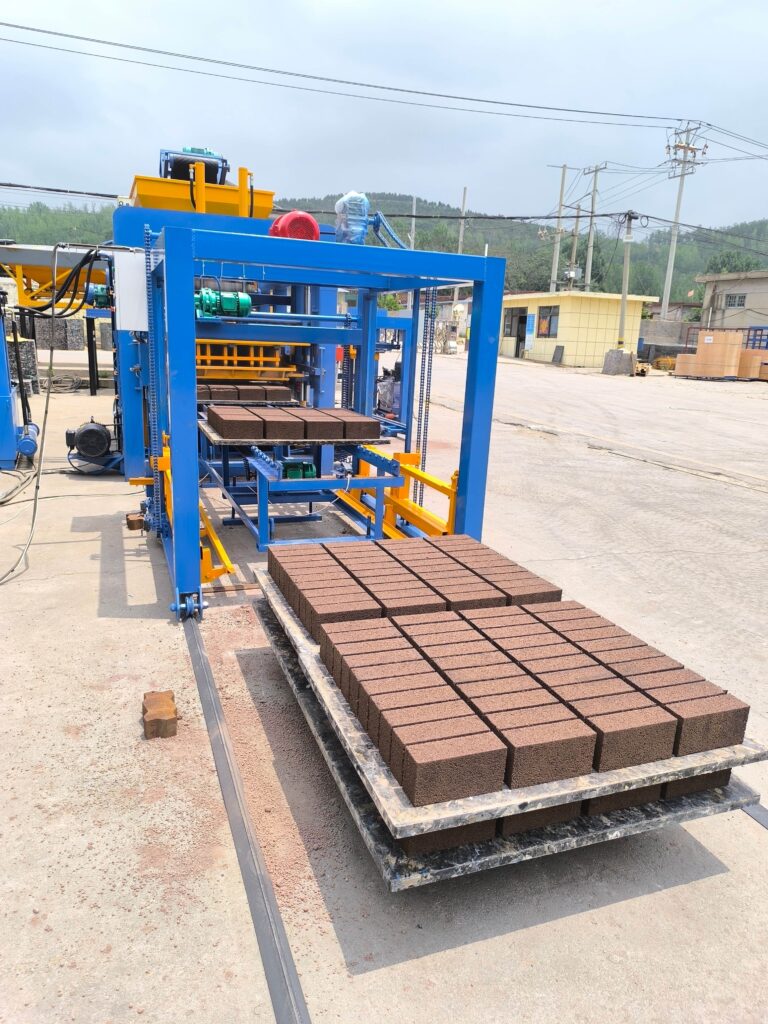
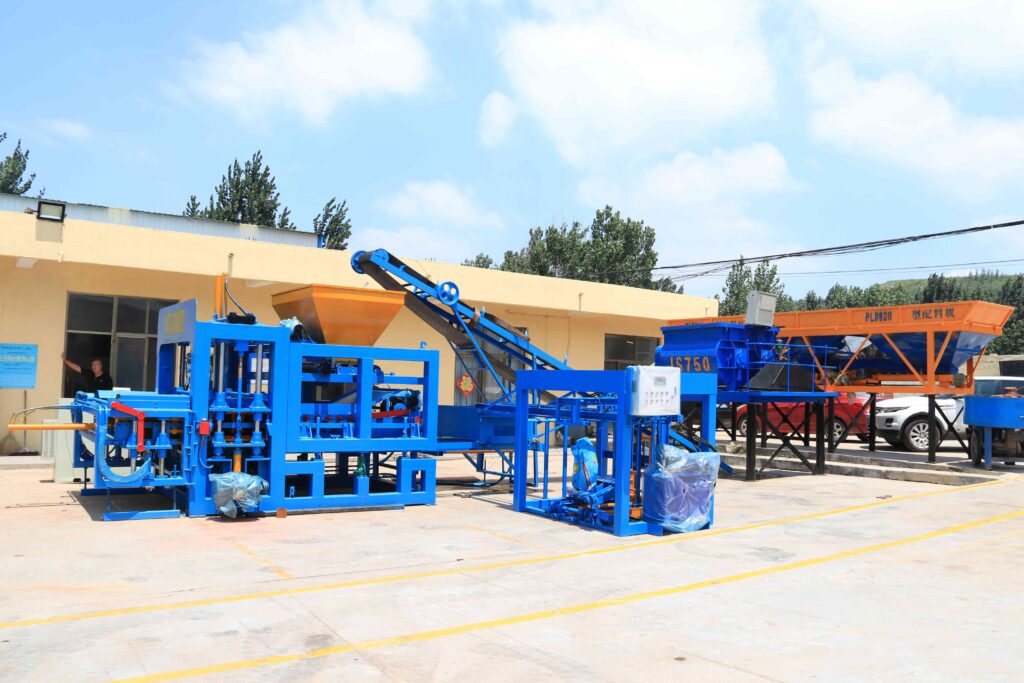
Ang mga makabagong stationary block machine ay gumagana sa mabilis at tuluy-tuloy na siklo, na kayang gumawa ng libu-libong pamantayang yunit kada oras. Ang ganitong mataas na dami ng output ay hindi maaaring makamit sa pamamagitan ng manwal o mababang mekanisadong pamamaraan. Para sa mga distributor, ito ay nangangahulugang maaasahan at malakihang supply na kayang tugunan ang mga pangangailangan ng malalaking proyektong imprastraktura, pagpapaunlad ng tirahan, at komersyal na konstruksyon nang walang bottleneck. Ang bilis ng makina ay humihiwalay sa produksyon mula sa limitasyon ng paggawa ng tao, na tinitiyak na ang dami ng order at mga deadline ay matutugunan nang may katiyakan.
1.2. Pag-optimize ng Paggawa at Pagbawas ng Dependency sa Kasanayan
Ang automation na likas sa isang block plant ay makabuluhang nagbabawas ng direktang pangangailangan sa paggawa bawat yunit na nalilikha. Bagama't kailangan ang mga bihasang teknisyan para sa pagpapanatili ng makinarya at kontrol sa proseso, ang mabibigat na gawain ng paghahalo, paghuhulma, at paghawak ay ginagawa ng sistema. Pinapabawasan nito ang mga panganib na kaugnay ng kakulangan sa paggawa, pagtaas ng gastos sa sahod, at pagkakaiba-iba sa kalidad ng trabaho. Para sa isang tagagawa na nagbibigay sa isang distributor, ang kontrol na ito sa gastos sa paggawa ay direktang nag-aambag sa katatagan ng presyo at pagiging maaasahan ng supply chain.
1.3. Potensyal na Operasyonal 24/7
Sa wastong mga shift ng pagpapanatili, ang isang planta ng block machine ay maaaring tumakbo nang tuluy-tuloy. Pinapalaki nito ang kita mula sa puhunang investasyon sa makinarya at pasilidad. Para sa supply chain, nangangahulugan ito ng mas maikling oras ng paghahatid para sa malalaking order at kakayahang mag-replenish ng imbentaryo sa labas ng karaniwang oras ng trabaho, na nagpapataas ng pangkalahatang pagtugon ng serbisyo.
2. Mataas at Palagiang Kalidad ng Produkto
Higit pa sa dami, tinitiyak ng makinarya ang antas ng kalidad at pagkakapareho na pundasyon sa mga makabagong kasanayan sa konstruksiyon.
2.1. Precisyong Inhinyeriya at Tumpak na Dimensyon
Ang bawat bloke mula sa isang partikular na hulma ay halos magkakapareho. Ang mga makina ay naglalapat ng tiyak at naka-kalibrong dami ng panginginig at daan-daang toneladang presyong haydroliko, na tinitiyak na ang bawat yunit ay may parehong sukat, pagkakahanay ng core, at kalidad ng mukha. Ang pagkakatugma ng sukat na ito ay mahalaga para sa mga distributor at kontratista. Pinapabilis nito ang bilis ng paglalagay, binabawasan ang paggamit ng mortar, pinapaliit ang pag-aaksaya sa pagputol sa site, at mahalaga para sa tagumpay ng reinforced masonry at prefabricated wall systems.
2.2. Kontrolado at Pinahusay na mga Katangian ng Materyales
Ang proseso ng makina ay direktang kumokontrol sa mga pangunahing sukatan ng pagganap.
- Lakas ng Pagpigil:Ang mataas na compaction ratio na nakamit sa pamamagitan ng vibration at presyon ay lumilikha ng mas siksik na matrix, na direktang nagreresulta sa mas mataas at mas maaasahang compressive strength, na maaaring iakma para sa mga partikular na aplikasyon (hal., load-bearing vs. partition blocks).
- Mababang Pagsipsip ng Tubig:Ang mga bloke na maayos na napapadikit ay may nabawasan na mga puwang, na nagreresulta sa mas mababang antas ng pagsipsip ng tubig. Pinapahusay nito ang tibay, paglaban sa pagyeyelo at pagtunaw, at pangkalahatang kahabaan ng gusali—isang mahalagang punto ng pagbebenta para sa mga end user.
- Tapos sa Ibabaw:Ang kalidad ng hulma at proseso ng pagtanggal ay naghahatid ng pantay-pantay na mga tekstura sa ibabaw, maging makinis, may hati, o may disenyo. Ang pagkakapareho sa estetika ay mahalaga para sa mga aplikasyon sa arkitektura at gawaing pang-veneer.
2.3. Robust Quality Assurance Protocols
Automated production is inherently measurable. Parameters like vibration time, head pressure, and mix proportions are digitally controlled and logged. This allows for rigorous Statistical Process Control (SPC), where quality is assured in real-time during manufacturing, rather than being inspected only in the final product. For procurement specialists, this means partnering with suppliers who can provide verifiable data on product consistency, reducing project risk.
3. Material Innovation and Sustainability Leadership
Modern block machines are not passive molds; they are active enablers of the circular economy and sustainable construction.
3.1. Facilitating the Use of Alternative and Recycled Aggregates
Advanced machines are engineered to process a wide spectrum of raw materials. They can effectively incorporate high percentages of industrial by-products like fly ash, slag, and foundry sand, as well as post-consumer materials like crushed glass and processed construction & demolition waste. This capability allows manufacturers—and by extension, their distributors—to offer products with a significantly reduced carbon footprint and high recycled content, meeting green building certification demands (e.g., LEED, BREEAM).
3.2. Reducing Environmental Impact Through Process Efficiency
The production process itself is optimized for resource conservation.
- Minimal Water Usage: The “no-slump” or “dry-cast” method uses only the water necessary for cement hydration, drastically reducing consumption compared to wet-cast concrete methods.
- Pagbabawas ng Basura: Precision in batching and forming minimizes raw material waste. Off-spec blocks can often be crushed and reintroduced into the mix as aggregate, promoting a near-zero-waste cycle.
- Energy-Efficient Curing: While curing requires energy, modern low-pressure steam kilns are designed for heat recovery and efficiency, and the accelerated curing cycle itself is less energy-intensive over time than long-term air curing.
4. Strategic Business and Market Advantages
The benefits of block machinery extend into commercial strategy and market positioning for all links in the supply chain.
4.1. Unmatched Product Range and Customization Flexibility
By simply changing the mold, a single machine can produce an extensive catalog of products: standard hollow blocks, solid bricks, paving stones, retaining wall units, architectural screen blocks, and specialty shapes like insulated concrete forms (ICFs). This allows a manufacturer to respond swiftly to market trends and specific project requests. For distributors, this means being able to source a diverse portfolio from a single, reliable supplier, simplifying logistics and strengthening partnerships.
4.2. Enhanced Cost Competitiveness and Supply Chain Stability
The efficiencies of scale, labor optimization, and material usage translate into a lower cost per unit at the factory gate. This competitiveness is passed through the supply chain. Furthermore, localized production enabled by machinery reduces dependency on long-distance transportation of heavy materials, insulating the supply chain from fuel price volatility and logistics disruptions, and allowing for faster regional response.
4.3. Foundation for Digital Integration and Value-Added Services
The automated, data-rich environment of a block plant is the first step toward Industry 4.0 integration. Production data can be linked to order management and logistics systems. Perhaps more importantly, the precise digital specifications of machine-made blocks allow them to be seamlessly integrated into Building Information Modeling (BIM) libraries. Distributors and manufacturers who can provide these digital assets offer a significant value-add to architects and engineers, embedding their products directly into the digital construction workflow.
Konklusyon
The advantages of using a block machine are systemic and transformative. It is the critical differentiator between a commodity supplier and a strategic partner in construction. For the manufacturing side, it delivers the triad of efficiency, quality, and adaptability. For distributors, dealers, and procurement experts, these advantages materialize as reliable supply, superior product performance, enhanced sustainability credentials, and a robust platform for business growth. In a market that increasingly values precision, responsibility, and resilience, the block produced by advanced machinery is more than a building component; it is a testament to a modern, efficient, and forward-looking supply chain. Understanding and leveraging these advantages is essential for any stakeholder aiming to build a sustainable and profitable future in the construction materials industry.
FAQ (Frequently Asked Questions)
Q1: Doesn’t the high initial investment in block machinery negate the cost advantages?
Isalin ang teksto sa Filipino. I-output LAMANG ang isinalin na teksto. While the capital expenditure is substantial, it must be analyzed as a long-term investment. The per-unit cost savings from labor efficiency, material optimization, and high-volume output typically lead to a strong return on investment (ROI) over the machine’s operational life. Furthermore, this investment creates a significant barrier to entry, ensuring stable market dynamics for established producers and their distribution networks.
Q2: How does machine-made block quality compare to traditionally cast or handmade masonry?
Isalin ang teksto sa Filipino. I-output LAMANG ang isinalin na teksto. Machine-made blocks excel in consistency and engineering precision, which are paramount for structural performance and modern construction speed. While handmade products may have unique aesthetic variations, they cannot match the dimensional tolerance, uniform strength, and batch-to-batch reliability of machine production. For the vast majority of commercial, industrial, and residential applications, the engineered quality of machine-made blocks is a requirement, not a choice.
Q3: Are there limitations to the shapes and sizes that can be produced with a block machine?
Isalin ang teksto sa Filipino. I-output LAMANG ang isinalin na teksto. The primary limitation is mold design and the machine’s stripping capability. While extremely complex, undercut shapes can be challenging, modern machinery is highly versatile. Through innovative mold design and adjustable machine parameters, a vast array of sizes, textures, and interlocking geometries can be produced. For truly unique, one-off architectural shapes, other methods may be used, but for standardized and even many custom specialty products, block machines are remarkably capable.
Q4: Can block machines operate effectively in regions with limited infrastructure or unstable power grids?
Isalin ang teksto sa Filipino. I-output LAMANG ang isinalin na teksto. Yes, with proper planning. Plant design can incorporate robust power backup systems like generators. Furthermore, the choice of machine type matters. For remote locations, mobile block-making machines that produce blocks directly on the ground at the construction site are a viable solution, eliminating the need for extensive material transport and large, fixed infrastructure.
Q5: As a distributor, why should I prioritize partnering with suppliers who use advanced block machinery?
Isalin ang teksto sa Filipino. I-output LAMANG ang isinalin na teksto. Such partnerships offer strategic security and growth potential. You gain assurance of: Supply Reliability (high, consistent output), Product Integrity (fewer returns and site issues), Competitive Pricing (scale efficiencies), Innovation Pipeline (ability to offer new, in-demand products like sustainable blocks), and Future-Readiness (alignment with digital construction trends). It is a partnership based on scalable capability, not just transactional supply.