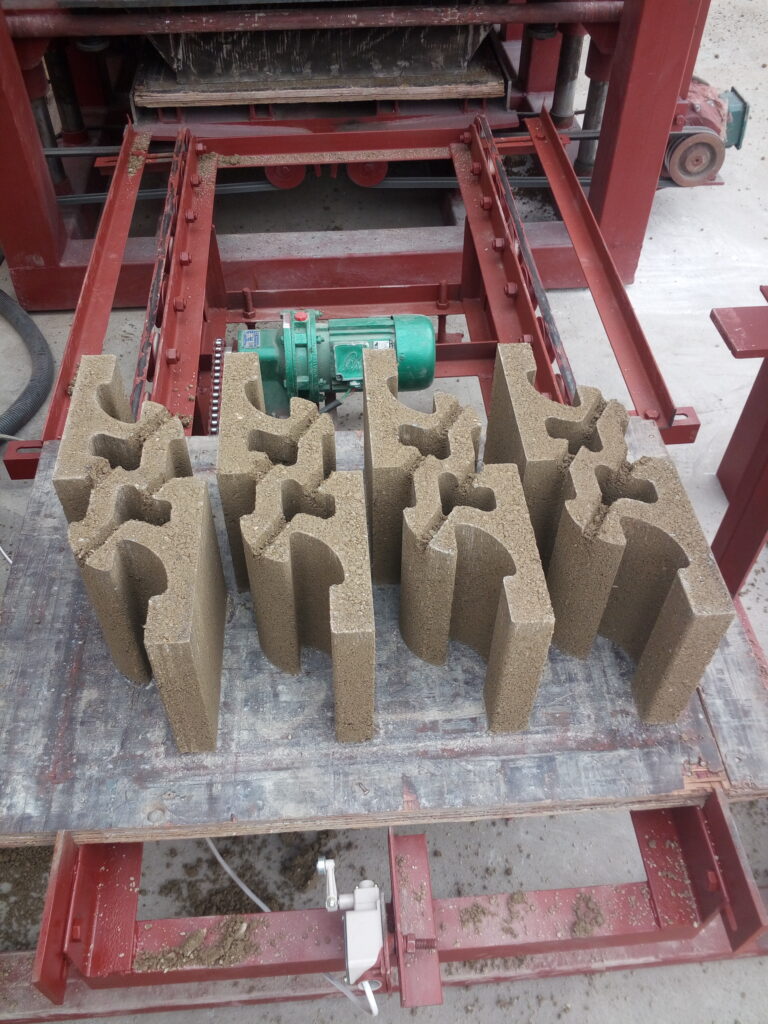
Machin Fabrikasyon Brik Konkrè
Entwodiksyon
Nan sektè materyèl konstriksyon an, machin pou fè brik siman reprezante yon teknoloji kle pou pwodiksyon modèn, kapab ogmante, ak efikas. Pou distribitè, konsesyonè, ak espesyalis apwovizyonman yo, yon konpreyansyon nuanse sou kategori ekipman sa a ale pi lwen pase definisyon debaz yo—li gen ladan prensip operasyonèl yo, aplikasyon sou mache a, ak avantaj estratejik ki pouse envèstisman kliyan yo. Kontrèman ak pwosesis tradisyonèl kui ajil yo, machin brik siman itilize konpakte idwolik ak vibrasyon pou transfòme agrega ak siman anvan yo an inite masonri egzak ak dirab.
Definisyon Teknoloji a: Prensip Fondamantal ak Mekanis
Yon machin pou fè brik beton se yon aparèy endistriyèl ki fèt pou fabrike inite solid, kre, antrebloke, ak pave prensipalman ak yon melanj de agrega (sab, gravye, wòch kraze), siman Pòtlann, ak dlo. Karakteristik prensipal li se itilizasyon konpakte mekanik—olye ke tèmik fou-fason—pou reyalize entegrite estriktirèl. Pwosesis la depann sou konsolidasyon idwolik oswa vibre yon melanj beton ki pa gen okenn afalman oswa ki gen ti afalman, ki swiv pa trete anbyan pou pèmèt idratasyon siman an.
- Prensip Konpaksyon Idwolik
- Nan kè anpil sistèm, gen yon prese idwolik. Yon motè elektrik fè yon ponp travay ki mete likid idwolik la anba presyon, e sa a aktive youn oswa plizyè silenn. Silenn sa yo pouse yon tèt konpakte ak yon fòs kontwole ki ekstrèmman fò (ki mezire an tòn oswa mega-Pascal) dirèkteman sou materyèl ki nan yon mòl. Presyon sa a diminye anpil espas vid ki genyen ant patikil yo, kreye yon matris dans ak kohèran kote pat siman an byen mare agrega yo. Kapasite pou kontwole ak kenbe presyon sa a avèk presizyon se kle pou jwenn yon dansite ak fòs ki konstan nan pwodwi a.
- Wòl Vibrasyon nan Konsolidasyon
- Souvan itilize ansanm ak presyon idwolik, vibrasyon frekans wo se yon eleman kle ki fè distenksyon ak lòt metòd pou fè brik. Vibratè ki monte sou tab moule oswa tèt transmèt enèji sinetik nan melanj beton an. Enèji sa a diminye tanporè friksyon entèn yo, sa ki pèmite materyèl grenn yo koule ak chita nan fòm konplike moule a, ansanm ak bòti baton santre pou blòk kre. Vibrasyon asire yon dansite inifòm nan tout pwodwi a, elimine vid epi pwodwi yon fini sifas lis, sa ki esansyèl pou kapasite chaj ak kalite estetik.
- Paradigm Geri an: Idratasyon Olye De Tire
- Diferans ki pi enpòtan ak teknoloji ajil kwit la se pwosesis gerizon an. Briyik konkrè yo vin fò atravè yon reyaksyon chimik yo rele idratasyon, kote siman reyaji avèk dlo pou fòme estrikti cristalin ki di. Sa fèt nan tanperati anbyen pandan plizyè jou. Machin nan pwodui briyik “vèt”, yo anpile epi kenbe yo imid anba kondisyon kontwole (souvan kouvri ak plastik oswa nan chanm gerizon) pou asire devlopman fòs konplè san gwo enèji ki nesesè pou fou yo.
Sistèm Achitekti ak Entegrasyon Eleman yo
Yon machin brik konkrè modèn se pa yon aparèy pou presyon ki pou kont li, men yon sistèm entegre. Achitekti li ka divize an plizyè sou-sistèm kle.
- Pouvwa ak Sistèm Aksyon
- Sistèm sa a bay fòs motè a. Anjeneral, li gen ladan yon motè elektrik ki gen yon gwo koupl, yon inite pouvwa idwolik (rezèvwa, ponp, valv, filtè), ak silenn aksyon. Konpleksite blòk valv la—ki souvan gen ladan valv pwopòsyonèl pou kontwòl lis—detèmine presizyon sik laprès la. Nan machin ki konsantre sou vibrasyon, sistèm nan gen ladan tou motè vibratè elektrik oswa idwolik ak kontwolè frekans ka ajiste.
- Mwayaj ak Asanble Zouti
- This is the product-defining subsystem. It consists of a hardened steel mold box that forms the external dimensions, a compaction head (upper mold), and, for hollow products, fixed or retractable core rods. These components are manufactured to exacting tolerances to prevent material leakage (flashing) and ensure easy release. The mold’s design directly dictates the brick’s shape, texture, and structural features (e.g., frog, grip patterns, interlocking keys).
- The Control and Automation Nexus
- Operational intelligence resides in a Programmable Logic Controller (PLC). This industrial computer receives signals from sensors (position, pressure, presence) and executes a pre-programmed logic sequence to control all machine functions: feeder movement, vibration activation, press stroke, and ejection. The Human-Machine Interface (HMI) touchscreen allows operators to input parameters, select product recipes, and monitor real-time diagnostics, making the machine adaptable and transparent in operation.
- Auxiliary Material Handling Systems
- To achieve continuous production, the core press is supported by peripheral equipment. This includes aggregate batchers, pan or twin-shaft mixers for homogeneous blending, conveyor belts for material transfer, and automated pallet circulation systems that move green bricks from the press to curing areas and return empty pallets. The degree of integration of these auxiliaries defines the line’s automation level.
Product Portfolio and Application Scope
The versatility of this machinery is a primary commercial driver. By changing mold sets and adjusting machine parameters, a single system can produce a diverse range of market-ready products.
- Structural Masonry Units
- Blòk Beton Kavo: The industry workhorse for wall construction, offering an optimal balance of strength, weight, and material economy. The machine must ensure perfect formation of the webs and shells around the cores.
- Blòk Beton Solid: Used for foundations, load-bearing piers, and applications requiring maximum compressive strength and density.
- Blòk Entèbloke: Designed for dry-stack or minimal-mortar construction, these require molds with extreme precision to ensure consistent locking geometry, enabling faster build times.
- Paving and Landscape Products
- Payè Konkrè For driveways, walkways, and patios. Produced at very high pressures for exceptional durability and freeze-thaw resistance. Machines can produce myriad shapes, from simple rectangles to complex interlocking patterns.
- Wòch bò wout ak bòdye: Specialized long, linear products that require specific mold designs and handling systems.
- Inite Miray Retansyon Often larger, sculpted blocks designed for gravity walls, requiring robust machine frames and high-pressure capabilities.
- Specialized and Engineered Products
- Blòk Lejè: Utilizing expanded clay or shale aggregates. The machine must be tuned to compact these softer aggregates without crushing them.
- Insulated Concrete Forms (ICFs): Complex blocks with built-in cavities for insulation.
- Architectural Screen Blocks: Decorative units with intricate perforations, showcasing the machine’s ability to handle delicate mold tooling.
Strategic Value Proposition for Stakeholders
For the target audience of distributors and their clients, concrete brick machinery offers a compelling set of advantages.
- Efisyans Ekonomik ak Operasyonèl
- The process eliminates the fuel cost of kiln firing, one of the largest expenses in clay brick production. With quick cycle times (often seconds per brick) and high levels of automation, the cost-per-unit is highly competitive. The ability to use locally sourced aggregates and industrial by-products like fly ash further reduces material costs and supports circular economy goals.
- Quality, Consistency, and Performance
- Machine-controlled production ensures every unit meets identical specifications for dimensions, density, and strength. This consistency is paramount for modern construction, allowing for predictable structural performance, easier bricklaying, and adherence to international standards (ASTM, EN, ISO). The resulting products offer high compressive strength, excellent fire resistance, and good acoustic insulation properties.
- Sustainability and Environmental Profile
- The technology supports sustainable construction through energy-efficient production (no firing), the potential for high recycled content in aggregates, and the use of supplementary cementitious materials like fly ash. Furthermore, concrete masonry buildings offer significant thermal mass, contributing to energy efficiency in operation.
Konklizyon
The concrete brick making machine is far more than a simple press; it is the engine of a highly efficient, adaptable, and modern construction materials plant. Its core principles of hydraulic/vibratory compaction and ambient curing represent a technologically and economically superior alternative to traditional fired methods for a vast range of applications. For the strategic distributor, success lies in conveying this machine’s role as a system—integrating mechanical force, electronic control, and material science to produce a diversified portfolio of high-performance building products. By articulating its operational logic, product versatility, and strong value proposition in terms of cost, quality, and sustainability, distributors empower their clients to make transformative investments. These investments not only build profitable businesses but also contribute to meeting the global need for resilient, affordable, and sustainable infrastructure.
Kesyon yo poze souvan (FAQ)
Q1: How does the strength of a machine-made concrete brick compare to a traditional fired clay brick?
A: High-quality concrete bricks produced on modern machinery routinely achieve compressive strengths that meet or exceed those of standard fired clay bricks. While clay bricks excel in certain properties like absorption, well-compacted concrete blocks offer superior consistency, dimensional accuracy, and can be engineered for very high strengths (over 20 MPa or 2900 psi) for specific structural applications. The performance is highly dependent on mix design and machine pressure.
Q2: What are the key infrastructure requirements for installing a concrete brick production line?
A: Major requirements include:
- Espas: A large, covered area for the production line, raw material storage, and curing yard.
- Pouvwa A stable, high-capacity three-phase electrical supply for motors, hydraulic pumps, and controls.
- Foundation: A heavy-duty, level concrete foundation to absorb machine vibrations and ensure alignment.
- Water Supply: A consistent source of clean water for mixing and curing.
- Material Storage: Organized space for aggregates, cement, and pallets.
Q3: Can these machines use recycled materials in the concrete mix?
A: Yes, this is a significant advantage. Properly processed recycled concrete aggregate (RCA), crushed glass (cullet), and post-industrial materials like fly ash can be successfully incorporated into the mix design. This requires careful grading and quality control to ensure the recycled content does not compromise strength or durability, but it offers substantial cost savings and environmental benefits.
Q4: What is the typical lifespan of a concrete brick making machine, and what drives maintenance costs?
A: With proper maintenance, the core structural frame of a quality machine can last 20+ years. The primary maintenance costs and wear are associated with:
- Mold Tooling: The highest wear item, requiring refurbishment or replacement after 1-3 million cycles depending on material abrasiveness.
- Konpozan Idwolik: Seals, hoses, and pumps require periodic replacement.
- Vibrators and Bearings: In vibration systems, these are subject to high-stress fatigue.
A proactive, scheduled maintenance program is far less costly than reactive repairs following a breakdown.
Q5: How quickly can a production line be reconfigured to make a different type of brick or block?
A: Reconfiguration time, or changeover, varies. For a simple mold change (e.g., from a solid block to a different sized solid block), a well-designed machine with quick-change clamps can be ready in under an hour. Switching to a radically different product (e.g., from standard block to thin pavers) may take several hours, as it involves changing multiple mold components, adjusting feeder settings, and recalibrating press parameters. This flexibility is a key selling point for markets requiring a diverse product mix.