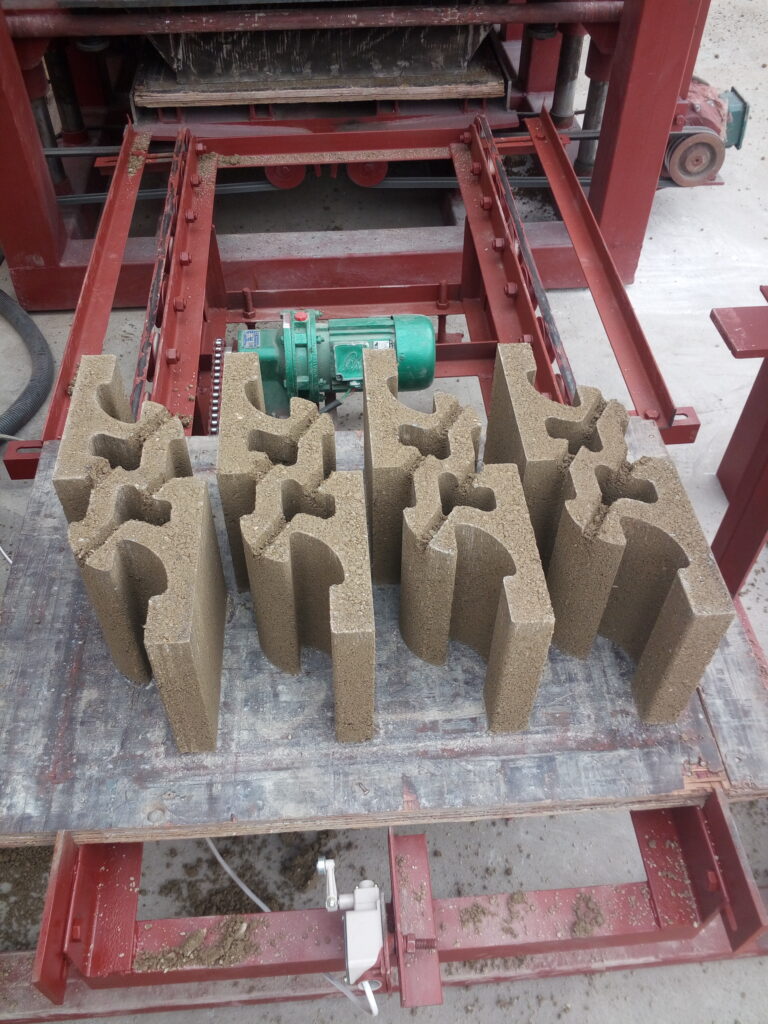
콘크리트 벽돌 제조 기계
소개
건설 자재 분야에서 콘크리트 벽돌 제조 기계는 현대적이고 확장 가능하며 효율적인 생산을 위한 핵심 기술을 대표합니다. 유통업체, 딜러, 조달 전문가에게 이 장비 범주에 대한 세심한 이해는 기본적인 정의를 훨씬 넘어서며, 고객 투자를 이끄는 운영 원리, 시장 응용 분야, 전략적 이점을 포함합니다. 전통적인 점토 소성 공정과 달리, 콘크리트 벽돌 기계는 유압 및 진동 압축을 활용하여 원자재와 시멘트를 정밀하고 내구성 있는 석조 단위로 변환합니다.
기술 정의: 핵심 원칙과 메커니즘
콘크리트 벽돌 제조기는 주로 골재(모래, 자갈, 쇄석), 포틀랜드 시멘트 및 물의 혼합물로부터 고체 벽돌, 중공 벽돌, 맞물림 벽돌 및 포장용 블록을 제조하도록 설계된 산업 장비입니다. 이 장치의 특징은 구조적 강도를 달성하기 위해 열 가마 소성 대신 기계적 압축을 사용한다는 점입니다. 공정은 유압 또는 진동 다짐을 통해 제로 슬럼프 또는 저슬럼프 콘크리트 혼합물을 압축한 후, 시멘트 수화를 위해 상온 양생을 거치는 방식으로 이루어집니다.
- 수압 압축 원리
- 많은 시스템의 핵심에는 유압 프레스가 있습니다. 전기 모터가 펌프를 구동하여 유압 유체에 압력을 가하고, 이 유체가 하나 이상의 실린더를 작동시킵니다. 이 실린더들은 압축 헤드를 엄청나고 제어 가능한 힘(톤 또는 메가파스칼 단위)으로 몰드 내의 재료에 직접 가합니다. 이 압력은 입자 사이의 공극을 크게 줄여 시멘트 페이스트가 골재를 효과적으로 결합하는 조밀하고 응집력 있는 매트릭스를 생성합니다. 이 압력을 정밀하게 제어하고 유지하는 능력은 일관된 제품 밀도와 강도를 달성하는 데 중요합니다.
- 진동이 다짐(Consolidation)에서의 역할
- Often used in conjunction with hydraulic pressure, high-frequency vibration is a key differentiator from other brick-making methods. Vibrators mounted on the mold table or head impart kinetic energy to the concrete mix. This energy momentarily reduces internal friction, allowing the granular material to flow and settle into the mold’s intricate contours, including around core rods for hollow blocks. Vibration ensures uniform density throughout the product, eliminating voids and producing a smooth surface finish, which is essential for load-bearing capacity and aesthetic quality.
- The Curing Paradigm: Hydration Over Firing
- The most significant distinction from fired clay technology is the curing process. Concrete bricks gain strength through a chemical reaction called hydration, where cement reacts with water to form hardened crystalline structures. This occurs at ambient temperatures over a period of days. The machine produces “green” bricks, which are then stacked and kept moist under controlled conditions (often covered with plastic sheeting or in curing chambers) to ensure full strength development without the massive energy input required for kilns.
System Architecture and Component Integration
A modern concrete brick machine is not a standalone press but an integrated system. Its architecture can be broken down into several key subsystems.
- The Power and Actuation System
- This system provides the motive force. It typically comprises a high-torque electric motor, a hydraulic power unit (reservoir, pump, valves, filters), and actuation cylinders. The sophistication of the valve block—often incorporating proportional valves for smooth control—determines the precision of the press cycle. In vibration-centric machines, the system also includes electric or hydraulic vibrator motors with adjustable frequency controllers.
- The Mold and Tooling Assembly
- This is the product-defining subsystem. It consists of a hardened steel mold box that forms the external dimensions, a compaction head (upper mold), and, for hollow products, fixed or retractable core rods. These components are manufactured to exacting tolerances to prevent material leakage (flashing) and ensure easy release. The mold’s design directly dictates the brick’s shape, texture, and structural features (e.g., frog, grip patterns, interlocking keys).
- The Control and Automation Nexus
- Operational intelligence resides in a Programmable Logic Controller (PLC). This industrial computer receives signals from sensors (position, pressure, presence) and executes a pre-programmed logic sequence to control all machine functions: feeder movement, vibration activation, press stroke, and ejection. The Human-Machine Interface (HMI) touchscreen allows operators to input parameters, select product recipes, and monitor real-time diagnostics, making the machine adaptable and transparent in operation.
- Auxiliary Material Handling Systems
- To achieve continuous production, the core press is supported by peripheral equipment. This includes aggregate batchers, pan or twin-shaft mixers for homogeneous blending, conveyor belts for material transfer, and automated pallet circulation systems that move green bricks from the press to curing areas and return empty pallets. The degree of integration of these auxiliaries defines the line’s automation level.
Product Portfolio and Application Scope
The versatility of this machinery is a primary commercial driver. By changing mold sets and adjusting machine parameters, a single system can produce a diverse range of market-ready products.
- Structural Masonry Units
- 홀로우 콘크리트 블록: The industry workhorse for wall construction, offering an optimal balance of strength, weight, and material economy. The machine must ensure perfect formation of the webs and shells around the cores.
- 솔리드 콘크리트 블록 Used for foundations, load-bearing piers, and applications requiring maximum compressive strength and density.
- 인터로킹 블록: Designed for dry-stack or minimal-mortar construction, these require molds with extreme precision to ensure consistent locking geometry, enabling faster build times.
- Paving and Landscape Products
- Concrete Pavers: For driveways, walkways, and patios. Produced at very high pressures for exceptional durability and freeze-thaw resistance. Machines can produce myriad shapes, from simple rectangles to complex interlocking patterns.
- 연석과 가장자리 마감 Specialized long, linear products that require specific mold designs and handling systems.
- Retaining Wall Units: Often larger, sculpted blocks designed for gravity walls, requiring robust machine frames and high-pressure capabilities.
- Specialized and Engineered Products
- 경량 블록: Utilizing expanded clay or shale aggregates. The machine must be tuned to compact these softer aggregates without crushing them.
- 단열 콘크리트 폼(ICFs) Complex blocks with built-in cavities for insulation.
- Architectural Screen Blocks: Decorative units with intricate perforations, showcasing the machine’s ability to handle delicate mold tooling.
Strategic Value Proposition for Stakeholders
For the target audience of distributors and their clients, concrete brick machinery offers a compelling set of advantages.
- Economic and Operational Efficiency
- The process eliminates the fuel cost of kiln firing, one of the largest expenses in clay brick production. With quick cycle times (often seconds per brick) and high levels of automation, the cost-per-unit is highly competitive. The ability to use locally sourced aggregates and industrial by-products like fly ash further reduces material costs and supports circular economy goals.
- Quality, Consistency, and Performance
- Machine-controlled production ensures every unit meets identical specifications for dimensions, density, and strength. This consistency is paramount for modern construction, allowing for predictable structural performance, easier bricklaying, and adherence to international standards (ASTM, EN, ISO). The resulting products offer high compressive strength, excellent fire resistance, and good acoustic insulation properties.
- Sustainability and Environmental Profile
- The technology supports sustainable construction through energy-efficient production (no firing), the potential for high recycled content in aggregates, and the use of supplementary cementitious materials like fly ash. Furthermore, concrete masonry buildings offer significant thermal mass, contributing to energy efficiency in operation.
결론
The concrete brick making machine is far more than a simple press; it is the engine of a highly efficient, adaptable, and modern construction materials plant. Its core principles of hydraulic/vibratory compaction and ambient curing represent a technologically and economically superior alternative to traditional fired methods for a vast range of applications. For the strategic distributor, success lies in conveying this machine’s role as a system—integrating mechanical force, electronic control, and material science to produce a diversified portfolio of high-performance building products. By articulating its operational logic, product versatility, and strong value proposition in terms of cost, quality, and sustainability, distributors empower their clients to make transformative investments. These investments not only build profitable businesses but also contribute to meeting the global need for resilient, affordable, and sustainable infrastructure.
자주 묻는 질문 (FAQ)
Q1: How does the strength of a machine-made concrete brick compare to a traditional fired clay brick?
A: High-quality concrete bricks produced on modern machinery routinely achieve compressive strengths that meet or exceed those of standard fired clay bricks. While clay bricks excel in certain properties like absorption, well-compacted concrete blocks offer superior consistency, dimensional accuracy, and can be engineered for very high strengths (over 20 MPa or 2900 psi) for specific structural applications. The performance is highly dependent on mix design and machine pressure.
Q2: What are the key infrastructure requirements for installing a concrete brick production line?
A: Major requirements include:
- 우주 A large, covered area for the production line, raw material storage, and curing yard.
- 힘 A stable, high-capacity three-phase electrical supply for motors, hydraulic pumps, and controls.
- 기반 A heavy-duty, level concrete foundation to absorb machine vibrations and ensure alignment.
- Water Supply: A consistent source of clean water for mixing and curing.
- Material Storage: Organized space for aggregates, cement, and pallets.
Q3: Can these machines use recycled materials in the concrete mix?
A: Yes, this is a significant advantage. Properly processed recycled concrete aggregate (RCA), crushed glass (cullet), and post-industrial materials like fly ash can be successfully incorporated into the mix design. This requires careful grading and quality control to ensure the recycled content does not compromise strength or durability, but it offers substantial cost savings and environmental benefits.
Q4: What is the typical lifespan of a concrete brick making machine, and what drives maintenance costs?
A: With proper maintenance, the core structural frame of a quality machine can last 20+ years. The primary maintenance costs and wear are associated with:
- Mold Tooling: The highest wear item, requiring refurbishment or replacement after 1-3 million cycles depending on material abrasiveness.
- 유압 구성 요소 Seals, hoses, and pumps require periodic replacement.
- Vibrators and Bearings: In vibration systems, these are subject to high-stress fatigue.
A proactive, scheduled maintenance program is far less costly than reactive repairs following a breakdown.
Q5: How quickly can a production line be reconfigured to make a different type of brick or block?
A: Reconfiguration time, or changeover, varies. For a simple mold change (e.g., from a solid block to a different sized solid block), a well-designed machine with quick-change clamps can be ready in under an hour. Switching to a radically different product (e.g., from standard block to thin pavers) may take several hours, as it involves changing multiple mold components, adjusting feeder settings, and recalibrating press parameters. This flexibility is a key selling point for markets requiring a diverse product mix.