Кірпіш өндірісі жабдықтарындағы автоматтандыру деңгейлеріне арналған стратегиялық нұсқаулық
Кіріспе
Кірпіш өндіру жабдықтарының ландшафтында автоматты және қолмен жұмыс істейтін машиналар арасындағы айырмашылық операциялық стильді қарапайым таңдаудан әлдеқайда асады; ол өндіріс құрылымының бүкіл бизнес-моделін, масштабтау мүмкіндіктерін және нарықтағы орнын анықтайды.
Спектрді анықтау: Адам күшімен жұмыс істейтін жүйелерден толық автономды жүйелерге дейін
Кірпіш машиналарын жіктеу автоматтандырудың үздіксіз үрдісі ретінде түсіну қажет, онда адамның қатысуы біртіндеп механикалық және электрондық жүйелермен ауыстырылады.
- Қолдан жасалған кірпіш машиналары: Адам еңбегі негізгі қозғаушы күш ретінде
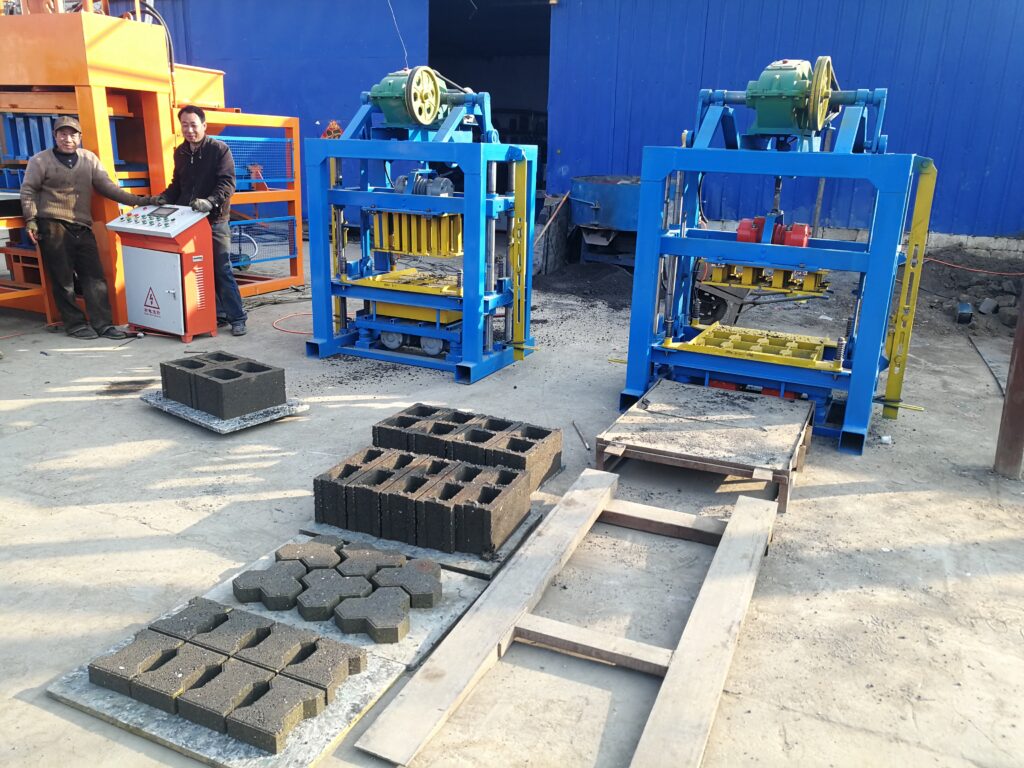
- Бұл негізінен механикалық құрылғылар болып табылады, олар жұмыстың әр кезеңінде толығымен адамның физикалық күшіне және басқаруына тәуелді. Оператор шикізатты қалыпқа қолмен жеткізуді, сығымдау күшін қолдану үшін рычаг немесе маховик механизмін іске қосуды, содан кейін дайын кірпішті қолмен шығарып, қатайту үшін орналастыруды жауапкершілік ретінде атқарады. Машинаның өзінде өз негізгі функциялары үшін тәуелсіз қуат көзі жоқ. Бүкіл процестің ритмі, сапасының тұрақтылығы және өнімділігі тікелей оператордың дағдысына, күшіне және шыдамдылығына байланысты.
- Жартылай автоматты кірпіш машиналары: Гибридтік өту нүктесі
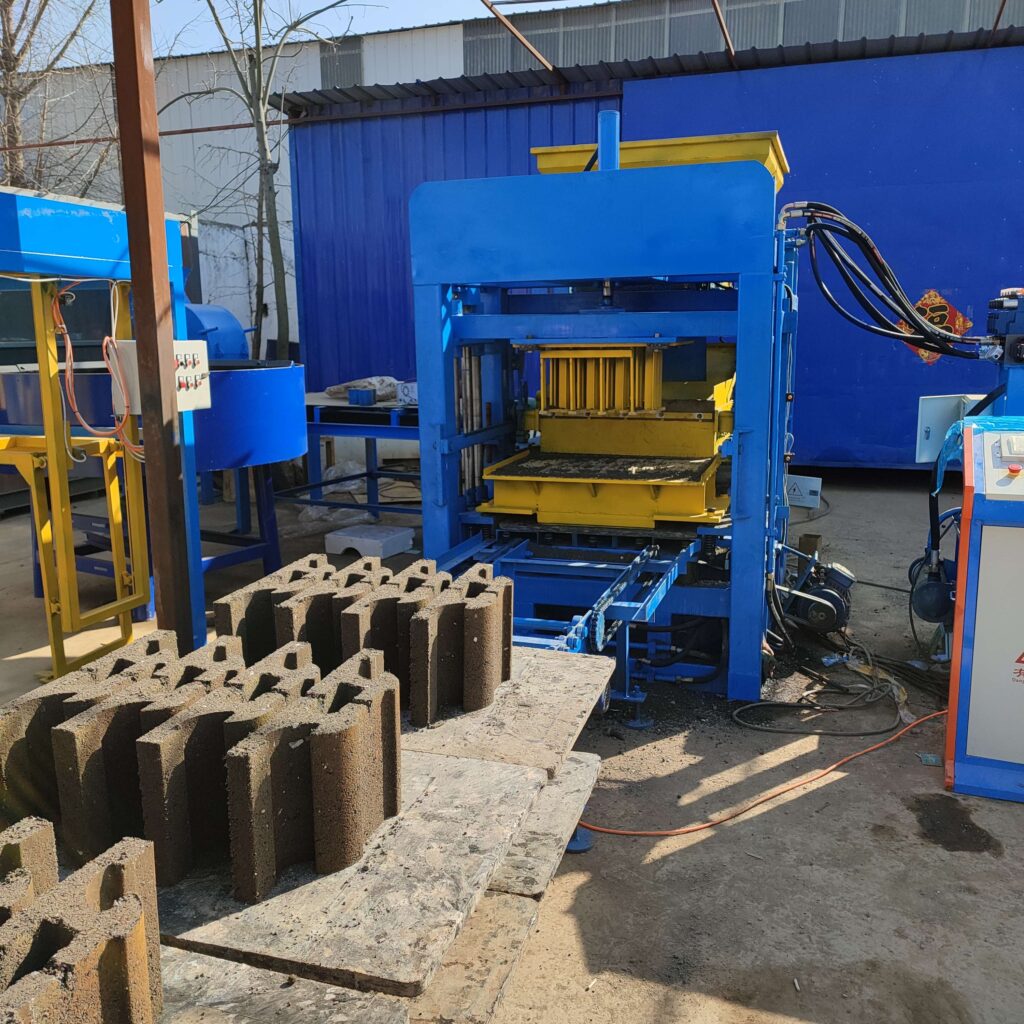
- Бұл санат механикаландырылған күшті циклдің ең қиын бөлігіне – тығыздауға – әдетте электр қозғалтқышы арқылы гидравликалық сорғыны немесе механикалық престі қозғай отырып енгізеді. Оператордың рөлі күш жұмсаудан процесс басқаруға ауысады. Олар машинаны (немесе кішкене бункерді) қолмен толтырады және жиі тығыздау циклін батырма немесе рычаг арқылы бастайды. Содан кейін машина престеу мен шығару ретін автоматты түрде орындайды. Оператор материалдарды өңдеу, паллета орналастыру (егер қолданылса) және кірпіштерді алу үшін маңызды болып қалады. Бұл деңгей физикалық жүктемені азайтып, толық автоматтандырумен салыстырғанда төмен кіру құнын сақтай отырып, теңгерімді ұсынады.
- Толық автоматты кірпіш машиналары: Біріктірілген жүйелі автоматтандыру
- Бұл толық өндірістік жүйелер, онда адамның араласуы тек қадағалау, бақылау және тұрақты техникалық қызмет көрсетумен шектеледі. Олар бірнеше автоматтандырылған ішкі жүйелерді біріктіреді:
- Автоматтандырылған материал беру:Үлкен жоғарыдағы бункерден конвейерлер немесе тамақтандырғыштар арқылы.
- Автоматтандырылған паллеттерді айналымы:Тұйық цикл жүйесі паллеттерді преске жылжытады, оларды орналастырады және жүктелген паллеттерді шығарады.
- Басқарылатын бағдарламалау:PLC барлық синхрондалған циклды – толтыру, басу, шығару және жинақтау процестерін басқарады, көбінесе бір оператор басқару панелінен бақылап отырады.
- Интеграцияланған Өнімді Қабылдау:Автоматтандырылған штабелерлер, роботтық қолдар немесе конвейер желілері шикі кірпішті қатайту аймақтарына жеткізеді.
- Оператордың рөлі машинаны басқарушы және процесті бақылаушы рөліне айналады.
- Бұл толық өндірістік жүйелер, онда адамның араласуы тек қадағалау, бақылау және тұрақты техникалық қызмет көрсетумен шектеледі. Олар бірнеше автоматтандырылған ішкі жүйелерді біріктіреді:
Салыстырмалы талдау: Көп өлшемді бағалау
Бұл жүйелер арасында таңдау бірнеше маңызды бизнес және операциялық параметрлер бойынша теңгерімді шешімдерді қажет етеді.
- Еңбек қажеттілігі және біліктілік профилі
- Нұсқаулық:Жұмыс көлемінің жоғарылығы. Мағыналы өнім алу үшін бірнеше біліктілігі шектеулі немесе жартылай білікті жұмысшыларды қажет етеді. Өнімділік бригада мөлшері мен шыдамдылығына тура пропорционалды.
- Жартылай автоматты:Физикалық еңбектің азаюы, бірақ оператордың тұрақты қатысуын талап етеді. Әрбір машинаға шикізат беру және өнімді өңдеу үшін 1-2 оператор қажет болуы мүмкін. Машинаны пайдаланудың негізгі дағдылары қажет.
- Толық автоматты:Еңбек шығынын айтарлықтай төмендету. Бір ғана білікті оператор бірнеше станокты немесе тұтас желіні бақылай алады. Қажетті дағдылар жиынтығы негізгі мехатроника, PLC интерфейсімен жұмыс істеу және алдын алу жөндеуге ауысады.
- Өндірістік қуаттылық және өнім шығарудың тұрақтылығы
- Нұсқаулық:Өте төмен және жоғары өзгермелі өнімділік (мысалы, әр машинаға 8 сағаттық ауысымда 200-500 кірпіш). Кірпіштің салмағы, тығыздығы және өлшемдерінің тұрақтылығы толығымен оператордың бірқалыпты әдісіне байланысты, бұл әдісті сақтау қиын.
- Жартылай автоматты:Орташа және тұрақты өнімділік (мысалы, 8 сағаттық ауысымда 800-2500 кірпіш). Машина сығымдау қысымы мен цикл уақытының біркелкілігін қамтамасыз етеді, бірақ қолмен беру кезіндегі өзгерістер өнімде белгілі бір айырмашылықтар тудыруы мүмкін.
- Толық автоматты:Жоғары және өте тұрақты өнімділік (мысалы, 8 сағаттық ауысымда 3000-15000 кірпіш және одан да көп). Автоматтандырылған, қайталанатын цикл әрбір өнім бірлігінің, партиядан партияға дерлік бірдей сапасын қамтамасыз етеді. Өнімділік болжамды және масштабталады.
- Бастапқы капитал салымдары және операциялық экономика
- Нұсқаулық:Өте төмен бастапқы капитал шығыны. Негізгі шығын – машинаның өзі. Алайда, қарқынды еңбек шығындары мен төмен өнімділікті ескеретін болсақ, бір кірпіштің құны жоғары.
- Жартылай автоматты: Moderate capital investment. Offers a favorable balance for small to medium enterprises (SMEs) by increasing output without a quantum leap in price. Operational costs include power and moderate labor.
- Толық автоматты: High initial capital investment. However, the cost-per-brick is typically the lowest in the long run due to high output, minimal labor costs, and optimized material use. Justification is based on volume and return on investment (ROI) calculations.
- Product Quality and Technological Sophistication
- Нұсқаулық: Quality is artisan-like and variable. Suitable for niche, non-standardized products but risky for contracts requiring strict adherence to engineering specifications.
- Жартылай автоматты: Good and reliable quality for standard bricks. Capable of meeting common commercial standards, as key parameters are machine-controlled.
- Толық автоматты: Excellent and precise quality. Essential for high-specification products like precision interlocking pavers, engineered masonry units, or where certification (e.g., ASTM, ISO) is required. Often includes data logging and quality monitoring features.
Strategic Selection Criteria for Client Advisory
Choosing the appropriate level of automation is a strategic decision. Key client assessment points include:
- Market Demand and Project Scale
- Is the client supplying a local, small-scale housing project (favoring semi-automatic) or bidding on large infrastructure contracts requiring guaranteed, high-volume supply (necessitating fully automatic)? The scale and consistency of demand are primary drivers.
- Capital Availability and Investment Horizon
- What is the client’s access to finance? A manual/semi-automatic machine can be a bootstrapping tool to generate capital for future automation. A fully automatic line requires significant upfront capital but a faster ROI if the market is ready.
- Local Labor Costs and Skill Availability
- In regions with low labor costs and limited technical training, semi-automatic machines may offer the most practical economic balance. In high-wage economies or areas with a skilled technician base, the labor-saving calculus strongly favors full automation.
- Business Growth Trajectory and Scalability
- A semi-automatic machine can be a starting point. Some systems are designed to be “automation-ready,” allowing for the later addition of pallet circulators and auto-feeders. Fully automatic lines are the end-state for scalable, industrial production.
The Hidden Considerations: Beyond the Purchase Price
- Infrastructure and Utility Requirements
- Нұсқаулық: Requires minimal infrastructure—a flat, sheltered space.
- Жартылай автоматты: Requires a reliable electrical connection of moderate power.
- Толық автоматты: Demands robust three-phase electrical supply, significant floor space for the production line and curing area, often compressed air, and a stable concrete foundation.
- Maintenance Complexity and Downtime Risk
- Нұсқаулық: Simple mechanical maintenance; low skill required. Downtime has limited financial impact.
- Жартылай автоматты: Requires basic hydraulic and electrical troubleshooting skills.
- Толық автоматты: Demands advanced preventative maintenance schedules and access to technical support for PLCs, sensors, and complex mechanical systems. Unplanned downtime is very costly, making service agreements crucial.
- Flexibility and Changeover Time
- Нұсқаулық: Highly flexible for custom one-off products; changeover is instant.
- Жартылай автоматты: Relatively easy mold changeovers; good for short production runs of different products.
- Толық автоматты: Changeovers (e.g., mold and program changes) can be more time-consuming. Economically justified for long runs of a single product type, though advanced lines offer faster changeover features.
Қорытынды
For the equipment distributor, the conversation about automation is a conversation about the client’s business future. There is no universally “best” option; only the most appropriate solution for a given set of commercial, logistical, and aspirational conditions. A manual machine is a tool for livelihood creation in a micro-enterprise. A semi-automatic machine is the engine for a stable, growing small business. A fully automatic line is the cornerstone of an industrial-scale operation competing on quality, cost, and volume. By comprehensively evaluating factors from local labor economics to client growth ambitions, distributors can provide invaluable strategic guidance. This consultative approach—positioning the right level of automation as a key to unlocking specific market opportunities—builds enduring partnerships and establishes the distributor as an essential architect of their clients’ success in the competitive construction materials industry.
Жиі қойылатын сұрақтар (ЖҚС)
Q1: Can a semi-automatic machine be upgraded to a fully automatic one later?
A: In some cases, yes, but with important caveats. The core press of a well-designed semi-automatic machine might be compatible with add-on modules like an automatic feeder, a pallet return system, and a stacker. However, this depends entirely on the original machine’s design (frame strength, control system compatibility, etc.). The upgrade cost can approach that of a new system, and performance may not match a purpose-built automatic line. It is crucial to discuss “automation readiness” with the manufacturer at the initial purchase if this is a potential future path.
Q2: Which automation level offers the fastest return on investment (ROI)?
A: The ROI is highly context-dependent. In a low-wage, small-market setting, a жартылай автоматты машина often offers the fastest and most reliable ROI due to its moderate cost and significant productivity jump over manual labor. In a high-volume, competitive market or a region with high labor costs, a толық автоматты машина, despite its high initial cost, can achieve a faster ROI due to its very low per-unit production cost and high output, provided it operates near capacity.
Q3: How significant is the difference in final product quality between a semi-automatic and a fully automatic machine?
A: While a well-operated semi-automatic machine can produce bricks that meet standard specifications, a fully automatic machine provides superior consistency. It eliminates human variability in feeding and cycle initiation, ensuring every brick is compressed with identical pressure and timing. This leads to tighter tolerances on dimensions, more uniform density and strength, and a more consistent visual appearance—critical for large, high-profile projects where batch uniformity is non-negotiable.
Q4: What are the typical power requirements for each tier?
A:
- Нұсқаулық: No external power required.
- Жартылай автоматты: Typically requires a standard single-phase or three-phase electrical connection, with power ratings commonly ranging from 5 HP to 15 HP for the motor driving the hydraulic system.
- Толық автоматты: Invariably requires a robust three-phase electrical supply. Total connected power can range from 25 HP to over 100 HP, accounting for the main press, conveyor motors, mixer, hydraulic power units, and control systems.
Q5: Is operator safety a differentiator between these types?
A: Absolutely. Қол машиналары carry high risks of repetitive strain injury and physical fatigue. Жартылай автоматты машиналар introduce moving parts and hydraulic pressure; operators must keep hands clear during the auto-cycle, requiring basic safety training. Fully automatic machines pose the highest inherent mechanical risk due to multiple synchronized moving parts but are equipped with comprehensive safety features like guarded zones, light curtains, emergency stop circuits, and lock-out/tag-out procedures, making the overall environment safer when protocols are followed. The risk shifts from physical strain to one of managing complex machinery.