
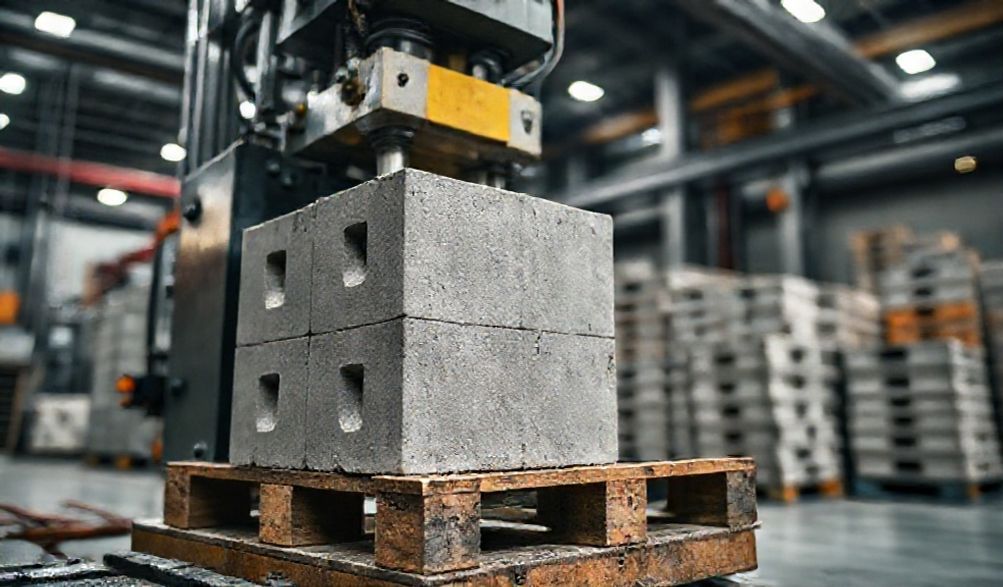
콘크리트 시멘트 블록 벽돌 제조 기계의 궁극적인 가이드 (2026)
소개
글로벌 건설 산업은 저렴하고 내구성 있으며 지속 가능한 건축 자재에 대한 끊임없이 증가하는 수요에 힘입어 끊임없이 성장하는 엔진과 같습니다. 이 거대한 수요를 충족하는 핵심에는 중요한 기술이 자리 잡고 있습니다:콘크리트 시멘트 블록 벽돌 제조 기계이 장비는 단순하고 풍부한 원자재를 우리의 집, 사무실, 그리고 사회 기반 시설의 기본 구성 요소로 변환합니다.
이 확실한 가이드는 기업가, 건설 사업주, 프로젝트 매니저, 토목 기사를 위해 제작되었습니다. 첫 장비에 투자하고자 하든, 생산 규모를 확장하고자 하든, 아니면 현대식 석공 기술의 배경을 이해하고자 하든, 이 자료는 전문가의 포괄적인 개요를 제공합니다. 우리는 산업 사양, 운영상의 모범 사례, 실제 경제적 고려 사항을 바탕으로 장비를 분석하여, 여러분이 정보에 기반한 결정을 내릴 수 있도록 도울 것입니다.
이 가이드에서는 다음을 배우게 됩니다:
* 기계의 핵심 유형과 이상적인 적용 분야.
품질 좋은 기계와 부실한 기계를 구분하는 핵심 특징.
* 생산 과정에 대한 단계별 살펴보기
특정 비즈니스 목표에 가장 적합한 기계를 선택하기 위한 실용적인 프레임워크.
* 투자 보호를 위한 필수 운영 및 유지 관리 인사이트
벽돌 제조 기계 이해하기: 핵심 개념과 응용 분야
사양과 가격을 살펴보기 전에, 이 장비가 무엇을 하는지 그리고 왜 모든 규모의 건설 프로젝트에 혁신적인 변화를 가져오는지 이해하는 것이 중요합니다.
콘크리트 시멘트 블록 벽돌 제조 기계란 무엇인가요?
본질적으로,콘크리트 시멘트 블록 벽돌 제조 기계전문 산업용 장비로, 주로 시멘트, 골재(쇄석 등), 모래, 물을 정밀하게 혼합한 후 고압으로 성형 및 다짐하여 균일한 형태의 건축 블록을 자동화 및 표준화 방식으로 생산하도록 설계되었습니다.
이 기계의 역할은 매우 중요합니다. 이는 일관되지 않고 노동 집약적인 수작업 방식을 대체하며, 다음과 같은 것을 보장하는 프로세스를 제공합니다:
* 효율성시간당 생산량이 극적으로 증가했습니다.
* 일관성모든 블록은 동일한 크기와 밀도를 가지고 있습니다.
* 확장성:생산은 프로젝트 수요에 정확히 맞춰 조정될 수 있습니다.
* 강점제어된 압축은 신뢰할 수 있고 설계된 압축 강도를 가진 블록을 생성합니다.
주요 응용 분야 및 생산물
이 기계의 가장 큰 장점 중 하나는 그 다용도성입니다. 단순히 금형만 교체하면, 하나의 기계로 다양한 건설 분야에 필요한 제품들을 생산할 수 있습니다.
- 구조적 블록
- 솔리드 블록 & 홀로우 블록:주거 및 상업용 건물의 벽체 구조의 핵심입니다.
- 경량 블록: Made with expanded clay or shale for improved insulation.
- Paving & Landscaping Products:
- 포장석 및 인터록킹 브릭:차도, 산책로, 테라스용.
- Curb Stones & Edgers: For roadways and landscape definition.
- 특수 모양:
- Chimney Blocks, Ventilation Blocks, and Decorative Facade Elements.
This means your investment can serve multiple markets—from building a housing development to supplying materials for a municipal park renovation.
Types of Brick Making Machines: Choosing the Right Technology
The market offers a spectrum of machines, categorized by their level of automation and mobility. Your choice here is the most significant factor determining your production capacity, labor needs, and initial investment.
수동 벽돌 제조 기계
- 설명: These are simple, lever-operated or hand-pressed machines with no electrical components. Filling the mold, compacting, and ejecting the block are all done by hand.
- 장점:
- Very low initial cost and minimal maintenance.
- No electricity required, ideal for remote sites.
- 간단하고 이해하기 쉬우며 조작도 쉽습니다.
- 단점:
- Extremely labor-intensive and slow (low output).
- Product consistency depends heavily on the operator’s skill.
- 상업적 규모 생산에는 적합하지 않습니다.
- 이상적인 대상: Very small-scale projects, personal use, NGOs in low-infrastructure areas, or as a starter unit for a micro-business testing the market.
반자동 벽돌 제조 기계
- 설명: These machines strike a balance. Key processes like compaction (via vibration or hydraulic pressure) are mechanized, but tasks like feeding raw material and removing finished blocks are often manual. They typically use a single motor.
- 장점:
- 수동 기계보다 훨씬 높고 일관된 출력.
- Moderate investment cost.
- Good product quality due to mechanical compaction.
- 단점:
- Still requires a steady labor crew for operation.
- Output is limited by the speed of manual handling stages.
- 이상적인 대상: Small to medium-sized businesses, local block supply yards, and contractors who need a dedicated on-site supply for projects.
완전 자동 벽돌 제작 기계
- 설명: These are complete production lines. They integrate automatic material feeding, mixing, molding, compaction, block transfer, curing, and stacking. Operation is managed via a Programmable Logic Controller (PLC) panel.
- 장점:
- Very high, consistent output with minimal manual labor.
- Exceptional product uniformity and quality control.
- Dramatically lower labor costs per block produced.
- 단점:
- 높은 자본 투자.
- Requires skilled technicians for maintenance and troubleshooting.
- Needs a stable power supply (often 3-phase) and more space.
- 이상적인 대상: Large-scale block manufacturing plants, industrial suppliers, and major construction firms with continuous, high-volume demand.
고정형 대 이동식 블록 제작 기계
- 고정식 발전소: These are fixed installations designed for maximum output in a dedicated location. They are the core of large block yards and supply businesses.
- 모바일 머신: Mounted on a trailer, these units can be towed directly to a construction site. They produce blocks on-location, eliminating transport costs for the finished product. They are typically semi-automatic and perfect for large, remote infrastructure projects.
Critical Features and Components of a Quality Machine
Beyond automation level, the engineering of key components dictates performance, product quality, and machine lifespan.
The Heart of the Machine: Hydraulic System vs. Vibration System
The compaction method is fundamental.
* 진동 시스템 Uses high-frequency vibrators to settle the concrete mix in the mold. Excellent for producing hollow blocks and lighter pavers. Generally more energy-efficient for certain products.
* 유압 시스템: Uses immense hydraulic pressure to compress the mix. Superior for producing high-density, high-strength solid blocks, paving stones, and curbs. Offers more consistent pressure control, leading to uniform strength.
The Verdict: For heavy-duty, high-strength products, hydraulic is often preferred. For standard hollow blocks, a robust vibration system is common. Many high-end machines combine both for optimal results.
Mold and Pallet Systems
The mold is the literal shape of your business.
* 재료: Molds must be made from high-grade, hardened steel to withstand constant abrasion and pressure.
* 정밀도 A poorly machined mold leads to blocks that are difficult to lay and have poor aesthetics.
* Interchangeability: The ability to quickly swap molds to produce different products is a key feature for business flexibility. Check the mold-changing mechanism’s ease of use.
Control Systems: From Manual Levers to PLC Panels
- 매뉴얼: Simple levers and switches. Prone to operator variance.
- Electro-Mechanical: Relays and timers for basic automation.
- PLC (프로그래머블 로직 컨트롤러): The brain of a fully automatic line. Allows for precise control over every parameter (pressure, vibration time, cycle time), stores recipes for different products, and provides diagnostic information. This is essential for top-tier consistency and efficiency.
Production Capacity and Cycle Time
Don’t just look at the “blocks per hour” claim in a brochure. Understand the 사이클 타임—the time to produce one pallet of blocks—and what block type that claim is based on.
* A machine might produce 1000 solid blocks/hour but only 600 complex interlocking pavers/hour.
* Real-world output is affected by raw material quality, operator speed (for semi-auto), and maintenance.
The Complete Production Process: From Raw Material to Finished Block
Understanding the full cycle highlights where quality is built into the product.
Raw Material Preparation: Mix Design Ratios
The machine can only work with what it’s given. A consistent, correct mix is non-negotiable.
* A typical mix might be 1 part cement, 3 parts sand, 5 parts aggregate (by volume), with just enough water for workability.
* Using clean, well-graded aggregates and consistent cement quality is critical. The water-cement ratio directly impacts final strength; too much water weakens the block dramatically.
The Manufacturing Cycle Step-by-Step
- 급식 Raw materials are loaded into the hopper (manually or via conveyor).
- 믹싱 Materials are blended into a homogeneous concrete mix (in a pan mixer or planetary mixer).
- 성형/압축: The mix is fed into the mold and compacted under vibration or hydraulic pressure.
- 이젝션 & 큐어링: The green (un-cured) block is ejected onto a pallet and transferred to a curing area.
- Stacking/Packaging: After sufficient curing, blocks are stacked for storage or transport.
Curing Methods for Optimal Strength
Curing is the chemical process where cement hydrates and gains strength. Proper curing is not optional.
* Water Curing: Blocks are sprayed with water and kept under damp covers for 7-14 days. Low-cost but space-intensive.
* Steam Curing: Blocks are placed in a curing chamber and exposed to steam heat (60-80°C) for 8-24 hours. This accelerates strength gain, allowing blocks to be sold or used in just 1-2 days. Standard for high-output plants.
* Chemical Curing (Sealing): Membranes or sprays are used to retain moisture within the blocks.
How to Select the Best Machinery for Your Business
This is where research turns into a strategic investment.
Assessing Your Production Needs and Budget
Ask these questions:
* What is my current and projected daily block requirement?
* What product types (solid, hollow, paver) will I sell the most?
* What is my total available investment (machine, setup, working capital)?
* What is my local power and water infrastructure?
Key Supplier Selection Criteria (Emphasizing E-E-A-T)
Your supplier is a long-term partner. Evaluate them rigorously:
* 경험 How long have they been manufacturing? Can they provide a list of installed machines in your region or similar markets?
* Expertise & Authoritativeness: Do they provide detailed technical drawings and performance data? Are machines certified (CE, ISO)? Do their engineers understand local material conditions?
* 신뢰성: 이것은 매우 중요합니다. Insist on verifiable customer testimonials and contact references. What is the warranty period and what does it cover? Is there a clear after-sales service and spare parts policy? Our strongest advice: Physically visit a working plant using their machine or, at a minimum, demand real-time video proof of a machine in operation at their factory.
총 소유 비용 분석
The purchase price is just the entry ticket. Factor in:
* Installation & Commissioning fees.
* Operator and technician training.
* Energy consumption (power of motors).
* Routine maintenance costs (oil, filters).
* Cost and lead time for spare parts and wear items (mold liners, pallets).
Operational Best Practices and Maintenance
Protect your investment with disciplined operation.
Essential Safety Protocols for Operators
- Mandatory use of safety glasses, gloves, steel-toe boots, and hearing protection.
- Never service or clear jams while the machine is powered on (Lock-Out/Tag-Out procedures).
- Keep the work area clean and free of slurry buildup.
Routine Maintenance Checklist
- Daily: Clean the machine thoroughly, check hydraulic oil levels, inspect molds for damage, tighten any loose bolts.
- Weekly: Grease all moving joints, check vibrator mounts, inspect electrical connections.
- Monthly: Change hydraulic filters as recommended, perform a full system pressure check, calibrate sensors on automatic machines.
Troubleshooting Common Issues
- Blocks Breaking: Often caused by incorrect mix (too dry/too wet), insufficient compaction pressure, or improper handling during green state.
- Poor Surface Finish: Worn-out mold liners, dirty molds, or incorrect vibration time.
- Machine Jams: Foreign objects in the mix, overfilling the hopper, or misaligned pallets.
FAQ: Expert Answers on Brick Making Machinery
Q1: What is the average cost range for a concrete block making machine?
A: Prices vary enormously based on automation and capacity. Manual machines start around $2,000 – $5,000. Semi-automatic machines range from $15,000 – $50,000. Fully automatic production lines begin around $70,000 and can exceed $300,000 for large, high-capacity systems with curing racks and handling equipment.
Q2: What is the typical compressive strength of blocks produced by these machines?
A: Strength is primarily a function of mix design and compaction pressure. Standard non-load-bearing blocks may start around 3.5 MPa. Load-bearing structural blocks typically range from 7 MPa to 15 MPa or higher. High-pressure hydraulic machines can produce paving stones exceeding 50 MPa.
Q3: Can I produce different block sizes and shapes with one machine?
A: Absolutely. This is a key advantage. Machines are designed to work with interchangeable molds. The cost and ease of changeover vary; it’s simpler and faster on a semi-automatic machine than on a complex fully automatic line, where a mold change might require more recalibration.
Q4: How much space and what utilities are required to set up a block yard?
A: You need space for: 1) the machine and mixing area, 2) curing area (the largest section), 3) raw material storage, and 4) finished product storage. A small yard might need 5,000 sq ft, while a large plant requires acres. Utilities typically include a robust 3-phase electrical connection and a reliable water source.
Q5: What is the expected return on investment (ROI) for a brick making business?
A: ROI is highly location-specific. It depends on your local market price for blocks, your production efficiency, and your operating costs. As a framework, calculate: (Daily Output x Block Selling Price) – (Daily Operating Costs). A well-run semi-automatic plant in a growing market can often see a full ROI in 12-24 months.
결론
Investing in 콘크리트 시멘트 블록 벽돌 제조 기계 is a strategic decision that hinges on aligning technology with your business ambition. The journey from a manual start-up to a fully automated plant is a path of scaling efficiency and quality. Remember, the core tenets are: match the machine type to your realistic production scale, prioritize engineering quality and supplier reputation over the lowest upfront price, and fully understand the production cycle from raw material to cured block.
This machinery is more than a tool; it’s a long-term investment in the quality of construction and the growth of your enterprise. Partnering with a knowledgeable, trustworthy supplier and investing in proper training for your team are the final, crucial steps to ensuring this investment pays dividends for years to come.
Call to Action: Begin your selection process with thorough research. Create a detailed project requirement sheet. Contact multiple reputable suppliers, request comprehensive quotations with full technical specifications, and—most importantly—ask for and follow up on customer references from projects similar to your own.
<