
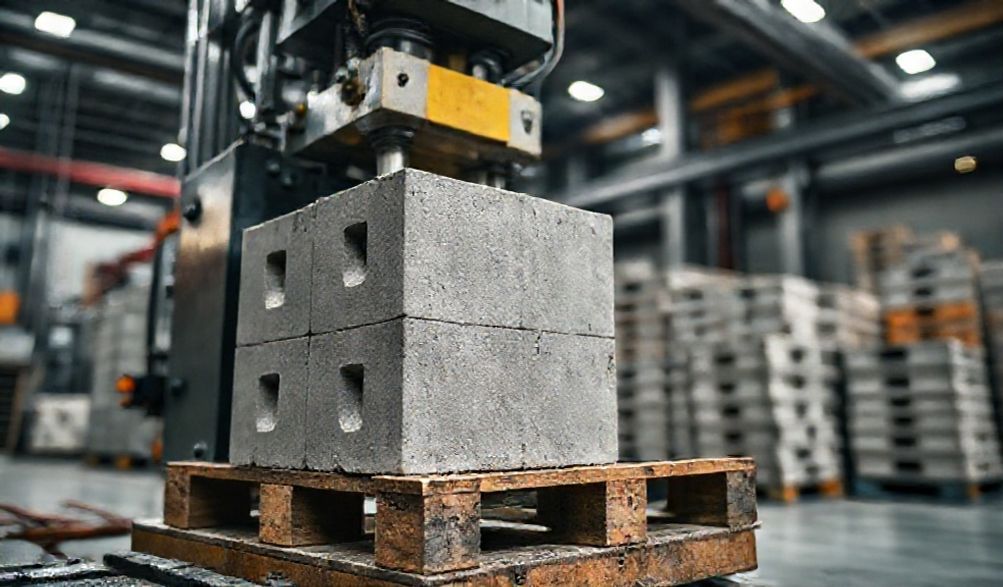
Полное руководство по оборудованию для производства бетонных цементных блоков и кирпичей (2026)
Введение
Глобальная строительная отрасль является неумолимым двигателем роста, движимым постоянно растущей потребностью в доступных, долговечных и экологичных строительных материалах. В самом центре удовлетворения этого огромного спроса находится критически важная технология:Бетонное оборудование для производства цементных блоков и кирпичейЭто оборудование превращает простые и доступные сырьевые материалы в основные компоненты наших домов, офисов и инфраструктуры.
Это руководство создано для предпринимателей, владельцев строительного бизнеса, руководителей проектов и инженеров-строителей. Независимо от того, планируете ли вы инвестировать в свою первую машину, наращивать производственные мощности или просто хотите понять технологию современной каменной кладки, этот ресурс предлагает всесторонний экспертный обзор. Мы проанализируем оборудование на основе отраслевых стандартов, лучших практик эксплуатации и реальных экономических соображений, чтобы вы могли принять взвешенное решение.
В этом руководстве вы узнаете:
* Основные типы машин и их оптимальные области применения.
* Ключевые особенности, которые отличают качественный станок от ненадежного.
* Пошаговый обзор производственного процесса.
* Практическая структура для выбора оптимального оборудования под конкретные бизнес-задачи.
* Важные операционные и технические рекомендации для защиты ваших инвестиций.
Понимание оборудования для производства кирпича: основные концепции и применение
Прежде чем перейти к техническим характеристикам и ценам, важно понять, что делает эта техника и почему она так революционна для строительных проектов любого масштаба.
Что такое оборудование для производства бетонных цементных блоков и кирпичей?
По сути,Бетонное оборудование для производства цементных блоков и кирпичейЭто специализированное промышленное оборудование предназначено для автоматизации и стандартизации производства строительных блоков. Оно достигает этого за счёт точного смешивания сырья — в основном цемента, заполнителей (таких как щебень), песка и воды — с последующим формованием и уплотнением этой смеси под высоким давлением в однородные формы.
Роль этого оборудования является ключевой. Оно заменяет нестабильные, трудоемкие ручные методы процессом, который гарантирует:
* Эффективность:Значительно выше производительность в час.
* Последовательность:Каждый блок имеет одинаковые размеры и плотность.
* Масштабируемость:Производство может быть точно согласовано с требованиями проекта.
* Сила:Контролируемое сжатие создает блоки с надежной, рассчитанной прочностью на сжатие.
Ключевые области применения и выпускаемая продукция
Универсальность этого оборудования является одним из его главных преимуществ. Просто меняя форму, одна машина способна производить широкий спектр продукции для различных строительных сегментов.
- Структурные блоки:
- Сплошные и пустотелые блоки:Основа конструкции стен для жилых и коммерческих зданий.
- Легковесные блоки:Изготовлено из керамзита или сланца для улучшенной теплоизоляции.
- Paving & Landscaping Products:
- Брусчатка и тротуарная плитка:Для подъездных путей, пешеходных дорожек и патио.
- Curb Stones & Edgers: For roadways and landscape definition.
- Специальные формы:
- Chimney Blocks, Ventilation Blocks, and Decorative Facade Elements.
This means your investment can serve multiple markets—from building a housing development to supplying materials for a municipal park renovation.
Types of Brick Making Machines: Choosing the Right Technology
The market offers a spectrum of machines, categorized by their level of automation and mobility. Your choice here is the most significant factor determining your production capacity, labor needs, and initial investment.
Ручные станки для производства кирпича
- Описание: These are simple, lever-operated or hand-pressed machines with no electrical components. Filling the mold, compacting, and ejecting the block are all done by hand.
- Плюсы:
- Very low initial cost and minimal maintenance.
- Не требует электричества, идеально для удаленных объектов.
- Просто понять и легко управлять.
- Минусы:
- Extremely labor-intensive and slow (low output).
- Product consistency depends heavily on the operator’s skill.
- Not suitable for commercial-scale production.
- Идеально подходит для: Very small-scale projects, personal use, NGOs in low-infrastructure areas, or as a starter unit for a micro-business testing the market.
Полуавтоматические машины для производства кирпича
- Описание: These machines strike a balance. Key processes like compaction (via vibration or hydraulic pressure) are mechanized, but tasks like feeding raw material and removing finished blocks are often manual. They typically use a single motor.
- Плюсы:
- Значительно более высокая и стабильная производительность по сравнению с ручными машинами.
- Moderate investment cost.
- Good product quality due to mechanical compaction.
- Минусы:
- Still requires a steady labor crew for operation.
- Output is limited by the speed of manual handling stages.
- Идеально подходит для: Small to medium-sized businesses, local block supply yards, and contractors who need a dedicated on-site supply for projects.
Полностью автоматические машины для производства кирпича
- Описание: These are complete production lines. They integrate automatic material feeding, mixing, molding, compaction, block transfer, curing, and stacking. Operation is managed via a Programmable Logic Controller (PLC) panel.
- Плюсы:
- Very high, consistent output with minimal manual labor.
- Exceptional product uniformity and quality control.
- Dramatically lower labor costs per block produced.
- Минусы:
- Высокие капиталовложения.
- Requires skilled technicians for maintenance and troubleshooting.
- Needs a stable power supply (often 3-phase) and more space.
- Идеально подходит для: Large-scale block manufacturing plants, industrial suppliers, and major construction firms with continuous, high-volume demand.
Стационарные и мобильные станки для изготовления блоков
- Стационарные установки: These are fixed installations designed for maximum output in a dedicated location. They are the core of large block yards and supply businesses.
- Мобильные машины: Mounted on a trailer, these units can be towed directly to a construction site. They produce blocks on-location, eliminating transport costs for the finished product. They are typically semi-automatic and perfect for large, remote infrastructure projects.
Critical Features and Components of a Quality Machine
Beyond automation level, the engineering of key components dictates performance, product quality, and machine lifespan.
The Heart of the Machine: Hydraulic System vs. Vibration System
The compaction method is fundamental.
* Вибросистема: Uses high-frequency vibrators to settle the concrete mix in the mold. Excellent for producing hollow blocks and lighter pavers. Generally more energy-efficient for certain products.
* Гидравлическая система: Uses immense hydraulic pressure to compress the mix. Superior for producing high-density, high-strength solid blocks, paving stones, and curbs. Offers more consistent pressure control, leading to uniform strength.
The Verdict: For heavy-duty, high-strength products, hydraulic is often preferred. For standard hollow blocks, a robust vibration system is common. Many high-end machines combine both for optimal results.
Mold and Pallet Systems
The mold is the literal shape of your business.
* Материал: Molds must be made from high-grade, hardened steel to withstand constant abrasion and pressure.
* Точность: A poorly machined mold leads to blocks that are difficult to lay and have poor aesthetics.
* Interchangeability: The ability to quickly swap molds to produce different products is a key feature for business flexibility. Check the mold-changing mechanism’s ease of use.
Control Systems: From Manual Levers to PLC Panels
- Инструкция: Simple levers and switches. Prone to operator variance.
- Electro-Mechanical: Relays and timers for basic automation.
- ПЛК (Программируемый логический контроллер): The brain of a fully automatic line. Allows for precise control over every parameter (pressure, vibration time, cycle time), stores recipes for different products, and provides diagnostic information. This is essential for top-tier consistency and efficiency.
Production Capacity and Cycle Time
Don’t just look at the “blocks per hour” claim in a brochure. Understand the время цикла—the time to produce one pallet of blocks—and what block type that claim is based on.
* A machine might produce 1000 solid blocks/hour but only 600 complex interlocking pavers/hour.
* Real-world output is affected by raw material quality, operator speed (for semi-auto), and maintenance.
The Complete Production Process: From Raw Material to Finished Block
Understanding the full cycle highlights where quality is built into the product.
Raw Material Preparation: Mix Design Ratios
The machine can only work with what it’s given. A consistent, correct mix is non-negotiable.
* A typical mix might be 1 part cement, 3 parts sand, 5 parts aggregate (by volume), with just enough water for workability.
* Using clean, well-graded aggregates and consistent cement quality is critical. The water-cement ratio directly impacts final strength; too much water weakens the block dramatically.
The Manufacturing Cycle Step-by-Step
- Кормление: Raw materials are loaded into the hopper (manually or via conveyor).
- Смешивание: Materials are blended into a homogeneous concrete mix (in a pan mixer or planetary mixer).
- Molding/Compacting: The mix is fed into the mold and compacted under vibration or hydraulic pressure.
- Выброс и отверждение: The green (un-cured) block is ejected onto a pallet and transferred to a curing area.
- Stacking/Packaging: After sufficient curing, blocks are stacked for storage or transport.
Curing Methods for Optimal Strength
Curing is the chemical process where cement hydrates and gains strength. Proper curing is not optional.
* Water Curing: Blocks are sprayed with water and kept under damp covers for 7-14 days. Low-cost but space-intensive.
* Steam Curing: Blocks are placed in a curing chamber and exposed to steam heat (60-80°C) for 8-24 hours. This accelerates strength gain, allowing blocks to be sold or used in just 1-2 days. Standard for high-output plants.
* Chemical Curing (Sealing): Membranes or sprays are used to retain moisture within the blocks.
How to Select the Best Machinery for Your Business
This is where research turns into a strategic investment.
Оценка ваших производственных потребностей и бюджета
Ask these questions:
* What is my current and projected daily block requirement?
* What product types (solid, hollow, paver) will I sell the most?
* What is my total available investment (machine, setup, working capital)?
* What is my local power and water infrastructure?
Key Supplier Selection Criteria (Emphasizing E-E-A-T)
Your supplier is a long-term partner. Evaluate them rigorously:
* Опыт: How long have they been manufacturing? Can they provide a list of installed machines in your region or similar markets?
* Expertise & Authoritativeness: Do they provide detailed technical drawings and performance data? Are machines certified (CE, ISO)? Do their engineers understand local material conditions?
* Доверие: Это критически важно. Insist on verifiable customer testimonials and contact references. What is the warranty period and what does it cover? Is there a clear after-sales service and spare parts policy? Our strongest advice: Physically visit a working plant using their machine or, at a minimum, demand real-time video proof of a machine in operation at their factory.
Анализ совокупной стоимости владения
The purchase price is just the entry ticket. Factor in:
* Installation & Commissioning fees.
* Operator and technician training.
* Energy consumption (power of motors).
* Routine maintenance costs (oil, filters).
* Cost and lead time for spare parts and wear items (mold liners, pallets).
Operational Best Practices and Maintenance
Protect your investment with disciplined operation.
Essential Safety Protocols for Operators
- Mandatory use of safety glasses, gloves, steel-toe boots, and hearing protection.
- Never service or clear jams while the machine is powered on (Lock-Out/Tag-Out procedures).
- Keep the work area clean and free of slurry buildup.
Routine Maintenance Checklist
- Ежедневно: Clean the machine thoroughly, check hydraulic oil levels, inspect molds for damage, tighten any loose bolts.
- Weekly: Grease all moving joints, check vibrator mounts, inspect electrical connections.
- Monthly: Change hydraulic filters as recommended, perform a full system pressure check, calibrate sensors on automatic machines.
Устранение распространённых проблем
- Blocks Breaking: Often caused by incorrect mix (too dry/too wet), insufficient compaction pressure, or improper handling during green state.
- Poor Surface Finish: Worn-out mold liners, dirty molds, or incorrect vibration time.
- Machine Jams: Foreign objects in the mix, overfilling the hopper, or misaligned pallets.
FAQ: Expert Answers on Brick Making Machinery
Q1: What is the average cost range for a concrete block making machine?
А: Prices vary enormously based on automation and capacity. Manual machines start around $2,000 – $5,000. Semi-automatic machines range from $15,000 – $50,000. Fully automatic production lines begin around $70,000 and can exceed $300,000 for large, high-capacity systems with curing racks and handling equipment.
Q2: What is the typical compressive strength of blocks produced by these machines?
А: Strength is primarily a function of mix design and compaction pressure. Standard non-load-bearing blocks may start around 3.5 MPa. Load-bearing structural blocks typically range from 7 MPa to 15 MPa or higher. High-pressure hydraulic machines can produce paving stones exceeding 50 MPa.
Q3: Can I produce different block sizes and shapes with one machine?
А: Absolutely. This is a key advantage. Machines are designed to work with interchangeable molds. The cost and ease of changeover vary; it’s simpler and faster on a semi-automatic machine than on a complex fully automatic line, where a mold change might require more recalibration.
Q4: How much space and what utilities are required to set up a block yard?
А: You need space for: 1) the machine and mixing area, 2) curing area (the largest section), 3) raw material storage, and 4) finished product storage. A small yard might need 5,000 sq ft, while a large plant requires acres. Utilities typically include a robust 3-phase electrical connection and a reliable water source.
Q5: What is the expected return on investment (ROI) for a brick making business?
А: ROI is highly location-specific. It depends on your local market price for blocks, your production efficiency, and your operating costs. As a framework, calculate: (Daily Output x Block Selling Price) – (Daily Operating Costs). A well-run semi-automatic plant in a growing market can often see a full ROI in 12-24 months.
Заключение
Investing in Бетонное оборудование для производства цементных блоков и кирпичей is a strategic decision that hinges on aligning technology with your business ambition. The journey from a manual start-up to a fully automated plant is a path of scaling efficiency and quality. Remember, the core tenets are: match the machine type to your realistic production scale, prioritize engineering quality and supplier reputation over the lowest upfront price, and fully understand the production cycle from raw material to cured block.
This machinery is more than a tool; it’s a long-term investment in the quality of construction and the growth of your enterprise. Partnering with a knowledgeable, trustworthy supplier and investing in proper training for your team are the final, crucial steps to ensuring this investment pays dividends for years to come.
Call to Action: Begin your selection process with thorough research. Create a detailed project requirement sheet. Contact multiple reputable suppliers, request comprehensive quotations with full technical specifications, and—most importantly—ask for and follow up on customer references from projects similar to your own.
<