
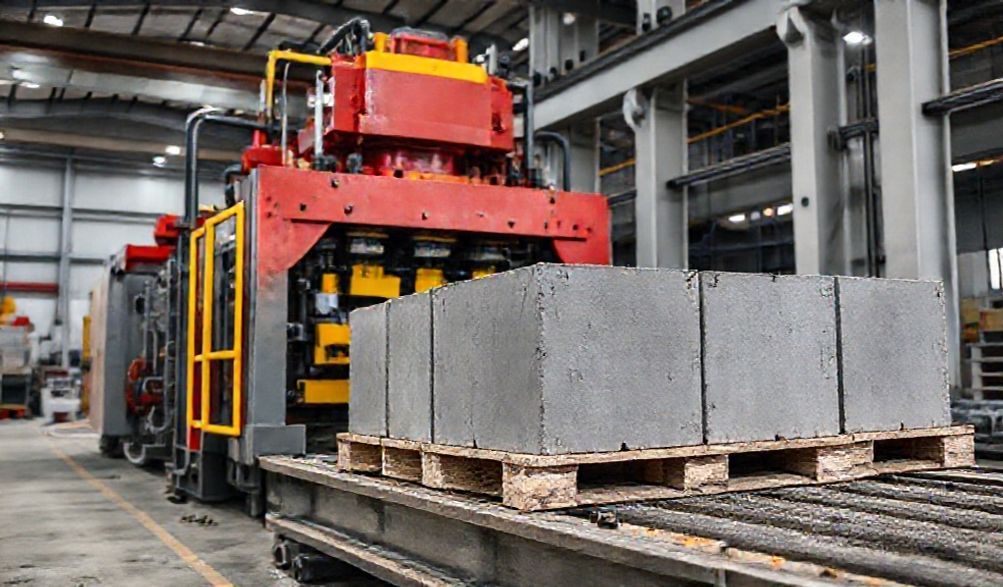
Ultima Ductor ad QT4-18 Plena Automata Caementi Lateris Faciendi Machina
Industria constructionis per orbem terrarum certamen continuum luctatur: necessitas materiae aedificatoriae bonae qualitatis, parvi pretii, celeritate producta quae crescenti postulationi occurrat. Pro fabricatoribus laterum, hoc in ingentem pressionem convertitur ut productio augeatur, constantia servetur, sumptus moderentur, omnia dum artificum penuria pernavigatur. Solutio in progressu technologico sita est. Ecce machina plene automatica laterum concretorum faciendorum, instrumentum transformans quod materias rudis in lucrum cum praecisione et magnitudine convertit. Inter has,QT4-18 machina plena automatica ad lateres concretos faciendos forma laterum machinapraestat ut exemplar primarium, ad fidem et productionem magni momenti excogitatum.
Hic dux est quasi plena peritorum explicatio de QT4-18. Ultra libellos venditionis procedemus ut praefectis fabricae, possessoribus negotiorum, et pecuniarum collocatoribus accuratam et incorruptam notitiam praebeamus, quae ad certam collocationem faciendam necessaria est. Perspicue intellegetis eius specificationes, rationem operandi, veros sumptus, et momenta discrimina quae emptionem fructuosam a dispendioso errore secernunt.
Quid est QT4-18 Plena Automata Laterum Formatoria Machina?
In suo nucleo, QT4-18 est machina stataria, hydraulica-vibrationis pressura, destinata ad continuam, magni-voluminis fabricationem laterum concretorum. Significans saltum a modis manualibus vel semi-automaticis repraesentat, per integrationem processus formandi in systema synchronizatum et automatizatum. Philosophia designationis machinae in durabilitate, repetibilitate, et facilitate operationis consistit, cor plantae modernae productionis laterum formans.
Munus Praecipuum et Philosophia Consilii
QT4-18 in opere nititur principio materiae concreti praeparatae in formam exactam comprimendae per vibrationes synchronas et pressionem hydraulicam. Eius validum compage ex ferro coniuncto plures claves subsystemata continet quae concorditer operantur:
- Systema AlendiInfundibulum et distributor qui mixturam concretam in cavitatem formae accurate metitur.
- Systema Formandi (Cor "Cordis"):Hoc continet ipsam formam—instrumentum mutabile quod figuram lateris definit—et validos motores vibrantes et arietes hydraulicos qui materiam comprimunt.
- Systema Hydraulicorum:Praebet vim altiorem quae ad compactionem requiritur et motum variarum partium sicut mensae formae et capitis expulsoris.
- Palletarum Convectoris Systema:Tabulas ferreas vel ligneas (quae recentes formas laterum portant) per machinam motu certo et distincto agit.
- PLC Armarium Imperiosum IntelligentisCerebrum machinae. Hoc moderamen logicum programmabile totum cyclum automatum reddit, operationes observat, et interficiem operariis praebet.
Signum Exemplaris Explicatum: QT4-18 Praescriptiones
Nomen exemplaris "QT4-18" est codex qui eius facultatem intimam patefacit. In normarum industrialium nomenclatura:
* QTSeries machinarum significat, quae plerumque machinas stationarias, hydraulicis, in formam redactas repraesentant.
* IVNumerum laterum magnitudinis solitae (400mm x 200mm) significat, quae uno cursu efficere potest cum forma congruente adhibita.
* XVIII refers to the nominal cycle time in seconds, from feeding to ejection.
Here are the key technical specifications that define its performance:
Specification | Detail
| :— | :— |
| Production Capacity (Theoretical) | Up to 4,320 blocks per 8-hour shift (based on a 400x200mm block, 18-second cycle) |
| Tempus Cyclicum | 15-18 seconds (adjustable based on product type) |
| Moulding Pressure | High hydraulic pressure (specific tonnage varies by manufacturer) |
| Potentia Consumptio | Approximately 30-40 kW (for the main host machine) |
| Systema Vibratorium | Dual-axis, high-frequency vibration with hydraulic pressure |
| Systema Moderandi | PLC with color touchscreen interface |
| Pondus Machinae | ~6,000 kg (varies with configuration) |
| Overall Dimensions (LxWxH) | ~6.5m x 2.5m x 3.2m (approx.) |
Nota Magni Momenti: The “blocks per shift” figure is a theoretical maximum under ideal conditions. Real-world output depends on raw material quality, product type, and operational efficiency.
Claves Proprietates et Praestantiae Technologicae
Full Automation and PLC Intelligent Control
The term “full automatic” signifies a profound shift in plant operation. While the QT4-18 machine itself automates the moulding process, it is designed to be the centerpiece of a fully automated line. This line can include automatic batching, mixing, conveying, curing, and stacking systems. The PLC control is the cornerstone of this automation.
- Precision & Repeatability: Every cycle is identical, eliminating human error in timing and pressure application.
- Labor Minutus Typically, only 1-2 workers are needed to monitor the control panel and manage pallets, compared to 5-8 for equivalent semi-automatic output.
- Diagnostics & Safety: The PLC monitors system health, provides fault alarms, and includes safety interlocks to protect both the machine and operators.
High-Pressure Vibration and Superior Block Quality
Block strength and finish are non-negotiable for market acceptance. The QT4-18 employs a dual-compaction strategy:
1. Vibratio Altae Frequentiae: Fluidizes the concrete mix, allowing it to flow into every corner of the mould.
2. Simultaneous Hydraulic Pressure: Compacts the vibrated material from the top, removing air pockets and achieving high density.
This combination produces blocks with:
* High compressive strength (readily meeting or exceeding common standards like ASTM C90).
* Excellent dimensional accuracy and sharp edges.
* A smooth, consistent surface finish that requires less plastering.
Versatility in Production: Beyond Standard Bricks
A significant advantage of the QT4-18 is its product flexibility. By simply changing the mould—a task that can often be completed in under an hour—the same machine can produce a diverse product portfolio:
- Lateres Cavi: (e.g., 4″, 5″, 6″, 8″)
- Solidi Cunei
- Lapides Strati & Lateres Internexiles
- Crepido
- Grass Blocks
It is also compatible with a wide range of raw materials, allowing for cost optimization and sustainable practices: Portland cement, sand, gravel/crushed stone, fly ash, slag, and other industrial by-products.
Operational Workflow and Production Line Integration
From Raw Material to Finished Block: A Step-by-Step Process
Understanding the workflow within a typical plant setup clarifies the machine’s role:
- Materiae Crudae Praeparatio: Aggregates, cement, and water are batched and mixed in a pan or planetary mixer to achieve a uniform, semi-dry concrete consistency.
- Alimentatio: The mix is conveyed (via belt conveyor or forklift) into the QT4-18’s feed hopper.
- Moulding Cycle: The PLC initiates the automated cycle: the feed box distributes mix into the mould cavity on a pallet; the mould table rises into vibration; hydraulic pressure is applied; the mould descends, and the freshly formed block is stripped onto the pallet.
- Pallet Ejection & Curing: The loaded pallet is pushed onto a roller conveyor, moving to a brick stacker which places blocks onto curing racks. These racks are transferred to a curing chamber (steam or ambient) for strength development.
- Return Cycle: The empty pallet is cleaned and conveyed back to the start of the QT4-18, completing the loop.
Essential Auxiliary Equipment for a Complete Plant
The QT4-18 is the core, but not a standalone solution. For a functional and profitable plant, it must be integrated with auxiliary equipment:
- Cementi Mixtorium: A compulsory partner for consistent mix quality.
- Fascia Convector: For efficient material transport to the hopper.
- Block Stacker: Automatically places green blocks onto curing racks.
- Brick Forklift / Pallet Truck: For moving heavy racks of blocks.
- Pallet Return System: A network of rollers or chains that returns empty pallets.
- Systema Sanandi: Can range from simple sheltered yards to automated steam curing rooms.
Investing in the right supporting equipment is as crucial as choosing the main block moulding machine.
Analyzing the Investment: Costs, ROI, and Market Potential
Understanding the Initial Investment and Operating Costs
The price of a QT4-18 is influenced by several factors: the manufacturer’s brand and reputation, the quality of components (e.g., Siemens vs. generic PLCs), the level of automation in the specific configuration, and shipping costs to your location.
Beyond the capital expenditure, responsible planning must account for ongoing operational costs:
* Maintenance: Regular lubrication, inspection, and replacement of wear parts (like mould liners, vibration mounts, and hydraulic seals).
* Energiae Consumptio: The main machine and entire line’s power draw.
* Labor: Reduced but still present for supervision, maintenance, and handling.
* Raw Materials & Pallets: The recurring cost of goods sold.
Calculating Your Return on Investment (ROI)
A simplified ROI framework can guide your decision:
- Estimate Daily Production: Use a realistic output (e.g., 70% of theoretical max) for your primary product.
- Determine Local Market Price: Research the selling price per block in your region.
- Calculate Cost Per Block: Sum all variable costs (materials, energy, labor, maintenance) per block.
- Analyze Gross Profit: (Selling Price – Cost Per Block) x Daily Production = Estimated Daily Gross Profit.
- Project Payback Period: (Total Plant Investment Cost) / (Estimated Daily Gross Profit x Operating Days/Year).
Key ROI Drivers: The primary financial benefits of the QT4-18 come from its efficientia (more blocks per hour) and dramatic labor savings. It also reduces waste through consistency and improves your competitive position with higher-quality products.
Critical Factors for Choosing the Right Supplier
Evaluating Manufacturer Expertise and After-Sales Service
The supplier you choose can make or break your project. Prioritize manufacturers with:
* Proven Experience: Look for companies with a decade or more in heavy machinery manufacturing.
* Servitium Comprehensivum: They must offer installation supervision (or detailed guidance), operator training, and readily available technical support.
* Partes Subsidiae Praesto: Ensure they stock and can quickly ship critical wear parts for the block moulding machine.
Quality Benchmarks: What to Look For in the Machinery
During your evaluation, go beyond the sales pitch:
* Structurae Qualitas: Inspect the thickness of steel plates, the quality of welding, and the robustness of the frame.
* Componentes Notae Reputable manufacturers use known brands for critical parts (e.g., Siemens/Delta PLCs, Schneider electrics, Rexroth hydraulics, WEG motors).
* Termini Cautionis: A clear, comprehensive warranty (typically 1 year for parts) is a sign of confidence.
* Verificatio: Always ask for customer references and, if feasible, visit an existing plant to see the machine in operation. Videos from the supplier are useful but not a substitute for independent verification.
Interrogationes Saepius Petitae (ISP)
Q1: What is the actual production capacity of the QT4-18 machine per day?
A: While the theoretical capacity is ~4,300 blocks/8 hours, a practical, sustainable output for hollow blocks is between 2,800 and 3,500 blocks, accounting for mould changes, maintenance breaks, and material handling.
Q2: How many workers are needed to operate this full automatic brick making machine?
A: For the core moulding process, 1-2 workers are sufficient to monitor the PLC, manage pallet flow, and perform basic checks. A complete plant with mixing and stacking may require 3-4 personnel per shift.
Q3: What is the difference between the QT4-18 and semi-automatic or manual block machines?
A: Manual machines require constant physical labor for every cycle. Semi-automatic machines mechanize some steps (like vibration) but require manual feeding and block removal. The QT4-18 is fully automatic, running continuous cycles with minimal human intervention, leading to exponentially higher output and consistency.
Q4: Can this machine use fly ash or other industrial waste as raw material?
A: Yes, absolutely. The QT4-18 is well-suited for using fly ash, slag, or even certain types of construction waste. These materials can reduce costs and improve block workability, but mix design ratios must be tested for optimal strength.
Q5: How do I source and change the moulds for different block types?
A: Moulds are purchased from your machine supplier or specialized mould makers to ensure perfect compatibility. Changing a mould involves loosening bolts, removing the old mould, positioning the new one, and re-aligning—a task trained operators can do in 30-60 minutes.
Q6: What kind of foundation and factory space is required for installation?
A: A solid, level concrete foundation (approx. 300mm thick) is mandatory to absorb vibration. The total plant space needed, including area for raw materials, mixing, curing, and block storage, is typically a minimum of 1,500-2,000 square meters for efficient operation.
Q7: What are the most common maintenance points for ensuring long machine life?
A: Daily: Clean the machine and check for loose parts. Weekly: Lubricate all moving joints and check hydraulic oil levels. Periodically: Inspect and replace wear parts—mould liners, conveyor rollers, vibration motor mounts, and hydraulic seals—as needed.
Conclusio.
The QT4-18 full automatic concrete block making machine represents a robust, efficient, and intelligent solution for entrepreneurs and companies aiming to establish or upgrade a medium-to-large-scale block production facility. Its blend of high-pressure vibration, PLC automation, and product versatility makes it a powerful engine for profitability.
However, success hinges on more than just purchasing a well-specified machine. It requires thorough due diligence: selecting a reputable supplier with strong after-sales support, carefully planning the integration of all auxiliary equipment, and conducting a realistic analysis of your local market demand and cost structure. View your investment as a complete production line ecosystem, with the QT4-18 as its core.
Call to Action: Before making a decision, consult with multiple suppliers, request detailed quotations that break down every component and cost, and insist on speaking to their existing customers. Arm yourself with information to ensure your investment builds a foundation for long-term success.
<