
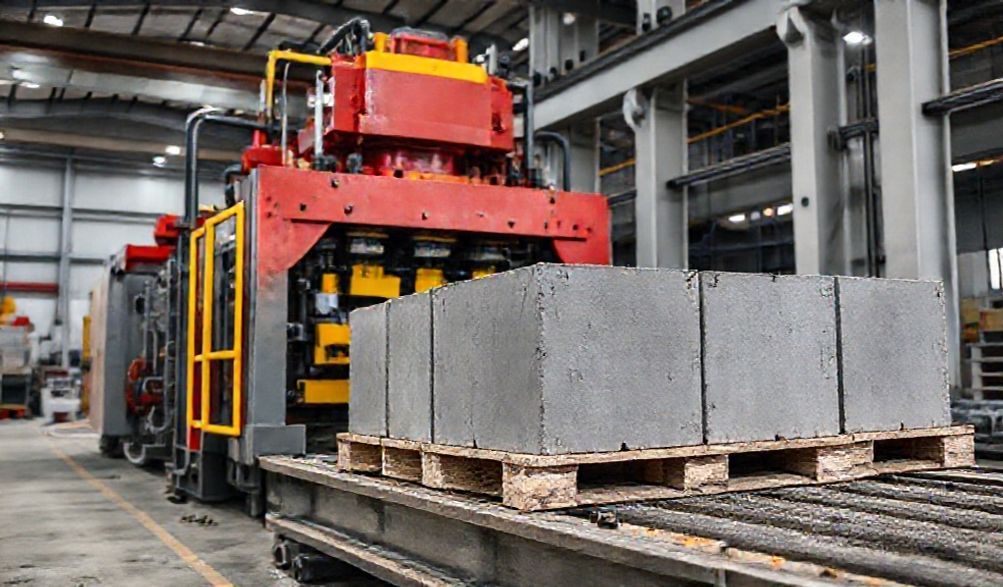
Остаточний посібник з повністю автоматичною машиною для виробництва бетонних блоків QT4-18
Будівельна галузь по всьому світу стикається з невблаганною проблемою: потребою у високоякісних, доступних будівельних матеріалах, вироблених у темпі, що відповідає стрімкому зростанню попиту. Для виробників блоків це означає величезний тиск з метою збільшення обсягів виробництва, підтримки стабільності якості та контролю витрат, водночас долаючи дефіцит кваліфікованої робочої сили. Рішення полягає в технологічному прогресі. На сцену виходить повністю автоматизована машина для виробництва бетонних блоків — революційне обладнання, яке перетворює сировину на прибуток з точністю та в масштабі. Серед них,QT4-18 повністю автоматична машина для виготовлення бетонних блоків, машина для формування блоківвиділяється як провідна модель, створена для надійності та масового виробництва.
Цей посібник є всебічним експертним аналізом моделі QT4-18. Ми вийдемо за межі рекламних буклетів, щоб надати керівникам підприємств, власникам бізнесу та інвесторам детальну, неупереджену інформацію, необхідну для прийняття обґрунтованого інвестиційного рішення. Ви отримаєте чітке уявлення про її технічні характеристики, операційний процес, реальну вартість та ключові фактори, які відрізняють вигідну покупку від дорогої помилки.
Що таке повністю автоматична машина для виробництва блоків QT4-18?
В основі QT4-18 лежить стаціонарна гідровібраційна пресова машина, призначена для безперервного виробництва бетонних блоків у великих обсягах. Вона знаменує значний стрибок від ручних або напівавтоматичних методів завдяки інтеграції процесу формування в синхронізовану автоматизовану систему. Концепція дизайну машини зосереджена на довговічності, повторюваності та простоті експлуатації, що робить її серцем сучасного заводу з виробництва блоків.
Основна функція та філософія дизайну
QT4-18 працює за принципом ущільнення підготовленої бетонної суміші у точну форму за допомогою синхронізованої вібрації та гідравлічного тиску. Його міцна, зварена сталева рама вміщує кілька ключових підсистем, які працюють узгоджено:
- Система живлення:Бункер і розподільник, який точно дозує бетонну суміш у порожнину форми.
- Система лиття (Серце):Це включає саму форму — змінний інструмент, який визначає форму блоку, — а також потужні вібраційні двигуни та гідравлічні циліндри, що ущільнюють матеріал.
- Гідравлічна система:Забезпечує необхідну високу силу тиску для ущільнення та руху різних частин, таких як стіл прес-форми та знімна головка.
- Система палетного конвеєра:Переміщує сталеві або дерев'яні палети (на яких розміщені свіжо відлиті блоки) через машину точним, індексованим способом.
- PLC Інтелектуальна шафа керування:"Мозок" машини. Цей програмований логічний контролер автоматизує весь цикл, контролює операції та забезпечує інтерфейс для операторів.
Розшифровка назви моделі: QT4-18 Характеристики
The model name “QT4-18” is a code that reveals its core capability. In industry-standard nomenclature:
* "QT" denotes the machine series, typically representing stationary, hydraulic block machines.
* "4" indicates the number of standard-sized bricks (400mm x 200mm) it can produce in a single cycle when using the corresponding mould.
* “18” refers to the nominal cycle time in seconds, from feeding to ejection.
Here are the key technical specifications that define its performance:
| Специфікація | Деталі |
| :— | :— |
| Production Capacity (Theoretical) | Up to 4,320 blocks per 8-hour shift (based on a 400x200mm block, 18-second cycle) |
| Час циклу | 15-18 seconds (adjustable based on product type) |
| Moulding Pressure | High hydraulic pressure (specific tonnage varies by manufacturer) |
| Power Consumption | Approximately 30-40 kW (for the main host machine) |
| Вібраційна система | Dual-axis, high-frequency vibration with hydraulic pressure |
| Система управління | PLC with color touchscreen interface |
| Machine Weight | ~6,000 kg (varies with configuration) |
| Overall Dimensions (LxWxH) | ~6.5m x 2.5m x 3.2m (approx.) |
Important Note: The “blocks per shift” figure is a theoretical maximum under ideal conditions. Real-world output depends on raw material quality, product type, and operational efficiency.
Ключові особливості та технологічні переваги
Full Automation and PLC Intelligent Control
The term “full automatic” signifies a profound shift in plant operation. While the QT4-18 machine itself automates the moulding process, it is designed to be the centerpiece of a fully automated line. This line can include automatic batching, mixing, conveying, curing, and stacking systems. The PLC control is the cornerstone of this automation.
- Precision & Repeatability: Every cycle is identical, eliminating human error in timing and pressure application.
- Зменшення витрат праці: Typically, only 1-2 workers are needed to monitor the control panel and manage pallets, compared to 5-8 for equivalent semi-automatic output.
- Diagnostics & Safety: The PLC monitors system health, provides fault alarms, and includes safety interlocks to protect both the machine and operators.
High-Pressure Vibration and Superior Block Quality
Block strength and finish are non-negotiable for market acceptance. The QT4-18 employs a dual-compaction strategy:
1. Високочастотна вібрація: Fluidizes the concrete mix, allowing it to flow into every corner of the mould.
2. Simultaneous Hydraulic Pressure: Compacts the vibrated material from the top, removing air pockets and achieving high density.
This combination produces blocks with:
* High compressive strength (readily meeting or exceeding common standards like ASTM C90).
* Excellent dimensional accuracy and sharp edges.
* A smooth, consistent surface finish that requires less plastering.
Versatility in Production: Beyond Standard Bricks
A significant advantage of the QT4-18 is its product flexibility. By simply changing the mould—a task that can often be completed in under an hour—the same machine can produce a diverse product portfolio:
- Пустотілі блоки: (e.g., 4″, 5″, 6″, 8″)
- Суцільні блоки
- Бруківка та бруковані блоки
- Бордюрні камені
- Grass Blocks
It is also compatible with a wide range of raw materials, allowing for cost optimization and sustainable practices: Portland cement, sand, gravel/crushed stone, fly ash, slag, and other industrial by-products.
Operational Workflow and Production Line Integration
From Raw Material to Finished Block: A Step-by-Step Process
Understanding the workflow within a typical plant setup clarifies the machine’s role:
- Підготовка сировини: Aggregates, cement, and water are batched and mixed in a pan or planetary mixer to achieve a uniform, semi-dry concrete consistency.
- Годування: The mix is conveyed (via belt conveyor or forklift) into the QT4-18’s feed hopper.
- Moulding Cycle: The PLC initiates the automated cycle: the feed box distributes mix into the mould cavity on a pallet; the mould table rises into vibration; hydraulic pressure is applied; the mould descends, and the freshly formed block is stripped onto the pallet.
- Pallet Ejection & Curing: The loaded pallet is pushed onto a roller conveyor, moving to a brick stacker which places blocks onto curing racks. These racks are transferred to a curing chamber (steam or ambient) for strength development.
- Return Cycle: The empty pallet is cleaned and conveyed back to the start of the QT4-18, completing the loop.
Essential Auxiliary Equipment for a Complete Plant
The QT4-18 is the core, but not a standalone solution. For a functional and profitable plant, it must be integrated with auxiliary equipment:
- Бетонозмішувач: A compulsory partner for consistent mix quality.
- Стрічковий конвеєр: For efficient material transport to the hopper.
- Block Stacker: Automatically places green blocks onto curing racks.
- Brick Forklift / Pallet Truck: For moving heavy racks of blocks.
- Pallet Return System: A network of rollers or chains that returns empty pallets.
- Система лікування: Can range from simple sheltered yards to automated steam curing rooms.
Investing in the right supporting equipment is as crucial as choosing the main block moulding machine.
Analyzing the Investment: Costs, ROI, and Market Potential
Understanding the Initial Investment and Operating Costs
The price of a QT4-18 is influenced by several factors: the manufacturer’s brand and reputation, the quality of components (e.g., Siemens vs. generic PLCs), the level of automation in the specific configuration, and shipping costs to your location.
Beyond the capital expenditure, responsible planning must account for ongoing operational costs:
* Maintenance: Regular lubrication, inspection, and replacement of wear parts (like mould liners, vibration mounts, and hydraulic seals).
* Споживання енергії: The main machine and entire line’s power draw.
* Праця: Reduced but still present for supervision, maintenance, and handling.
* Raw Materials & Pallets: The recurring cost of goods sold.
Calculating Your Return on Investment (ROI)
A simplified ROI framework can guide your decision:
- Estimate Daily Production: Use a realistic output (e.g., 70% of theoretical max) for your primary product.
- Determine Local Market Price: Research the selling price per block in your region.
- Calculate Cost Per Block: Sum all variable costs (materials, energy, labor, maintenance) per block.
- Analyze Gross Profit: (Selling Price – Cost Per Block) x Daily Production = Estimated Daily Gross Profit.
- Project Payback Period: (Total Plant Investment Cost) / (Estimated Daily Gross Profit x Operating Days/Year).
Key ROI Drivers: The primary financial benefits of the QT4-18 come from its ефективність (more blocks per hour) and dramatic labor savings. It also reduces waste through consistency and improves your competitive position with higher-quality products.
Critical Factors for Choosing the Right Supplier
Evaluating Manufacturer Expertise and After-Sales Service
The supplier you choose can make or break your project. Prioritize manufacturers with:
* Proven Experience: Look for companies with a decade or more in heavy machinery manufacturing.
* Comprehensive Service: They must offer installation supervision (or detailed guidance), operator training, and readily available technical support.
* Наявність запчастин: Ensure they stock and can quickly ship critical wear parts for the block moulding machine.
Quality Benchmarks: What to Look For in the Machinery
During your evaluation, go beyond the sales pitch:
* Якість збірки: Inspect the thickness of steel plates, the quality of welding, and the robustness of the frame.
* Component Brands: Reputable manufacturers use known brands for critical parts (e.g., Siemens/Delta PLCs, Schneider electrics, Rexroth hydraulics, WEG motors).
* Warranty Terms: A clear, comprehensive warranty (typically 1 year for parts) is a sign of confidence.
* Перевірка: Always ask for customer references and, if feasible, visit an existing plant to see the machine in operation. Videos from the supplier are useful but not a substitute for independent verification.
Часті питання (FAQ)
Q1: What is the actual production capacity of the QT4-18 machine per day?
A: While the theoretical capacity is ~4,300 blocks/8 hours, a practical, sustainable output for hollow blocks is between 2,800 and 3,500 blocks, accounting for mould changes, maintenance breaks, and material handling.
Q2: How many workers are needed to operate this full automatic brick making machine?
A: For the core moulding process, 1-2 workers are sufficient to monitor the PLC, manage pallet flow, and perform basic checks. A complete plant with mixing and stacking may require 3-4 personnel per shift.
Q3: What is the difference between the QT4-18 and semi-automatic or manual block machines?
A: Manual machines require constant physical labor for every cycle. Semi-automatic machines mechanize some steps (like vibration) but require manual feeding and block removal. The QT4-18 is fully automatic, running continuous cycles with minimal human intervention, leading to exponentially higher output and consistency.
Q4: Can this machine use fly ash or other industrial waste as raw material?
A: Yes, absolutely. The QT4-18 is well-suited for using fly ash, slag, or even certain types of construction waste. These materials can reduce costs and improve block workability, but mix design ratios must be tested for optimal strength.
Q5: How do I source and change the moulds for different block types?
A: Moulds are purchased from your machine supplier or specialized mould makers to ensure perfect compatibility. Changing a mould involves loosening bolts, removing the old mould, positioning the new one, and re-aligning—a task trained operators can do in 30-60 minutes.
Q6: What kind of foundation and factory space is required for installation?
A: A solid, level concrete foundation (approx. 300mm thick) is mandatory to absorb vibration. The total plant space needed, including area for raw materials, mixing, curing, and block storage, is typically a minimum of 1,500-2,000 square meters for efficient operation.
Q7: What are the most common maintenance points for ensuring long machine life?
A: Daily: Clean the machine and check for loose parts. Weekly: Lubricate all moving joints and check hydraulic oil levels. Periodically: Inspect and replace wear parts—mould liners, conveyor rollers, vibration motor mounts, and hydraulic seals—as needed.
Висновок
The QT4-18 full automatic concrete block making machine represents a robust, efficient, and intelligent solution for entrepreneurs and companies aiming to establish or upgrade a medium-to-large-scale block production facility. Its blend of high-pressure vibration, PLC automation, and product versatility makes it a powerful engine for profitability.
However, success hinges on more than just purchasing a well-specified machine. It requires thorough due diligence: selecting a reputable supplier with strong after-sales support, carefully planning the integration of all auxiliary equipment, and conducting a realistic analysis of your local market demand and cost structure. View your investment as a complete production line ecosystem, with the QT4-18 as its core.
Call to Action: Before making a decision, consult with multiple suppliers, request detailed quotations that break down every component and cost, and insist on speaking to their existing customers. Arm yourself with information to ensure your investment builds a foundation for long-term success.
<