
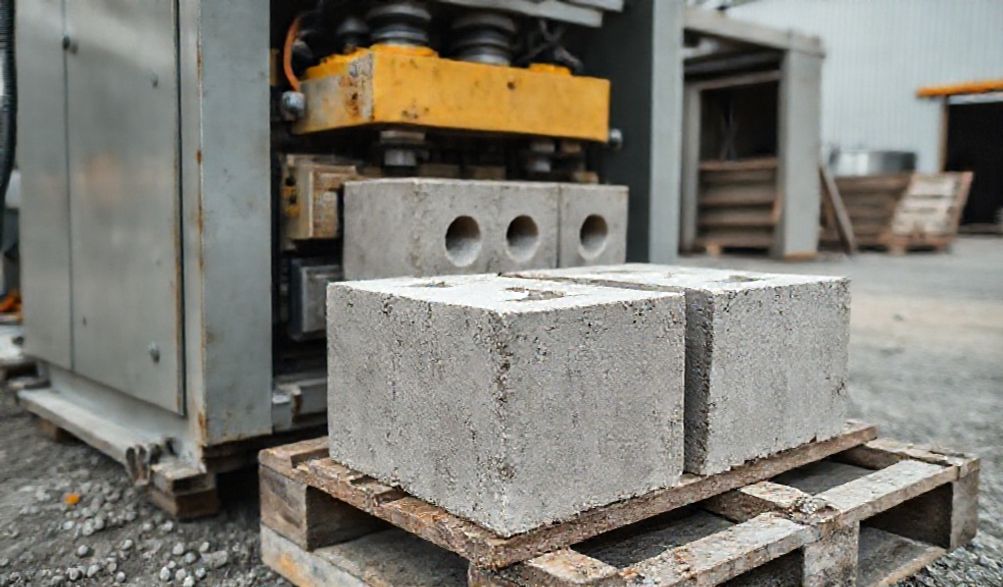
Panduan Terbaik untuk Memilih Mesin Pembuat Blok Simen
Pengenalan
Industri pembinaan global berjalan berdasarkan unit asas yang mudah: blok simen. Mampu dimiliki, tahan lama, dan serba boleh, blok-blok ini merupakan asas infrastruktur moden, dari rumah dan sekolah ke kompleks komersial. Namun, di sebalik bahan yang terdapat di mana-mana ini terletak satu titik keputusan kritikal bagi usahawan dan firma pembinaan—bagaimana untuk menghasilkannya dengan cekap. Jawapannya adalah mesin pembuat blok simen, tetapi meneroka pelbagai pilihan yang ada boleh menjadi mengelirukan.
Kaedah tradisional pembuatan blok secara manual penuh dengan cabaran. Ia memerlukan tenaga kerja yang intensif, menghasilkan kualiti yang tidak konsisten, dan tidak dapat memenuhi skala mana-mana projek atau perniagaan yang serius. Sebaliknya, pasaran moden menawarkan pelbagai mesin yang mengelirukan, daripada mesin tekan operasi tangan yang mudah sehingga ke barisan pengeluaran automatik sepenuhnya. Memilih dengan salah boleh membawa maksud ketidaksesuaian yang membebankan antara pelaburan dan output, yang akan menggantung projek atau perniagaan anda sebelum ia bermula.
Panduan ini adalah peta jalan komprehensif anda. Dibina berdasarkan spesifikasi teknikal, data pengilang, dan amalan operasi terbaik, kami akan menerangkan dunia jentera blok simen. Kami akan meneroka pelbagai jenis mesin, memecahkan ciri-ciri utama yang penting, menganalisis kos pelaburan sebenar, dan memandu anda melalui operasi. Matlamat kami adalah untuk melengkapkan anda dengan kepakaran yang diperlukan untuk membuat keputusan yakin dan menguntungkan yang selari dengan matlamat khusus anda, sama ada anda pembina komuniti, usahawan permulaan, atau pengeluar industri.
Memahami Mesin Pembuat Blok Simen: Jenis dan Teknologi
Tidak semua mesin pembuat blok dicipta sama. Tahap automasi adalah pembeza utama, yang secara langsung mempengaruhi keluaran, keperluan tenaga kerja, dan pelaburan modal. Memahami kategori ini adalah langkah pertama untuk mengenal pasti padanan ideal anda.
Mesin Membuat Blok Manual
Penerangan & Operasi:Ini adalah peralatan pembuatan blok yang paling ringkas. Dikendalikan sepenuhnya oleh tenaga manusia, ia biasanya terdiri daripada acuan keluli, mekanisme pemadatan beroperasi tuas, dan plat pelucutan. Prosesnya melibatkan pengisian acuan dengan campuran konkrit secara manual, menggunakan tuas untuk memadatkan bahan, dan kemudian melucutkan blok yang baru dibentuk ke tanah atau palet.
- Kes Penggunaan Ideal:Projek berskala sangat kecil (contohnya, membina sebuah rumah tunggal), inisiatif dipimpin komuniti, NGO di kawasan terpencil, atau sebagai pengenalan berkos rendah kepada pengeluaran blok.
- Kelebihan:
- Kos Sangat Rendah:Titik masuk yang paling berpatutan.
- Keperluan Kuasa Sifar:Boleh digunakan di mana-mana, sesuai untuk lokasi luar grid.
- Kebolehalihan Tinggi:Ringan dan mudah dipindahkan di sekitar tapak.
- Keburukan:
- Output Sangat Rendah:Pengeluaran adalah terhad kepada beberapa ratus blok sehari.
- Sangat Memerlukan Tenaga Kerja yang Banyak:Memerlukan usaha fizikal yang ketara dan beberapa pekerja untuk hasil yang bermakna.
- Kualiti Tidak Konsisten:Ketumpatan dan kekuatan blok sangat bergantung pada teknik pengendali.
Mesin Membuat Blok Semi-Automatik
Penerangan:Kategori ini mencapai keseimbangan penting. Mesin-mesin ini menggunakan sistem getaran berkuasa elektrik atau diesel untuk memadatkan campuran konkrit di dalam acuan, memastikan ketumpatan yang konsisten. Walau bagaimanapun, tugas seperti memasukkan bahan mentah, menggerakkan palet, dan menyusun blok siap biasanya dilakukan secara manual.
- Kes Penggunaan Ideal:Perniagaan pembuatan blok bersaiz kecil hingga sederhana (taman blok), syarikat pembinaan yang menghasilkan untuk projek mereka sendiri, dan usahawan yang mencari permulaan yang boleh ditingkatkan.
- Kelebihan:
- Keseimbangan Output/Kos yang Baik:Pengeluaran yang jauh lebih tinggi berbanding mesin manual dengan pelaburan yang berpatutan.
- Kualiti Konsisten:Pembentukan mekanis menghasilkan blok-blok yang seragam dan berkekuatan tinggi.
- Mengurangkan Beban Buruh:Automasi proses pemadatan meningkatkan kecekapan dan mengurangkan tuntutan fizikal terhadap pekerja.
- Keburukan:
- Memerlukan Kuasa:Bergantung kepada bekalan elektrik yang boleh dipercayai atau bahan api untuk model diesel.
- Kerja Manual SeparaMasih memerlukan kru untuk pengendalian bahan dan penyingkiran blok.
- Kos Awal yang Lebih Tinggi More expensive than manual options.
Mesin Pembuat Blok Sepenuhnya Automatik
Penerangan: These are industrial-grade production lines. They integrate all processes: automatic raw material batching and feeding, high-pressure vibration and compaction, block ejection, curing, and even robotic palletizing and stacking. Operation is managed via a programmable logic controller (PLC).
- Kes Penggunaan Ideal: Large-scale commercial block manufacturing plants, government infrastructure projects, and industrial producers supplying to major distributors.
- Kelebihan:
- Very High Output: Capable of producing thousands of blocks per hour.
- Minimal Labor: Requires only a few operators for monitoring and supervision.
- Superior Consistency & Precision: Computer-controlled processes guarantee identical block quality.
- Programmable Flexibility: Can easily switch between different block types and sizes.
- Keburukan:
- High Capital Cost: A major investment requiring significant financing.
- Complex Maintenance: Requires skilled technicians and a reliable supply of spare parts.
- Infrastructure Needs: Demands a large, stable factory space with robust power connections.
Mesin Blok Mudah Alih vs. Tetap
This is another key distinction:
* Mesin Blok Mudah Alih: Mounted on a trailer, these are designed for on-site production. They eliminate transport costs for finished blocks and are perfect for large, remote construction sites. They are typically semi-automatic.
* Mesin Blok Stesen: Installed in a fixed location (a factory or yard), these are the standard for dedicated block manufacturing businesses. They can be manual, semi-automatic, or fully automatic and benefit from optimized, permanent setups.
Key Features and Specifications to Evaluate
Once you’ve narrowed down the type of machine, dive into the specifications. These details determine performance, versatility, and long-term value.
Kapasiti Pengeluaran (Blok Per Jam/Hari)
This is often the first number buyers look at. However, manufacturer ratings are usually under ideal conditions.
- Pertimbangan Utama: Be realistic. A machine rated for 2,000 blocks per 8-hour shift might achieve 1,500-1,800 in practice due to breaks, mold changes, and material loading times. Match the machine’s practical output with your verified market demand and business growth projections. Don’t overbuy, but leave room for scaling up.
Block Types and Sizes (Mold Compatibility)
Your machine’s potential is defined by its molds.
- Standard Products: Ensure the machine can produce the blocks your market demands:
- Blok Berongga (4″, 6″, 8″)
- Blok Pejal
- Pavers dan Pavers Saling Berkunci
- Batu tepi jalan
- Decorative Landscape Blocks
- Sistem Acuan: Investigate how easily molds can be changed. A quick-change mold system is a valuable feature that minimizes downtime when switching production.
Power Source and Consumption
The choice here affects operational flexibility and running costs.
- Elektrik: Clean, quiet, and efficient for fixed locations with grid power. Check the voltage (e.g., 380V/3-phase) and power rating (kW).
- Diesel: Provides independence from the electrical grid, essential for mobile units or areas with unreliable power. Factor in fuel costs and maintenance.
- Hibrid: Some machines offer the option to switch between power sources, providing valuable flexibility.
Vibration System and Compression Force
This is the engineering heart of the machine, directly responsible for block strength.
- Sistem Getaran: High-frequency, vertically-directed vibration is crucial. It removes air pockets and compacts the concrete mix to its maximum density. Look for machines with multiple, balanced vibration motors.
- Compression Force: Often measured in tons or kilonewtons (kN), this is the pressure applied during vibration. Higher force generally produces denser, stronger blocks suitable for load-bearing applications.
Kualiti Pembinaan dan Ketahanan
A machine is a long-term asset. Inspect its construction.
- Gred Keluli: The frame and key components should be made from high-grade, reinforced steel.
- Kimpalan & Kemasan: Look for clean, robust welds and anti-corrosion paint or treatment.
- Kualiti Komponen: Bearings, vibration motors, and hydraulic systems (if present) should be from reputable brands for reliability and easier servicing.
The Investment: Cost Analysis and ROI
Moving from ballpark figures to a detailed financial plan is critical for success.
Initial Purchase Price Ranges
Prices vary enormously based on automation, capacity, and origin of manufacture. Use these as very broad brackets:
* Mesin Manual: $1,000 – $5,000
* Mesin Semi-Automatik: $5,000 – $50,000
* Mesin Sepenuhnya Automatik: $50,000 – $300,000+
Beyond the Machine: Additional Costs
The machine is just one part of the setup. Budget for:
* Land & Shed: A secure, level production and curing area.
* Raw Material Storage: Space for cement (kept dry), sand, and aggregate.
* Mixing Equipment: A pan mixer or concrete mixer is essential for preparing consistent raw material.
* Curing Area: Space to store blocks for proper moist curing for 7-14 days.
* Buruh: Wages for operators and helpers.
* Transportation: For delivering raw materials and finished blocks.
* Maintenance Fund: A reserve for spare parts, repairs, and routine servicing.
Calculating Your Return on Investment (ROI)
A simplified framework can illuminate profitability:
1. Daily Production Value: (Number of blocks produced per day) x (Selling price per block in your market).
2. Daily Operational Cost: Sum of (Raw material cost for daily production) + (Labor cost) + (Power/Fuel cost) + (Transport & overhead allocation).
3. Daily Gross Profit: (Daily Production Value) – (Daily Operational Cost).
4. Tempoh Bayar Balik: (Total Initial Investment Cost) / (Daily Gross Profit). This gives you the number of production days needed to recoup your investment.
Contoh: If your total investment is $20,000 and your daily gross profit is $200, your simple payback period is 100 production days (roughly 5 months at 20 days/month).
Operating Your Machine: From Raw Material to Finished Block
Optimal operation ensures quality and protects your investment.
The Ideal Cement Block Mix Design
Consistency is key. A common standard mix ratio is 1:6:4 (Cement: Sand: Aggregate, by volume) for hollow blocks, but this must be adjusted for local materials and desired strength.
* Simen: Use fresh, high-quality Portland cement.
* Agregat: Sand and crushed stone should be clean, hard, and well-graded.
* Air: Use clean water. The water-cement ratio is critical—too much water weakens the block; too little prevents proper compaction.
* Penyembuhan: Freshly demolded blocks are fragile. They must be kept moist and under cover for at least 7 days to gain strength properly.
Step-by-Step Operational Guide
- Penyediaan Bahan: Measure and mix raw materials thoroughly to a uniform, semi-dry consistency.
- Machine Setup: Ensure the machine is on a level base. Install and secure the correct mold. Check oil and fuel levels.
- Safety First: Wear protective gear (gloves, boots, ear protection). Ensure all safety guards are in place.
- Operation Cycle: Feed mix into the hopper, initiate the compaction cycle (manual lever press or automated vibration), and eject the finished block onto a pallet.
- Block Handling: Move pallets gently to the curing area without jarring the green blocks.
- Penyembuhan: Stack blocks and keep them covered with plastic sheeting, spraying them with water regularly.
Essential Maintenance for Longevity
- Daily: Clean the machine thoroughly after use, especially the mold and hopper. Check for loose bolts.
- Weekly: Lubricate all moving parts as per the manual. Inspect the vibration motors for unusual noise or heat.
- Monthly: Conduct a thorough inspection of electrical connections, hydraulic hoses (if any), and wear parts like mold liners and stripping plates.
How to Choose the Right Supplier and Machine
Your relationship with the manufacturer is as important as the machine itself.
Researching Reputable Manufacturers
- Experience & Reputation: Look for companies with a decade or more in the industry. Search for their brand name online alongside keywords like “review” or “complaint.”
- Pensijilan: International quality certifications (like CE) indicate adherence to manufacturing standards.
- Portfolio Pelanggan: A legitimate manufacturer will have photos/videos of their machines in operation at client sites.
The Importance of After-Sales Support
This is non-negotiable. A machine without support is a future scrap metal.
* Alat Ganti: Are they readily available? What is the lead time?
* Dokumentasi Teknikal Is a clear, illustrated manual provided?
* Jaminan: What is covered and for how long?
* Service: Do they offer remote troubleshooting, on-call support, or on-site technician visits?
Requesting Quotes and Making the Decision
When you request quotes, ask for a detailed specification sheetdan sebuahcommercial proforma invoice that includes:
* Machine model and detailed specs
* FOB or CIF price
* Warranty terms
* Spare parts list and prices
* Delivery timeline
Apply Due Diligence: Compare the total value of the package—machine quality, support terms, and supplier credibility—not just the bottom-line price. Verify claims by asking for references or contacting existing customers. This foundational step of verification is critical to building a trustworthy and sustainable business.
Soalan Lazim (FAQ)
Q1: What is the average cost of a cement block making machine?
A: There is no single “average” cost. Prices range from around $1,000 for a basic manual machine to well over $100,000 for a fully automatic production line. The key is to first define your required production scale and level of automation, then budget accordingly.
Q2: How many blocks can a semi-automatic machine produce in an 8-hour shift?
A: A typical semi-automatic machine can produce between 2,000 to 6,000 standard hollow blocks in an 8-hour shift. The actual output depends on the block size, the skill and speed of the crew, the efficiency of the material supply chain, and how quickly molds can be changed.
Q3: Can I use a block making machine for other products?
A: Absolutely. By changing the mold, most block making machines can produce a variety of concrete products, including paving stones, kerbstones (curbstones), solid bricks, landscaping blocks, and even some lightweight wall panels.
Q4: What is the most common problem with block machines and how do I fix it?
A: The most common issue is producing blocks with inconsistent density or low strength. This is usually traced back to three areas: 1) An inconsistent or incorrect raw material mix (fix by standardizing the recipe), 2) Inadequate vibration time or force (check machine settings and motor health), or 3) Worn-out mold liners allowing too much “fines” to escape (replace the liners).
Q5: Is operating a block making machine a profitable business?
A: It can be a highly profitable business, but success is not automatic. Critical factors include: strong local demand for construction materials, tight control over raw material and operational costs, a commitment to producing consistently high-quality blocks, and an effective sales and marketing strategy to reach builders and contractors.
Kesimpulan
Choosing the right machine to make cement blocks is a journey that moves from understanding core technologies to making a strategic financial decision. We’ve explored the spectrum from manual to fully automatic machines, highlighted the specifications that dictate performance, and outlined the real costs and operational knowledge needed for success.
Your final decision should be anchored in a clear definition of your goals. Are you supplying a local community, starting a block yard, or establishing an industrial plant? Let your production targets, budget, and market research guide you. Remember, the right machine is not an expense; it’s a capital investment that forms the foundation of your productivity and profit.
Ready to take the next step? Begin by speaking with reputable suppliers, asking the detailed questions outlined here, and requesting demonstrations. Building a successful block manufacturing business hinges on the synergy of quality equipment, sound operational knowledge, and trusted partnerships. With careful planning and the right machine, you’re not just making blocks—you’re building the future.
<