
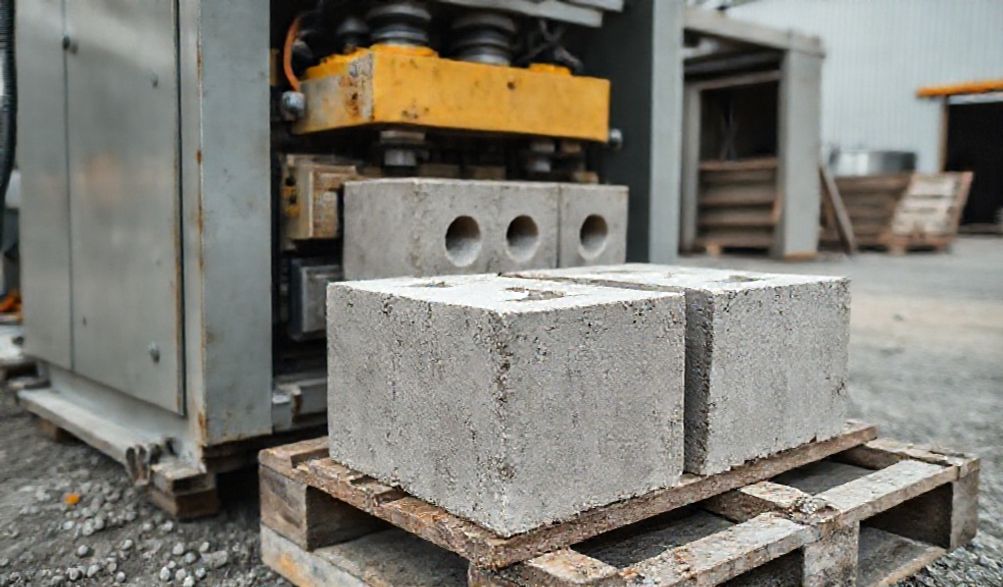
The Ultimate Guide to Choosing a Machine to Make Cement Blocks
บทนำ
The global construction industry runs on a simple, fundamental unit: the cement block. Affordable, durable, and versatile, these blocks are the building blocks of modern infrastructure, from homes and schools to commercial complexes. Yet, behind this ubiquitous material lies a critical decision point for entrepreneurs and construction firms alike—how to produce them efficiently. The answer is a cement block making machine, but navigating the vast array of options can be overwhelming.
The traditional method of manual block making is fraught with challenges. It’s labor-intensive, yields inconsistent quality, and cannot hope to meet the scale of any serious project or business. Conversely, the modern market offers a dizzying spectrum of machines, from simple hand-operated presses to fully automated production lines. Choosing incorrectly can mean a crippling mismatch between investment and output, stalling your project or business before it even begins.
This guide is your comprehensive roadmap. Built on technical specifications, manufacturer data, and operational best practices, we will demystify the world of cement block machinery. We’ll explore the different types of machines, break down the key features that matter, analyze the true cost of investment, and walk you through operation. Our goal is to equip you with the expertise needed to make a confident, profitable decision that aligns with your specific goals, whether you’re a community builder, a startup entrepreneur, or an industrial producer.
ทำความเข้าใจเครื่องผลิตบล็อกคอนกรีต: ประเภทและเทคโนโลยี
Not all block making machines are created equal. The level of automation is the primary differentiator, directly impacting output, labor requirements, and capital investment. Understanding these categories is the first step to identifying your ideal match.
เครื่องทำบล็อกคอนกรีตแบบแมนนวล
คำอธิบายและการทำงาน: These are the simplest form of block-making equipment. Operated entirely by human power, they typically consist of a steel mold, a lever-operated compaction mechanism, and a stripping plate. The process involves manually filling the mold with concrete mix, using the lever to compress the material, and then stripping the freshly formed block onto the ground or a pallet.
- กรณีการใช้งานที่เหมาะสม: Extremely small-scale projects (e.g., building a single home), community-led initiatives, NGOs in remote areas, or as a very low-cost introduction to block production.
- ข้อดี:
- Very Low Cost: The most affordable entry point.
- ไม่ต้องใช้พลังงาน Can be used anywhere, ideal for off-grid locations.
- High Portability: Lightweight and easy to move around a site.
- ข้อเสีย
- Very Low Output: Production is limited to a few hundred blocks per day.
- Highly Labor-Intensive: Requires significant physical effort and multiple workers for meaningful output.
- คุณภาพไม่คงที่ Block density and strength depend heavily on the operator’s technique.
เครื่องจักรทำบล็อกกึ่งอัตโนมัติ
คำอธิบาย: This category strikes a crucial balance. These machines use an electric or diesel-powered vibration system to compact the concrete mix within the mold, ensuring consistent density. However, tasks like feeding raw material, moving pallets, and stacking finished blocks are typically done manually.
- กรณีการใช้งานที่เหมาะสม: Small to medium-sized block manufacturing businesses (block yards), construction companies producing for their own projects, and entrepreneurs looking for a scalable start.
- ข้อดี:
- Good Output/Cost Balance: Significantly higher production than manual machines at a reasonable investment.
- คุณภาพที่สม่ำเสมอ Mechanized vibration produces uniform, high-strength blocks.
- ลดความเครียดจากการทำงาน Automation of the compaction process increases efficiency and reduces physical demand on workers.
- ข้อเสีย
- ต้องใช้ไฟฟ้า Dependent on a reliable electricity supply or fuel for diesel models.
- Partial Manual Labor: Still requires a crew for material handling and block removal.
- ต้นทุนเริ่มต้นที่สูง More expensive than manual options.
เครื่องทำบล็อกอัตโนมัติเต็มรูปแบบ
คำอธิบาย: These are industrial-grade production lines. They integrate all processes: automatic raw material batching and feeding, high-pressure vibration and compaction, block ejection, curing, and even robotic palletizing and stacking. Operation is managed via a programmable logic controller (PLC).
- กรณีการใช้งานที่เหมาะสม: Large-scale commercial block manufacturing plants, government infrastructure projects, and industrial producers supplying to major distributors.
- ข้อดี:
- Very High Output: Capable of producing thousands of blocks per hour.
- Minimal Labor: Requires only a few operators for monitoring and supervision.
- Superior Consistency & Precision: Computer-controlled processes guarantee identical block quality.
- Programmable Flexibility: Can easily switch between different block types and sizes.
- ข้อเสีย
- High Capital Cost: A major investment requiring significant financing.
- การบำรุงรักษาที่ซับซ้อน Requires skilled technicians and a reliable supply of spare parts.
- Infrastructure Needs: Demands a large, stable factory space with robust power connections.
เครื่องอัดบล็อกแบบเคลื่อนที่เทียบกับเครื่องอัดบล็อกแบบติดตั้งอยู่กับที่
This is another key distinction:
* เครื่องอัดบล็อกเคลื่อนที่: Mounted on a trailer, these are designed for on-site production. They eliminate transport costs for finished blocks and are perfect for large, remote construction sites. They are typically semi-automatic.
* เครื่องอัดบล็อกแบบอยู่กับที่ Installed in a fixed location (a factory or yard), these are the standard for dedicated block manufacturing businesses. They can be manual, semi-automatic, or fully automatic and benefit from optimized, permanent setups.
Key Features and Specifications to Evaluate
Once you’ve narrowed down the type of machine, dive into the specifications. These details determine performance, versatility, and long-term value.
กำลังการผลิต (บล็อกต่อชั่วโมง/วัน)
This is often the first number buyers look at. However, manufacturer ratings are usually under ideal conditions.
- ข้อควรพิจารณาหลัก: Be realistic. A machine rated for 2,000 blocks per 8-hour shift might achieve 1,500-1,800 in practice due to breaks, mold changes, and material loading times. Match the machine’s practical output with your verified market demand and business growth projections. Don’t overbuy, but leave room for scaling up.
Block Types and Sizes (Mold Compatibility)
Your machine’s potential is defined by its molds.
- Standard Products: Ensure the machine can produce the blocks your market demands:
- บล็อกคอนกรีตมวลเบา (4″, 6″, 8″)
- บล็อกทึบ
- แผ่นทางเดินและแผ่นทางเดินเชื่อมต่อกัน
- ขอบทางเท้า
- Decorative Landscape Blocks
- ระบบแม่พิมพ์ Investigate how easily molds can be changed. A quick-change mold system is a valuable feature that minimizes downtime when switching production.
Power Source and Consumption
The choice here affects operational flexibility and running costs.
- ไฟฟ้า Clean, quiet, and efficient for fixed locations with grid power. Check the voltage (e.g., 380V/3-phase) and power rating (kW).
- ดีเซล Provides independence from the electrical grid, essential for mobile units or areas with unreliable power. Factor in fuel costs and maintenance.
- ไฮบริด: Some machines offer the option to switch between power sources, providing valuable flexibility.
Vibration System and Compression Force
This is the engineering heart of the machine, directly responsible for block strength.
- ระบบสั่นสะเทือน High-frequency, vertically-directed vibration is crucial. It removes air pockets and compacts the concrete mix to its maximum density. Look for machines with multiple, balanced vibration motors.
- แรงอัด: Often measured in tons or kilonewtons (kN), this is the pressure applied during vibration. Higher force generally produces denser, stronger blocks suitable for load-bearing applications.
คุณภาพการประกอบและความทนทาน
A machine is a long-term asset. Inspect its construction.
- เกรดเหล็ก: The frame and key components should be made from high-grade, reinforced steel.
- Welding & Finish: Look for clean, robust welds and anti-corrosion paint or treatment.
- คุณภาพของส่วนประกอบ Bearings, vibration motors, and hydraulic systems (if present) should be from reputable brands for reliability and easier servicing.
The Investment: Cost Analysis and ROI
Moving from ballpark figures to a detailed financial plan is critical for success.
Initial Purchase Price Ranges
Prices vary enormously based on automation, capacity, and origin of manufacture. Use these as very broad brackets:
* เครื่องจักรที่ใช้แรงคน $1,000 – $5,000
* เครื่องจักรกึ่งอัตโนมัติ: $5,000 – $50,000
* เครื่องจักรอัตโนมัติสมบูรณ์แบบ: $50,000 – $300,000+
Beyond the Machine: Additional Costs
The machine is just one part of the setup. Budget for:
* Land & Shed: A secure, level production and curing area.
* Raw Material Storage: Space for cement (kept dry), sand, and aggregate.
* Mixing Equipment: A pan mixer or concrete mixer is essential for preparing consistent raw material.
* Curing Area: Space to store blocks for proper moist curing for 7-14 days.
* แรงงาน Wages for operators and helpers.
* Transportation: For delivering raw materials and finished blocks.
* Maintenance Fund: A reserve for spare parts, repairs, and routine servicing.
Calculating Your Return on Investment (ROI)
A simplified framework can illuminate profitability:
1. Daily Production Value: (Number of blocks produced per day) x (Selling price per block in your market).
2. Daily Operational Cost: Sum of (Raw material cost for daily production) + (Labor cost) + (Power/Fuel cost) + (Transport & overhead allocation).
3. Daily Gross Profit: (Daily Production Value) – (Daily Operational Cost).
4. Payback Period: (Total Initial Investment Cost) / (Daily Gross Profit). This gives you the number of production days needed to recoup your investment.
ตัวอย่าง If your total investment is $20,000 and your daily gross profit is $200, your simple payback period is 100 production days (roughly 5 months at 20 days/month).
Operating Your Machine: From Raw Material to Finished Block
Optimal operation ensures quality and protects your investment.
The Ideal Cement Block Mix Design
Consistency is key. A common standard mix ratio is 1:6:4 (Cement: Sand: Aggregate, by volume) for hollow blocks, but this must be adjusted for local materials and desired strength.
* ซีเมนต์: Use fresh, high-quality Portland cement.
* มวลรวม: Sand and crushed stone should be clean, hard, and well-graded.
* น้ำ Use clean water. The water-cement ratio is critical—too much water weakens the block; too little prevents proper compaction.
* การบ่ม Freshly demolded blocks are fragile. They must be kept moist and under cover for at least 7 days to gain strength properly.
Step-by-Step Operational Guide
- การเตรียมวัสดุ Measure and mix raw materials thoroughly to a uniform, semi-dry consistency.
- Machine Setup: Ensure the machine is on a level base. Install and secure the correct mold. Check oil and fuel levels.
- Safety First: Wear protective gear (gloves, boots, ear protection). Ensure all safety guards are in place.
- Operation Cycle: Feed mix into the hopper, initiate the compaction cycle (manual lever press or automated vibration), and eject the finished block onto a pallet.
- Block Handling: Move pallets gently to the curing area without jarring the green blocks.
- การบ่ม Stack blocks and keep them covered with plastic sheeting, spraying them with water regularly.
Essential Maintenance for Longevity
- Daily: Clean the machine thoroughly after use, especially the mold and hopper. Check for loose bolts.
- Weekly: Lubricate all moving parts as per the manual. Inspect the vibration motors for unusual noise or heat.
- Monthly: Conduct a thorough inspection of electrical connections, hydraulic hoses (if any), and wear parts like mold liners and stripping plates.
How to Choose the Right Supplier and Machine
Your relationship with the manufacturer is as important as the machine itself.
Researching Reputable Manufacturers
- Experience & Reputation: Look for companies with a decade or more in the industry. Search for their brand name online alongside keywords like “review” or “complaint.”
- การรับรอง: International quality certifications (like CE) indicate adherence to manufacturing standards.
- Client Portfolio: A legitimate manufacturer will have photos/videos of their machines in operation at client sites.
The Importance of After-Sales Support
This is non-negotiable. A machine without support is a future scrap metal.
* อะไหล่: Are they readily available? What is the lead time?
* เอกสารทางเทคนิค: Is a clear, illustrated manual provided?
* การรับประกัน:ความคุ้มครองครอบคลุมอะไรบ้างและเป็นระยะเวลาเท่าใด
* Service: Do they offer remote troubleshooting, on-call support, or on-site technician visits?
Requesting Quotes and Making the Decision
When you request quotes, ask for a detailed specification sheet and a commercial proforma invoice that includes:
* Machine model and detailed specs
* FOB or CIF price
* Warranty terms
* Spare parts list and prices
* Delivery timeline
Apply Due Diligence: Compare the มูลค่ารวม of the package—machine quality, support terms, and supplier credibility—not just the bottom-line price. Verify claims by asking for references or contacting existing customers. This foundational step of verification is critical to building a trustworthy and sustainable business.
คำถามที่พบบ่อย (FAQ)
Q1: What is the average cost of a cement block making machine?
ก There is no single “average” cost. Prices range from around $1,000 for a basic manual machine to well over $100,000 for a fully automatic production line. The key is to first define your required production scale and level of automation, then budget accordingly.
Q2: How many blocks can a semi-automatic machine produce in an 8-hour shift?
ก A typical semi-automatic machine can produce between 2,000 to 6,000 standard hollow blocks in an 8-hour shift. The actual output depends on the block size, the skill and speed of the crew, the efficiency of the material supply chain, and how quickly molds can be changed.
Q3: Can I use a block making machine for other products?
ก Absolutely. By changing the mold, most block making machines can produce a variety of concrete products, including paving stones, kerbstones (curbstones), solid bricks, landscaping blocks, and even some lightweight wall panels.
Q4: What is the most common problem with block machines and how do I fix it?
ก The most common issue is producing blocks with inconsistent density or low strength. This is usually traced back to three areas: 1) An inconsistent or incorrect raw material mix (fix by standardizing the recipe), 2) Inadequate vibration time or force (check machine settings and motor health), or 3) Worn-out mold liners allowing too much “fines” to escape (replace the liners).
Q5: Is operating a block making machine a profitable business?
ก It can be a highly profitable business, but success is not automatic. Critical factors include: strong local demand for construction materials, tight control over raw material and operational costs, a commitment to producing consistently high-quality blocks, and an effective sales and marketing strategy to reach builders and contractors.
สรุป
Choosing the right machine to make cement blocks is a journey that moves from understanding core technologies to making a strategic financial decision. We’ve explored the spectrum from manual to fully automatic machines, highlighted the specifications that dictate performance, and outlined the real costs and operational knowledge needed for success.
Your final decision should be anchored in a clear definition of your goals. Are you supplying a local community, starting a block yard, or establishing an industrial plant? Let your production targets, budget, and market research guide you. Remember, the right machine is not an expense; it’s a capital investment that forms the foundation of your productivity and profit.
พร้อมที่จะก้าวไปสู่ขั้นต่อไปหรือยัง? Begin by speaking with reputable suppliers, asking the detailed questions outlined here, and requesting demonstrations. Building a successful block manufacturing business hinges on the synergy of quality equipment, sound operational knowledge, and trusted partnerships. With careful planning and the right machine, you’re not just making blocks—you’re building the future.
<