
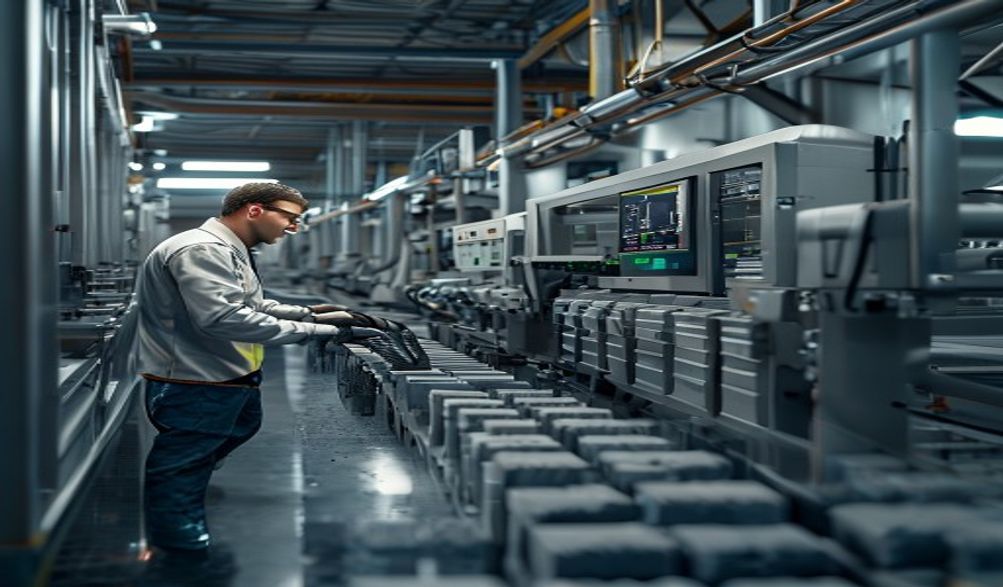
Как выбрать машину для производства шлакоблоков: Экспертное руководство покупателя на 2026 год
Введение
Строительный ландшафт меняется прямо у нас под ногами. По мере того как глобальное внимание сосредотачивается на устойчивости и экономической эффективности, кирпичи из летучей золы вышли на передний план, превращая промышленные отходы в прочные, экологичные строительные блоки. Однако успех этого зелёного предприятия зависит от одного единственного критического решения: выбора правильного станка для производства зольных кирпичей. Правильная машина — это двигатель вашей прибыльности, определяющая качество продукции, операционную эффективность и, в конечном счёте, окупаемость инвестиций.
Многие покупатели — от начинающих предпринимателей до опытных подрядчиков — оказываются в растерянности. Рынок переполнен вариантами, технические характеристики читаются как иностранный язык, а страх вложить средства в неподходящее или, что еще хуже, ненадежное оборудование вполне реален. Неудачный выбор может привести к критическим простоям, выпуску некачественного кирпича и финансовым трудностям.
Данное руководство призвано отсечь лишнее. Основанное на многолетнем отраслевом опыте и технической экспертизе, оно предоставляет надежные и практичные рекомендации, чтобы помочь вам принять взвешенное решение. Мы вместе пройдем через все этапы этой непростой покупки: от оценки потребностей вашего проекта и понимания различных типов оборудования до анализа технических характеристик, расчета реальной стоимости и проверки поставщиков. В итоге вы получите четкую и уверенную дорожную карту для выбора идеальной машины, которая обеспечит ваш успех.
Понимание ваших потребностей и объема проекта
Прежде чем вы посмотрите хотя бы одну брошюру о машинах, вы должны заглянуть внутрь себя. Самое сложное оборудование становится обузой, если оно не соответствует вашей конкретной реальности. Именно с этого основополагающего шага начинают опытные операторы.
Оценка источника и качества вашего сырья (золы-уноса)
Ваша машина настолько хороша, насколько хорош материал, которым вы её кормите. Зола-унос не является однородным продуктом.
- Последовательность — залог успеха:Надёжная долгосрочная поставка летучей золы с постоянными химическими и физическими свойствами является обязательным условием. Непостоянная зола приводит к непредсказуемому качеству кирпича, вынуждая постоянно вручную корректировать смесь.
- 质量决定机器选择:Состав вашей золы (например, содержание извести, тонкость помола) напрямую влияет на процесс. Зола с низким содержанием извести (класс F) часто требует добавления извести или цемента для надлежащего связывания. Система смешивания вашего оборудования должна быть достаточно надежной, чтобы равномерно обрабатывать эти добавки. Понимание качества вашей золы с самого начала позволяет избежать дорогостоящих доработок в будущем.
Определение производственных целей: Выпуск и тип кирпича
Расплывчатые цели приводят к расплывчатым — и часто ошибочным — решениям. Будьте конкретны с цифрами.
- Расчет реалистичной емкости:Не просто думайте «высокая отдача», а рассчитайте свою необходимую.сменная или месячная выработкаосновано на подтвержденных заказах или рыночном спросе. Машина, производящая 10 000 кирпичей за 8-часовую смену, звучит замечательно, но если вам нужно только 2 000, вы переинвестируете и недогружаете оборудование.
- Determine Your Product Portfolio: What are you selling?
- Твердые кирпичи: For general masonry.
- Пустотелые блоки: For load-bearing walls, offering lighter weight and thermal insulation.
- Тротуарная плитка и брусчатка: For landscaping and paving.
Different bricks require different mold designs and, sometimes, different compaction mechanisms. Ensure your chosen machine can accommodate the molds for your desired product range.
Site & Infrastructure Considerations
The machine must fit your physical and operational environment.
- Космос: You need space for more than just the machine. Factor in:
- Raw material storage (fly ash, sand, lime).
- Mixing area.
- Production floor.
- Curing area (critical for 14-28 days).
- Finished goods storage.
- Власть: What is available? A fully automatic hydraulic machine requires a stable, high-capacity three-phase electrical connection. A manual machine may only need basic single-phase power for a small mixer.
- Труд: Match the machine’s automation to your labor pool. A fully automatic machine needs 1-2 skilled operators. A semi-automatic machine may require 4-5 workers for loading, operation, and stacking. Assess local skill levels and training availability.
Types of Ash Brick Making Machines: A Technical Overview
Understanding the core technologies available is the first step in matching capability to your needs.
Ручные и полуавтоматические машины
- Процесс: Material is mixed separately and manually fed into a mold. Pressure is applied via a mechanical lever or a small hydraulic system. Bricks are ejected manually and carried to the curing area.
- Плюсы:
- Low Capital Cost: Minimal initial investment.
- Low Power Consumption: Often runs on basic electricity or even manual power.
- Простота: Easier to understand and repair.
- Минусы:
- Низкий выпуск:Обычно 500-2 000 кирпичей в день.
- Высокая трудоемкость: Physically demanding, requiring multiple workers.
- Несоответствие: Brick density and strength can vary due to manual operations.
- Идеально подходит для: Small-scale startups, community projects, rural areas with limited infrastructure, or businesses testing the market with minimal risk.
Полностью автоматические стационарные машины
- Процесс: An integrated system where material feeding, mixing, compaction, and brick ejection are automated via programmable logic controllers (PLCs). The operator primarily monitors the process.
- Плюсы:
- High Consistency: Automated pressure and cycles ensure every brick meets the same standard.
- Medium-High Output: Ranges from 4,000 to over 15,000 bricks per shift.
- Сокращение рабочей силы: Requires only 1-2 trained personnel.
- Минусы:
- Higher Investment: Significant upfront cost.
- Complexity: Requires proper installation, training, and maintenance.
- Power Dependency: Needs a stable, high-capacity power supply.
- Идеально подходит для: Established medium to large-scale businesses, supplying consistent demand in urban markets, and projects where quality certification (like IS codes) is mandatory.
Fully Automatic Mobile Block Making Machines
- Процесс: These are high-output plants, often with a built-in pan mixer and conveyor system. They produce bricks directly on a concrete pallet, which is then moved to curing via a rack system. They are “mobile” in the sense they can be set up on different sites, though setup is major.
- Плюсы:
- Highest Output: Can produce 20,000+ bricks per shift.
- Superior Product Density: Often use high-pressure vibration for extremely strong bricks/blocks.
- Versatile Siting: Can be established at a central block yard.
- Минусы:
- Highest Investment: The most expensive option by far.
- Maximum Infrastructure Needed: Requires a large, solid, level floor (often concrete) and major power supply.
- Complex Operation: Requires a dedicated, skilled team.
- Идеально подходит для: Large-scale commercial production plants, major infrastructure projects, and dedicated block manufacturing yards supplying to a city or region.
Ключевые технические характеристики для оценки
Now, dive into the details. These specs separate marketing hype from operational reality.
Основные характеристики машины
- Давление (Тоннаж): This is arguably the most critical spec. Pressure determines brick density and compressive strength. For quality fly ash bricks meeting IS 12894 or similar standards, you typically need a machine capable of applying at least 80-100 tons of pressure. Don’t compromise here.
- Время цикла и производственная мощность: Cycle time is the time to produce one brick/block. A faster cycle means higher capacity. However, verify the stated “bricks per hour” claim. Is it for a single brick mold or a multi-cavity mold producing 4-6 bricks per cycle?
- Тип формы и настройка Molds are the heart of your product line.
- Interchangeability: How quickly and easily can molds be changed? Look for standardized, bolted systems.
- Прочность: Molds should be made from hardened, high-chrome steel to withstand abrasion.
- Availability: Can the supplier provide custom mold designs for special blocks?
- Уровень автоматизации: “Automatic” can mean different things. Clarify:
- Кормление: Manual, conveyor, or automated hopper?
- Смешивание: Separate mixer or integrated?
- Стекинг: Does it include an automatic stacker, or is this manual?
Power & Performance Metrics
- Motor & Hydraulics: Don’t just note the motor power (e.g., 15 HP). Inquire about the quality of the hydraulic pump, valves, and cylinders. Reputable brands (like Rexroth, Parker, Yuken) indicate a longer-lasting, more reliable system. A cheap hydraulic system is a primary source of leaks and failures.
- Потребление энергии Ask for the machine’s rated power consumption (kW). Factor this into your long-term operational cost analysis. A more efficient machine may have a higher price tag but lower running costs.
Finished Product Quality Parameters
The machine must be engineered to produce a sellable product.
- Точность размеров: The machine must hold tight tolerances (e.g., +/- 1mm) to ensure bricks are uniform and easy to lay.
- Surface Finish & Compaction: The brick should have a smooth, dense surface straight from the mold, indicating proper compaction. Poor compaction leads to crumbling edges and low strength.
- Standard Compliance: The machine should be demonstrably capable of producing bricks that can pass standard tests for compressive strength, water absorption, and dimensional tolerance as per IS 12894 (India) or ASTM C90 (International).
The Total Cost of Ownership: Beyond the Sticker Price
The purchase price is just the entry fee. Smart buyers calculate the total cost of ownership (TCO).
Initial Investment Breakdown
- Machine Cost: The base price.
- Стоимость пресс-форм: Often extra. Price your initial set of molds.
- Установка и ввод в эксплуатацию: Will the supplier install it? Is there a cost?
- Initial Training: Is operator training included, or is it an added fee?
- Транспортировка и логистика A major cost, especially for international purchases.
Operational & Maintenance Costs
This is where your profit margin is made or lost.
- Власть: Calculate daily consumption based on operational hours.
- Труд: Factor in wages for the required number of operators.
- 例行维护: Oil, filters, grease, and regular wear parts.
- Запчасти:Theavailability and cost of local spares (like seals, hoses, relays) is crucial. A machine with no local support can be down for weeks waiting for a single part.
Calculating ROI (Return on Investment)
Create a simple framework:
1. Total Annual Cost: Sum of all fixed (depreciation, loan interest) and variable (power, labor, maintenance, raw materials) costs.
2. Annual Revenue: Estimated bricks produced * sale price per brick.
3. Annual Profit: Revenue – Total Cost.
4. Payback Period: Total Initial Investment / Annual Profit.
A detailed ROI analysis turns an emotional purchase into a strategic business decision.
Vetting Manufacturers and Ensuring After-Sales Support
Your relationship with the manufacturer is as important as the machine itself.
How to Research and Shortlist Manufacturers
- Reputation & Longevity: Prioritize companies with a solid track record of 10+ years. They’ve likely solved common problems.
- Client Portfolio: Ask for references, preferably in your region or with similar production goals. A video testimonial is more valuable than a stock photo.
- Site Visit: If feasible, visit the manufacturer’s factory. Assess their build quality, testing procedures, and organization. Even more powerful: visit an existing customer’s plant to see the machine running.
Non-Negotiable After-Sales Services
- Комплексная гарантия: A minimum of 12 months on the entire machine, with clear terms on what’s covered and what’s considered wear-and-tear.
- Установка и обучение: Insist on supervised installation and hands-on training for your operators at your site.
- Техническая поддержка Guaranteed access to technical support via phone, WhatsApp, or video call. Ask about their average response time.
- Поставка запчастей: Get a written commitment on the availability of critical spare parts and their price list.
Requesting and Comparing Quotations
A professional quote should be detailed and transparent.
- What to Demand: Itemized pricing (machine, molds, accessories), detailed technical specifications, drawings, warranty certificate, service terms, and delivery schedule.
- Red Flags: Vague specs, pressure to pay 100% upfront, refusal to provide customer contacts, quotes significantly lower than the market average (often indicating substandard components), and poor communication.
Frequently Asked Questions (FAQ)
Q1: What is the average cost range for an ash brick making machine?
А: Prices vary dramatically. A small manual machine can start around $2,000 – $5,000. A robust semi-automatic machine may range from $10,000 – $25,000. Fully automatic stationary machines typically fall between $30,000 – $80,000, while large mobile plants can exceed $150,000. Always get detailed, itemized quotes for accurate comparison.
Q2: Can one machine produce different types and sizes of bricks?
А: Yes, most machines can—but only with interchangeable molds. The key question for the supplier is: How quick and easy is the mold changeover? Some systems allow changes in 15 minutes; others may take hours. Also, confirm the cost of each additional mold.
Q3: How much manpower is required to operate a semi-automatic vs. fully automatic machine?
А:Дляполуавтоматический machine, plan for 3-5 workers (material handling, feeding the machine, stacking bricks). For a полностью автоматический machine, you typically need 1-2 skilled operators primarily for monitoring, minor adjustments, and managing the output stacker.
Q4: What are the most common maintenance issues, and how can I prevent them?
А: The most common issues are hydraulic oil leaks (from poor-quality seals/hoses), mold wear, and electrical control panel faults. Prevention is straightforward: follow the supplier’s preventive maintenance schedule religiously, use recommended oils and greases, and ensure operators are properly trained to spot early warning signs like unusual noises or pressure drops.
Q5: How do I ensure the bricks produced meet official quality standards?
А: First, ensure your machine has sufficient pressure (tonnage). Second, maintain a consistent, high-quality raw material mix recipe. Third, follow proper curing procedures (keeping bricks moist for 14-28 days). Finally, conduct periodic compressive strength and water absorption tests at a certified construction materials laboratory. The machine enables quality, but you must control the process.
Заключение
Choosing an ash brick making machine is a strategic journey, not a simple purchase. It begins with a clear-eyed assessment of your own needs—your materials, your goals, your site. From there, you match those needs to the appropriate machine type, scrutinizing the technical specifications that truly matter: pressure, capacity, and build quality. You then look beyond the price tag to understand the total cost of ownership and, most importantly, partner with a manufacturer whose reputation and after-sales support are beyond reproach.
This investment is the foundation of your business. Rushing this decision, or basing it solely on the lowest price, is the most common and costly mistake. Use this guide as your definitive checklist. Be patient, ask the hard questions, and conduct thorough due diligence. By leveraging this expert-backed approach, you will not just buy a machine; you will invest in a reliable, profitable future in the sustainable construction industry. Take this knowledge, engage with suppliers confidently, and build your success from the ground up.
<