
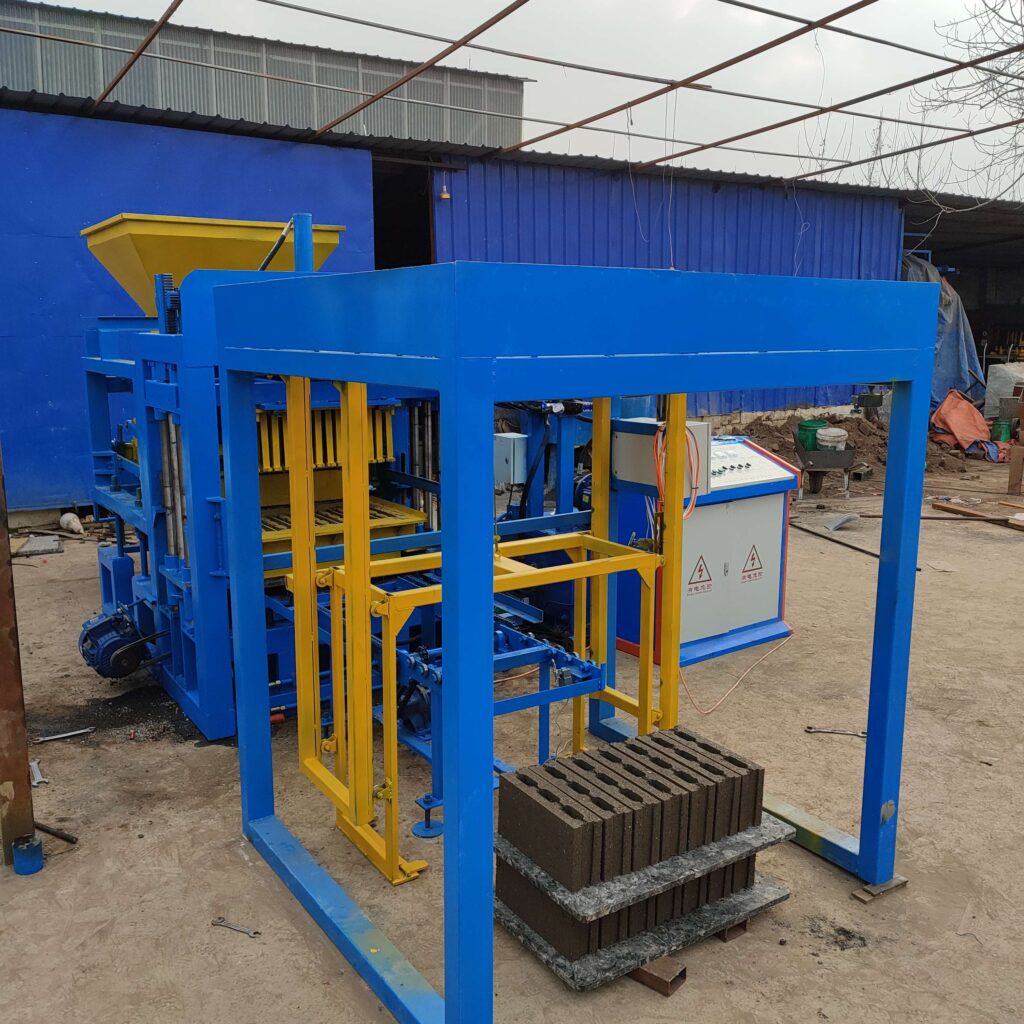
1 Inshingiro ry’Ubwubatsi bw’Ibicuruzwa: Gukoresha neza ubutaka no Gukora Ibishushanyo
Mu ngingo yayo nyamukuru, imashini ikora amatafari y’ibyatsi ishingira ku gitekerezo cyo gukanya ibyatsi by’inyandiko mu cyatsi cyuzuye, gikomeye, kigizwe n’imiterere n’ingano zagenwe mbere. Ubwiza bw’icyuma cyasohotse ni umurongo w’ibanze w’ibyatsi byakoreshejwe, ingufu zikoreshwa mu gukanya, n’ubwiza bw’imiterere y’ibyatsi.
- Ingaruka Ngenganda y’Ibikoresho By’ibanze:Urugero nk’imikorere ishingiye kuri ubufatanye bw’ibinyabijyanye mu gutwika, ibyo mashini akenshi akoresha “ikinyampeke” cya sima cy’amazi make. Ibikomoka ku gikoresho cya buri wese birimo ikinyamafunguro (akenshi sima cyangwa ishwagara), ibikomoka mu butaka (urugero nk’umusenyi, umukungugu w’amabuye, cyangwa ifu y’amabuye), hamwe n’ibindi bikoresho byongerwa ku sima (nk’ivu y’umuriro cyangwa ishwagara). Ubwinshi bw’amazi muri iki kinyampeke buragenewe neza—amazi make ntibashobora gukora ikinyamafunguro, kandi amazi menshi akabije bigatera igipande kuba n’ingaruka nyuma yo gusohoka mu mwobo. Iki kinyampeke gihuje neza kigamije kugira ubushobozi bwo kugabanyirizwa mu mwobo ariko kitanabangikana n’umwobo.
- Ubusobanuro bwo Gukomatanya: Ibinyabiziga n'Umutekano:Umushinga w'ikoranabuhanga ryo gukora umashini urashinzwe sisitemu yayo yo gukora ibikomoka. Imashini zikoreshwa mu buryo bwa hejuru zikoresha uburyo bubiri: ingufu zikomeye za hydrolike ziva hejuru no gukora imyanyagurika yihuse ku rwego rwa mold. Ingufu zikomeye zikora ibintu byose, zikuraho ibyago byo kuba ubusa kandi zongera ubunini, mu gihe imyanyagurika ituma ibintu bigenda neza, bigatuma bikwira neza mu ngingo zose z'ubwoko bwa mold. Iyi mboneramubiri ni ngombwa mu gukora ibikomoka bifite imipaka ikomeye, ubunini busa, n'ingufu zihuse "z'ubutaka," bigatuma bikwira gukorwa byihuse nyuma yo gukora.
1.2 Urwego rw'Imashini: Kuva mu Gikoresho cy'Abantu Kugeza mu Mishinga Ihuriweho
Igitangazo "mashini yo kubaka amatafari" gisobanura urwego rwinshi rw’ikoranabuhanga, buri gahunda igamije ubushobozi bw’ikiguzi butandukanye n’intego z’umusaruro.
- Imashini z'igikoresho cy'ibiganza n'izigendeshwa n'ikinyabiziga gitoAya ni amasomo y'ingendo ya tekinoloji. Umashini w'igikoresho gifata umukozi kugirango akoreshe ingendo y'ikanya, ukora urubingo rumwe mu gihe. Inyandiko z'ibikoresho bigendana n'umushini w'amashanyarazi bikoresha ikanya ry'amashanyarazi rigendeshwa n'umukozi, ariko kugaburira no gukuraho urubingo bishobora kuba bikorwa n'umuntu. Bihamijwe no gutangira amafaranga make kandi bihagije kubikorwa bito cyane cyangwa byateguwe n'umuryango, ariko bihangayikishwa n'umusaruro muke, umurimo ukomeye, no kudahwitse k'umusaruro.
- Imashini Zikora Byikoresho Zishobora Kwikorera Ubwabyo.Iyi ni igenzura ry’ubucuruzi mu gukora ibikorwa remezo. Iyi sisitemu ari ingingo zihuze aho Konturore y’Ibikorwa Remezo (PLC) igenzura urunigi rwose rw’ibikorwa: guhuza ibikoresho mu buryo bwikora, gutanga ibyahuwe ku nzira yohereza ibintu ziba ziyongereyeho, gukora neza ibyazuwe, guhuza hamwe no guhanahanura, gusohora ibyazuwe byarangiye, no kuzitwara mu buryo bwikora mu buryo bwo kubika cyangwa gukora. Ubusabane bw’abantu burambuye mu kugenzura no kugenzura, bigatuma haboneka ibyazuwe byinshi bishobora kugera kuri ibihumbi mu gihe cy’akazi kimwe, biba byuzuye neza.
- Amashamiro Y’Ubukorwa Yashyizweho Bikwiye:Ku rwego rwo hejuru rw'ikora mu buryo bwikora, harimo amashami yuzuye. Aya mashami atangiza nta gushidikanya umatsi wubaka ibyatsi, ahubwo yose sisitemu zinyuranye. Ibi birimo amasilo y'ikora mu buryo bwikora ya sima na fly ash, imiyoboro yohereza ibikoresho, sisitemu z'ikora mu buryo bwikora zo gucunga ibipimo, imishanyo ya ndangamurage, roboti zishinzwe gushyira ibyatsi ku nkeke zikoreshwa mu koroshya ibyatsi, n'ibyumba by'ikora mu buryo bwikora bigenga ubushyuhe n'ubunyobwa byoroshye kwiyongera kw'ingufu. Aya mashami asobanura icyerekezo cy'ikirenga mu kuba byoroshye, umusaruro, no kugenzura irembere.
Umusaruro w'ibicuruzwa: Ubushobozi mu Kubaka Ibisubizo
Agaciro nyakuri k'ibyo mashini ari mu bushobozi bwabyo bwo gukora ibikoresho by'ubwubatsi bitandukanye, gusa binyuze mu guhindura imiterere y'ibikoresho. Ubu buryo bwo gukora ibintu bitandukanye bushobora gufasha abakora ibikoresho kugira uruhare mu masoko atandukanye hamwe.
2.1 Ibikoresho by'ibyumba bya buri wese n'iby'umwanda
The workhorses of the industry, used in everything from load-bearing walls in low-rise buildings to infill walls in framed structures. Hollow blocks reduce weight and material cost while providing inherent insulation.
2.2 Pavers and Landscape Products
These include interlocking concrete pavers for roads, driveways, and walkways, as well as retaining wall blocks and landscaping bricks. This segment often commands higher profit margins and requires machines capable of high-vibration and high-pressure for dense, durable, and aesthetically pleasing products.
2.3 Specialized Masonry Units
- Ibiraro by'ibyumba: Designed with profiled edges that lock together without mortar, enabling rapid, dry-stack construction for walls with excellent seismic resistance.
- Cellular Lightweight Blocks: Produced using a specialized mix that includes a foaming agent, these blocks are lightweight, offering superior thermal and acoustic insulation. Their production requires specific machine adaptations.
- Curved and Architectural Blocks: For aesthetic applications, machines can be fitted with molds to produce blocks for decorative walls, arches, and other architectural features.
Strategic Imperatives for Distribution and Procurement
3.1 Quantifying the Value Proposition for End-Users
For your clients, the investment in a block brick building machine is justified by a clear and compelling financial and operational calculus.
- Unmatched Economic Velocity: The production capacity of an automatic machine can be 10 to 50 times that of a manual operation. This high-volume output enables manufacturers to secure large contracts, achieve economies of scale, and realize a rapid return on investment. The reduction in labor costs further accelerates the payback period.
- Assured Quality and Regulatory Compliance: Machine-made blocks guarantee dimensional consistency, which translates to faster bricklaying, reduced mortar consumption, and lower skilled labor requirements. The controlled production process ensures that every batch meets or exceeds the compressive strength standards mandated by national building codes, a critical factor for structural integrity and market acceptance.
- Operational Independence and Supply Chain Resilience: By establishing their own production facility, construction companies or entrepreneurs gain independence from volatile market prices and unreliable supply chains for bricks. They can produce on-demand, reducing inventory costs and ensuring a consistent supply for their projects.
3.2 Critical Technical Evaluation for Procurement
Selecting the right machine requires a meticulous assessment of technical specifications against market demands.
- Production Capacity Analysis: Move beyond simple “blocks per hour” claims. Evaluate the cycle time for the specific block type the client intends to produce most frequently. Calculate the potential output in cubic meters of concrete per day, as this is a more universal metric for comparing different machines and product mixes.
- Core System Robustness: Scrutinize the heart of the machine. The hydraulic system should be powerful, reliable, and energy-efficient (preferably with variable frequency drives). The vibration system should have multiple, balanced motors capable of delivering high-frequency vibrations for optimal compaction. The mold frame and pressing head must be constructed from high-grade, wear-resistant steel to maintain precision over thousands of cycles.
- After-Sales Ecosystem: The machine’s value is inextricably linked to the support behind it. A supplier must offer comprehensive training, a readily available inventory of critical spare parts (mold liners, hydraulic seals, vibration motors), and access to responsive technical support, ideally with remote diagnostics capabilities. The availability of detailed technical documentation is non-negotiable.
Conclusion: Positioning at the Forefront of Industrialized Construction
The block brick building machine is far more than a piece of factory equipment; it is the cornerstone of a more efficient, resilient, and accessible model of construction. It democratizes the production of high-quality building materials, empowering local businesses and driving regional development. For the astute distributor and procurement specialist, this technology represents a dynamic and high-growth market segment.
Success in this field demands a strategic partnership with manufacturers who demonstrate unwavering commitment to engineering excellence and customer success. By providing your clients with not just a machine, but a comprehensive business solution—including technical guidance on mix design, plant layout, and market strategy—you elevate your role from a vendor to an indispensable partner in their growth. The future of construction is prefabricated, standardized, and locally produced, and the block brick building machine is the vehicle to that future.
Bibazo Byinshi Byibazwa (FAQ)
Q1: What is the fundamental difference between a block making machine and a brick making machine?
A: The terms are often used interchangeably, but a key distinction lies in the product size and the machine’s power. “Block making machines” are generally heavier, more powerful units designed to produce larger concrete masonry units (CMUs), like hollow blocks, which are typically 8x8x16 inches in nominal size. “Brick making machines” may refer to equipment producing smaller, solid units akin to traditional clay bricks. However, most modern automatic machines are versatile and can produce both, depending on the mold installed.
Q2: How long does it take for machine-made blocks to cure and gain full strength?
A: While blocks gain enough “green strength” from high-pressure compaction to be handled within minutes, they require a curing period to achieve their specified compressive strength. With proper water curing or steam curing, blocks can achieve over 70% of their final strength within 3-7 days. Full strength (100%) is typically attained after 28 days, in line with standard concrete curing practices.
Q3: Can these machines use local soil or clay as a primary raw material?
A: While specialized machines exist for compressed earth blocks (CEBs), the vast majority of commercial block brick building machines are designed for a concrete-based mix requiring cement as a binder. Local soil can sometimes be incorporated as a partial aggregate replacement, but its properties must be tested. The standard and most reliable raw materials remain cement, sand, and stone aggregates.
Q4: What is the single most important factor for achieving high-quality blocks?
A: Consistency. This applies to three areas: a consistent and well-graded raw material mix, a consistent moisture content in that mix, and a consistent compaction force and vibration time from the machine. Any variation in these parameters will directly lead to variations in the block’s weight, density, strength, and appearance.
Q5: What level of technical expertise is required to operate and maintain an automatic machine?
A: For daily operation, a competent operator with basic literacy and mechanical aptitude can be trained to run the machine via the user-friendly PLC interface. However, for maintenance and troubleshooting, a more skilled technician is required. The machine supplier should provide training covering daily operation, routine maintenance (greasing, cleaning, inspection), and basic electrical and hydraulic troubleshooting.
Q6: How should a client prepare their site for installing a medium-to-large automatic machine?
A: Site preparation is critical for stability and performance. Key requirements include:
- A Level, Reinforced Concrete Foundation: Designed to absorb the dynamic loads and vibrations of the machine.
- Adequate Space: A covered production area for the machine and auxiliary equipment (mixer, conveyor, curing racks).
- Robust Utilities: A stable and powerful three-phase electrical connection and a reliable source of clean water for the mixing process.
- Raw Material Storage: Designated, organized areas for storing cement (in silos or a dry place), aggregates, and other materials.
