
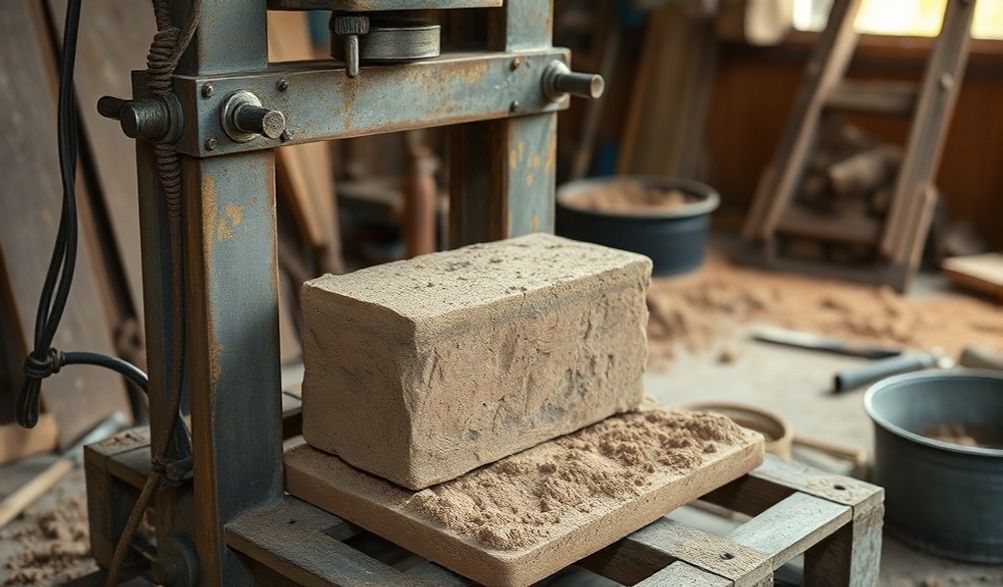
Дастури комил барои сохтани мошини сохтмонии хишт дар хона
Муқаддима
Тасаввур кунед, ки девори боғ, корхонаи хурд ё ҳатто хонаеро бо хиштҳое, ки худ аз ҳамин замини зери пой сохтаед, бунёд мекунед. ҷозибаи худкофӣ, сарфаи назаррас дар маводҳои сохтмонӣ ва ризояти амиқ аз офаридани чизе, ки мушоҳидашаванда ва устувор аст, руҳияи "худ кунед"-ро ба оҳанги олӣ мерасонад. Сохтани мошини сохтани хишти худсохт, лоиҳаи ниҳоист барои касоне, ки мехоҳанд манбаъҳои сохтмонии худро дар даст гиранд.
Аз таҷрибаи солҳои дароз дар сохтмони худсоз ва мошинҳои хурдҳаҷм гирифта, ин дастур барои ошкор кардани раванд тарҳрезӣ шудааст. Мо шуморо аз механикаи асосии чӣ гуна кор кардани...дастгоҳи санги хештии хонагӣко ба таркиби асосӣ ва илми муҳими омезиши хоки шумо кор мекунад.
Ин манбаи фарохӣ ба шумо намунаи воқеӣ ва қадами ба қадами пешниҳод мекунад, то ба шумо кӯмак кунад, ки арзёбӣ кунед, ки оё ин лоиҳаи амбитсиозӣ барои маҳорат, буҷа ва ҳадафҳои шумо мувофиқ аст. Як қайди муҳим пеш аз оғоз: сохтани мошини коркунанда ва бехатар талаб дорад, ки шумо соҳиби малакаи мустаҳками механикӣ бошед, ба протоколҳои қатъии бехатарӣ риоя кунед ва қонунҳои маҳаллии сохтмонро масъулона тафтиш кунед. Ин лоиҳаи ҳунарии як рӯзи истироҳат нест, балки барои шахси омода, саъю кӯшиши бисёр пурсамар аст.
Фаҳмидани Мошинҳои Созандаи Хишт ва Механикаи Онҳо
Пеш аз он ки ба ҳар гуна металл даст ёбед ё камераи варзиширо оғоз кунед, муҳим аст, ки дарк кунед чӣ месозед. Дар асоси худ, мошини сохтани хишт воситаи содда ва қавӣ барои фишор аст.
Машинаҳои сохтани хишт чӣ гуна кор мекунанд?
Принсипи асосӣ умумӣ аст:материали намхушку тағирёбанда бо қувваи бузург дар дохили қолиби сахт фишурда мешавад, то блоки зичи мутаҳид ташкил диҳад.Мошин сохтори зарурӣ барои нигоҳ доштани ин раванд ва имконияти механикӣ барои тавлиди фишори заруриро таъмин мекунад.
- Системаҳои дастӣ (бо истифода аз дӯст):Инҳо барои тарҳҳои хонагӣ бештар истифода мешаванд. Онҳо аз дарозии дастгоҳи фишор истифода мебаранд, ки одатан бо нуқтаи гардиш дар якҷоягӣ кор мекунанд, то қуввати корбарро ба таҳхонаи фишор зиёд кунанд. Онро ҳамчун меҳвари калон ва махсус тасаввур кунед.
- Системаҳои ним-автоматӣ (моторизатсияшуда):Онҳо прессаи гидравликӣ ё механикиро дар бар мегиранд, ки бо мотор ё муҳаррики барқӣ идора карда мешаванд. Гарчанде ки сохтани онҳо мураккабтар аст, вале устуворӣ бештарро таъмин мекунанд ва барои ҳар хишт талоши ҷисмонии камтарро талаб мекунанд.
Раванди сиклӣ аст: қолибро пур кунед, фишорро татбиқ кунед, нигоҳ доред, озод кунед ва хишти сохташударо берун кунед.
Намудҳои хиштҳое, ки шумо метавонед дар хона тайёр кунед
Дизайни қолиби мошинаи шумо навъи хиштиро муайян мекунад. Барои мошинаҳои хонагӣ мумкинтаринҳо инҳоянд:
- Блокҳои заминӣ фишурда (CEB):Инҳо блокҳои зичии сохташуда аз омехтаи заминӣ мебошанд, ки дар фишори баланд фурӯ бурда мешаванд. Онҳоро метавон бо миқдори каме семент (5-10%) устувор кард, то устувории иловагӣ ва тобоварӣ ба шароити обуҳаво пайдо кунанд.
- Хаҷмҳои ба ҳамдигар пайвастшаванда:Инҳо боло ва поёни нақшдор доранд, ки ба якдигар қулф мешаванд, дар баъзе барномаҳо талаби мортро коҳиш медиҳанд ё хориҷ мекунанд. Онҳо қолиби мураккабтарро талаб мекунанд, аммо сохтмони зудтар пешниҳод мекунанд.
- Блокҳои содаи росткунҷа: The standard, solid brick shape. This is the easiest mold to fabricate and is perfect for learning the process and for general use.
The material mix—whether it’s a clay-rich soil, a sandier mix, or a cement-stabilized blend—will be chosen based on the brick type and its intended use.
Essential Tools and Materials for Your Build
A successful build starts with the right components. Strength and precision are non-negotiable here.
Metal Components & Structural Frame
This is the skeleton of your machine. Do not compromise on quality.
* Чорчӯбаи сохторӣ: Heavy-duty steel square tubing (minimum 2″x2″ with 1/8″ wall) or C-channel. This must resist bending under tons of pressure.
* Қуттии қолибсозӣ: 1/4″ thick steel plate is ideal for the mold walls and compression plates. Thinner metal will warp.
* Fasteners & Hardware: High-tensile strength bolts, nuts, and washers. Heavy-duty hinges for any access doors or lids.
* Механизми фишор A 10-20 ton hydraulic bottle jack (the most common choice) or the materials to build a robust lever system (solid steel rod, pivot pins).
Tools You’ll Need in the Workshop
You will need access to a well-equipped metalworking shop:
* Welder: A MIG or ARC welder capable of welding 1/4″ steel. Strong, penetrating welds are critical.
* Angle Grinder: With cutting and grinding discs for shaping metal and cleaning welds.
* Drill Press or Heavy-Duty Hand Drill: For drilling precise holes in thick steel.
* Measuring & Layout Tools: Tape measure, combination square, marker, and center punch.
* Clamps: Multiple C-clamps or locking pliers to hold components square for welding.
* Safety Gear: Non-negotiable. Welding helmet, heavy-duty gloves, safety goggles, ear protection, and a respirator for grinding.
Sourcing Materials Responsibly
Cost can be managed through smart sourcing:
* Scrap Yards: An excellent source for heavy steel tubing, plate, and odd parts. Inspect for cracks or severe rust.
* Metal Suppliers: For new, guaranteed-quality steel. You’ll pay more but get precise dimensions and known metallurgy.
* Online Marketplaces: For items like the hydraulic jack.
* Key Principle: When in doubt, overbuild. A machine that flexes or fails under pressure is useless and dangerous.
Step-by-Step Assembly Guide (Core Process)
This is a conceptual guide. Always work from detailed, engineered plans for your specific design.
Phase 1: Building the Main Frame and Compression Chamber
- Бурдан Precisely cut all frame members to the dimensions in your plans using the angle grinder.
- Tack Welding: Assemble the frame on a flat surface (e.g., a leveled workbench). Use the combination square to ensure every angle is 90 degrees. Tack weld all joints.
- Final Welding: Once the entire frame is square and true, complete the welds. Weld both sides of joints where possible for maximum strength. Allow welds to cool slowly to prevent brittleness.
Phase 2: Fabricating the Mold and Ejection System
- Қуттии қолибсозӣ: Weld the 1/4″ steel plates into an open-top box. The interior dimensions define your brick size (allow for ~10% shrinkage after compression and curing).
- Ejection Plate: Fabricate a steel plate that fits snugly inside the mold. This will be the “floor” that pushes the finished brick out.
- Механизми партофтани гилоза This can be a simple lever system that lifts the ejection plate from below, or a design where the entire mold box tilts or opens.
Phase 3: Installing the Compression Mechanism
- For Hydraulic Jack Systems: Weld a sturdy mounting plate at the top center of the frame. The jack will sit here, pressing a “compression head” plate down into the mold.
- For Lever Systems: Design and install a strong pivot point above the mold. The lever must be long enough to provide a mechanical advantage sufficient to achieve high pressure. This often requires careful calculation.
- Мувофиқат The force must be applied perfectly vertically and centered. Any misalignment will cause binding and uneven bricks.
Preparing the Right Soil Mix for Durable Bricks
The best machine in the world will fail with poor material. Your soil is your recipe.
Soil Testing: The Key to Success
Start with the simple “jar test”:
1. Fill a clear jar 1/3 with dry, crushed soil.
2. Add water until the jar is 2/3 full, then shake vigorously for several minutes.
3. Let it settle for 24 hours. Layers will form: coarse sand at the bottom, silt in the middle, and clay on top.
4. Measure each layer. An ideal CEB mix often falls in the range of ~70% sand and gravel, 15-30% silt, and 10-20% clay.
Optimal Mix Formulas
- Stabilized Earth Block (Most Common & Recommended): Screened soil (free of organic matter) + 5-10% Portland cement by volume. Mix thoroughly dry first, then add water.
- High-Clay Brick: For a more traditional unfired adobe-style brick, you’ll want a mix with 25-30% clay. These require longer curing and protection from rain.
Moisture Content and Curing
- Moisture: The mix should be damp, not wet or crumbly. The “proctor test”: squeeze a handful tightly. It should form a firm ball that holds its shape and shows slight moisture on your fingers without dripping.
- Шифо додан: This is where bricks gain strength. Keep stabilized blocks damp under plastic sheeting for 7-14 days, then allow to air-dry for several weeks before use. Never let them dry too quickly (cracking) or freeze while wet.
Critical Safety Protocols and Best Practices
Workshop and Build Safety
- Welding: Work in a well-ventilated area, free of flammables. Wear your full-face helmet and protective clothing to avoid arc flash and burns.
- Grinding/Cutting: Always use a guard on the angle grinder, wear a face shield over safety glasses, and secure the workpiece.
- Lifting: Get help with heavy steel components. Use proper lifting technique to avoid injury.
Operational Safety and Maintenance
- Inspect Before Use: Check all welds for cracks, ensure bolts are tight, and verify the hydraulic jack is functioning smoothly.
- Clear the Area: Keep hands, tools, and loose clothing clear of the compression area during operation.
- Maintenance: Regularly clean the mold, lubricate moving parts, and check for wear on the ejection system and compression plates.
Evaluating Cost, Time, and Practicality
Homemade vs. Commercial Machines: A Breakdown
| Factor | Homemade Machine | Small Commercial Machine |
| :— | :— | :— |
| Upfront Cost | $200 – $800+ (scrap vs. new materials) | $1,500 – $5,000+ |
| Capability | Customizable, but output is low (50-100 bricks/day). | Higher, consistent output. Engineered for production. |
| Давомнокӣ | Depends entirely on builder skill and material quality. | Professionally manufactured with warranties. |
| Time Investment | Салом. 40-100+ hours to build, plus learning curve. | Салом. Unbox, set up, and start production. |
| Satisfaction | Extremely high if successful. A true DIY achievement. | Functional, but no personal creation aspect. |
Is Building Your Own Machine Worth It?
It is worth it if you:
* Have a specific, finite project (e.g., a garden perimeter, shed).
* Are located remotely where transporting bricks is prohibitively expensive.
* Possess intermediate-to-advanced welding/fabrication skills and enjoy the challenge.
* Value the knowledge and self-reliance as much as the end product.
You should consider buying if you:
* Need bricks for a large or time-sensitive project.
* Lack confidence in your metalworking abilities.
* Require certified, code-compliant bricks for a primary dwelling.
* Want a turn-key solution with reliable output.
Frequently Asked Questions (FAQ)
Q1: How much does it cost to build a homemade brick making machine?
A: The cost spectrum is wide. A minimalist build using scavenged scrap metal and a used jack can be under $200. A robust, all-new steel build with a quality jack and hardware will likely run between $500 and $800. Your investment is primarily time and skill.
Q2: What is the strongest brick mix I can make at home?
A: For a homemade press, a well-compacted cement-stabilized earth block (8-10% cement) with optimal soil grading and proper curing will yield the strongest result. However, it’s important to note that these still differ from kiln-fired clay bricks and have lower tensile strength. Their compressive strength can be ample for many applications.
Q3: Can I make bricks for a house or structural wall with a homemade machine?
A: This is the most critical question. You must consult a qualified structural engineer and your local building code office. Homemade bricks can be suitable for non-load-bearing structures like garden walls, sheds, or interior partitions. Using them for a primary residence’s load-bearing walls is a major engineering undertaking that requires professional mix design, testing, and approval.
Q4: Where can I find detailed DIY plans or blueprints?
A: Look to reputable engineering-for-development resources like Open Source Ecology, university agricultural or appropriate technology extensions (e.g., University of California, Davis), and dedicated DIY construction forums. Always vet plans carefully—look for ones that include material specs, weld diagrams, and stress calculations.
Q5: What are the most common mistakes to avoid?
A:
* Using under-spec materials: Thin metal that bends.
* Skipping soil testing: Guessing your mix leads to weak, crumbly bricks.
* Insufficient compression: Not achieving high enough pressure for proper block density.
* Neglecting curing: Letting bricks dry out too fast, causing cracks.
* Rushing safety: One lapse with a grinder or welder can cause serious injury.
Conclusion
Building a дастгоҳи санги хештии хонагӣ is a journey that blends practical engineering, materials science, and old-fashioned hands-on skill. We’ve covered the path from understanding the core mechanics of compression to assembling a sturdy frame, fabricating a precise mold, and mastering the crucial art of the soil mix.
The advice here is rooted in practical, hands-on experience, designed to give you a clear-eyed view of the challenges and rewards. Our final recommendation is this: honestly assess your workshop skills, your project needs, and your local regulations. If you proceed, start methodically. Consider building a simple, single-brick mold prototype first to test your soil and process before committing to a full machine.
Have specific questions about weld types, soil ratios, or mechanism design? Share your thoughts below. For those looking to deepen their knowledge, we recommend further reading on soil mechanics and advanced workshop fabrication techniques.
<