
The Ultimate Guide to Cement Fly Ash Brick Making Machines | FUDA Factory Insights
The construction industry is at a pivotal crossroads. As the world intensifies its focus on sustainability and resource efficiency, the demand for eco-friendly, high-performance building materials has never been greater. Traditional clay brick manufacturing, with its reliance on topsoil excavation and energy-intensive kiln firing, is increasingly seen as an environmental liability.
Enter the modern solution: the cement fly ash brick. This superior building block offers a compelling answer, but its widespread adoption hinges on efficient, reliable production technology. This is where the cement fly ash brick making machine becomes the linchpin of a smarter, greener construction future.
For builders, contractors, and entrepreneurs, investing in this technology isn’t just an equipment purchase—it’s a strategic business decision. This comprehensive guide will demystify these machines, drawing on industry best practices and the engineering expertise of established manufacturers like โรงงานผลิตอิฐฟูดา. By the end, you’ll understand the process, the profound benefits, the key features to prioritize, and how to select a partner that ensures long-term success.
What is a Cement Fly Ash Brick Making Machine?
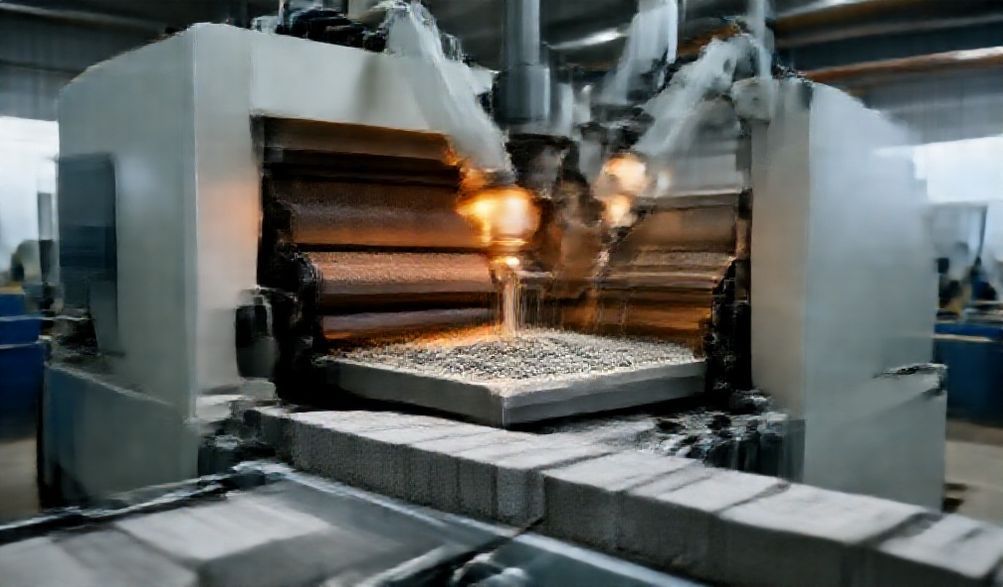
At its core, a cement fly ash brick making machine is an automated system designed to transform raw materials into dense, uniform, and high-strength bricks or blocks. It replaces labor-intensive, inconsistent manual methods with precision engineering, ensuring every brick meets strict quality standards.
Core Function and Process Explained
The machine automates the entire production cycle, which typically follows these key stages:
- การให้อาหาร Raw materials—primarily cement, fly ash, sand/stone dust, and water—are fed into the machine’s mixer in precise, pre-determined ratios.
- การผสม A powerful mixer blends the materials into a homogeneous, semi-dry concrete mix, ensuring consistent quality from the very first step.
- การขึ้นรูปและการอัดอัด This is the heart of the process. The mix is transferred into molds. Through a combination of high mechanical pressure and often vibration, the mix is compacted to remove air voids and achieve the desired brick density and shape.
- การปลดออกและบำบัดรักษา The freshly formed, “green” bricks are automatically ejected onto pallets or a conveyor. They are then stacked and moved to a curing area, where they gain strength over time through controlled hydration.
Why Fly Ash? The Environmental and Economic Advantage
Fly ash is a fine powder, a by-product of burning pulverized coal in thermal power plants. Historically treated as waste, it’s now a valuable resource in construction.
- แชมป์สิ่งแวดล้อม Using fly ash diverts millions of tons of industrial waste from landfills. It reduces the need for cement, whose production is a major source of global CO2 emissions, thereby significantly lowering the brick’s overall carbon footprint.
- Economic Sense: Fly ash is often less expensive than cement. Its use in the mix can reduce raw material costs. Furthermore, bricks produced with fly ash often exhibit better long-term strength and durability due to pozzolanic reactions.
- Superior Product: Fly ash bricks are known for their uniform color, smooth finish, excellent compressive strength, and lower water absorption compared to traditional clay bricks, leading to better plaster bonding and reduced efflorescence.
Key Benefits of Using an Automated Brick Making Machine
Transitioning from manual or rudimentary methods to an automated system unlocks transformative advantages for any business.
Unmatched Efficiency and Productivity
- ผลผลิตปริมาณสูง Machines can produce thousands of bricks per shift, operating consistently 24/7 if needed. This scalability is impossible with manual labor.
- Speed and Consistency: Automated cycles ensure a continuous, predictable production flow, allowing for accurate project planning and timely order fulfillment.
อิฐคุณภาพสูงและสม่ำเสมอ
- Uniformity Guaranteed: Every brick is identical in size, shape, weight, and density. This eliminates waste on-site due to irregular bricks and speeds up the masonry process.
- Controlled Strength: Precise pressure application ensures each brick meets or exceeds required compressive strength standards (like IS 12894 in India), building trust with engineers and clients.
การลดต้นทุนระยะยาวอย่างมีนัยสำคัญ
- Lower Labor Dependency: One automated machine can replace a large team of manual workers, drastically cutting recurring wage costs and management overhead.
- Optimized Material Use: Computerized or volumetric batching minimizes raw material waste, ensuring you get the maximum number of bricks from your input costs.
- Higher ROI: While the initial investment is higher, the combination of massive output, lower operational costs, and premium product pricing leads to a faster and more substantial return on investment.
Enhanced Worker Safety and Ergonomic Design
- Reduced Physical Strain: Automation eliminates the heavy lifting and repetitive motions associated with manual brick molding, lowering the risk of musculoskeletal injuries.
- Safer Work Environment: Enclosed mixing and pressing areas reduce workers’ exposure to cement and fly ash dust, creating a cleaner, healthier workplace.
Types of Cement Fly Ash Brick Making Machines
Choosing the right type of machine is critical and depends entirely on your production goals, budget, and scale.
เครื่องจักรอัตโนมัติเต็มรูปแบบ เทียบกับ เครื่องจักรกึ่งอัตโนมัติ เทียบกับ เครื่องจักรที่ควบคุมด้วยมือ
- อัตโนมัติเต็มรูปแบบ: The pinnacle of efficiency. These systems feature automated material handling, mixing, molding, and brick stacking. They require minimal human intervention, offer the highest output, and are ideal for large-scale plants with significant capital.
- กึ่งอัตโนมัติ: A balanced choice for small to medium enterprises. The core pressing process is automated, but tasks like feeding raw materials or removing finished bricks may be manual. They offer excellent productivity at a more accessible price point.
- เครื่องจักรที่ใช้แรงคน These are simple, lever-operated or small hydraulic presses. They have very low output and are labor-intensive but serve as an ultra-low-cost entry point for micro-enterprises or very specific, small-batch needs.
Stationary Plant vs. Mobile Block Making Machine
- Stationary Plant: Set up in a fixed factory location. Ideal for supplying a local market or multiple construction sites. Allows for optimized workflow, shelter for curing, and larger, more powerful equipment.
- Mobile Block Machine: Mounted on a trailer, it can be driven directly to a large construction site. This eliminates brick transportation costs for that project, as blocks are made on-demand, right where they will be used.
Key Machine Specifications to Understand
When evaluating machines, focus on these critical specs:
* เวลาในรอบการผลิตและผลผลิต Measured in bricks per hour or per 8-hour shift. This defines your production capacity.
* Pressure Capacity: Measured in tons or megaPascals (MPa). Higher pressure generally produces denser, stronger bricks.
* ความต้องการพลังงาน The voltage and electrical load (in kW) needed to operate the machine.
* Brick Sizes & Mold Versatility: The range of brick and block sizes (solid, hollow, paver, interlocking) the machine can produce with different molds.
Inside Look: How FUDA Brick Making Factory Ensures Quality
Understanding a manufacturer’s philosophy and processes is key to assessing the long-term value of your investment. A factory like FUDA exemplifies the engineering rigor required for dependable machinery.
Engineering and Design Philosophy
Leading manufacturers prioritize durability above all. This means:
* Using high-grade, wear-resistant materials for critical components like the mold box (often hardened steel), hydraulic cylinders, and the main frame.
* Designing for user-friendly operation with intuitive control panels (often PLC-based) and easy access for maintenance.
* Focusing on low-maintenance design with sealed bearings, easily replaceable wear parts, and robust construction that withstands continuous operation.
Manufacturing and Quality Control Protocols
Quality isn’t an afterthought; it’s built into every stage:
* Component Sourcing: Critical parts like hydraulic pumps, motors, and electrical components are sourced from reputable brands.
* In-House Machining: Precision machining of parts ensures perfect fit and alignment, which is vital for consistent brick quality and machine longevity.
* Assembly & Testing: Each machine is assembled by skilled technicians and undergoes rigorous running tests before leaving the factory. This includes pressure tests, cycle tests, and safety checks.
Research, Development, and Innovation
A forward-thinking manufacturer continuously improves. This can involve:
* Optimizing vibration systems for better compaction with less energy.
* Developing new mold designs for innovative block profiles.
* Incorporating smart features like data loggers to track production efficiency or fault diagnostics for easier troubleshooting.
Choosing the Right Machine for Your Business
Making the correct choice requires honest self-assessment and careful supplier evaluation.
Assessing Your Production Needs and Scale
ถามตัวเอง
* What is my current and projected daily brick demand?
* What is my available budget (including machine, installation, and working capital)?
* Do I have adequate space for the machine, raw material storage, and brick curing?
* What is the skill level of my available workforce?
Essential Features to Prioritize
Regardless of type, a quality machine must have:
* เอheavy-duty, vibration-resistant frame.
* เอreliable, branded hydraulic system with proper cooling.
* An efficient and balanced vibration system for optimal compaction.
* Quick-change mold systems to switch production with minimal downtime.
* Integrated safety features like emergency stops and protective guards.
The Importance of Supplier Support and Service
The machine is a long-term asset. The supplier is your long-term partner. Exceptional after-sales support is non-negotiable and includes:
* A clear, comprehensive warranty.
* Ready availability of genuine spare parts.
* On-site installation, commissioning, and operator training.
* Responsive technical support via phone, email, or service visits.
Questions to Ask Your Machine Supplier
- Can you provide contact information for current clients in my region for a reference?
- What is included in the installation and commissioning process? Is training provided?
- Can you share a detailed list of recommended spare parts and their costs?
- What is the typical lead time for critical spare parts if they are not in stock locally?
- Do you offer guidance on optimal raw material mix designs for my local fly ash?
คำถามที่พบบ่อย (FAQ)
Q1: What is the typical ratio of cement to fly ash in these bricks?
A common range is between 1:3 and 1:6 (cement:fly ash), with the balance being sand or stone dust. However, the optimal ratio is highly dependent on the quality (class) of your local fly ash and the target brick strength. Always consult your machine supplier or a materials engineer for a site-specific mix design.
Q2: How strong are fly ash bricks compared to traditional clay bricks?
Well-manufactured fly ash bricks consistently achieve a minimum compressive strength of 7.5 MPa to 10 MPa, often surpassing the requirements for Class I clay bricks. They also offer superior dimensional consistency, lower water absorption, and better resistance to salt attack.
Q3: What is the curing process for these bricks?
Unlike sun-dried clay bricks, cement-based bricks require controlled hydration. After molding, bricks are stacked and kept moist through water sprinkling or covered with wet gunny sacks for a minimum of 14-21 days. For faster strength gain, steam curing chambers can be used, achieving high strength in under 24 hours.
Q4: Can the machine produce different types of blocks (hollow, solid, paver)?
Yes, versatility is a key advantage. By simply changing the mold, most modern machines can produce a wide variety of products including solid blocks, hollow blocks (for load-bearing and partition walls), paving slabs, and interlocking blocks for landscaping. Confirm the specific mold compatibility with your supplier.
Q5: What is the expected return on investment (ROI) period?
ROI depends on factors like machine cost, local brick selling price, operational efficiency, and market demand. For a well-planned, medium-scale operation with good market access, a typical ROI period can range from 1 to 3 years. The high and consistent output of automated machines is the primary driver for this attractive payback period.
สรุป
Investing in a cement fly ash brick making machine is a decisive step toward a future-proof business. It aligns profitability with sustainability, offering a clear path to higher productivity, consistent quality, and a significantly reduced environmental impact. The technology empowers you to meet the growing demand for green building materials head-on.
As we’ve explored, the success of this investment hinges not just on the machine’s specifications, but on the expertise and reliability of the manufacturer behind it. A partner committed to robust engineering, rigorous quality control, and unwavering after-sales support—principles embodied by manufacturers like โรงงานผลิตอิฐฟูดา—transforms a capital purchase into a lasting competitive advantage.
Your next step is to move from research to action. Contact reputable suppliers for detailed quotations tailored to your needs, request a visit to a working plant to see the machinery in action, and begin calculating your production potential based on the opportunities in your local construction market. The foundation for a more efficient and sustainable building future is ready to be laid.
<