
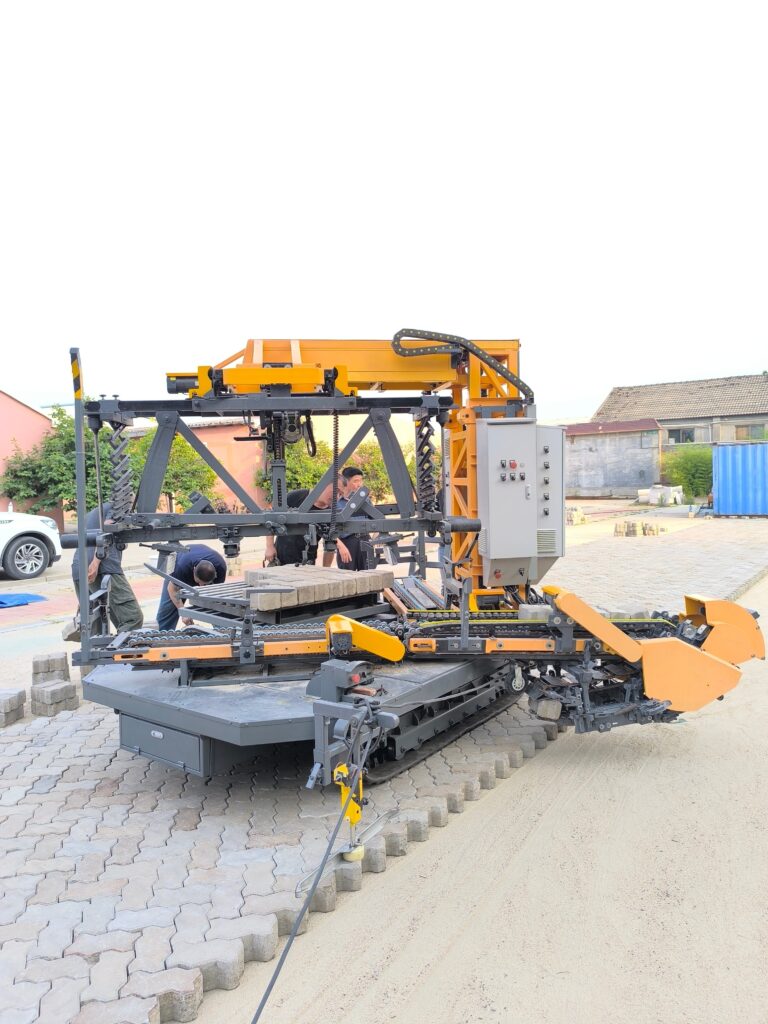
Операційна структура машин для друку блоків цегли
Машинобудування для друку будівельних блоків — це інтегрована система, призначена для автоматизації точного нанесення бетону або розчину для формування будівельних елементів шар за шаром. На відміну від традиційних методів, цей процес керується цифровим способом, що забезпечує безпрецедентну точність і гнучкість.
1. Базова архітектура системи
Механізм побудований на синергетичній інтеграції кількох складних підсистем, які працюють узгоджено, щоб перетворити цифровий проект у фізичну структуру.
- 3.1. Центральне управління та програмний інтерфейс
В основі кожної системи 3D-друку лежить потужний блок комп'ютерного чисельного програмного керування (ЧПК), яким керує спеціалізоване програмне забезпечення. Це програмне забезпечення виконує роль командного центру, де цифрові моделі (зазвичай у форматі STL або G-коду) імпортуються, масштабуються та нарізаються на тонкі горизонтальні шари. Потім програмне забезпечення генерує точні траєкторії руху інструмента та інструкції для переміщення принтера, швидкості подачі матеріалу та швидкості сопла, гарантуючи, що фізичний виріб ідеально відповідає цифровому прототипу. - 3.2. Система транспортування та змішування матеріалів
Стабільне та надійне постачання матеріалу є ключовим. Ця система включає високомісткий силос для зберігання сухої суміші (спеціалізований склад цементу, заповнювачів та добавок) та інтегрований змішувальний вузол. Сухий матеріал автоматично подається до змішувача, де додаються вода та інші рідкі добавки для створення однорідної, придатної для перекачування пасти. Часто використовуються безперервні змішувачі, щоб забезпечити безперебійний потік матеріалу, що є критичним для великомасштабного, безперервного друку. - 3.3. Роботизована система позиціонування
Друкуюча головка встановлена на надійній системі позиціонування, яка визначає робочий простір машини. На ринку домінують дві основні конфігурації:- Гантрійні системиЦі системи мають жорстку раму, яка переміщує друкувальну головку по осях X, Y та Z над нерухомим робочим столом. Гантрейні системи відомі своєю стабільністю та здатністю створювати великі, важкі конструкції з високою точністю.
- Системи роботизованих маніпуляторів:Промисловий багатоосьовий роботизований маніпулятор забезпечує більшу гнучкість та ширшу робочу зону відносно своєї площі. Він здатен створювати складніші непланарні геометрії і часто використовується для виготовлення вишуканих архітектурних елементів.
2. Процес друку: від цифрового файлу до фізичного блоку
The actual printing process is a meticulous, layer-by-layer additive manufacturing sequence.
- 3.1. Substrate Preparation and Calibration
Before printing commences, the build platform or print bed must be perfectly leveled. The printing system often performs an automated calibration routine to ensure the first layer adheres correctly. A release agent may be applied to the bed to facilitate easy demolding of the finished product. - 3.2. Material Extrusion and Nozzle Technology
The prepared mix is pumped from the mixer through high-pressure hoses to the print head. The print head is equipped with a extrusion nozzle, whose diameter can often be changed to achieve different print resolutions and bead widths. A precision servo-motor or peristaltic pump controls the extrusion rate, ensuring it is perfectly synchronized with the print head’s movement to deposit a continuous, consistent bead of material. - 3.3. Layer-by-Layer Fabrication and Curing
The printer deposits the first layer according to the toolpath. Subsequent layers are then built upon the previous ones. The specific material mix is engineered to possess thixotropic properties—it flows easily under pressure during extrusion but sets almost immediately afterward to support the weight of the layers above. This inter-layer adhesion is critical for the structural integrity of the final block or brick.
3. Key Technological Features and Innovations
Modern block brick printers incorporate several advanced features that differentiate them from conventional manufacturing equipment.
- 3.1. Real-Time Monitoring and Closed-Loop Control
High-end systems are equipped with an array of sensors that monitor material pressure, flow rate, print head position, and environmental conditions. This data is fed back to the central control system in a closed-loop, allowing for real-time adjustments. If a deviation is detected, the system can automatically compensate, ensuring consistent quality throughout the print job. - 3.2. Multi-Material and Color Printing Capabilities
Some advanced printers are designed with multiple material delivery systems. This allows for the simultaneous printing of different concrete mixes or the incorporation of color pigments into specific layers or sections of the design. This capability opens up new markets in architectural facades and custom decorative elements. - 3.3. Integrated Curing Systems
To accelerate the initial setting and achieve early-age strength, some printing cells are equipped with integrated curing systems. These can include misting nozzles that spray a fine curing compound or controlled environmental chambers that maintain optimal temperature and humidity, reducing the time between printing and handling.
Strategic Commercial Implications for Distributors and Procurement Agents
Adopting or sourcing from block brick printing technology presents a paradigm shift with distinct competitive advantages for your business.
- Unprecedented Design Freedom and Customization: This is the most significant value proposition. You can offer clients fully customized bricks, blocks, and architectural elements with complex geometries, internal channels, and bespoke textures that are impossible or prohibitively expensive to produce with traditional molds. This allows you to move beyond commodity products into high-margin, specialized markets.
- Radical Reduction in Lead Times and On-Demand Production: The digital workflow eliminates the need for expensive and time-consuming mold fabrication. A design can be sent to the printer and produced within hours. This enables a just-in-time manufacturing model, reducing inventory costs and allowing you to respond with agility to client requests and urgent project timelines.
- Minimized Material Waste and Sustainable Operations: Additive manufacturing is inherently a low-waste process. Material is deposited only where needed, drastically reducing scrap compared to subtractive methods. This aligns with the growing global demand for sustainable construction practices and can be a powerful marketing tool.
- Labor Optimization and Reduced Skill Dependency: The printing process is highly automated, requiring minimal human intervention for operation. This reduces dependency on highly skilled laborers for complex forming tasks and mitigates risks associated with labor shortages, while also enhancing overall site safety.
- Supply Chain Consolidation and Localized Production: The compact nature of some printing systems allows for the establishment of small-scale, localized production facilities. This can drastically reduce transportation costs and logistics complexity, enabling you to serve regional markets more efficiently and resiliently.
Висновок
Block brick printing machinery is not merely an incremental improvement; it is a disruptive force redefining the very nature of masonry unit manufacturing. For forward-thinking distributors and procurement agents, this technology represents a gateway to new business models, elevated product offerings, and a strengthened competitive stance. The ability to provide customized, high-quality, and sustainably produced building components on demand aligns perfectly with the future trajectory of the construction industry. By developing a deep expertise in this field and strategically incorporating printed products into your portfolio, you position your organization not just as a supplier, but as an innovative partner in construction, ready to meet the challenges and opportunities of the 21st century.
Часті питання (FAQ)
Q1: What types of materials can be used with these printing machines?
А: The primary material is a specialized cement-based mix, often referred to as a “printable mortar” or “concrete ink.” These mixes are engineered with specific additives to control setting time, workability, and green strength. Research is ongoing into incorporating recycled materials and geopolymers to enhance sustainability.
Q2: What is the typical build volume or maximum product size achievable?
А: Build volumes vary significantly by machine model. Gantry systems can have print envelopes exceeding 10 meters in length and 5 meters in width and height, capable of producing large walls or multiple blocks simultaneously. Robotic arms may have a smaller footprint but a larger spherical work envelope, ideal for complex, free-form structures.
Q3: How does the structural strength of a printed block compare to a traditionally molded one?
А: When using properly formulated materials, printed blocks can achieve compressive strengths comparable to or even exceeding those of traditional high-grade concrete blocks. The layer-by-layer process can create anisotropic strength properties, but this is accounted for in the structural design and mix formulation.
Q4: What is the learning curve for operating this type of machinery?
А: Operating the machine itself is designed to be user-friendly, with intuitive software interfaces. However, the core expertise lies in mastering the digital design (CAD) for printability and understanding the material science behind the mixes. Comprehensive training from the equipment provider is essential, and many operators become proficient within a few weeks.
Q5: Can these machines print entire buildings, or are they just for components?
А: The technology exists on a spectrum. The machinery described here is primarily for manufacturing individual blocks, bricks, and prefabricated panels. Separate, larger-scale “contour crafting” systems are designed to print entire building shells on-site. The block printing approach offers more control and is better suited for integration into standard supply chains.
Q6: What are the primary operational costs associated with running this equipment?
А: The key operational costs include:
- Сировина: The cost of the specialized printable mix.
- Споживання енергії: Significant electricity usage from the robotic system, mixer, and pump.
- Maintenance: Regular servicing of the pump, hoses, nozzle, and robotic positioning system.
- Software Licenses: Ongoing subscriptions for the proprietary printing software.
- Праця: Skilled technicians for machine operation and monitoring.
