Yuqori Hajmli Ishlab Chiqarish Texnologiyasiga Kirish
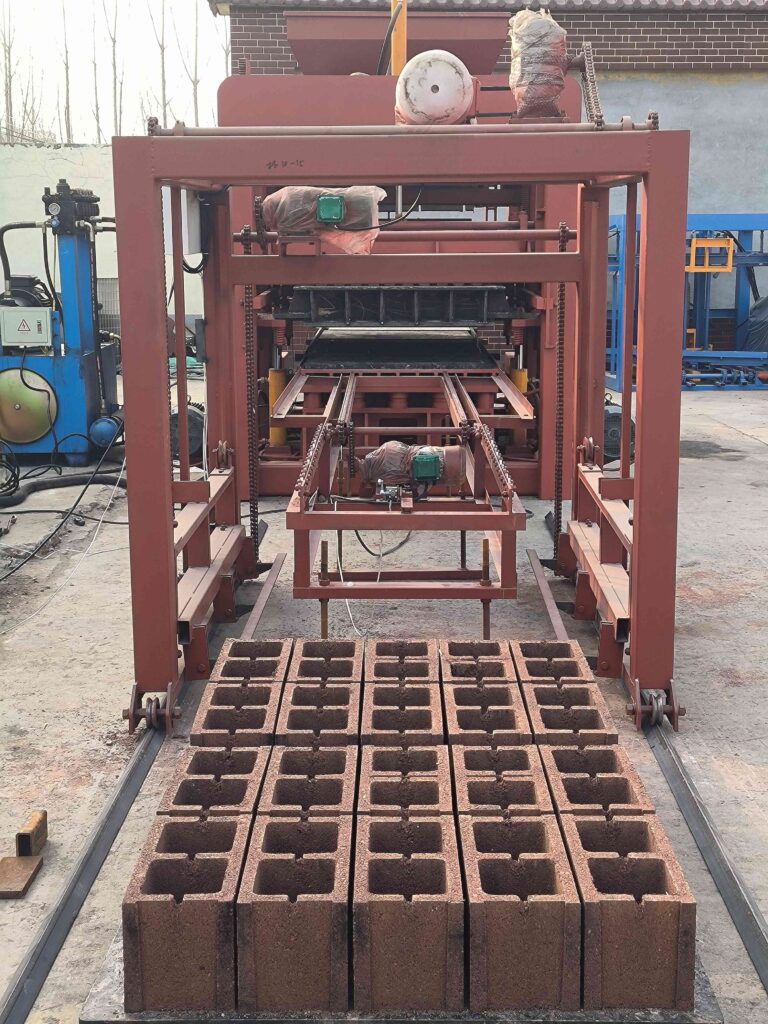
Qurilish materiallarini ishlab chiqarish sohasidagi raqobatbardosh muhitda samaradorlik va mahsulot hajmi bozor yetakchiligining asosiy omillaridir. 10-g'ishtli avtomatik blok va g'isht tayyorlash mashinasi bozor ulushini oshirishni maqsad qilgan ishlab chiqaruvchilar uchun mo'ljallangan maxsus sanoat uskunasi sinfini ifodalayadi. Mashina tsikli davomida o'nta mahsulotni qoliplash qobiliyati bilan ajralib turadigan bu konfiguratsiya, kichikroq yarim avtomatik operatsiyalardan o'sib borayotgan korxonalar yoki ishlab chiqarish quvvatini sezilarli darajada kengaytirishni istaydigan o'rnatilgan zavodlar uchun eng optimal yechim hisoblanadi.
10-уйли ишлаб чиқариш тизимининг ҳамма жиҳатдан таҳлили
1.1 Muhandislik Arxitekturasi va Operatsion Ish Jarayoni
10-каверли машина фақат ўз аналогларининг каттароқ версияси эмас; бу синхронлаштирилган, юқори тезликда ишлаш учун мослаштирилган механик, гидравлик ва бошқарув тизимларининг мураккаб интеграциясидир.
- Sinxronlashtirilgan Ko'p Bo'shliqli Quyish Jarayoni:Mashinaning yadroni o'nta alohida bo'shliqdan iborat mustahkam, aniq ishlov berilgan qoliplar yig'indisi tashkil etadi. Har bir ishlab chiqarish siklida, o'lchangan hajmdagi beton bir vaqtning o'zida barcha o'nta kameralarga taqsimlanadi. Yuqori chastotali tebranish va 200 tonnadan ortiq umumiy kuchga ega bo'lgan gidravlik bosimning kombinatsiyasi butun qolip stoliga bir xilda qo'llaniladi. Bu shakllantirilayotgan o'nta blokning har birining bir xil zichlash energiyasini olishini ta'minlab, partiyalararo ajoyib izchillikni keltirib chiqaradi. Qolip dizayni tez mahsulot o'zgarishlarini osonlashtirish uchun tezkor chiqarish mexanizmlari va standartlashtirilgan o'rnatish plitalarini o'z ichiga oladi.
- Integratsiyalashgan Materiallarni Boshqarish va Logistika:10-kanalli tizimning yuqori ishlab chiqarish darajasini saqlab qolish uchun mashina odatda avtomatlashtirilgan partiyalash va aralashtirish qurilmasi bilan ta'minlanadi. Uzluksiz konveyor aralash betonning doimiy oqimini mashinaning quyish bunkeriga yetkazib beradi. Keyin avtomatlashtirilgalgan chelakli yuklovchi yoki konveyor materialni aniq ravishda o'nta kavumga taqsimlaydi. Bloklar siqilgandan so'ng, avtomatlashtirilgan paleta aylanish tizimi bo'sh paletalarni kerakli joyga olib keladi. Butun blok va paleta yig'indisi keyin chiqarilib, o'tkazgich orqali stakerga yoki avtomatlashtirilgan quritish tizimiga o'tkaziladi, bu esa uzluksiz, to'xtovsiz ishlab chiqarish oqimini yaratadi.
- Ilg‘or Boshqaruv va Nazorat Tizimlari:Operatsiya boshqarilishi Dasturiy mantiqiy boshqaruv (PLC) va foydalanuvchi uchun qulay Interfeys (HMI) orqali amalga oshiriladi. Ushbu tizim operatorlarga barcha muhim parametrlarni, jumladan, tebranish davomiyligi, gidravlik bosim, berilish chuqurligi va tsikl vaqtini sozlash va nazorat qilish imkonini beradi. Zamonaviy tizimlar Internet of Things (IoT) sensorlari bilan jihozlangan bo‘lib, ular mashina holatini kuzatadi, ishlab chiqarish ma’lumotlarini real vaqt rejimida kuzatadi va hatto bashoratli texnik xizmat ko‘rsatish ogohlantirishlarini yaratishi mumkin. Ushbu darajadagi nazorat ish vaqtini maksimal darajada oshirish va o‘nta chuqurlikning har biri har bir tsiklda mukammal blok ishlab chiqarishini ta’minlash uchun zarurdir.
1.2 Ishlab chiqarish iqtisodiyoti va mahsulot spetsifikatsiyalari
"10-kavitali" spetsifikatsiyasi benzeri olmayan chiqish samaradorligiga asoslangan jozibador iqtisodiy modelni bevosita ifodalaydi.
- Ishlab chiqarish quvvatini miqdoriy baholash:10-kanalli mashina mahsuloti uning tsikl vaqtiga bog'liq. Oziqlantirish, siqish va paleta o'tkazishni o'z ichiga olgan standart tsikl 15-20 soniya qisqa bo'lishi mumkin. Bu soatiga 180-240 tsikl nazariy ishlab chiqarish tezligini tashkil qiladi, natijadaSoatiga 1,800 dan 2,400 gacha g'isht. In a standard 8-hour shift, this equates to 14,400 – 19,200 units, making it capable of producing over 50,000 units in a three-shift operation. This volume is sufficient to supply major housing projects or serve as a primary source for a regional distribution network.
- Comparative Advantage Over Lower-Cavity Machines: Compared to a 4-cavity system, a 10-cavity machine does not simply offer 150% more output. Due to engineering efficiencies in the cycle, the per-unit production cost is often 15-25% lower. The fixed costs of operation (supervision, power for the control system, facility overhead) are distributed across a much larger number of units, dramatically improving profitability at scale.
- Product Range and Versatility: While optimized for high-volume production, these machines are highly versatile. With interchangeable mold sets, a single 10-cavity machine can produce a wide array of products, including 10 solid bricks, 5 hollow blocks (using a split-cavity design), or a combination of different paving stones per cycle. This allows manufacturers to batch-produce different products efficiently without lengthy machine downtime for reconfiguration.
1.3 Strategic Market Applications and Business Implications
The acquisition of a 10-cavity automatic machine is a strategic decision that aligns with specific business growth objectives.
- Capturing Large-Scale Contractual Projects: This level of production is essential for reliably supplying bricks for large-scale infrastructure projects, government housing initiatives, and major commercial developments. The ability to guarantee consistent, high-volume supply is a key competitive differentiator that allows businesses to bid on and secure these lucrative contracts.
- Establishing Regional Distribution Dominance: A company operating a 10-cavity machine can transition from being a local supplier to a regional powerhouse. The volume produced allows for the establishment of a robust supply chain, feeding multiple distributors and retail outlets across a wider geographic area.
- Economic of Scale for Export-Oriented Businesses: For manufacturers located near ports or in economic zones, the high output makes exporting bricks to international markets economically viable. The consistent quality ensured by the automated process is critical for meeting international standards and competing in global tenders.
1.4 Investment Analysis and Total Cost of Ownership
The financial commitment for a 10-cavity system is substantial, and its justification lies in a detailed analysis of its return on investment.
- Dastlabki kapital xarajatlari: The procurement cost for a quality 10-cavity automatic machine typically falls within the range of $150,000 to $300,000. This variance depends on the level of automation, the sophistication of the control system, the quality of components (e.g., German or Japanese hydraulics), and the inclusion of auxiliary equipment like an automated pallet feeder or built-in curing system.
- Infrastructure and Installation Costs: Housing and operating this industrial asset requires significant infrastructure. This includes a reinforced concrete foundation, a spacious production shed, a three-phase high-voltage power connection (often 380V/50Hz or 440V/60Hz), and a reliable water supply. These costs can add 20-40% to the initial machine investment.
- Operational Expenditure (OPEX) Breakdown:
- Mehnat: Requires only 2-3 operators per shift for monitoring and basic management.
- Kuch: High consumption during vibration and compression; can range from $800 to $2,000 per month.
- Maintenance: Regular upkeep of hydraulic systems, vibrator motors, and wear parts like mold liners is critical. An annual maintenance budget of 3-5% of the machine’s initial cost is prudent.
- Xom ashyolar: The consumption is massive, necessitating bulk purchasing of cement and aggregates to keep material costs low.
- Investitsiyadan daromad (ROI) prognozi: Assuming a stable market, a well-utilized 10-cavity machine can achieve an ROI within 18 to 30 months. The payback period is highly sensitive to local brick prices, capacity utilization, and the cost efficiency of raw material sourcing.
Xulosa
The 10-cavity automatic brick block making machine is unequivocally an engine for industrial-scale growth. It represents a definitive step up in the production hierarchy, designed for businesses that have outgrown smaller systems and are poised to capture significant market share. The decision to invest in such a system must be underpinned by a clear strategic vision, access to capital, and a robust market analysis that confirms the demand for its massive output. For the distributor, this machine represents a high-value product for a discerning clientele; for the manufacturer, it is the key to unlocking new levels of production capacity, operational efficiency, and market influence. In the quest for dominance in the building materials sector, the 10-cavity automatic machine is not just an option—it is a strategic imperative.
Tez-tez so'raladigan savollar (FAQ)
Q1: What is the actual, realistic daily output we can expect from a 10-cavity machine, accounting for breaks and maintenance?
A: While theoretical output can exceed 50,000 bricks in 24 hours, a more realistic and sustainable output in a well-managed 20-hour operation (allowing for shift changes and preventive maintenance) is between 35,000 and 42,000 bricks per day. This factors in minor stoppages, mold cleaning, and routine checks.
Q2: How complex is the operation, and what level of technical skill is required for the workforce?
A: The operation via the HMI is designed to be user-friendly. However, troubleshooting and maintenance require skilled technicians. A team should include at least one person proficient in industrial hydraulics, basic PLC operation, and mechanical systems. Comprehensive training from the supplier is non-negotiable.
Q3: With 10 cavities, how do you ensure consistent quality across all bricks in every cycle?
A: Consistency is achieved through the machine’s design: a single, powerful vibration system serving the entire mold table, a centralized hydraulic system ensuring uniform pressure distribution, and an automated feed system that distributes material evenly. Regular calibration and maintenance of these systems are key to maintaining this consistency.
Q4: What are the most common maintenance challenges with a high-output machine like this?
A: The primary wear points are the mold liners, the vibrator motors, and the hydraulic seals and hoses. A strict preventive maintenance schedule is vital. Keeping a inventory of critical spare parts—especially specific mold liners and hydraulic seals—can drastically reduce unplanned downtime.
Q5: Can the machine be customized for a specific, non-standard brick or block design?
A: Yes, most manufacturers offer custom mold design and fabrication services. The lead time and cost for a custom 10-cavity mold will be higher than for standard designs, but it enables producers to create unique products for niche markets or specific architectural requirements.
Q6: How does the power consumption of a 10-cavity machine compare to running two smaller 5-cavity machines?
A: A single 10-cavity machine is generally more energy-efficient than two 5-cavity machines producing the same output. This is because it utilizes one central power unit, one control system, and one frame, reducing the “fixed” energy overhead. The efficiency gain can be in the range of 15-20% in terms of energy per brick produced.