
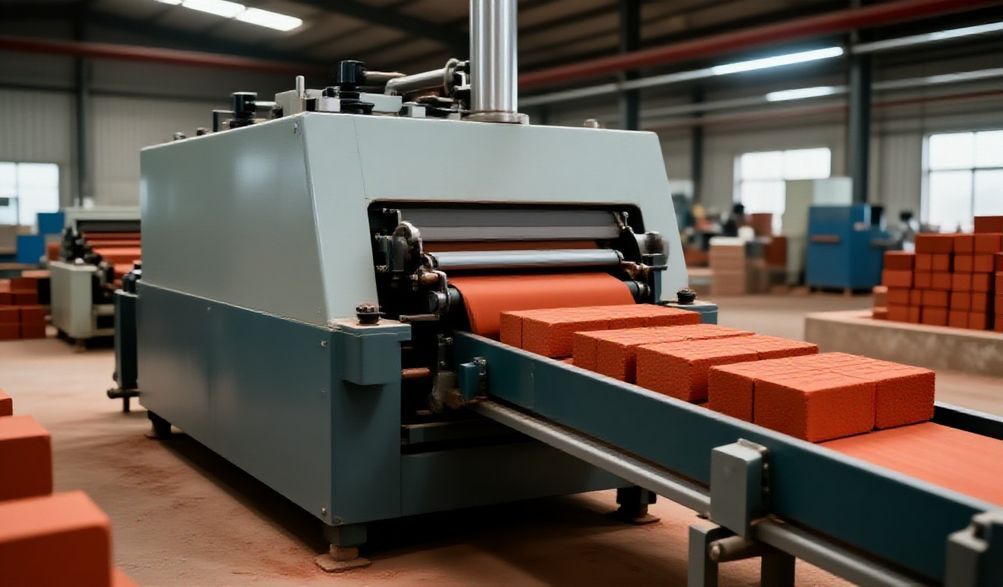
Jou Uiteindelike Gids vir Kleibaksteenvervaardigingsmasjiene in Punjab | Die Kollig op FUDA Fabriek
Inleiding
Punjab se horison is 'n bewys van groei. Van besige stedelike sentrums in Ludhiana en Amritsar tot uitbreidende dorpsgebiede, die konstruksiebedryf floreer. Aan die grondslag van hierdie vooruitgang lê 'n nederige dog kritiese komponent: die kleibaksteen. Vir generasies is die sterkte en betroubaarheid van Punjabi-strukture gebou op plaaslik vervaardigde bakstene. Die bedryf staan egter op 'n kruispad. Die tradisionele handmetodes, wat staatmaak op intensiewe arbeid en wisselende oondtoestande, sukkel om te voldoen aan die eise vir skaal, konsekwentheid en moderne gehaltestandaarde.
Hierdie gaping bied 'n duidelike uitdaging vir vervaardigers en entrepreneurs: hoe om hoëgehalte kleistene doeltreffend, koste-effektief en teen 'n mededingende tempo te vervaardig? Die antwoord is om die landskap te revolusioner—geoutomatiseerde kleisteenvormmasjiene. Hierdie gids duik in hierdie moderne oplossing, met 'n spesiale fokus op 'n plaaslike leier:FUDA Baksteenvervaardigingsfabriek.
Ons sal ondersoek hoe FUDA Punjab se ryk klei-baksteen-erfenis verbind met die voorpunt van vervaardigingstegnologie. Gebou op bedryfskundigheid en 'n diep begrip van die plaaslike mark, dien hierdie gids as 'n betroubare hulpbron vir enigiemand wat wil belê in 'nkleistene baksteen maak masjien in PunjabLaat ons 'n sterker, meer doeltreffende toekoms bou, baksteen vir baksteen.
Verstaan van Kleibaksteenmaakmasjiene: Tipes en Tegnologieë
Om van handmatige produksie na outomatisering oor te gaan, is nie net 'n opgradering nie; dit is 'n transformasie. Dit gaan daaroor om onkonsekwentheid met presisie te vervang en potensiaal met betroubare tegnologie te skaal.
Hoe Outomatiese Masjiene Tradisionele Baksteenoonde in Punjab Revolusioner
Die tradisionele baksteen-oond, hoewel ikonies, is deurspek met uitdagings:
* Arbeidsintensief:Swaar afhanklik van 'n groot, geskoolde arbeidsmag vir vorming, dra en stapel.
* Konsekwente Kwaliteit:Handmatige vorm lei tot variasies in baksteen grootte, digtheid en sterkte. Branding in klampe of Bull's Trench Oonde (BTO's) lei dikwels tot ongelyke verhitting.
* Lae Produksie:Die proses is siklies en weersafhanklik, veral die droogfase.
* Hoër Vermorsing:Breekkoerse is aansienlik hoër as gevolg van handmatige hantering en ongelyke vuur.
Outomatiese masjiene spreek hierdie kwessies regstreeks aan. Hulle verseker eenvormige vermenging, presiese hoëdrukverdichting en konstante produksie 24/7, onafhanklik van seisoenale arbeidstekorte. Die resultaat is 'n produk wat voldoen aan moderne konstruksiekodes vir druksterkte en dimensionele akkuraatheid.
Tipes Sleutel van Baksteenvervaardigingsmasjiene
Nie alle masjiene is gelyk geskep nie. Die regte keuse hang af van jou skaal, belegging en outomatiseringsdoelwitte.
- Vliegas Baksteenvervaardigingsmasjiene:Terwyl ons fokus op klei is, is dit belangrik om te onderskei. Hierdie masjiene gebruik vliegas (’n termiese kragstasie-byproduk), sement en sand. Hulle is uitstekend vir omgewingsvriendelike konstruksie, maar werk op ’n ander grondstofbeginsel as suiwer kleimasjiene.
- Volledig Outomatiese Kleibaksteen Aanlegte:Die toppunt van doeltreffendheid. Dit is volledige produksielyne met outomatiese materiaaltoevoer, vermenging, vervoer, pers en stapeling. Ideaal vir grootskaalse vervaardigers wat mik op 'n produksie van 10 000+ bakstene per skof met minimale menslike ingryping.
- Semi-Automatiese Baksteenmasjiene:Die ideale oplossing vir baie Punjabi-ondernemings. Hulle meganiseer die kritieke pers- en uitstootprosesse, maar mag handmatige toediening van die mengsel of hantering van groen bakstene vereis. Perfek vir medium-skaal bedrywighede wat aanvanklike koste balanseer met aansienlike produktiwiteitswins.
- Handmatige PersseHierdie is meganiese perse (soos die gewilde “Midget” of “Aswani” tipes) wat die druk van handvorming verhoog. Geskik vir baie kleinskaalse, landelike of spesialiteitsteëlproduksie waar belegging minimaal moet wees.
Kernkomponente en Hoe Hulle Werk
Om die masjien se anatomie te verstaan, ontraaisel dit die proses. 'n Standaard outomatiese kleisteenmasjien integreer verskeie sleutelkomponente:
- Voerder & Menger:Ontvang en meng klei homogeen met optimale waterinhoud, wat 'n buigsame, konsekwente mengsel skep.
- Vervoerstelsel:Vervoer die voorbereide kleimengsel na die perskamer sonder handmatige optel.
- Hidrouliese Pers & Vorm (Matrys)Die hart van die masjien. ’n Hoëdruk-hidrouliese ram druk die klei in ’n presisie-ingenieursstaalvorm. Hierdie druk bepaal die finale baksteen se digtheid en sterkte.
- Uitskietstelsel:Stoot outomaties die gevormde "groen baksteen" uit die vorm op ’n palet of vervoerband vir versameling.
- PLC-beheerpaneel:Die brein. Hierdie gerekenariseerde stelsel stel operateurs in staat om parameters soos druk, siklustyd en baksteentelling in te stel, wat herhaalbare, foutvrye produksie verseker.
Why Choose a Clay Brick Making Machine from Punjab’s FUDA Factory?
In a market filled with options, choosing a partner is as crucial as choosing a machine. Here’s why FUDA Brick Making Factory stands out as a leader in Punjab.
FUDA’s Legacy in Punjabi Manufacturing
FUDA isn’t just a seller; it’s a manufacturer rooted in the soil of Punjab. With years of dedicated operation, the company has built its gesag by specializing exclusively in brick and block making machinery. This deep-seated experience means FUDA understands not just engineering, but the very fabric of Punjab’s industrial needs—from the characteristics of local alluvial clay to the power infrastructure and business aspirations of local entrepreneurs.
Engineering Expertise and Machine Durability
Kundigheid is engineered into every machine. FUDA invests in in-house research and development to adapt to evolving market demands. Their machines are built for the rigors of continuous industrial operation, featuring:
* Robust, heavy-duty frames to withstand constant vibration.
* High-grade hydraulic components from reputable brands for reliable pressure.
* Hardened steel molds that resist wear, ensuring brick dimensional accuracy for thousands of cycles.
This focus on durability translates to lower long-term maintenance costs and higher uptime for your business.
Customization for Punjab’s Clay and Market
FUDA’s ondervinding shines in its ability to customize. Clay from Malwa is different from clay from Doaba. FUDA technicians can calibrate machine settings—like moisture content and compression ratio—for your specific local clay. Furthermore, they offer customization for:
* Brick Size: Standard (9″x4.5″x3″), modular, jumbo, or any custom size required by architects.
* Brick Tipe: Solid, hollow (for reduced weight and improved insulation), or even patterned facing bricks.
* Uitsetvermoë: From small semi-automatic setups to large fully automatic plants.
After-Sales Support: Training, Spares, and Service
A machine is only as good as the support behind it. FUDA establishes betroubaarheid through a comprehensive after-sales ecosystem:
* On-Site Installation & Commissioning: Expert engineers set up your plant for optimal operation.
* Hands-On Operator Training: They don’t just deliver a machine; they transfer knowledge on operation, daily maintenance, and safety.
* Local Spares Inventory: A dedicated inventory of critical spare parts within Punjab ensures you are not waiting for shipments from distant states, minimizing costly downtime.
* Responsive Service Network: A team of service technicians is on call to provide prompt support, ensuring your business keeps running smoothly.
Key Features to Look for in a Quality Clay Brick Machine
Whether you’re evaluating FUDA or other brands, these are the non-negotiable features that define a quality investment.
Produksiekapasiteit (Stene Per Uur)
This is your starting point. Align capacity with your business plan:
* Small Scale: 1,000 – 2,500 bricks per hour (often semi-automatic).
* Medium Scale: 2,500 – 6,000 bricks per hour (semi or fully automatic).
* Large Scale Plant: 6,000 – 15,000+ bricks per hour (fully automatic lines).
Hydraulic System Pressure and Brick Density
Dit is dietechnical core of quality. Higher hydraulic pressure (measured in tons or PSI) compacts the clay particles more tightly.
* Resultaat: Bricks with higher compressive strength (exceeding 70-100 kg/cm² easily), lower water absorption, and better frost resistance. Always ask for the machine’s maximum pressure and the tested strength of the bricks it produces.
Automation Level and Control Panel
The control system dictates ease of use and consistency.
* Look for PLC (Programmableerbare Logiese Beheerder) systems with touchscreen interfaces. These allow for precise setting of production parameters, store recipes for different brick types, and provide fault diagnostics, drastically reducing operator error and training time.
Power Requirement and Energy Efficiency
Consider your local industrial power situation in Punjab.
* Elektriese Motors: Cleaner, quieter, and more efficient for areas with stable grid power.
* Diesel Engine Options: Crucial for locations with frequent power cuts, ensuring uninterrupted production. Evaluate the machine’s specific power consumption (HP/KW) per thousand bricks for long-term cost efficiency.
Mold Quality and Interchangeability
The mold defines the brick. Insist on:
* Precision-Engineered Molds: Made from hardened, wear-resistant steel (e.g., EN-31) for a long lifespan and sharp brick edges.
* Easy Interchangeability: A design that allows one operator to change molds within minutes to switch between brick types, maximizing plant flexibility.
The Business Case: ROI and Setting Up Your Plant in Punjab
Investing in a brick making machine is a strategic business decision. Let’s break down the practicalities.
Investment Breakdown and Government Schemes
Your initial investment goes beyond the machine price:
* Machinery Cost: The core machine (semi or fully automatic).
* Civil Work: A covered shed for the production line, raw material storage bays, and drying areas.
* Land: Adequate space for the plant, drying yards, and stockpiling.
* Ancillaries: A tractor/pug mill for clay mixing, trolleys, and pallets.
* Wenk: Explore potential support from Punjab’s MSME or industrial policies, which may offer subsidies on machinery, interest subventions on loans, or favorable land allotments in industrial clusters.
Calculating Your Return on Investment (ROI)
A simplified model illustrates the potential. Let’s compare a semi-automatic machine with manual production.
| Factor | Manual Production (Per 10,000 Bricks) | Semi-Auto Machine (Per 10,000 Bricks) |
| :— | :— | :— |
| Arbeid Vereis | 25-30 persons | 8-12 persons |
| Production Time | 2-3 days | 4-6 hours |
| Key Cost Savings | Very high, recurring labor cost | Drastically reduced labor cost |
| Quality Premium | Sells at standard market rate | Can command a 10-15% premium for consistent, high-strength bricks |
| Wastage | High (15-20%) | Low (5-7%) |
ROI Calculation: The significant savings in labor, time, and wastage, combined with the ability to produce and sell more high-quality bricks daily, typically allows the machine to pay for itself within 12 to 24 months, depending on scale and market rates.
Ideal Plant Layout and Space Requirements
Efficiency is also about layout. A well-planned plant (approx. 1-2 acres for medium scale) should have a logical flow:
1. Raw Material Yard: Where clay is weathered and stored.
2. Production Shed: Houses the machine, mixer, and conveyor.
3. Green Brick Drying Area: A covered, ventilated space for initial drying before firing.
4. Kiln Area: For setting up a Hoffman Kiln, Tunnel Kiln, or using a clamp.
5. Finished Goods Storage: For cooled, fired bricks before dispatch.
Sourcing Raw Materials: Clay in Punjab
Punjab is endowed with good alluvial clay. Expert insight for sourcing:
* Test the Clay: Simple tests include checking plasticity, shrinkage on drying, and presence of harmful salts like sulfates.
* Voorbereiding is die Sleutel: Clay must be “weathered” by exposure to rain and sun for weeks to improve plasticity. It should then be properly crushed and mixed to a uniform consistency before feeding into the machine.
* FUDA’s Advantage: Their experience allows them to advise on optimal preparation techniques for your specific clay source.
FAQs: Clay Bricks Making Machines in Punjab
Q1: What is the approximate price range for a FUDA clay brick making machine in Punjab?
A: Prices vary significantly based on automation level and capacity. A basic semi-automatic machine can start from several lakhs, while a high-capacity fully automatic plant can run into crores. We advise contacting FUDA for a detailed, customized quote based on your desired output, brick type, and automation needs. Remember, the focus should be on long-term value and ROI, not just the initial price tag.
Q2: Can the machine produce different types and sizes of bricks?
A: Absolutely. By changing the mold/die, a single FUDA machine can produce various bricks—standard solid bricks, hollow blocks for partition walls, and even decorative paving bricks. They offer a wide range of standard mold sizes and can fabricate custom molds to your specifications.
Q3: What kind of after-sales service and warranty does FUDA provide?
A: FUDA typically offers a comprehensive warranty (e.g., 12 months) on major components like the hydraulic system and mainframe. Their commitment extends beyond warranty with readily available technical support, a robust spare parts supply chain within Punjab, and a responsive service team to ensure minimal operational disruption.
Q4: How much manpower is required to operate a semi-automatic vs. fully automatic plant?
A: This is a key differentiator. A fully automatic line, with automated handling from mixing to stacking, may require only 3-5 personnel for supervision and handling. A semi-automatic line, which might involve manual feeding or brick handling, typically requires 8-12 people. Both represent a massive reduction compared to traditional methods.
Q5: Is training provided for machine operation and maintenance?
A: Yes, comprehensively. FUDA provides mandatory on-site training for your operators and maintenance staff. This covers safe startup/shutdown procedures, daily maintenance routines, basic troubleshooting for common issues, and best practices for optimal brick quality and machine longevity.
Conclusion
The evolution from manual kilns to automated brick making is not merely a trend; it’s an essential strategic move for anyone serious about the brick manufacturing business in Punjab. It’s an investment in unparalleled consistency, scalable production, and superior product quality that the modern construction market demands.
Throughout this guide, one partner has consistently exemplified the blend of local insight and technical prowess needed to succeed: FUDA Baksteenvervaardigingsfabriek. They represent more than a machinery supplier; they are a true business partner invested in your success—from customizing a machine for your local clay to supporting you with training and service long after the sale.
If you are ready to transform your brick production, boost your profitability, and build a future-proof business, the next step is clear.
Contact FUDA Brick Making Factory today for a personalized consultation, a live machine demonstration at their facility, and a detailed project report tailored to your specific location and business goals in Punjab. Discover the power of partnering with a local expert for your kleistene baksteen maak masjien in Punjab.
<