
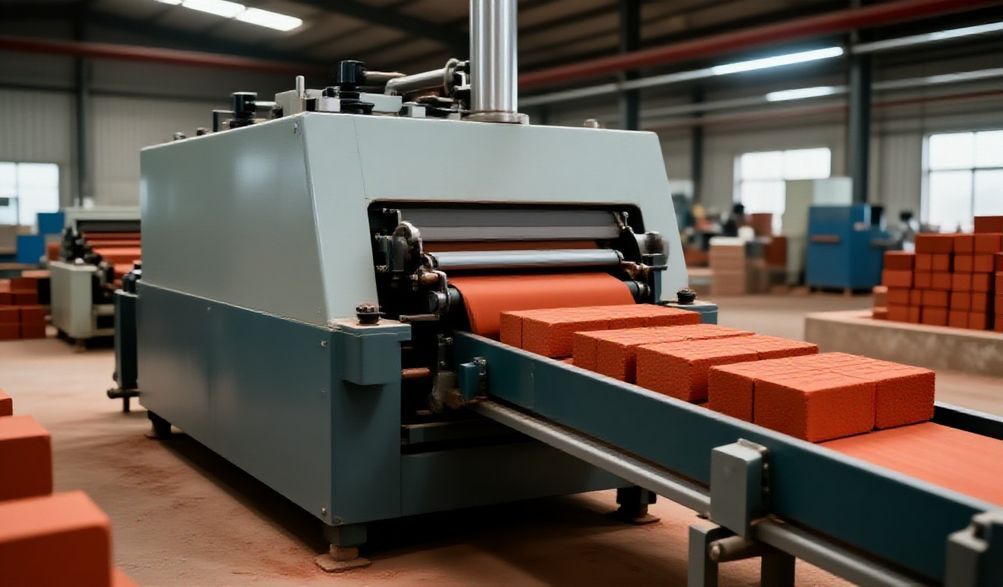
Tu Guía Definitiva sobre Máquinas para Hacer Ladrillos de Arcilla en Punjab | Enfoque en la Fábrica FUDA
Introducción
El horizonte de Punjab es un testimonio del crecimiento. Desde los bulliciosos centros urbanos de Ludhiana y Amritsar hasta las urbanizaciones en expansión, la industria de la construcción está en auge. En la base misma de este progreso yace un componente humilde pero crítico: el ladrillo de arcilla. Durante generaciones, la fuerza y confiabilidad de las estructuras punjabíes se han construido sobre ladrillos fabricados localmente. Sin embargo, la industria se encuentra en una encrucijada. Los métodos manuales tradicionales, que dependen de mano de obra intensiva y condiciones variables en los hornos, están luchando por satisfacer las demandas de escala, consistencia y estándares modernos de calidad.
Esta brecha presenta un claro desafío para fabricantes y emprendedores: ¿cómo producir ladrillos de arcilla de alta calidad de manera eficiente, rentable y a un ritmo competitivo? La respuesta está revolucionando el panorama: las máquinas automatizadas para fabricar ladrillos de arcilla. Esta guía profundiza en esta solución moderna, con un enfoque especial en un líder de origen local:Fábrica de Ladrillos FUDA.
Exploraremos cómo FUDA conecta la rica herencia de ladrillos de arcilla de Punjab con la tecnología de fabricación más avanzada. Basada en la experiencia de la industria y un profundo conocimiento del mercado local, esta guía sirve como un recurso confiable para cualquiera que busque invertir en unaMáquina para hacer ladrillos de arcilla en PunjabConstruyamos un futuro más fuerte y eficiente, ladrillo a ladrillo.
Comprensión de las Máquinas para Fabricar Ladrillos de Arcilla: Tipos y Tecnologías
Pasar de la producción manual a la automatización no es solo una mejora; es una transformación. Se trata de reemplazar la inconsistencia con precisión y el potencial de escalabilidad con tecnología confiable.
Cómo las Máquinas Automatizadas Revolucionan los Hornos de Ladrillos Tradicionales en Punjab
El horno de ladrillos tradicional, aunque icónico, está plagado de desafíos:
* Intensivo en mano de obra:Altamente dependiente de una gran fuerza laboral calificada para moldear, transportar y apilar.
* Calidad Inconsistente:El moldeo manual conduce a variaciones en el tamaño, densidad y resistencia de los ladrillos. La cocción en hornos de tipo clamp o en Hornos de Zanja de Buey (BTK, por sus siglas en inglés) a menudo resulta en un calentamiento desigual.
* Producción Lenta:El proceso es cíclico y depende del clima, especialmente la fase de secado.
* Mayor Desperdicio:Las tasas de rotura son significativamente más altas debido al manejo manual y a la cocción desigual.
Las máquinas automatizadas abordan estos problemas de frente. Garantizan una mezcla uniforme, una compactación precisa a alta presión y una producción constante las 24 horas del día, los 7 días de la semana, independientemente de las escaseces estacionales de mano de obra. El resultado es un producto que cumple con los códigos de construcción modernos en cuanto a resistencia a la compresión y precisión dimensional.
Tipos Clave de Máquinas para Hacer Ladrillos
No todas las máquinas son creadas iguales. La elección correcta depende de tu escala, inversión y objetivos de automatización.
- Máquinas para Fabricar Ladrillos de Ceniza Volante:Aunque nuestro enfoque es la arcilla, es importante diferenciar. Estas máquinas utilizan cenizas volantes (un subproducto de las centrales térmicas), cemento y arena. Son excelentes para la construcción ecológica, pero operan bajo un principio de materia prima diferente al de las máquinas de arcilla pura.
- Plantas de Ladrillos de Arcilla Completamente Automáticas:La cúspide de la eficiencia. Estas son líneas de producción completas con alimentación, mezcla, transporte, prensado y apilado automatizados de materiales. Ideales para fabricantes a gran escala que buscan producciones de más de 10,000 ladrillos por turno con intervención manual mínima.
- Máquinas de Ladrillos Semiautomáticas:El punto ideal para muchos negocios punjabíes. Mecanizan los procesos críticos de prensado y expulsión, pero pueden requerir alimentación manual de la mezcla o manejo de ladrillos verdes. Perfecto para operaciones de mediana escala que equilibran el costo inicial con ganancias significativas de productividad.
- Prensas Manuales/Operadas a Mano:Estas son prensas mecánicas (como los populares tipos "Midget" o "Aswani") que aumentan la presión del moldeo manual. Son adecuadas para la producción de ladrillos a muy pequeña escala, rural o especializada, donde la inversión debe ser mínima.
Componentes Principales y Cómo Funcionan
Comprender la anatomía de la máquina desmitifica el proceso. Una máquina automática estándar para ladrillos de arcilla integra varios componentes clave:
- Alimentador y Mezclador:Recibe y mezcla homogéneamente la arcilla con el contenido óptimo de agua, creando una mezcla maleable y consistente.
- Sistema de Transportador:Transporta la mezcla de arcilla preparada a la cámara de prensado sin levantamiento manual.
- Prensa Hidráulica y Molde (Troquel):El corazón de la máquina. Un pistón hidráulico de alta presión compacta la arcilla en un molde de acero de ingeniería de precisión. Esta presión es lo que determina la densidad y resistencia final del ladrillo.
- Sistema de Eyección:Expulsa automáticamente el "ladrillo verde" formado del molde hacia una paleta o cinta transportadora para su recolección.
- Panel de Control PLC:El cerebro. Este sistema computarizado permite a los operadores establecer parámetros como presión, tiempo de ciclo y cantidad de ladrillos, asegurando una producción repetible y libre de errores.
¿Por qué elegir una máquina de hacer ladrillos de arcilla de la fábrica FUDA en Punyab?
In a market filled with options, choosing a partner is as crucial as choosing a machine. Here’s why FUDA Brick Making Factory stands out as a leader in Punjab.
FUDA’s Legacy in Punjabi Manufacturing
FUDA isn’t just a seller; it’s a manufacturer rooted in the soil of Punjab. With years of dedicated operation, the company has built its autoridad by specializing exclusively in brick and block making machinery. This deep-seated experience means FUDA understands not just engineering, but the very fabric of Punjab’s industrial needs—from the characteristics of local alluvial clay to the power infrastructure and business aspirations of local entrepreneurs.
Engineering Expertise and Machine Durability
Experiencia is engineered into every machine. FUDA invests in in-house research and development to adapt to evolving market demands. Their machines are built for the rigors of continuous industrial operation, featuring:
* Robust, heavy-duty frames to withstand constant vibration.
* High-grade hydraulic components from reputable brands for reliable pressure.
* Hardened steel molds that resist wear, ensuring brick dimensional accuracy for thousands of cycles.
This focus on durability translates to lower long-term maintenance costs and higher uptime for your business.
Customization for Punjab’s Clay and Market
FUDA的experiencia shines in its ability to customize. Clay from Malwa is different from clay from Doaba. FUDA technicians can calibrate machine settings—like moisture content and compression ratio—for your specific local clay. Furthermore, they offer customization for:
* Brick Size: Standard (9″x4.5″x3″), modular, jumbo, or any custom size required by architects.
* Tipo de Ladrillo: Solid, hollow (for reduced weight and improved insulation), or even patterned facing bricks.
* Capacidad de Salida: From small semi-automatic setups to large fully automatic plants.
After-Sales Support: Training, Spares, and Service
A machine is only as good as the support behind it. FUDA establishes confiabilidad through a comprehensive after-sales ecosystem:
* On-Site Installation & Commissioning: Expert engineers set up your plant for optimal operation.
* Hands-On Operator Training: They don’t just deliver a machine; they transfer knowledge on operation, daily maintenance, and safety.
* Local Spares Inventory: A dedicated inventory of critical spare parts within Punjab ensures you are not waiting for shipments from distant states, minimizing costly downtime.
* Responsive Service Network: A team of service technicians is on call to provide prompt support, ensuring your business keeps running smoothly.
Key Features to Look for in a Quality Clay Brick Machine
Whether you’re evaluating FUDA or other brands, these are the non-negotiable features that define a quality investment.
Capacidad de Producción (Ladrillos por Hora)
This is your starting point. Align capacity with your business plan:
* Small Scale: 1,000 – 2,500 bricks per hour (often semi-automatic).
* Medium Scale: 2,500 – 6,000 bricks per hour (semi or fully automatic).
* Large Scale Plant: 6,000 – 15,000+ bricks per hour (fully automatic lines).
Hydraulic System Pressure and Brick Density
Esto es eltechnical core of quality. Higher hydraulic pressure (measured in tons or PSI) compacts the clay particles more tightly.
* Resultado: Bricks with higher compressive strength (exceeding 70-100 kg/cm² easily), lower water absorption, and better frost resistance. Always ask for the machine’s maximum pressure and the tested strength of the bricks it produces.
Automation Level and Control Panel
The control system dictates ease of use and consistency.
* Look for PLC (Controlador Lógico Programmable) systems with touchscreen interfaces. These allow for precise setting of production parameters, store recipes for different brick types, and provide fault diagnostics, drastically reducing operator error and training time.
Power Requirement and Energy Efficiency
Consider your local industrial power situation in Punjab.
* Motores Eléctricos: Cleaner, quieter, and more efficient for areas with stable grid power.
* Diesel Engine Options: Crucial for locations with frequent power cuts, ensuring uninterrupted production. Evaluate the machine’s specific power consumption (HP/KW) per thousand bricks for long-term cost efficiency.
Mold Quality and Interchangeability
The mold defines the brick. Insist on:
* Precision-Engineered Molds: Made from hardened, wear-resistant steel (e.g., EN-31) for a long lifespan and sharp brick edges.
* Easy Interchangeability: A design that allows one operator to change molds within minutes to switch between brick types, maximizing plant flexibility.
The Business Case: ROI and Setting Up Your Plant in Punjab
Investing in a brick making machine is a strategic business decision. Let’s break down the practicalities.
Investment Breakdown and Government Schemes
Your initial investment goes beyond the machine price:
* Machinery Cost: The core machine (semi or fully automatic).
* Civil Work: A covered shed for the production line, raw material storage bays, and drying areas.
* Land: Adequate space for the plant, drying yards, and stockpiling.
* Ancillaries: A tractor/pug mill for clay mixing, trolleys, and pallets.
* Consejo: Explore potential support from Punjab’s MSME or industrial policies, which may offer subsidies on machinery, interest subventions on loans, or favorable land allotments in industrial clusters.
Calculating Your Return on Investment (ROI)
A simplified model illustrates the potential. Let’s compare a semi-automatic machine with manual production.
| Factor | Manual Production (Per 10,000 Bricks) | Semi-Auto Machine (Per 10,000 Bricks) |
| :— | :— | :— |
| Mano de Obra Requerida | 25-30 persons | 8-12 persons |
| Production Time | 2-3 days | 4-6 hours |
| Key Cost Savings | Very high, recurring labor cost | Drastically reduced labor cost |
| Quality Premium | Sells at standard market rate | Can command a 10-15% premium for consistent, high-strength bricks |
| Wastage | High (15-20%) | Low (5-7%) |
ROI Calculation: The significant savings in labor, time, and wastage, combined with the ability to produce and sell more high-quality bricks daily, typically allows the machine to pay for itself within 12 to 24 months, depending on scale and market rates.
Ideal Plant Layout and Space Requirements
Efficiency is also about layout. A well-planned plant (approx. 1-2 acres for medium scale) should have a logical flow:
1. Raw Material Yard: Where clay is weathered and stored.
2. Production Shed: Houses the machine, mixer, and conveyor.
3. Green Brick Drying Area: A covered, ventilated space for initial drying before firing.
4. Kiln Area: For setting up a Hoffman Kiln, Tunnel Kiln, or using a clamp.
5. Finished Goods Storage: For cooled, fired bricks before dispatch.
Sourcing Raw Materials: Clay in Punjab
Punjab is endowed with good alluvial clay. Expert insight for sourcing:
* Test the Clay: Simple tests include checking plasticity, shrinkage on drying, and presence of harmful salts like sulfates.
* La preparación es clave: Clay must be “weathered” by exposure to rain and sun for weeks to improve plasticity. It should then be properly crushed and mixed to a uniform consistency before feeding into the machine.
* FUDA’s Advantage: Their experience allows them to advise on optimal preparation techniques for your specific clay source.
FAQs: Clay Bricks Making Machines in Punjab
Q1: What is the approximate price range for a FUDA clay brick making machine in Punjab?
A: Prices vary significantly based on automation level and capacity. A basic semi-automatic machine can start from several lakhs, while a high-capacity fully automatic plant can run into crores. We advise contacting FUDA for a detailed, customized quote based on your desired output, brick type, and automation needs. Remember, the focus should be on long-term value and ROI, not just the initial price tag.
Q2: Can the machine produce different types and sizes of bricks?
A: Absolutely. By changing the mold/die, a single FUDA machine can produce various bricks—standard solid bricks, hollow blocks for partition walls, and even decorative paving bricks. They offer a wide range of standard mold sizes and can fabricate custom molds to your specifications.
Q3: What kind of after-sales service and warranty does FUDA provide?
A: FUDA typically offers a comprehensive warranty (e.g., 12 months) on major components like the hydraulic system and mainframe. Their commitment extends beyond warranty with readily available technical support, a robust spare parts supply chain within Punjab, and a responsive service team to ensure minimal operational disruption.
Q4: How much manpower is required to operate a semi-automatic vs. fully automatic plant?
A: This is a key differentiator. A fully automatic line, with automated handling from mixing to stacking, may require only 3-5 personnel for supervision and handling. A semi-automatic line, which might involve manual feeding or brick handling, typically requires 8-12 people. Both represent a massive reduction compared to traditional methods.
Q5: Is training provided for machine operation and maintenance?
A: Yes, comprehensively. FUDA provides mandatory on-site training for your operators and maintenance staff. This covers safe startup/shutdown procedures, daily maintenance routines, basic troubleshooting for common issues, and best practices for optimal brick quality and machine longevity.
Conclusión
The evolution from manual kilns to automated brick making is not merely a trend; it’s an essential strategic move for anyone serious about the brick manufacturing business in Punjab. It’s an investment in unparalleled consistency, scalable production, and superior product quality that the modern construction market demands.
Throughout this guide, one partner has consistently exemplified the blend of local insight and technical prowess needed to succeed: Fábrica de Ladrillos FUDA. They represent more than a machinery supplier; they are a true business partner invested in your success—from customizing a machine for your local clay to supporting you with training and service long after the sale.
If you are ready to transform your brick production, boost your profitability, and build a future-proof business, the next step is clear.
Contact FUDA Brick Making Factory today for a personalized consultation, a live machine demonstration at their facility, and a detailed project report tailored to your specific location and business goals in Punjab. Discover the power of partnering with a local expert for your Máquina para hacer ladrillos de arcilla en Punjab.
<