
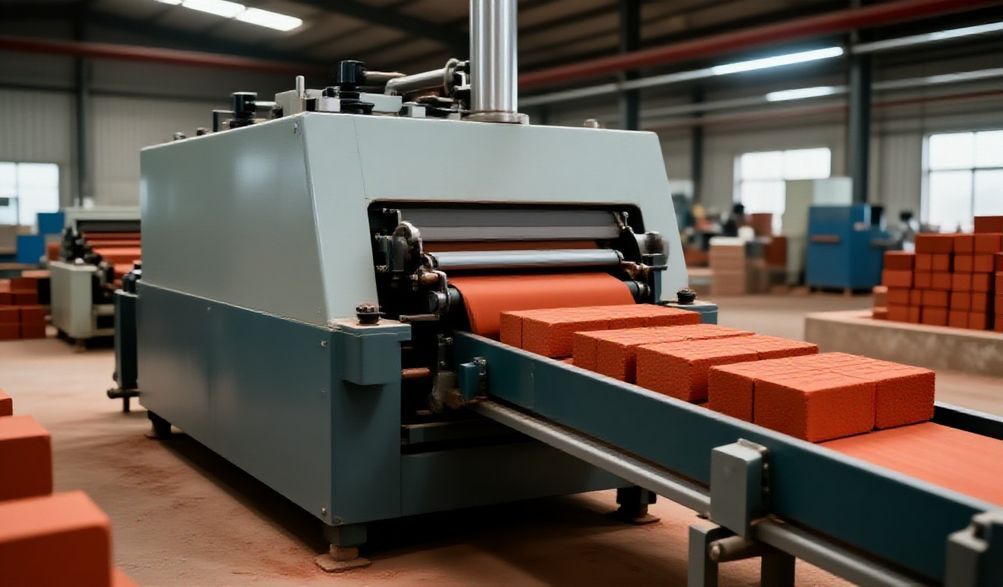
Panduan Terbaik Anda untuk Mesin Pembuatan Batu Bata Tanah Liat di Punjab | Sorotan pada Kilang FUDA
Pengenalan
Langit Punjab adalah bukti kepada pertumbuhan. Dari pusat bandar yang sibuk di Ludhiana dan Amritsar ke pekan-pekan yang berkembang, industri pembinaan sedang pesat membangun. Di asas kemajuan ini terletak komponen yang sederhana namun kritikal: bata tanah liat. Selama beberapa generasi, kekuatan dan kebolehpercayaan struktur Punjabi telah dibina atas bata yang dikeluarkan tempatan. Walau bagaimanapun, industri ini berada di persimpangan jalan. Kaedah manual tradisional, yang bergantung pada buruh intensif dan keadaan tanur yang berubah-ubah, sedang berjuang untuk memenuhi permintaan bagi skala, konsistensi, dan piawaian kualiti moden.
Jurang ini memberikan cabaran yang jelas kepada pengilang dan usahawan: bagaimana menghasilkan bata tanah liat berkualiti tinggi dengan cekap, kos efektif, dan pada kadar yang kompetitif? Jawapannya sedang merevolusikan landskap—mesin pembuatan bata tanah liat automatik. Panduan ini menyelami penyelesaian moden ini, dengan fokus khas kepada peneraju tempatan:Kilang Bata FUDA.
Kami akan meneroka bagaimana FUDA menjembatani warisan bata tanah liat Punjab yang kaya dengan teknologi pembuatan terkini. Dibina atas kepakaran industri dan pemahaman mendalam tentang pasaran tempatan, panduan ini berfungsi sebagai sumber yang boleh dipercayai untuk sesiapa yang ingin melabur dalammesin pembuatan bata tanah liat di PunjabMari kita bina masa depan yang lebih kukuh dan efisien, bata demi bata.
Memahami Mesin Pembuatan Batu Bata Tanah Liat: Jenis dan Teknologi
Beralih daripada pengeluaran manual kepada automasi bukan sekadar peningkatan; ia adalah transformasi. Ia mengenai menggantikan ketidakseragaman dengan ketepatan dan potensi penskalaan dengan teknologi yang boleh dipercayai.
Bagaimana Mesin Automatik Merevolusikan Kilang Bata Tradisional di Punjab
Relau bata tradisional, walaupun ikonik, penuh dengan cabaran:
* Padat Buruh:Sangat bergantung kepada tenaga kerja yang besar dan mahir untuk membentuk, mengangkut, dan menyusun.
* Kualiti Tidak Konsisten:Pembentukan manual membawa kepada variasi dalam saiz, ketumpatan, dan kekuatan bata. Pembakaran dalam pengapit atau Tanur Parit Lembu (BTK) sering mengakibatkan pemanasan tidak sekata.
* Pengeluaran Perlahan:Proses ini bersifat kitaran dan bergantung kepada cuaca, terutamanya fasa pengeringan.
* Lebih Tinggi Pembaziran:Kadar kerosakan adalah jauh lebih tinggi disebabkan oleh pengendalian manual dan pembakaran yang tidak sekata.
Mesin automatik menangani isu-isu ini secara langsung. Ia memastikan pencampuran seragam, pemadatan tekanan tinggi yang tepat, dan keluaran konsisten 24/7, tanpa bergantung kepada kekurangan tenaga kerja bermusim. Hasilnya adalah produk yang mematuhi kod pembinaan moden untuk kekuatan mampatan dan ketepatan dimensi.
Jenis-Jenis Utama Mesin Pembuat Bata
Tidak semua mesin dicipta sama. Pilihan yang tepat bergantung pada skala, pelaburan, dan matlamat automasi anda.
- Mesin Pembuatan Bata Abu Terbang:Walaupun tumpuan kami adalah tanah liat, adalah penting untuk membezakan. Mesin-mesin ini menggunakan abu terbang (produk sampingan loji janakuasa haba), simen, dan pasir. Ianya sangat baik untuk pembinaan mesra alam tetapi beroperasi berdasarkan prinsip bahan mentah yang berbeza berbanding mesin tanah liat tulen.
- Loji Bata Tanah Liat Automatik Sepenuhnya:Puncak kecekapan. Ini adalah barisan pengeluaran lengkap dengan suapan bahan automatik, pencampuran, pengangkutan, penekanan, dan penyusunan. Sesuai untuk pengeluar berskala besar yang menyasarkan pengeluaran 10,000+ bata setiap syif dengan campur tangan manual yang minimum.
- Mesin Bata Semi-Automatik:Titik seimbang untuk banyak perniagaan Punjabi. Mereka mengautomasikan proses penekanan dan pengeluaran yang kritikal, tetapi mungkin memerlukan pemasukan campuran secara manual atau pengendalian bata mentah. Sesuai untuk operasi berskala sederhana yang mengimbangi kos awal dengan peningkatan produktiviti yang ketara.
- Penekan Manual/Dikendalikan Tangan:Ini adalah penekan mekanikal (seperti jenis "Midget" atau "Aswani" yang popular) yang meningkatkan tekanan acuan manual. Sesuai untuk pengeluaran bata berskala sangat kecil, di kawasan luar bandar, atau pengeluaran bata khusus yang memerlukan pelaburan minimum.
Komponen Teras dan Cara Ia Berfungsi
Memahami anatomi mesin menghilangkan misteri proses tersebut. Mesin bata tanah liat automatik standard mengintegrasikan beberapa komponen utama:
- Pemberi Makan & Pengadun:Menerima dan mencampurkan tanah liat secara homogen dengan kandungan air yang optimum, menghasilkan campuran yang lentur dan konsisten.
- Sistem Penghantar: Transports the prepared clay mix to the pressing chamber without manual lifting.
- Hydraulic Press & Mold (Die): The heart of the machine. A high-pressure hydraulic ram compacts the clay into a precision-engineered steel mold. This pressure is what determines the final brick’s density and strength.
- Sistem Pelontaran: Automatically pushes the formed “green brick” out of the mold onto a pallet or conveyor for collection.
- Panel Kawalan PLC: The brain. This computerized system allows operators to set parameters like pressure, cycle time, and brick count, ensuring repeatable, error-free production.
Why Choose a Clay Brick Making Machine from Punjab’s FUDA Factory?
In a market filled with options, choosing a partner is as crucial as choosing a machine. Here’s why FUDA Brick Making Factory stands out as a leader in Punjab.
FUDA’s Legacy in Punjabi Manufacturing
FUDA isn’t just a seller; it’s a manufacturer rooted in the soil of Punjab. With years of dedicated operation, the company has built its kuasa by specializing exclusively in brick and block making machinery. This deep-seated experience means FUDA understands not just engineering, but the very fabric of Punjab’s industrial needs—from the characteristics of local alluvial clay to the power infrastructure and business aspirations of local entrepreneurs.
Engineering Expertise and Machine Durability
Kepakaran is engineered into every machine. FUDA invests in in-house research and development to adapt to evolving market demands. Their machines are built for the rigors of continuous industrial operation, featuring:
* Robust, heavy-duty frames to withstand constant vibration.
* High-grade hydraulic components from reputable brands for reliable pressure.
* Hardened steel molds that resist wear, ensuring brick dimensional accuracy for thousands of cycles.
This focus on durability translates to lower long-term maintenance costs and higher uptime for your business.
Customization for Punjab’s Clay and Market
FUDA'spengalaman shines in its ability to customize. Clay from Malwa is different from clay from Doaba. FUDA technicians can calibrate machine settings—like moisture content and compression ratio—for your specific local clay. Furthermore, they offer customization for:
* Brick Size: Standard (9″x4.5″x3″), modular, jumbo, or any custom size required by architects.
* Jenis Bata: Solid, hollow (for reduced weight and improved insulation), or even patterned facing bricks.
* Kapasiti Output: From small semi-automatic setups to large fully automatic plants.
After-Sales Support: Training, Spares, and Service
A machine is only as good as the support behind it. FUDA establishes kebolehpercayaan through a comprehensive after-sales ecosystem:
* On-Site Installation & Commissioning: Expert engineers set up your plant for optimal operation.
* Hands-On Operator Training: They don’t just deliver a machine; they transfer knowledge on operation, daily maintenance, and safety.
* Local Spares Inventory: A dedicated inventory of critical spare parts within Punjab ensures you are not waiting for shipments from distant states, minimizing costly downtime.
* Responsive Service Network: A team of service technicians is on call to provide prompt support, ensuring your business keeps running smoothly.
Key Features to Look for in a Quality Clay Brick Machine
Whether you’re evaluating FUDA or other brands, these are the non-negotiable features that define a quality investment.
Kapasiti Pengeluaran (Batu Bata Per Jam)
This is your starting point. Align capacity with your business plan:
* Small Scale: 1,000 – 2,500 bricks per hour (often semi-automatic).
* Medium Scale: 2,500 – 6,000 bricks per hour (semi or fully automatic).
* Large Scale Plant: 6,000 – 15,000+ bricks per hour (fully automatic lines).
Hydraulic System Pressure and Brick Density
Ini adalahtechnical core of quality. Higher hydraulic pressure (measured in tons or PSI) compacts the clay particles more tightly.
* Keputusan: Bricks with higher compressive strength (exceeding 70-100 kg/cm² easily), lower water absorption, and better frost resistance. Always ask for the machine’s maximum pressure and the tested strength of the bricks it produces.
Automation Level and Control Panel
The control system dictates ease of use and consistency.
* Look for PLC (Pengawal Logik Boleh Aturcara) systems with touchscreen interfaces. These allow for precise setting of production parameters, store recipes for different brick types, and provide fault diagnostics, drastically reducing operator error and training time.
Power Requirement and Energy Efficiency
Consider your local industrial power situation in Punjab.
* Motor Elektrik: Cleaner, quieter, and more efficient for areas with stable grid power.
* Diesel Engine Options: Crucial for locations with frequent power cuts, ensuring uninterrupted production. Evaluate the machine’s specific power consumption (HP/KW) per thousand bricks for long-term cost efficiency.
Mold Quality and Interchangeability
The mold defines the brick. Insist on:
* Precision-Engineered Molds: Made from hardened, wear-resistant steel (e.g., EN-31) for a long lifespan and sharp brick edges.
* Easy Interchangeability: A design that allows one operator to change molds within minutes to switch between brick types, maximizing plant flexibility.
The Business Case: ROI and Setting Up Your Plant in Punjab
Investing in a brick making machine is a strategic business decision. Let’s break down the practicalities.
Investment Breakdown and Government Schemes
Your initial investment goes beyond the machine price:
* Machinery Cost: The core machine (semi or fully automatic).
* Civil Work: A covered shed for the production line, raw material storage bays, and drying areas.
* Land: Adequate space for the plant, drying yards, and stockpiling.
* Ancillaries: A tractor/pug mill for clay mixing, trolleys, and pallets.
* Petua: Explore potential support from Punjab’s MSME or industrial policies, which may offer subsidies on machinery, interest subventions on loans, or favorable land allotments in industrial clusters.
Calculating Your Return on Investment (ROI)
A simplified model illustrates the potential. Let’s compare a semi-automatic machine with manual production.
| Factor | Manual Production (Per 10,000 Bricks) | Semi-Auto Machine (Per 10,000 Bricks) |
| :— | :— | :— |
| Tenaga Buruh Diperlukan | 25-30 persons | 8-12 persons |
| Production Time | 2-3 days | 4-6 hours |
| Key Cost Savings | Very high, recurring labor cost | Drastically reduced labor cost |
| Quality Premium | Sells at standard market rate | Can command a 10-15% premium for consistent, high-strength bricks |
| Wastage | High (15-20%) | Low (5-7%) |
ROI Calculation: The significant savings in labor, time, and wastage, combined with the ability to produce and sell more high-quality bricks daily, typically allows the machine to pay for itself within 12 to 24 months, depending on scale and market rates.
Ideal Plant Layout and Space Requirements
Efficiency is also about layout. A well-planned plant (approx. 1-2 acres for medium scale) should have a logical flow:
1. Raw Material Yard: Where clay is weathered and stored.
2. Production Shed: Houses the machine, mixer, and conveyor.
3. Green Brick Drying Area: A covered, ventilated space for initial drying before firing.
4. Kiln Area: For setting up a Hoffman Kiln, Tunnel Kiln, or using a clamp.
5. Finished Goods Storage: For cooled, fired bricks before dispatch.
Sourcing Raw Materials: Clay in Punjab
Punjab is endowed with good alluvial clay. Expert insight for sourcing:
* Test the Clay: Simple tests include checking plasticity, shrinkage on drying, and presence of harmful salts like sulfates.
* Persiapan Adalah Kunci: Clay must be “weathered” by exposure to rain and sun for weeks to improve plasticity. It should then be properly crushed and mixed to a uniform consistency before feeding into the machine.
* FUDA’s Advantage: Their experience allows them to advise on optimal preparation techniques for your specific clay source.
FAQs: Clay Bricks Making Machines in Punjab
Q1: What is the approximate price range for a FUDA clay brick making machine in Punjab?
A: Prices vary significantly based on automation level and capacity. A basic semi-automatic machine can start from several lakhs, while a high-capacity fully automatic plant can run into crores. We advise contacting FUDA for a detailed, customized quote based on your desired output, brick type, and automation needs. Remember, the focus should be on long-term value and ROI, not just the initial price tag.
Q2: Can the machine produce different types and sizes of bricks?
A: Absolutely. By changing the mold/die, a single FUDA machine can produce various bricks—standard solid bricks, hollow blocks for partition walls, and even decorative paving bricks. They offer a wide range of standard mold sizes and can fabricate custom molds to your specifications.
Q3: What kind of after-sales service and warranty does FUDA provide?
A: FUDA typically offers a comprehensive warranty (e.g., 12 months) on major components like the hydraulic system and mainframe. Their commitment extends beyond warranty with readily available technical support, a robust spare parts supply chain within Punjab, and a responsive service team to ensure minimal operational disruption.
Q4: How much manpower is required to operate a semi-automatic vs. fully automatic plant?
A: This is a key differentiator. A fully automatic line, with automated handling from mixing to stacking, may require only 3-5 personnel for supervision and handling. A semi-automatic line, which might involve manual feeding or brick handling, typically requires 8-12 people. Both represent a massive reduction compared to traditional methods.
Q5: Is training provided for machine operation and maintenance?
A: Yes, comprehensively. FUDA provides mandatory on-site training for your operators and maintenance staff. This covers safe startup/shutdown procedures, daily maintenance routines, basic troubleshooting for common issues, and best practices for optimal brick quality and machine longevity.
Kesimpulan
The evolution from manual kilns to automated brick making is not merely a trend; it’s an essential strategic move for anyone serious about the brick manufacturing business in Punjab. It’s an investment in unparalleled consistency, scalable production, and superior product quality that the modern construction market demands.
Throughout this guide, one partner has consistently exemplified the blend of local insight and technical prowess needed to succeed: Kilang Bata FUDA. They represent more than a machinery supplier; they are a true business partner invested in your success—from customizing a machine for your local clay to supporting you with training and service long after the sale.
If you are ready to transform your brick production, boost your profitability, and build a future-proof business, the next step is clear.
Contact FUDA Brick Making Factory today for a personalized consultation, a live machine demonstration at their facility, and a detailed project report tailored to your specific location and business goals in Punjab. Discover the power of partnering with a local expert for your mesin pembuatan bata tanah liat di Punjab.
<