
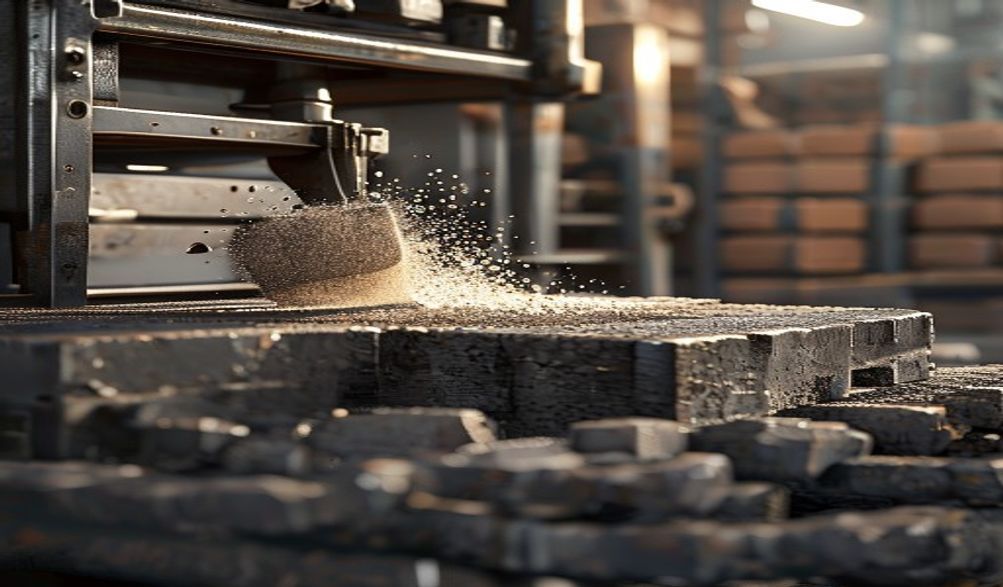
Hoe om 'n Baksteenmaakmasjien te Kies: 'n Omvattende Koper se Gids
Inleiding
Bakstene is die fundamentele boustene van ons wêreld, letterlik. Van huise en skole tot paaie en kommersiële komplekse, hul rol in konstruksie is onvervangbaar. Vandag is die verskuiwing van handearbeid na outomatisering in baksteenproduksie nie net 'n neiging nie—dit is 'n rewolusie in doeltreffendheid, kwaliteit en skaalbaarheid. Maar hierdie vooruitgang bied 'n kritieke uitdaging: met 'n duiselingwekkende verskeidenheid masjiene op die mark, hoe kies jy dieregseen vir jou spesifieke projek of besigheid?
Hierdie gids is ontwerp om deur die geraas te sny. As jou kundige hulpbron bied ons gesaghebbende, ervaringsgebaseerde advies om jou te help om 'n ingeligte en selfversekerde belegging te maak. Of jy nou 'n kontrakteur is wat 'n groot ontwikkeling bestuur, 'n klein besigheidseienaar wat wil uitbrei, of 'n toegewyde DIY-entoesias wat aan 'n selfbouprojek begin, is die verstaan van jou behoeftes die eerste stap.
Ons sal jou deur die hele besluitnemingsreis lei. Jy sal leer hoe om jou projekomvang te definieer, die kernsoorte masjiene te verstaan, kritieke tegniese spesifikasies te evalueer, en die ononderhandelbare faktore te identifiseer wat 'n wyse belegging van 'n duur fout onderskei. Kom ons begin deur die grondslag te lê: om presies te verstaan wat jy nodig het.
Verstaan van U Behoeftes en Projekomvang
Voordat jy na 'n enkele masjienbrochure kyk, moet jy absolute helderheid oor jou eie vereistes hê. Hierdie interne oudit is die belangrikste stap in die proses.
Definieer U Produksiedoelwitte
Begin deur jouself 'n paar fundamentele vrae te vra. Die antwoorde sal die grootte en kapasiteit van die masjien wat jy benodig, direk bepaal.
- Wat is jou daaglikse of weeklikse baksteenbehoefte?'n Eenmalige projek vir 'n enkelgesinshuis het aansienlik verskillende behoeftes as 'n deurlopende toevoerbesigheid.
- Is dit vir 'n eindige projek of deurlopende kommersiële produksie?Projekgebaseerde werk kan buigsaamheid of huuropsies bevoordeel, terwyl 'n besigheid betroubaarheid en uitsetkonsekwentheid vereis.
- Wat is jou groeitrajek?As jy beplan om uit te brei, kan belegging in 'n masjien met 'n effens hoër kapasiteit as jou huidige behoeftes op die lang termyn meer ekonomies wees.
Impak:Om jou uitsetbehoeftes te onderskat lei tot gemiste sperdatums en verlore inkomste. Om dit te oorskat lei tot 'n onnodig groot kapitaaluitgawe en hoër bedryfskoste. Wees genadeloos realisties.
Tipes Stene en Blokke Wat U Beplan om te Produseer
Nie alle masjiene maak alle stene. Jou verlangde eindproduk vernou die veld aansienlik.
- Soliede & Hol Blokke:Die basiese elemente van muurkonstruksie. Hol blokke is ligter en bied beter isolasie.
- Plaatstene (Plaveisels):Gebruik vir opritte, voetpaadjies en patio's. Vereis hoë digtheid en presiese kleurkonsekwentheid.
- Inmekaar-sluitende Blokke:Ontwerp om sonder mortel aanmekaar te sluit, ideaal vir keermure en sommige boustelsels.
- Spesiale Stene:Geboue, geperforeerde, of pasgemaakte bakstene.
Kernboodskap:Die baksteentipe bepaal die masjien se vorm en, dikwels, sy verdigtingsisteem. 'n Masjien wat ideaal is vir soliede blokke, mag dalk nie hoë-gehalte, gedetailleerde plaveisels kan produseer nie. Bepaal eers jou produkatalogus duidelik.
Beskikbare Rou Materiale
Jou plaaslike materiaal is 'n sleutelontwerpbeperking. Die masjien moet versoenbaar wees met jou insette.
- Sementgebaseerde Masjiene:Gebruik 'n mengsel van sement, sand en aggregaat (bv. gebreekte klip). Dit is algemeen vir betonblokmasjiene.
- Klei/Grond-Gebaseerde Masjiene:Gebruik plaaslik-verkrygde grond of klei. Dit vereis dikwels 'n grondtoets om geskiktheid te bepaal en mag 'n vuurproses insluit (vir oondgebakte stene).
- Vliegas- of Herwinde Materiaal Masjiene:Eko-vriendelike opsies wat industriële neweprodukte gebruik. Die masjien moet hierdie spesifieke materiaaleienskappe hanteer.
Pro Wenk:Voer 'n grondtoets uit indien jy klei gebruik. Vir betonmengsels, ontwikkel 'n standaard mengontwerp. Die regte rou materiaalvoorbereiding is 50% van die bereiking van 'n kwaliteit baksteen.
Core Types of Brick Making Machines
Machines are broadly categorized by their level of automation, which correlates directly with output, cost, and labor needs.
Handmatige Baksteenmaakmasjiene
These are human-powered, lever-operated devices.
- Voordele: Extremely low initial cost, simple to understand, requires no electricity, portable.
- Nadele: Highly labor-intensive, very low output, product consistency depends entirely on operator skill, physically demanding.
- Ideaal Vir: Ultra-small-scale projects, remote locations with no power, NGOs in community development, or those with a very strict budget testing the waters.
Semi-Automatiese Baksteenvervaardigingsmasjiene
These machines mechanize the critical compaction and molding process but require manual intervention for feeding raw material and removing finished bricks.
- Voordele: Excellent balance between output and cost. Significantly reduces labor compared to manual machines while being far more affordable than full automation. Good output consistency.
- Nadele: Still requires several operators. Output is limited by the speed of manual handling.
- Ideaal Vir: Small to medium-sized businesses, growing startups, contractors with multiple projects, and regions where labor is available but mechanization is desired for quality.
Volledig Outomatiese Baksteenvervaardigingsmasjiene
These are complete production lines. They automate feeding, mixing, molding, compaction, curing, and sometimes even stacking/palletizing with minimal human oversight.
- Voordele: Very high, consistent output. Superior and uniform product quality. Dramatically reduced labor costs per brick. High efficiency.
- Nadele: Very high initial investment. Requires reliable power (often three-phase). Needs more sophisticated maintenance and technical know-how.
- Ideaal Vir: Large-scale commercial plants, industrial production, municipal projects, and businesses focused on maximizing volume and minimizing unit cost.
Sleutel Tegniese Spesifikasies om te Evalueer
Once you know the type of machine, dive into the specs. These numbers tell the real story.
Produksiekapasiteit (Uitset per Uur/Dag)
Don’t just look at the “maximum” output in ideal conditions. Understand the practical output.
- Siklustyd: How many seconds does it take to produce one cycle of bricks?
- Bakstene per Siklus: How many bricks (e.g., standard blocks) does it produce in that one cycle?
- Matching to Timeline: Calculate backwards from your project deadline. If you need 10,000 bricks in a month, a machine producing 500 bricks per 8-hour shift won’t suffice.
Pressure and Vibration System
This is the heart of the machine. It determines the brick’s strength, density, and surface finish.
- Hoekom Dit Belangrik Is: High pressure and efficient vibration force out air pockets, ensuring the mix is compacted uniformly. This leads to higher compressive strength and durability.
- Hidroulies vs. Meganies Hydraulic systems offer more controllable and often higher pressure, leading to denser bricks. Mechanical systems can be robust but may offer less precise control.
Kragvereistes en Bedryfskoste
The purchase price is just the beginning.
- Kragbron: Is it electric (single-phase or industrial three-phase) or diesel-powered? Diesel offers mobility and independence from the grid but has higher fuel costs. Three-phase electric is more efficient for large machines.
- Totale Eienaarskoste (TEC): Factor in energy consumption, routine maintenance costs, spare parts, and labor. A cheaper machine with high energy consumption or frequent breakdowns becomes expensive quickly.
Mobility and Space Requirements
Where will the machine live and operate?
- Stilstaande Aanlegte: Fixed installations for high-volume production. Require a solid, level concrete foundation, significant floor space, and adequate ceiling height.
- Mobiele Masjiene: Mounted on trailers. Excellent for contractors who need to move the machine between job sites. Compromise on ultimate output for flexibility.
- Logistics: Ensure your site has the access needed for delivery, installation, and raw material handling.
Beyond the Machine: Essential Factors for Success
The machine itself is only part of the equation. The company behind it and its build quality are what ensure long-term success.
Supplier Reputation and After-Sales Support
This is non-negotiable. A machine is a long-term investment, not a one-time purchase.
- Why E-E-A-T Matters: You need a supplier with ErvaringenGesaghebbendheid. Look for companies with a long track record, verifiable customer testimonials, and a strong industry presence.
- Trust Checklist:
- Waarborg: What is covered and for how long?
- Onderdele: Are they readily available, and what is the lead time?
- Tegniese Ondersteuning: Do they offer phone, online, or on-site support?
- Installasie & Opleiding: Will they commission the machine and train your operators?
Kwaliteit van Konstruksie en Duursaamheid
Inspect the build like you would a piece of heavy equipment.
- Materiale: Look for high-grade steel in critical frames and components. Thicker steel and robust welding resist the constant stress of vibration.
- Signs of Quality: Precision machining, well-fitted components, quality paint or coating to prevent rust, and reputable brand-name parts for hydraulics and electrical systems.
- Signs of a Cheap Copy: Thin-gauge metal, rough welds, poorly aligned parts, and generic, unlabeled components.
Safety Features and Ease of Operation
Protect your most valuable asset: your people.
- Safety Must-Haves: Proper guarding on all moving parts, emergency stop buttons in accessible locations, and clear safety labels.
- Usability: Are the controls intuitive? Is there a clear operation manual? Good machine design minimizes complex procedures and potential for operator error.
Financial Considerations and ROI
Translate your technical choices into financial logic.
Budgeting: Initial Investment vs. Total Cost of Ownership
Create a comprehensive budget that includes all costs:
* Machine Price
* Shipping, Customs, and Delivery
* Installation and Foundation Work
* Initial Set of Spare Parts and Molds
* Raw Material Inventory
* Labor for Operation
* Estimated Monthly Power/Fuel Costs
Calculating Your Potential Return on Investment (ROI)
A simple framework to gauge viability:
1. Estimate Annual Production Value: (Bricks produced per year) x (Selling price per brick).
2. Calculate Annual Operational Costs: Raw materials + labor + power + maintenance + other overheads.
3. Determine Annual Gross Profit: Production Value – Operational Costs.
4. Analyze Payback: (Total Initial Investment) / (Annual Gross Profit) = Simple Payback Period (in years).
Factors Influencing ROI: Local market demand and price for bricks, your production efficiency (reject rate), machine uptime/reliability, and your operational cost control.
Frequently Asked Questions (FAQ)
Q1: What is the average cost range for a brick making machine?
A: Prices vary dramatically. Manual machines can start from a few hundred dollars. Semi-automatic machines range from $5,000 to $50,000. Fully automatic production lines can start from $50,000 and go well into the hundreds of thousands. Always get detailed quotes based on your specific needs.
Q2: Can one machine produce different types/sizes of bricks?
A: Yes, through interchangeable molds. Most manufacturers offer a variety of mold sizes and designs. However, changing molds takes time and requires an additional investment in each mold set. Ensure the machine you choose has a versatile and accessible mold system.
Q3: How important is after-sales service when buying a machine?
A: It is absolutely crucial. A machine without reliable technical support and available spare parts can become a very expensive paperweight during a breakdown. Prioritize suppliers with a proven, responsive service network over a slightly cheaper price from an unknown vendor.
Q4: What are the most common maintenance tasks?
A: Regular cleaning to prevent material buildup, daily lubrication of moving parts, checking and changing hydraulic oil as recommended, and inspecting high-wear items like mold liners, mixer blades, and conveyor belts for damage.
Q5: How do I choose between a new and a used brick making machine?
A: A used machine offers a lower entry cost but carries risks: unknown maintenance history, potential wear, and often little to no warranty or support. If considering used, insist on a thorough inspection by a qualified technician, review maintenance logs, and try to see it running under load.
Conclusion
Choosing the right brick making machine is a strategic decision that blends technical understanding with clear business planning. Your journey should follow this path: start by deeply analyzing your own needs—your production scale, desired products, and available materials. Use that knowledge to navigate the world of machine types, from manual to fully automatic. Then, become a savvy evaluator of technical specifications, looking beyond marketing claims to pressure systems, power needs, and practical output.
Finally, and most importantly, conduct rigorous due diligence on the verskaffer. Your partnership with them will define your experience for years to come. This comprehensive, research-driven approach is the hallmark of a trustworthy investment.
Your Next Step: Use this guide as a living checklist. Document your answers to each section. Then, contact 3-5 reputable suppliers with your specific requirements. Compare their proposals not just on price, but on how well they meet the criteria outlined here. The right machine is out there, ready to build your future, brick by brick.
<