
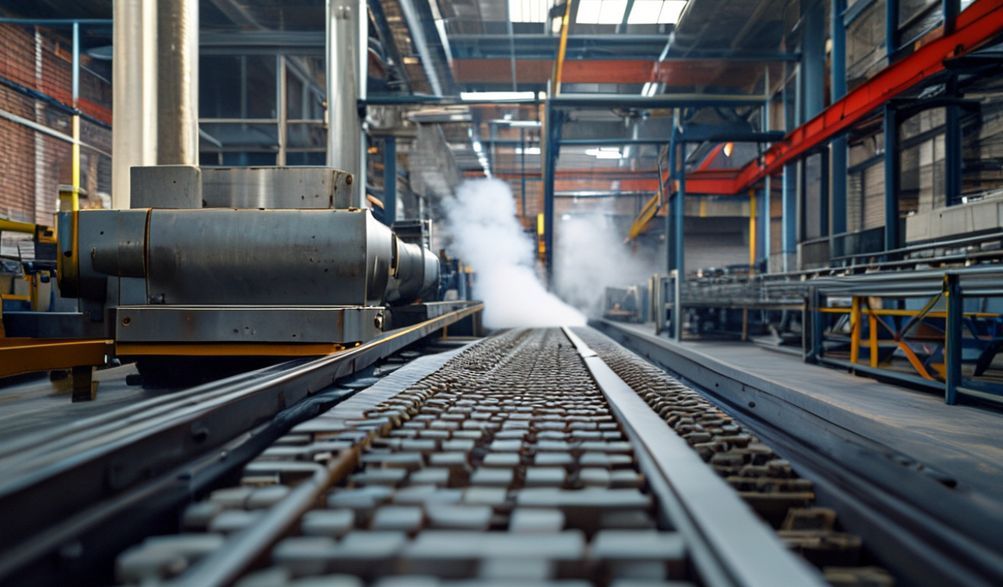
La Guía Definitiva de Máquinas de Moldeo por Bloque: Dentro de una Fábrica Moderna de Fabricación de Ladrillos
En el competitivo mundo de los materiales de construcción, ¿cómo garantiza una fábrica de ladrillos una calidad constante, una alta producción y rentabilidad? La respuesta se encuentra en el corazón de la operación: laMáquina de moldeo por bloques.
Esta guía se basa en décadas de conocimiento de la industria para desmitificar la tecnología de moldeo por bloques. Te llevaremos dentro de los procesos de una fábrica profesional de fabricación de ladrillos, como FUDA, para mostrarte lo que hace que una línea de producción sea eficiente y confiable.
Ya sea que seas un contratista, el dueño de una fábrica emergente o un profesional de la industria, esta publicación te ayudará a comprender los tipos de máquinas, características clave, criterios de selección y mejores prácticas operativas. Nuestro objetivo es proporcionar información confiable y práctica para ayudarte a tomar decisiones informadas para tu negocio.
Comprender lo correctoMáquina de moldeo por bloqueses fundamental para cualquier éxitoFábrica de fabricación de ladrillos.
Comprensión de las Máquinas de Moldeo por Bloques: Tecnología Central para la Producción
Antes de explorar el piso de una fábrica, es esencial comprender los fundamentos de la máquina que lo hace todo posible.
¿Qué es una Máquina de Moldeo por Bloques?
Una máquina de moldeo de bloques es un equipo industrial especializado diseñado para fabricar bloques de hormigón, ladrillos y adoquines. Su principio de funcionamiento central implica la compactación de una mezcla de hormigón semiseco dentro de un molde (o troquel) bajo alta presión y vibración.
Este proceso expulsa las bolsas de aire y compacta densamente el material, formando un bloque con la forma, textura e integridad estructural precisas requeridas para la construcción.
En una planta de fabricación completa, la máquina de moldeo de bloques es el componente central. Es el punto donde las materias primas se transforman en un producto estandarizado y vendible, dictando el ritmo y la calidad de toda la operación.
Tipos de Máquinas de Moldeo por Bloque
No todas las máquinas son creadas iguales. La elección correcta depende completamente de tu escala, presupuesto y objetivos de automatización.
-
Máquinas Manuales y Semiautomáticas:Estos son el punto de entrada para muchas empresas.
- Máquinas manualesRequieren mano de obra significativa para la alimentación, compactación y retiro de bloques. Son de bajo costo pero tienen una producción muy limitada.
- Máquinas semiautomáticasIntroducen vibración mecánica y presión hidráulica, pero aún requieren manejo manual de los bloques para el curado y apilamiento. Son ideales para proyectos a pequeña escala, empresas emergentes o para producir artículos especializados de bajo volumen.
-
Máquinas de Fabricación de Bloques Completamente Automáticas:Esta es la columna vertebral de una producción moderna y de alto rendimiento.Fábrica de fabricación de ladrillosEstos sistemas integran todo el proceso:
- Alimentación automatizada de materiales mediante cintas transportadoras.
- Ciclos de moldeo programables con presión/vibración consistentes.
- Expulsión automática de bloques y transferencia a áreas de curado (mediante paletas o apiladoras).
- Maximizan la producción, garantizan una calidad uniforme y reducen drásticamente los costos laborales, ofreciendo el mejor retorno de inversión a largo plazo para una producción seria.
-
Máquinas de bloques móviles vs. estacionarias:
- Máquinas de Bloques Móvilesson unidades más pequeñas, a menudo remolcables, diseñadas para producir bloques directamente en el sitio de construcción, eliminando los costos de transporte del producto final. Son perfectas para proyectos grandes y remotos.
- Máquinas de Bloques Estacionarias¿Se encuentran las instalaciones fijas en la...Fábrica de fabricación de ladrillosSon más grandes, más potentes y están diseñados para una producción continua y de alto volumen en un entorno controlado.
Componentes Clave y Sus Funciones
La confiabilidad de una máquina de moldeo por bloques depende de la calidad de sus componentes centrales:
- Hopper:El punto de entrada para la mezcla de hormigón preparado. Una tolva bien diseñada garantiza un flujo de material constante e ininterrumpido.
- Sistema de Transportador: Transports the raw mix from the mixer to the machine hopper in automated lines.
- Molde (Troquel): The heart of the machine. This high-strength steel component defines the block’s shape, size, and surface pattern. Interchangeable molds allow one machine to produce various products.
- Sistema de Vibración: High-frequency vibrators pack the concrete mix into the mold, eliminating voids and creating a dense, strong block.
- Sistema Hidráulico: Provides the immense pressure needed to compact the material. The quality of hydraulic pumps, cylinders, and valves directly impacts machine durability and performance.
- Panel de Control: The “brain” of the machine, especially in automatic models. It allows operators to set parameters, monitor the cycle, and diagnose issues.
Investing in a machine with robust, well-engineered components from a reputable manufacturer minimizes downtime and ensures consistent product quality for years.
Inside a Professional Brick Making Factory: The FUDA Production Workflow
Let’s step inside the controlled, systematic environment of a professional operation like the FUDA brick making factory to see how theory translates into practice.
Raw Material Preparation: The Foundation of Quality
The journey of a perfect block begins long before the mix reaches the machine. Consistency here is non-negotiable.
- Materials Used: A typical mix includes cement (the binder), aggregates (sand, gravel, or crushed stone for bulk and strength), fly ash (an industrial by-product that enhances workability and sustainability), and pigments for colored blocks.
- The Mixing Process: Using a computerized batching system, raw materials are combined in precise ratios. The moisture content is critically controlled; a semi-dry mix is essential for the block to hold its shape immediately after molding.
The Molding Process: Where the Magic Happens
This is the core of the Fábrica de fabricación de ladrillos where the Máquina de moldeo por bloques takes center stage.
- Alimentación: The prepared mix is conveyed into the machine’s feed hopper.
- Relleno: The mix is distributed into the mold cavity.
- Compactación: The mold is subjected to intense hydraulic pressure and high-frequency vibration. This dual action compresses the material to its maximum density.
- Expulsión: The freshly molded, yet still “green,” block is gently pushed out of the mold onto a pallet or conveyor belt.
- Transferencia: In an automated factory, blocks on their pallets are automatically moved to the curing area.
Curing and Drying: Achieving Maximum Strength
A newly molded block only has “green strength.” Curing develops its full structural potential.
- Curado al Vapor: Used in advanced factories, blocks are moved into climate-controlled chambers. Here, controlled heat and humidity accelerate the cement hydration process, allowing blocks to achieve market-ready strength in 24 hours or less.
- Water Curing & Natural Curing: Traditional methods involve sprinkling blocks with water or simply allowing them to cure under tarps. These methods are effective but much slower, taking 7-28 days.
Quality Control & Testing: Ensuring Every Brick Meets Standards
A trustworthy Fábrica de fabricación de ladrillos like FUDA embeds quality checks at every stage.
- Verificaciones en Proceso: Operators regularly verify block dimensions, weight, and visual appearance.
- Laboratory Testing: Samples from production batches are tested for:
- Resistencia a la Compresión: Crushing blocks in a press to ensure they meet or exceed ASTM or local building code standards.
- Absorción de Agua: Determining porosity, which affects durability and freeze-thaw resistance.
- Precisión Dimensional: Ensuring consistency for easy, stable construction.
This rigorous commitment to standards is what separates professional suppliers from backyard operations.
How to Choose the Right Block Molding Machine for Your Needs
Selecting your machine is a pivotal investment. Here’s an expert framework for your decision.
Evaluando Sus Requisitos de Producción
Start by answering these key questions:
- What is my required output (blocks per hour or 8-hour shift)?
- What block types and sizes do I need to produce? (Hollow blocks, solid blocks, pavers?)
- What is my available factory space and power supply (3-phase electricity)?
- What is my realistic budget, including installation, training, and initial spare parts?
Must-Check Features & Specifications
Look beyond the brochure. Scrutinize these details:
- Capacidad de Producción: Ensure the stated output matches your needs for your most common block type.
- Power & Energy Consumption: Factor in long-term operational costs.
- Nivel de Automatización: Balance higher upfront cost against long-term labor savings and consistency.
- Versatilidad del Molde: Can you easily source additional molds for new products?
- Servicio Postventa: This is arguably the most critical factor. What does the support package include?
Expert Tip: Always calculate the Costo Total de Propiedad, not just the purchase price. A slightly more expensive, reliable machine with good support will cost less per block over 5 years than a cheap, problematic one.
Red Flags and Green Flags in a Supplier
Red Flags to Avoid:
* Vague or missing technical specifications.
* Inability or unwillingness to provide contactable customer references.
* A warranty that is unclear, very short, or excludes key components.
* Pressure to buy without allowing a factory visit or equipment demonstration.
Green Flags of a Trustworthy Partner:
* Transparency about their manufacturing facility and process.
* Offering comprehensive installation supervision and hands-on operator training.
* Maintaining a clear inventory of wear parts (like mold liners, vibration motors) for quick shipment.
* Providing genuine client testimonials and case studies.
Maximizing Efficiency and ROI in Your Brick Making Operation
Your machine is an asset. Proper operation and planning determine its return.
Operational Best Practices for Machine Longevity
- Daily: Clean the machine, especially the mold area, to prevent concrete buildup.
- Weekly: Check hydraulic fluid levels, inspect hoses for wear, and lubricate all moving parts as per the manual.
- Per Shift: Visually inspect molds for damage or excessive wear that could affect block quality.
Optimizing the Production Line Layout
Efficiency is about smooth material flow. A well-planned layout minimizes handling and delays.
- Position the raw material storage (cement silos, aggregate bays) for easy access to the mixer.
- Place the mixer to feed directly into the Máquina de moldeo por bloques‘s conveyor.
- Ensure a clear, direct path from the machine to the curing area (racks or chambers).
- Designate ample space for post-curing storage and loading.
Calculating Your Return on Investment (ROI)
A simplified framework to estimate your payback period:
- Total Investment: Machine cost + Installation + Initial raw material stock.
- Monthly Operating Costs: Raw materials + Labor + Energy + Maintenance.
- Monthly Revenue: (Blocks produced per month) x (Selling price per block).
- Monthly Gross Profit: Monthly Revenue – Monthly Operating Costs.
- Simple Payback Period: Total Investment / Monthly Gross Profit.
Ejemplo: If your total investment is $100,000 and your monthly gross profit is $10,000, your payback period is approximately 10 months. After that, the profit contributes directly to your bottom line.
Frequently Asked Questions (FAQ) About Block Molding Machines
Q1: What is the average production capacity of a standard block molding machine?
A: Capacities vary widely. Small manual machines may produce 500-1000 blocks per 8-hour shift, while fully automatic lines in a large Fábrica de fabricación de ladrillos can produce over 10,000 blocks in the same time. The specific model and block size are determining factors.
Q2: Can one machine produce different types of blocks and pavers?
A: Yes, most machines are designed with interchangeable molds. A versatile Máquina de moldeo por bloques can produce hollow blocks, solid blocks, interlocking pavers, curb stones, and more by simply changing the mold (die). Always confirm this capability with your supplier.
Q3: What kind of after-sales support should I expect from the manufacturer?
A: Reputable manufacturers offer installation supervision, operator training, a clear warranty (1+ years on core parts), and readily available technical support and spare parts. This support is crucial for minimizing downtime.
Q4: How important is the raw material mix for the final block quality?
A: Extremely important. The machine provides form and compaction, but the raw material mix determines the block’s strength, durability, and finish. A consistent, well-proportioned mix is non-negotiable for professional-grade results.
Conclusión
Seleccionar el correctoMáquina de moldeo por bloques is the most critical decision for establishing or upgrading a Fábrica de fabricación de ladrillos. It affects everything from product quality and brand reputation to operational efficiency and long-term profitability.
Success is built on a triad of pillars: robust, well-engineered machinery (demonstrating Experiencia), optimized and systematic factory processes (establishing Autoridad), and an unwavering commitment to quality control and supplier reliability (building Confianza).
Use this guide as a framework for your research. Visit factories, ask detailed, technical questions of potential suppliers, and prioritize long-term partnership and support over the lowest initial price. With the right equipment and knowledge, your brick making operation can build a truly solid foundation for growth in the ever-evolving construction industry.
<