
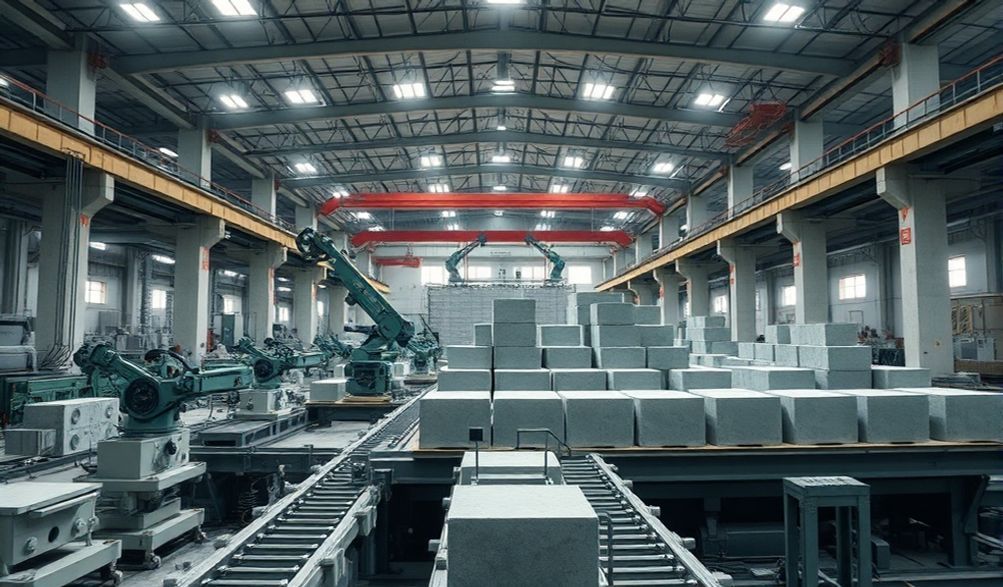
La Guía Definitiva de las Máquinas de Bloques Automáticas de China: Calidad, Innovación y Valor
El panorama global de la construcción está experimentando un cambio sísmico. A medida que la demanda de vivienda e infraestructura aumenta en todo el mundo, la industria se está volcando decididamente hacia la automatización para cumplir con los objetivos de velocidad, escala y sostenibilidad. En el epicentro de esta transformación se encuentra un gigante de la manufactura y la innovación: China. Para las empresas que buscan modernizar su producción de bloques, el mercado chino de máquinas automáticas para bloques presenta una frontera de oportunidades convincente, aunque compleja.
Sin embargo, navegar por este vasto mercado está plagado de desafíos. ¿Cómo discernir la calidad genuina en medio de un mar de proveedores? ¿Se pueden confiar en las especificaciones técnicas desde lejos? ¿Qué pasa con el soporte posventa, la logística y garantizar que la máquina funcione con sus materiales locales? Las apuestas son altas: una inversión de capital significativa depende de obtener estas respuestas correctamente.
Esta guía sirve como su recurso definitivo e imparcial. Basándonos en años de análisis de la industria, contacto directo con fabricantes y un profundo conocimiento de la procuración internacional, eliminamos el ruido. Nuestro objetivo es proporcionarle el conocimiento y el marco crítico necesarios para tomar una decisión segura e informada, transformando la abrumadora tarea de abastecerse desde China en una ventaja estratégica para su negocio.
Comprensión de las Máquinas de Bloque Automáticas: Conceptos Fundamentales y Aplicaciones
Antes de adentrarse en el proceso de abastecimiento, es crucial comprender la maquinaria que está en el centro de su inversión. Una máquina automática de bloques es más que solo equipo; es el núcleo de una planta moderna y rentable de producción de bloques.
¿Qué es una Máquina de Bloques Automática?
Una máquina automática de bloques es un sistema sofisticado y controlado por computadora, diseñado para la fabricación de unidades de mampostería de concreto (CMU) en grandes volúmenes con mínima intervención manual. Integra varios procesos, desde el dosificado de materias primas hasta el apilado de bloques, en una línea automatizada y fluida.
Para apreciar su valor, considere las alternativas:
* Máquinas Manuales:Intensivo en mano de obra, baja producción y calidad inconsistente. Solo adecuado para proyectos diminutos e hiperlocales.
* Máquinas Semiautomáticas:Requieren una participación significativa del operador para la alimentación, el moldeo y la extracción. Ofrecen una producción mayor que las máquinas manuales, pero están limitadas en eficiencia y consistencia.
La máquina completamente automática elimina estos cuellos de botella, ofreciendo una velocidad de producción inigualable, precisión repetible y menores costos laborales a largo plazo.
Componentes Clave y Cómo Funcionan
Una planta automática de fabricación de bloques es un ecosistema integrado. Comprender sus componentes desmitifica el proceso:
- Lotes y Mezcla:Se dosifican y mezclan cantidades precisas de cemento, áridos, arena y agua para obtener una mezcla homogénea de hormigón.
- Transporte de Materiales:El hormigón fresco se transfiere mediante cinta transportadora o montacargas de cangilón a la tolva de alimentación de la máquina.
- Moldeo y Compactación:El núcleo de la máquina. El hormigón se introduce en una cavidad del molde sobre una paleta. Una combinación de alta presión hidráulica y potente vibración compacta el material hasta su forma y densidad finales.
- Curado y Apilado:El bloque verde (recién moldeado), sobre su paleta, es expulsado y transferido a una estantería o cámara de curado. Una vez curado, los bloques se apilan automáticamente y se preparan para el transporte.
Este ciclo continuo opera las 24 horas del día, los 7 días de la semana, transformando materias primas en productos terminados y listos para el mercado con una eficiencia notable.
Aplicaciones Principales en la Construcción Moderna
La versatilidad de estas máquinas es un punto de venta clave. Pueden configurarse con diferentes moldes para producir una amplia gama de productos.
* Bloques Huecos y Macizos:La columna vertebral de la construcción de muros para edificios residenciales y comerciales.
* Adoquines y Ladrillos de Traba:Para entradas de vehículos, caminos peatonales y plazas públicas.
* Bordillos, Aceras y Productos de Paisajismo:Esencial para la construcción de carreteras y el paisajismo estético.
* Formas Especializadas:Incluyendo adoquines de césped, bloques de protección de taludes y formas de concreto aisladas (FCA).
Esta adaptabilidad permite que una sola línea de producción atienda múltiples segmentos de mercado, desde proyectos de infraestructura a gran escala hasta aplicaciones arquitectónicas especializadas.
¿Por qué adquirir máquinas automáticas de bloques de China?
La decisión de adquirir maquinaria pesada del extranjero es significativa. China se ha convertido en el destino predeterminado para una multitud de compradores globales, y por varias razones convincentes que van mucho más allá del precio inicial.
Rentabilidad y Valor Inigualables
The term “cheap” is misleading and often dangerous in this context. The advantage is better described as exceptional value. China’s manufacturing sector achieves this through:
* Economías de Escala: Vast production volumes drive down the cost of components and assembly.
* Mature, Localized Supply Chains: Everything from steel and hydraulics to PLC controllers is sourced within an efficient, integrated network, reducing procurement delays and costs.
* Dinámicas de Mercado Competitivo: A high concentration of manufacturers fosters competition, which drives innovation and fair pricing for the buyer.
You are not just buying a machine; you are accessing a decades-deep ecosystem of industrial production.
Avance Tecnológico e Innovación
Gone are the days of China being seen as a copycat manufacturer. Today, leading Chinese machinery producers are at the forefront of innovation:
* Eficiencia Energética: Modern machines increasingly use servo-motor systems, which drastically reduce electricity consumption compared to traditional hydraulic systems.
* Smart Integration: Many models now feature IoT (Internet of Things) connectivity for remote monitoring, production data analytics, and predictive maintenance alerts.
* International Compliance: Reputable manufacturers rigorously design machines to meet international safety and quality standards, evidenced by certifications like CE (Europe) and ISO 9001.
Scale and Manufacturing Diversity
Whether you are a startup looking for a compact, fully automatic plant or a national corporation needing a high-capacity production line, China has a supplier. The market includes:
* Large, Integrated Exporters: Companies with massive factories, in-house R&D, and global dealer networks.
* Specialized Niche Producers: Experts in specific machine types, like high-pressure paver machines or fully robotic plants.
* Component Specialists: Firms that produce superior key parts (e.g., hydraulic systems, molds), often used by assemblers.
This diversity means you can find a partner whose scale and expertise align perfectly with your specific business needs.
A Buyer’s Guide: How to Choose the Right Chinese Supplier
This is the most critical phase of your journey. Diligent supplier vetting separates a successful investment from a costly mistake.
Especificaciones Técnicas Críticas a Evaluar
Move beyond the sales pitch and focus on hard data. Your request for quotation (RFQ) must detail:
* Capacidad de Producción: Measured in blocks per 8-hour shift (e.g., 15,000 standard hollow blocks). Be realistic about your market needs.
* Presión (Tonelaje): Higher tonnage (e.g., 1,800 tons) typically produces denser, stronger blocks suitable for load-bearing applications.
* Nivel de Automatización: Does it include automatic pallet return, color feeder, and stacker? Or are these add-ons?
* Versatilidad del Molde: How quickly can molds be changed? Does the supplier offer custom mold design?
* Requisitos de Energía: Voltage (380V/415V/440V), phase, and total connected load.
* Huella de la Máquina: Ensure your factory layout can accommodate the entire production line.
Verifying Manufacturer Credentials & Quality
Trust must be earned, especially from a distance. Implement this credibility checklist:
- Verificación de Fábrica: Insist on a live video factory tour via video call. Look for organization, welding quality, and assembly practices.
- Certificaciones: Valid ISO 9001 (Quality Management) and CE (for machinery safety) are baseline expectations. SGS inspection reports on finished machines add another layer of assurance.
- Business Legitimacy: Request a business license and verify export history. How long have they been in business?
- Referencias de Clientes: Ask for contact information for 2-3 international clients in a region similar to yours. Follow up with them.
- Warranty & Service Blueprint: A clear, written warranty (typically 12-24 months on core components) and a detailed after-sales service plan are non-negotiable.
Navigating Communication and Logistics
Clear processes prevent future headaches:
* Communication: Use detailed technical drawings, videos, and samples. Confirm all agreements in writing. Consider hiring a bilingual technical liaison if needed.
* Incoterms: Understand your responsibilities. FOB (Franco a Bordo) means you own the goods and control shipping once they leave the Chinese port. CIF (Costo, Seguro y Flete) means the supplier arranges shipping to your port. FOB often offers more control and cost transparency.
* Logística: Factor in sea freight costs, insurance, and local port clearance. Reliable suppliers will assist with export documentation and crate the machine professionally for ocean transport.
Key Considerations for Investment and Operation
Looking beyond the purchase price is what separates savvy investors from disappointed buyers.
Análisis del Costo Total de Propiedad
The machine’s sticker price is just the beginning. A realistic budget must include:
* Instalación y Puesta en Marcha: Costs for foundation work, electrical hookup, and potentially flying in a technician.
* Entrenamiento: For your operators and maintenance team.
* Spare Parts Inventory: An initial kit of common wear parts (seals, vibration motors, filter elements).
* Consumo de Energía: Calculate the daily power cost based on the machine’s kW rating and your local electricity tariff.
* Mantenimiento Preventivo: Regular upkeep costs to ensure longevity and avoid downtime.
Raw Material Compatibility and Recipe Formulation
A machine is only as good as the blocks it produces. This hinges on your local materials.
* Sample Testing: A top-tier supplier will request samples of your cement, aggregates, and sand to test in their lab.
* Mix Design Provision: They should provide you with a proven, optimized concrete mix recipe for your specific materials to achieve the required block strength and finish.
* Flexibilidad del Material: Discuss if the machine can handle alternative materials like fly ash, slag, or recycled aggregates, which can lower costs and support sustainability goals.
After-Sales Support: The Make-or-Break Factor
This is the ultimate test of a supplier’s integrity and your long-term success.
* Documentation: Demand comprehensive, clearly translated operation and maintenance manuals, electrical diagrams, and parts lists.
* Support Structure: How will you get help? Look for suppliers offering:
* A dedicated service contact/WeChat.
* Remote troubleshooting via video call.
* Guaranteed response times for technical queries.
* Availability of on-site engineer dispatch (with clear cost structure).
* Parts Supply: Confirm spare parts availability, pricing, and guaranteed shipping timelines (e.g., “critical parts shipped within 48 hours”).
Future Trends in Block Making Technology
Investing in an automatic block machine is a long-term decision. Understanding emerging trends ensures your new asset remains competitive for years to come.
Green Manufacturing and Sustainable Practices
The industry is moving towards a lower carbon footprint:
* Innovación de Materiales: Machines are being adapted to use higher percentages of industrial by-products (fly ash, slag) and even recycled concrete.
* Eficiencia de Recursos: New designs focus on reducing water consumption in the mix and energy use during production and curing.
* Eco-Products: There is growing demand for machines that can produce permeable pavers, lightweight insulating blocks, and other sustainable building products.
AI and Industry 4.0 Integration
The smart factory is arriving in block production:
* Predictive Maintenance: Sensors monitor component health (vibration, temperature, pressure), predicting failures before they cause downtime.
* Production Optimization: AI algorithms analyze production data to optimize cycle times, reduce waste, and ensure consistent quality.
* Full-Line Automation: Integration with automated robotic palletizing, packaging, and guided vehicle (AGV) systems for a true “lights-out” factory.
The Rise of Specialized and Customizable Solutions
As architectural demands grow, so does the need for versatility:
* Architectural Blocks: Machines capable of producing complex, textured, or colored blocks for aesthetic facades.
* Bespoke Solutions: Leading manufacturers are increasingly working with clients to engineer custom solutions for unique block designs or specific production challenges.
Frequently Asked Questions (FAQ)
Q1: What is the average price range for an automatic block machine from China?
A: Prices vary dramatically based on specifications. A small-scale automatic line can start around $30,000 – $50,000, while large, fully integrated high-capacity plants with robots can exceed $200,000. The only way to get an accurate price is to provide detailed requirements and get itemized quotations.
Q2: How do I ensure the machine quality without visiting the factory?
A: Leverage technology and third parties. Demand a live video tour of the factory and a video of a similar machine running. Hire a reputable third-party inspection company (like SGS, BV) to perform a pre-shipment inspection. Most importantly, speak directly to their existing international clients.
Q3: What is the typical lead time from order to delivery?
A: After order confirmation and deposit, standard lead times range from 30 to 90 days. Customized machines or those ordered during peak seasons will take longer. Ensure your contract includes clear production and shipping milestones.
Q4: Can Chinese machines adapt to our local raw materials and standards?
A: Absolutely. Reputable manufacturers expect this. They will test your material samples and often customize the mixer design, vibration parameters, and even the mold to ensure the machine produces blocks that meet your local ASTM, BS, EN, or other regional standards for strength and dimensions.
Q5: What kind of after-sales service can I realistically expect?
A: At a minimum, you should receive detailed manuals, online support, and a warranty. The best suppliers provide much more: a dedicated service engineer on call, readily available spare parts with fast shipping options, and comprehensive training programs—either at their factory or via a technician sent to your site.
Conclusión
Sourcing an automatic block machine from China represents a strategic opportunity to acquire world-class technology at exceptional value, directly fueling your business’s growth and competitiveness. The journey, however, demands careful navigation. Success hinges not on finding the lowest price, but on identifying the most credible, capable, and supportive partner.
Let this guide be your framework. Use it to ask the right questions, verify claims, and prioritize long-term operational support over short-term savings. The goal is to build a partnership, not just complete a transaction.
Your Next Step: Begin by clearly defining your project requirements—capacity, block types, budget, and local conditions. Then, approach a shortlist of vetted manufacturers with this knowledge in hand. Initiate conversations, request detailed proposals and client references, and take the first step toward transforming your block production with confidence.
<