
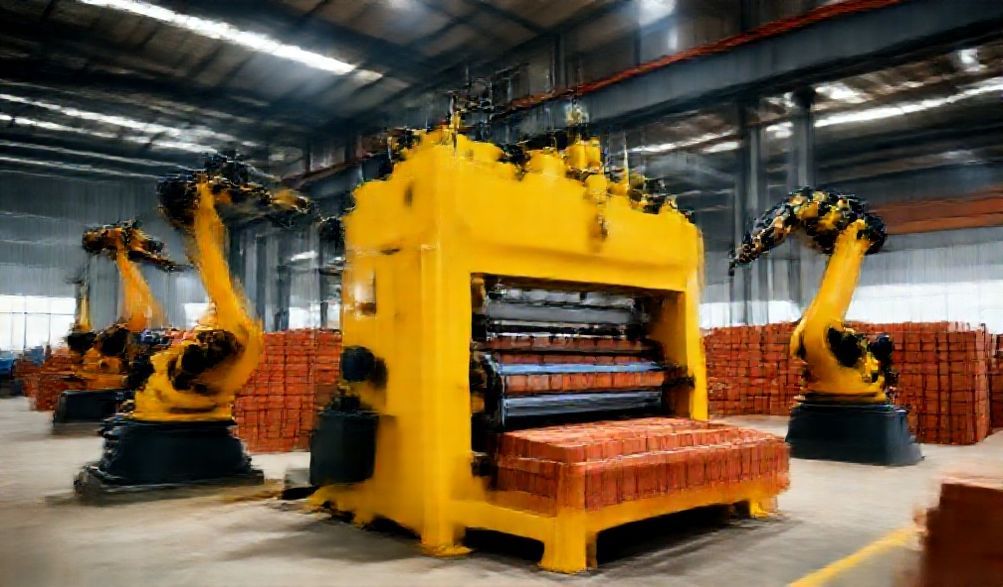
La Guía Definitiva para Encontrar una Fábrica Confiable de Máquinas para Hacer Ladrillos en China
Introducción
La industria de la construcción global funciona con ladrillos y bloques. Desde proyectos de viviendas asequibles hasta diseños arquitectónicos de alta gama, la demanda de materiales de construcción confiables y rentables es constante. Para satisfacer esta demanda, emprendedores y empresas constructoras en todo el mundo están recurriendo a una fuente principal para su equipo esencial: China.
China ha consolidado su posición como el indiscutible centro mundial de fabricación de maquinaria para hacer ladrillos. Sin embargo, navegar por este vasto mercado puede resultar abrumador. ¿Cómo distinguir a los fabricantes reputados del resto? Esta guía sirve como su hoja de ruta experta y transparente.
Basado en el análisis del sector, la experiencia en auditorías de fábricas y un profundo conocimiento de las tendencias del mercado, este recurso está diseñado para construir suExperiencia, Autoridad y Confiabilidad (E-A-C)En el proceso de abastecimiento, iremos más allá de las simples comparaciones de precios para centrarnos en el valor, la fiabilidad y la asociación a largo plazo.
Ya sea que tu objetivo sea encontrar unaFábrica china de máquinas para hacer ladrilloscomprender diferenciadores críticos de calidad, navegar por logísticas complejas o asegurar un retorno máximo de su inversión, esta guía lo cubre todo.
Esto es lo que exploraremos:
* El Dominio de China:Por qué es el centro global para esta maquinaria.
* Tipos de Máquinas:Un desglose de las tecnologías disponibles.
* Verificación de Fábrica:Cómo auditar y confiar en su proveedor.
* Criterios de Selección:Factores clave más allá del precio inicial.
* Logística y Apoyo:Navegando por la compra, el envío y el servicio postventa crucial.
Comencemos tu viaje hacia una compra inteligente e informada.
Por qué China es el Centro Global de Maquinaria para Fabricar Ladrillos
El ascenso de China como la fábrica del mundo no es casualidad, especialmente en equipos industriales pesados como las máquinas para fabricar ladrillos. Este dominio se basa en décadas de desarrollo de cadenas de suministro, inversión masiva en infraestructura y una búsqueda incansable de eficiencia industrial. Para un comprador, esto se traduce en una oferta inigualable y una ventaja competitiva, siempre que sepa dónde buscar.
Ventajas de Escala y de Costo
El enorme ecosistema manufacturero de China genera economías de escala significativas que benefician al comprador final.
* Cadenas de Suministro Concentradas:Los componentes clave—desde acero de alta calidad y cilindros hidráulicos hasta sistemas de control PLC—se obtienen localmente y en volumen, reduciendo los costos de materiales.
* Clústeres Industriales Maduros:Regiones enteras se especializan en maquinaria de construcción, fomentando la competencia, la innovación y la eficiencia entre las empresas.Fábricas de máquinas para ladrillos..
* Precios Competitivos:Este ecosistema integrado permite a las fábricas chinas ofrecer maquinaria avanzada a precios que suelen ser entre un 30% y un 50% más bajos que los de sus homólogos europeos o estadounidenses, sin sacrificar necesariamente la funcionalidad principal.
Avance Tecnológico e Innovación
过时的中国制造业仅仅是“廉价山寨品”的看法已经过时了。领先的工厂正处于实用创新的前沿。
* Integración de Automatización:Las plantas modernas producen máquinas con líneas de producción completamente automatizadas, apiladores de palés robóticos y sistemas de dosificación informatizados.
* Control y Precisión:La adopción generalizada de los Controladores Lógicos Programables (PLC) y las Interfaces Hombre-Máquina (HMI) de pantalla táctil permite un control preciso sobre la presión, la frecuencia de vibración y los ciclos de curado, garantizando una calidad consistente de los ladrillos.
* Diseños de Eficiencia Energética:Los modelos más nuevos se centran en reducir el consumo de energía mediante sistemas hidráulicos optimizados y una gestión inteligente de ciclos, lo que reduce sus costos operativos.
Amplia Gama de Productos para Cada Necesidad
Desde un pequeño emprendedor en una nación en desarrollo hasta un gran conglomerado de construcción, hay una máquina construida en China para la tarea. Esta gama es resultado directo de atender a un mercado global con necesidades, presupuestos de capital y condiciones laborales enormemente diferentes. Esta diversidad nos lleva sin problemas al centro de su decisión: comprender los tipos de máquinas disponibles.
Tipos de Máquinas para Fabricar Ladrillos de Fábricas Chinas
Las fábricas chinas producen una amplia gama de máquinas. Seleccionar el tipo correcto es su primera y más crucial decisión técnica. A continuación, se desglosan las principales tecnologías, dirigidas a las palabras clave específicas que buscan los compradores.
Máquinas Hidráulicas para Hacer Ladrillos
Estas máquinas utilizan alta presión hidráulica para compactar materia prima (hormigón, cenizas volantes, tierra) en un molde, produciendo ladrillos extremadamente densos y duraderos.
* Principio:Compresión estática mediante cilindros hidráulicos.
* Mejores Casos de Uso:Ideal para producir adoquines de alta resistencia, bordillos, ladrillos entrelazados y bloques macizos donde se requieren una densidad superior y un acabado fino.
* Salida Típica:Varía desde un volumen medio (por ejemplo, 5,000 ladrillos por turno de 8 horas) hasta una producción industrial de alto volumen.
Concrete Block Making Machines
This is the most common and versatile category for producing hollow blocks, solid blocks, and fly ash bricks. They primarily use vibration and compaction.
* Stationary Models: High-output machines that produce blocks at a fixed location, with products moved via conveyor or forklift. Suited for large-scale plants.
* Mobile Models (Egg-Layers): Smaller, movable machines that produce and deposit blocks directly on the ground. Perfect for small businesses and on-site production with lower capital investment.
* Aplicaciones: From standard hollow blocks for construction to specialized interlocking bricks for landscaping.
Clay Brick Making Machines (Extruders)
For traditional clay brick production, Chinese factories offer robust extruder systems.
* Proceso: Clay is mixed, extruded through a die to form a continuous column (the “clay column”), and then cut into individual bricks by automatic cutters.
* Components: The system typically includes a clay crusher, mixer, extruder, cutter, and sometimes automatic stackers.
* Salida: Can be configured for very high-volume production suitable for dedicated brickfields.
Automatic vs. Semi-Automatic vs. Manual Models
This comparison is crucial for aligning the machine with your budget, labor availability, and production goals.
* Totalmente Automático: High capital cost, minimal labor (1-2 operators), very high and consistent output. Requires stable power supply. Best for established businesses focusing on volume.
* Semiautomático: Moderate capital cost. Operators manually feed pallets or remove finished products, while the core molding process is automated. Offers a good balance of output and affordability.
* Manual/Small: Lowest capital cost. Labor-intensive, lower output. Ideal for micro-enterprises, community projects, or testing a market. Often uses lever or small motor-driven mechanisms.
How to Verify a Trustworthy China Brick Machine Factory
This is the heart of a successful purchase. Due diligence separates a profitable partnership from a costly mistake. This section builds the Trustworthiness and Authoritativeness of your sourcing process.
Essential Factory Credentials and Certifications
Always request and verify these documents. A professional factory will provide them readily.
* Business License (营业执照): Confirms the legal entity and registered scope of business.
* ISO 9001 Certification: Indicates the factory has a documented Quality Management System (QMS) for consistent production and customer service processes.
* CE Certification (for export to many regions): Signifies the machine meets EU health, safety, and environmental protection standards. Note: Understand the difference between a self-issued CE and one from a notified body.
* Patents: Ownership of product patents can be a sign of R&D investment and innovation.
The Critical Role of Factory Audits (Virtual & Physical)
Never skip the audit. If a physical visit isn’t feasible, a virtual audit is non-negotiable.
* Physical Audit Checklist:
* Observe active production lines—look for organization and safety.
* Inspect the quality control area for testing equipment (e.g., compression testers).
* Check raw material (steel plate, components) storage for quality.
* Ask to see the R&D or engineering department.
* Virtual Audit via Video Call:
* Schedule a live walkthrough. A refusal is a major red flag.
* Ask them to show specific areas: assembly floor, painting booth, finished goods warehouse, and their QC process in action.
* Speak directly to a senior engineer or production manager, not just a sales agent.
Analyzing Customer Reviews and Case Studies
Go beyond the testimonials on the factory’s website.
* Seek Third-Party Platforms: Look for client feedback on B2B platforms like Made-in-China.com or Alibaba.com, but read critically.
* Discern Genuine Reviews: Genuine reviews often include specific details (machine model, project location, minor issues resolved). Vague, overly glowing reviews may be fabricated.
* Demand References: Ask the sales representative for 2-3 client references in a region similar to yours (e.g., similar climate, raw materials). Contact them directly to ask about machine performance and after-sales support.
Key Selection Criteria Beyond the Price Tag
The cheapest machine is often the most expensive in the long run. Use these insider criteria to evaluate true value.
Production Capacity and Brick Specifications
Match the machine to your business plan, not the other way around.
* Output Reality-Check: A factory may state “5,000 blocks per hour.” Clarify if this is under ideal, continuous conditions. Ask for a realistic, sustainable “blocks per 8-hour shift” figure.
* Personalización de Moldes: Your brick design defines your product. Confirm the factory can design and manufacture custom molds for your required brick size, shape, and interlocking pattern. Ask about mold steel quality and lead time.
Machine Durability and Core Components
The quality of key components dictates lifespan and uptime.
* Critical Parts to Inquire About:
* Sistema Hidráulico: Pumps, valves, and cylinders. Brands like Rexroth, Yuken, or reliable Chinese brands are positive indicators.
* Marco Estructural: Should be made from thick, reinforced steel plate, not lightweight sections.
* Moldes: Hardened steel (e.g., Cr12MoV) is essential for longevity.
* Electrical Controls: Siemens, Schneider, or Omron components suggest a higher standard.
* Ask for a detailed component brand list in the quotation.
Energy Efficiency and Operational Costs
Calculate the Total Cost of Ownership (TCO).
* Power Rating: Compare the total kW power consumption of shortlisted models. A slightly higher-priced machine with a more efficient system can save thousands in electricity.
* Piezas de desgaste: Understand the cost and sourcing process for common wear parts like mold liners, seal kits, and vibration motor bearings.
* Lifecycle Analysis: A robust machine running for 10+ years with standard maintenance offers far better value than a cheaper machine needing major overhauls after 3 years.
Navigating Purchase, Shipping, and After-Sales Service
Transparently addressing these logistical and support aspects builds final-stage trust and ensures a smooth project conclusion.
Understanding Incoterms and Logistics
Clarity here prevents unexpected costs and responsibilities.
* FOB (Franco a Bordo): You pay for the machine loaded on the ship at the Chinese port. You control and pay for the main sea freight, insurance, and destination port costs. Offers more control and often lower total cost.
* CIF (Costo, Seguro y Flete): The supplier arranges and pays for sea freight and insurance to your nearest port. It’s simpler but usually more expensive, and you relinquish control over carrier choice.
* Timeline: From order confirmation to delivery at your port, typically allow 30-60 days, accounting for production, inland transport, customs clearance, and sailing.
Payment Terms and Protecting Your Investment
Standard terms exist, but structure them to mitigate risk.
* Common Terms: Telegraphic Transfer (T/T) is most common. A typical structure is 30% deposit, 70% before shipment.
* Secure Payment Advice: For your first order or with a new supplier, negotiate a portion (e.g., 10-20%) to be paid after receiving proof of shipment (copy of Bill of Lading). This provides significant leverage.
* Letter of Credit (L/C): More secure but involves bank fees. Suitable for very large orders.
The Non-Negotiable: After-Sales Support
This is where reputable factories truly distinguish themselves. Robust after-sales support is a critical component of E-E-A-T.
* Garantía: Standard is 12 months for the machine, excluding wear parts. Clarify what is covered and the process for claiming.
* Documentación Técnica: Expect detailed English manuals, electrical diagrams, and hydraulic schematics.
* Installation Guidance: Comprehensive installation manuals and video guides should be provided. Many factories offer remote video support during commissioning.
* Disponibilidad de Repuestos: Confirm that common spare parts are kept in stock and can be shipped via air express within days, not weeks.
* Soporte Técnico: The factory should provide 24/7 responsive support via WhatsApp, WeChat, or email for troubleshooting.
Frequently Asked Questions (FAQ)
Q1: What is the average lead time for a brick making machine from China?
A: For a standard model from stock, expect 15-30 days. For a customized machine (different color, specific components, custom molds), lead time typically ranges from 30 to 60 days, depending on factory workload and customization complexity.
Q2: Can Chinese factories customize machines for my local materials?
A: Yes, most reputable factories have engineering teams that can adapt machine parameters (vibration force, pressure, moisture content) for your specific raw materials (e.g., local soil, fly ash, aggregate size). It is critical to provide them with detailed material samples and lab test reports for optimal results.
Q3: How do I handle machine installation and operator training?
A: Detailed manuals and video guides are standard. Many factories offer the optional service of sending an engineer for on-site installation and training, at an additional cost covering their flight, visa, and daily allowance. For DIY installation, having a local mechanic or electrician familiar with industrial equipment is highly recommended.
Q4: What is the minimum order quantity (MOQ) for a China brick machine factory?
A: For the machinery itself, the MOQ is usually 1 unit. However, if you are ordering custom molds or a large batch of spare parts, there may be an MOQ (e.g., 1 set for molds, 10 pieces for a specific seal). Always confirm this in writing.
Q5: How can I verify the quality before the machine ships?
A: Insist on a pre-shipment inspection and video test. You or a hired third-party inspection agent can visit the factory to witness a full production cycle under load. As a minimum, require a high-quality video showing the machine’s complete operation, cycle time, and the finished brick samples.
Conclusión
Sourcing a brick making machine from China is a significant investment that, when done correctly, can yield tremendous returns for your business or project. The journey involves understanding China’s manufacturing landscape, selecting the appropriate technology, and, most importantly, conducting rigorous due diligence on your chosen Fábrica china de máquinas para hacer ladrillos.
We’ve moved from the macro advantages of scale and innovation to the micro-details of component quality and payment terms. The thread connecting each step is the need for Expertise, Authoritativeness, and Trustworthiness—in both your approach and the supplier you select.
Your final decision should prioritize a factory that demonstrates a balanced combination of proven quality, transparent communication, and robust, long-term after-sales support. The absolute lowest price often comes with the highest hidden risk.
Call to Action: Begin your sourcing process with the checklist from this guide in hand. Approach potential suppliers with detailed, technical questions. Request audits, verify credentials, and speak to past clients. By doing so, you transform from a hopeful buyer into an informed partner, ready to secure a machine that will build your success for years to come.
<