
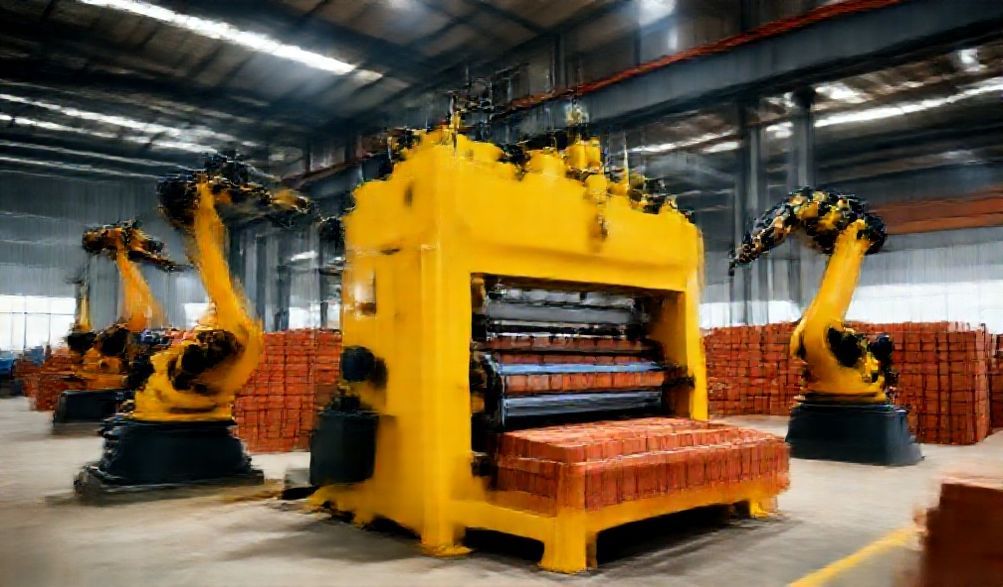
Panduan Utama untuk Menemukan Pabrik Mesin Pembuat Batu Bata yang Andal di China
Pengantar
Industri konstruksi global bergantung pada batu bata dan balok. Dari proyek perumahan terjangkau hingga desain arsitektur kelas atas, permintaan akan bahan bangunan yang andal dan hemat biaya selalu konstan. Untuk memenuhi permintaan ini, pengusaha dan perusahaan konstruksi di seluruh dunia beralih ke satu sumber utama untuk peralatan inti mereka: Tiongkok.
China telah mengukuhkan posisinya sebagai pusat manufaktur mesin pembuat bata yang tak terbantahkan secara global. Namun, menavigasi pasar yang luas ini bisa menjadi menakutkan. Bagaimana cara membedakan produsen yang terpercaya dari yang lainnya? Panduan ini berfungsi sebagai peta jalan ahli dan transparan untuk Anda.
Dibangun berdasarkan analisis industri, pengalaman audit pabrik, dan pemahaman mendalam tentang tren pasar, sumber daya ini dirancang untuk membangunKeahlian, Otoritas, dan Keandalan (E-E-A-T)dalam proses pengadaan. Kami akan melampaui perbandingan harga sederhana untuk fokus pada nilai, keandalan, dan kemitraan jangka panjang.
Apakah tujuan Anda adalah menemukan yang terpercayaPabrik mesin pembuat bata di Chinamemahami pembeda kualitas kritis, menavigasi logistik yang kompleks, atau memastikan pengembalian investasi maksimal, panduan ini mencakup semuanya.
Inilah yang akan kita telusuri:
* Dominasi Tiongkok:Mengapa ia menjadi pusat global untuk mesin ini.
* Jenis Mesin:Rincian teknologi yang tersedia.
* Verifikasi Pabrik:Cara mengaudit dan mempercayai pemasok Anda.
* Kriteria Seleksi:Faktor-faktor kunci di luar harga awal.
* Logistik & Dukungan:Menavigasi pembelian, pengiriman, dan layanan purna jual yang krusial.
Mari kita mulai perjalanan Anda menuju pembelian yang cerdas dan terinformasi.
Mengapa China Menjadi Pusat Global untuk Mesin Pembuat Batu Bata
Bangkitnya China sebagai lantai pabrik dunia bukanlah suatu kebetulan, terutama dalam peralatan industri berat seperti mesin pembuat bata. Dominasi ini dibangun melalui pengembangan rantai pasokan selama beberapa dekade, investasi infrastruktur yang masif, dan dorongan tak kenal lelah untuk efisiensi industri. Bagi pembeli, hal ini berarti pilihan yang tak tertandingi dan keunggulan kompetitif, asalkan Anda tahu ke mana harus mencari.
Skala dan Keuntungan Biaya
Skala ekosistem manufaktur Tiongkok yang sangat besar menciptakan ekonomi signifikan yang menguntungkan pembeli akhir.
* Rantai Pasokan Terkonsentrasi:Komponen-kunci—mulai dari baja berkualitas tinggi dan silinder hidrolik hingga sistem kontrol PLC—diperoleh secara lokal dan dalam jumlah besar, mengurangi biaya material.
* Klaster Industri Matang:Seluruh wilayah mengkhususkan diri dalam mesin konstruksi, mendorong persaingan, inovasi, dan efisiensi di antara mereka.Pabrik mesin bata.
* Harga Kompetitif:Ekosistem terintegrasi ini memungkinkan pabrik-pabrik Tiongkok menawarkan mesin canggih dengan harga yang seringkali 30-50% lebih rendah dibandingkan rekanan Eropa atau Amerika, tanpa harus mengorbankan fungsionalitas intinya.
Kemajuan dan Inovasi Teknologi
Persepsi usang tentang manufaktur Tiongkok yang hanya sebagai "peniru murah" sudah ketinggalan zaman. Pabrik-pabrik terkemuka berada di garis depan inovasi praktis.
* Integrasi Otomasi:Tanaman modern menghasilkan mesin dengan lini produksi yang sepenuhnya otomatis, penumpuk palet robotik, dan sistem penimbangan yang terkomputerisasi.
* Kontrol & Presisi:Adopsi luas Programmable Logic Controllers (PLC) dan HMI layar sentuh memungkinkan kontrol yang presisi atas tekanan, frekuensi getaran, dan siklus pengawetan, sehingga memastikan kualitas bata yang konsisten.
* Desain Hemat Energi:Model yang lebih baru berfokus pada pengurangan konsumsi daya melalui sistem hidrolik yang dioptimalkan dan manajemen siklus cerdas, sehingga menurunkan biaya operasional Anda.
Beragam Produk untuk Setiap Kebutuhan
Dari pengusaha kecil di negara berkembang hingga konglomerat konstruksi berskala besar, ada mesin buatan China yang dibangun untuk tugas tersebut. Rentang ini merupakan hasil langsung dari melayani pasar global dengan kebutuhan, anggaran modal, dan kondisi tenaga kerja yang sangat berbeda. Keberagaman ini secara mulus membawa kita pada inti keputusan Anda: memahami jenis-jenis mesin yang tersedia.
Jenis-Jenis Mesin Pembuat Batu Bata dari Pabrik Cina
Pabrik-pabrik Cina memproduksi beragam mesin dalam jumlah besar. Memilih jenis yang tepat adalah keputusan teknis pertama dan paling krusial Anda. Berikut adalah rincian teknologi utama, yang menargetkan kata kunci spesifik yang dicari oleh pembeli.
Mesin Pembuat Batu Bata dengan Tekanan Hidrolik
Mesin-mesin ini menggunakan tekanan hidrolik tinggi untuk memadatkan bahan baku (beton, abu terbang, tanah) ke dalam cetakan, menghasilkan bata yang sangat padat dan tahan lama.
* Prinsip:Kompresi statis melalui silinder hidraulik.
* Penggunaan Terbaik:Ideal untuk menghasilkan batu paving berkekuatan tinggi, batu tepi jalan, bata saling mengunci, dan balok padat di mana kepadatan superior dan hasil akhir yang halus diperlukan.
* Keluaran Khas:Bervariasi dari volume sedang (misalnya, 5.000 bata per shift 8 jam) hingga output industri volume tinggi.
Mesin Pembuat Blok Beton
Ini adalah kategori yang paling umum dan serbaguna untuk memproduksi blok berongga, blok padat, dan bata abu terbang. Mereka terutama menggunakan getaran dan pemadatan.
* Model Stasioner:Mesin berkapasitas tinggi yang memproduksi balok di lokasi tetap, dengan produk dipindahkan melalui konveyor atau forklift. Cocok untuk pabrik skala besar.
* Model Ponsel (Bertelur):Mesin yang lebih kecil dan dapat dipindahkan yang memproduksi dan meletakkan balok langsung di tanah. Cocok untuk usaha kecil dan produksi di lokasi dengan investasi modal yang lebih rendah.
* Aplikasi:Dari bata ringan standar untuk konstruksi hingga batu bata saling mengunci khusus untuk lansekap.
Mesin Pembuat Batu Bata Tanah Liat (Ekstruder)
Untuk produksi bata tanah liat tradisional, pabrik-pabrik Cina menawarkan sistem ekstruder yang kokoh.
* Proses: Clay is mixed, extruded through a die to form a continuous column (the “clay column”), and then cut into individual bricks by automatic cutters.
* Components: The system typically includes a clay crusher, mixer, extruder, cutter, and sometimes automatic stackers.
* Keluaran: Can be configured for very high-volume production suitable for dedicated brickfields.
Automatic vs. Semi-Automatic vs. Manual Models
This comparison is crucial for aligning the machine with your budget, labor availability, and production goals.
* Sepenuhnya Otomatis: High capital cost, minimal labor (1-2 operators), very high and consistent output. Requires stable power supply. Best for established businesses focusing on volume.
* Semi-Otomatis: Moderate capital cost. Operators manually feed pallets or remove finished products, while the core molding process is automated. Offers a good balance of output and affordability.
* Manual/Small: Lowest capital cost. Labor-intensive, lower output. Ideal for micro-enterprises, community projects, or testing a market. Often uses lever or small motor-driven mechanisms.
How to Verify a Trustworthy China Brick Machine Factory
This is the heart of a successful purchase. Due diligence separates a profitable partnership from a costly mistake. This section builds the Trustworthiness and Authoritativeness of your sourcing process.
Essential Factory Credentials and Certifications
Always request and verify these documents. A professional factory will provide them readily.
* Business License (营业执照): Confirms the legal entity and registered scope of business.
* ISO 9001 Certification: Indicates the factory has a documented Quality Management System (QMS) for consistent production and customer service processes.
* CE Certification (for export to many regions): Signifies the machine meets EU health, safety, and environmental protection standards. Note: Understand the difference between a self-issued CE and one from a notified body.
* Patents: Ownership of product patents can be a sign of R&D investment and innovation.
The Critical Role of Factory Audits (Virtual & Physical)
Never skip the audit. If a physical visit isn’t feasible, a virtual audit is non-negotiable.
* Physical Audit Checklist:
* Observe active production lines—look for organization and safety.
* Inspect the quality control area for testing equipment (e.g., compression testers).
* Check raw material (steel plate, components) storage for quality.
* Ask to see the R&D or engineering department.
* Virtual Audit via Video Call:
* Schedule a live walkthrough. A refusal is a major red flag.
* Ask them to show specific areas: assembly floor, painting booth, finished goods warehouse, and their QC process in action.
* Speak directly to a senior engineer or production manager, not just a sales agent.
Analyzing Customer Reviews and Case Studies
Go beyond the testimonials on the factory’s website.
* Seek Third-Party Platforms: Look for client feedback on B2B platforms like Made-in-China.com or Alibaba.com, but read critically.
* Discern Genuine Reviews: Genuine reviews often include specific details (machine model, project location, minor issues resolved). Vague, overly glowing reviews may be fabricated.
* Demand References: Ask the sales representative for 2-3 client references in a region similar to yours (e.g., similar climate, raw materials). Contact them directly to ask about machine performance and after-sales support.
Key Selection Criteria Beyond the Price Tag
The cheapest machine is often the most expensive in the long run. Use these insider criteria to evaluate true value.
Production Capacity and Brick Specifications
Match the machine to your business plan, not the other way around.
* Output Reality-Check: A factory may state “5,000 blocks per hour.” Clarify if this is under ideal, continuous conditions. Ask for a realistic, sustainable “blocks per 8-hour shift” figure.
* Kustomisasi Cetakan: Your brick design defines your product. Confirm the factory can design and manufacture custom molds for your required brick size, shape, and interlocking pattern. Ask about mold steel quality and lead time.
Machine Durability and Core Components
The quality of key components dictates lifespan and uptime.
* Critical Parts to Inquire About:
* Sistem Hidrolik: Pumps, valves, and cylinders. Brands like Rexroth, Yuken, or reliable Chinese brands are positive indicators.
* Kerangka Struktural: Should be made from thick, reinforced steel plate, not lightweight sections.
* Jamur: Hardened steel (e.g., Cr12MoV) is essential for longevity.
* Electrical Controls: Siemens, Schneider, or Omron components suggest a higher standard.
* Ask for a detailed component brand list in the quotation.
Energy Efficiency and Operational Costs
Calculate the Total Cost of Ownership (TCO).
* Power Rating: Compare the total kW power consumption of shortlisted models. A slightly higher-priced machine with a more efficient system can save thousands in electricity.
* Suku Cadang Aus: Understand the cost and sourcing process for common wear parts like mold liners, seal kits, and vibration motor bearings.
* Lifecycle Analysis: A robust machine running for 10+ years with standard maintenance offers far better value than a cheaper machine needing major overhauls after 3 years.
Navigating Purchase, Shipping, and After-Sales Service
Transparently addressing these logistical and support aspects builds final-stage trust and ensures a smooth project conclusion.
Understanding Incoterms and Logistics
Clarity here prevents unexpected costs and responsibilities.
* FOB (Free On Board): You pay for the machine loaded on the ship at the Chinese port. You control and pay for the main sea freight, insurance, and destination port costs. Offers more control and often lower total cost.
* CIF (Biaya, Asuransi, dan Pengangkutan): The supplier arranges and pays for sea freight and insurance to your nearest port. It’s simpler but usually more expensive, and you relinquish control over carrier choice.
* Timeline: From order confirmation to delivery at your port, typically allow 30-60 days, accounting for production, inland transport, customs clearance, and sailing.
Payment Terms and Protecting Your Investment
Standard terms exist, but structure them to mitigate risk.
* Common Terms: Telegraphic Transfer (T/T) is most common. A typical structure is 30% deposit, 70% before shipment.
* Secure Payment Advice: For your first order or with a new supplier, negotiate a portion (e.g., 10-20%) to be paid after receiving proof of shipment (copy of Bill of Lading). This provides significant leverage.
* Letter of Credit (L/C): More secure but involves bank fees. Suitable for very large orders.
The Non-Negotiable: After-Sales Support
This is where reputable factories truly distinguish themselves. Robust after-sales support is a critical component of E-E-A-T.
* Garansi: Standard is 12 months for the machine, excluding wear parts. Clarify what is covered and the process for claiming.
* Technical Documentation: Expect detailed English manuals, electrical diagrams, and hydraulic schematics.
* Installation Guidance: Comprehensive installation manuals and video guides should be provided. Many factories offer remote video support during commissioning.
* Ketersediaan Suku Cadang: Confirm that common spare parts are kept in stock and can be shipped via air express within days, not weeks.
* Dukungan Teknis: The factory should provide 24/7 responsive support via WhatsApp, WeChat, or email for troubleshooting.
Pertanyaan yang Sering Diajukan (FAQ)
Q1: What is the average lead time for a brick making machine from China?
A: For a standard model from stock, expect 15-30 days. For a customized machine (different color, specific components, custom molds), lead time typically ranges from 30 to 60 days, depending on factory workload and customization complexity.
Q2: Can Chinese factories customize machines for my local materials?
A: Yes, most reputable factories have engineering teams that can adapt machine parameters (vibration force, pressure, moisture content) for your specific raw materials (e.g., local soil, fly ash, aggregate size). It is critical to provide them with detailed material samples and lab test reports for optimal results.
Q3: How do I handle machine installation and operator training?
A: Detailed manuals and video guides are standard. Many factories offer the optional service of sending an engineer for on-site installation and training, at an additional cost covering their flight, visa, and daily allowance. For DIY installation, having a local mechanic or electrician familiar with industrial equipment is highly recommended.
Q4: What is the minimum order quantity (MOQ) for a China brick machine factory?
A: For the machinery itself, the MOQ is usually 1 unit. However, if you are ordering custom molds or a large batch of spare parts, there may be an MOQ (e.g., 1 set for molds, 10 pieces for a specific seal). Always confirm this in writing.
Q5: How can I verify the quality before the machine ships?
A: Insist on a pre-shipment inspection and video test. You or a hired third-party inspection agent can visit the factory to witness a full production cycle under load. As a minimum, require a high-quality video showing the machine’s complete operation, cycle time, and the finished brick samples.
Kesimpulan
Sourcing a brick making machine from China is a significant investment that, when done correctly, can yield tremendous returns for your business or project. The journey involves understanding China’s manufacturing landscape, selecting the appropriate technology, and, most importantly, conducting rigorous due diligence on your chosen Pabrik mesin pembuat bata di China.
We’ve moved from the macro advantages of scale and innovation to the micro-details of component quality and payment terms. The thread connecting each step is the need for Expertise, Authoritativeness, and Trustworthiness—in both your approach and the supplier you select.
Your final decision should prioritize a factory that demonstrates a balanced combination of proven quality, transparent communication, and robust, long-term after-sales support. The absolute lowest price often comes with the highest hidden risk.
Call to Action: Begin your sourcing process with the checklist from this guide in hand. Approach potential suppliers with detailed, technical questions. Request audits, verify credentials, and speak to past clients. By doing so, you transform from a hopeful buyer into an informed partner, ready to secure a machine that will build your success for years to come.
<