
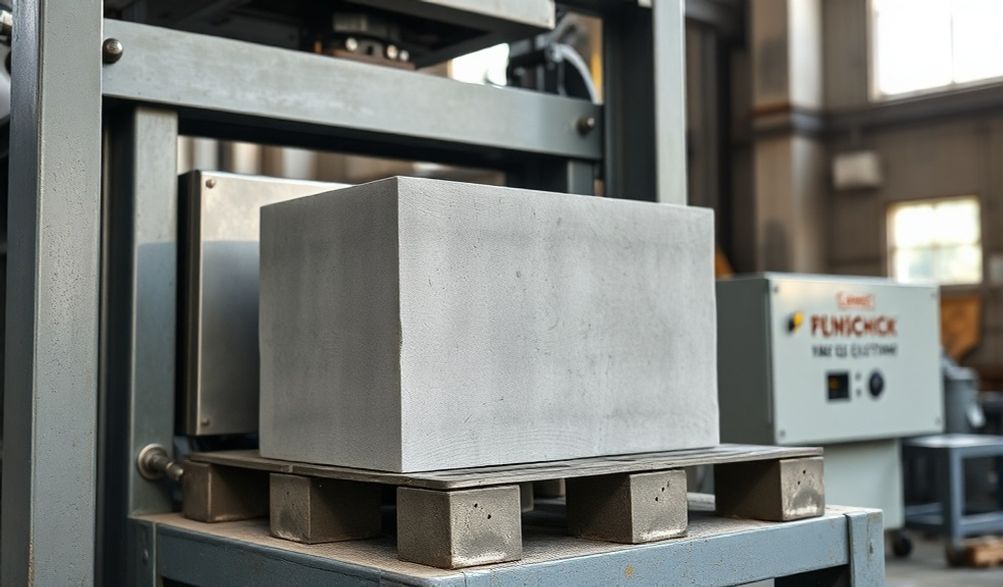
La Guía Definitiva de Máquinas de Bloques de 4 Pulgadas: Desde la Compra hasta la Ganancia
Introducción
En el mundo fundamental de la construcción, la consistencia es la clave. Ya sea que seas un contratista gestionando un cronograma de proyecto ajustado o un emprendedor observando el mercado de materiales de construcción, la capacidad de producir componentes confiables y de alta calidad bajo demanda es un cambio radical. Entra en escena elMáquina de bloques de 4 pulgadasuna pieza de equipo especializada diseñada para fabricar uno de los componentes más omnipresentes en la industria.
El bloque de concreto estándar de 4 pulgadas es un caballo de batalla. Es la opción preferida para particiones interiores, revestimientos exteriores y un sinfín de otras aplicaciones. Producir estos bloques manualmente es laborioso y poco uniforme. Sin embargo, una máquina dedicada transforma las materias primas en componentes de precisión con una eficiencia notable.
Esta guía integral está construida sobre la experiencia de la industria. Iremos más allá de los folletos de ventas para ofrecer una visión confiable y autorizada de cómo funcionan estas máquinas, cómo elegir una y cómo operarla para obtener el máximo retorno de la inversión. Considere esto su recurso fundamental para tomar una decisión informada y rentable en el mundo de la producción de bloques.
Comprendiendo la Máquina de Bloques de 4 Pulgadas
En esencia, una máquina de bloques de 4 pulgadas es una prensa de precisión. Está diseñada para tomar una mezcla de concreto semiseco y, mediante una combinación de presión inmensa y vibración, moldearla en un bloque denso y duradero con un ancho nominal de 4 pulgadas (100 mm). Este enfoque en un tamaño específico permite una ingeniería optimizada, lo que resulta en una mejor calidad y una producción más rápida que los equipos genéricos y multipropósito.
Cómo Funciona una Máquina de Bloques de 4 Pulgadas: El Ciclo
El proceso es una maravilla de ingeniería simple y eficaz. Aunque los niveles de automatización varían, el ciclo central permanece consistente:
- Alimentación:La mezcla de concreto preparada (cemento, arena, árido, agua) se carga en la tolva de la máquina.
- Medición y Moldeo:Una cantidad medida de mezcla se introduce en la cavidad del molde de 4 pulgadas.
- Compactación:La cabeza del martinete de la máquina desciende. Simultáneamente, se activan potentes vibradores que asientan la mezcla y eliminan las bolsas de aire. La presión hidráulica—que a menudo oscila entre 20 y más de 100 toneladas—comprime el material hasta darle una forma sólida.
- Expulsión:El bloque recién formado es empujado hacia arriba fuera de la caja del molde sobre un palé o transportador en espera.
- Curado:El bloque, sobre su paleta, se traslada a una zona de curado donde gana resistencia durante días antes de estar listo para su uso o venta.
Componentes Clave y sus Funciones Críticas
Cada parte desempeña un papel en garantizar la calidad y el tiempo de actividad.
- Hopper:El punto de entrada. Debe tener un tamaño adecuado para su ritmo de producción y permitir un flujo constante de material sin puentes o atascos.
- Caja de Molde:El corazón de la máquina. Este componente de acero endurecido define la forma, textura y precisión dimensional del bloque. Un molde de alta calidad y resistente al desgaste no es negociable.
- Sistema de Vibración:Típicamente compuesto por motores eléctricos y pesos excéntricos, este sistema proporciona la agitación de alta frecuencia esencial para compactar la mezcla en cada rincón del molde, garantizando una densidad y resistencia uniformes.
- Sistema Hidráulico/de Presión:El músculo. Este sistema (bomba, cilindros, válvulas) genera la tonelada requerida para producir un bloque estructuralmente sólido. Su fiabilidad impacta directamente la calidad del bloque.
- Panel de Control:El cerebro. Desde simples botones manuales hasta controladores lógicos programables (PLC) en modelos automáticos, este gobierna el ciclo de la máquina.
- Alimentador/Transportador de Paletas:Maneja la logística. Posiciona automáticamente los pallets vacíos para el nuevo bloque y retira los llenos, optimizando el flujo de trabajo.
Tipos de Máquinas de Bloques de 4 Pulgadas: Adaptando la Tecnología a la Necesidad
No todas las máquinas son creadas iguales. Tu elección debe estar dictada por tus objetivos de producción.
- Máquinas de Bloque Manuales:Operados mediante palancas manuales o volantes. Requieren un esfuerzo físico significativo y son lentos, pero tienen un costo inicial muy bajo. Ideales para proyectos extremadamente pequeños y ocasionales.
- Máquinas Semiautomáticas:El punto ideal para muchas pequeñas empresas. El ciclo central de moldeo (vibración, compresión, eyección) está automatizado, pero tareas como alimentar la mezcla cruda o colocar los palés pueden ser manuales. Ofrecen un excelente equilibrio entre producción, costo y simplicidad.
- Máquinas de Bloque Completamente Automáticas:Líneas de producción completas. Estas cuentan con alimentación automática de mezcla, circulación de paletas, apilado de bloques e incluso manejo de bastidores de curado. Requieren una mayor inversión de capital y energía trifásica, pero producen el mayor volumen con mano de obra mínima.
Benefits of Using a Dedicated 4 Inch Block Machine
Why invest in a machine for just one block size? The advantages over makeshift or manual methods are substantial and tangible.
- Unmatched Precision and Consistency: Every block is identical. This dimensional accuracy is critical for speed and quality in masonry work, as consistent blocks lay faster and create a more professional finish. Structural integrity is also assured.
- Dramatically Enhanced Efficiency: A single operator on a semi-automatic machine can produce in one hour what might take a full crew a day to cast manually. This accelerates project completion or scales commercial output exponentially.
- Direct Material and Cost Savings: The machine’s precise measurement and high compaction reduce waste. You use the optimal amount of cement and aggregate per block, lowering your raw material cost per unit. Less spoilage equals higher margins.
- Inherent Versatility: While designed for 4-inch blocks, most quality machines offer interchangeable molds. With a quick change, the same machine can often produce solid blocks, 6-inch blocks, paving stones, or curb stones, allowing you to diversify your product line.
How to Choose the Right 4 Inch Block Machine
This is the most critical decision you’ll make. Let expertise, not just price, guide you. Ask the right questions.
Step 1: Honestly Assess Your Production Needs
- For a Single Project: A basic manual or small semi-automatic machine may be cost-effective. Focus on durability for the project’s duration.
- For a Startup/Small Business: A robust semi-automatic machine is typically the ideal entry point. Calculate your target daily output (e.g., 800-1500 blocks) and choose a model that exceeds it by 20% to allow for growth.
- For Large-Scale Commercial Production: You need a fully automatic line. Your analysis should focus on output per shift, total cost of ownership, and integration with mixers and material handling systems.
Step 2: Scrutinize Key Machine Specifications
- Tiempo de Ciclo: How many blocks per hour (BPH)? Don’t rely on theoretical maximums; ask for realistic, sustained production rates.
- Capacidad de Presión: Measured in tons. Higher pressure (e.g., 60 tons vs. 30 tons) generally produces denser, stronger blocks suitable for load-bearing applications.
- Requisitos de Energía: Most semi-automatic and all automatic machines require 3-phase industrial power. Verify your facility’s electrical capacity.
- Calidad de Construcción: Look for a heavy, rigid frame made from thick steel plate. The vibration table should be massively built. This reduces wear and ensures stability during operation.
Step 3: Vet the Supplier with a Focus on E-A-T
Your relationship with the manufacturer or distributor is a long-term asset. Evaluate their Expertise, Authoritativeness, and Trustworthiness:
- Experiencia: Do they provide clear, detailed technical documentation? Can they answer deep technical questions about mix design or machine optimization?
- Autoridad: How long have they been in business? Do they have case studies or testimonials from other clients? Are their machines certified to relevant standards?
- Confianza: What does their after-sales support look like? A reliable supplier will offer:
- A clear, comprehensive warranty.
- Readily available spare parts inventory.
- Accessible technical support, ideally with options for remote diagnostics.
- Installation guidance or supervision.
Operational Best Practices and Maintenance
A machine is only as good as its operation. Proper setup and care prevent downtime and ensure consistent quality.
Setting Up for Success
- Foundation is Key: Install the machine on a perfectly level, reinforced concrete pad. This is critical for alignment and proper vibration transfer.
- Master the Mix: The machine can only compact what you feed it. Spend time perfecting your concrete mix ratio (e.g., 1 part cement, 3 parts sand, 2 parts aggregate) and moisture content. The mix should be semi-dry—holding its shape when squeezed but crumbling apart.
- Follow the Manual: Adhere strictly to the manufacturer’s instructions for initial startup, lubrication, and electrical connections.
Essential Maintenance Checklist
Proactive maintenance is cheap; reactive repair is expensive.
- Daily:
- Clean the mold box, hopper, and pallets thoroughly with water and a brush after the last production cycle. Never let concrete harden on components.
- Visually inspect for loose bolts, nuts, or hydraulic leaks.
- Weekly:
- Lubricate all guide rods, bearings, and moving parts with the recommended grease.
- Check hydraulic fluid levels and condition.
- Monthly:
- Tighten all motor and vibrator mounting bolts (vibration can loosen them).
- Inspect mold liners for wear and replace if blocks show rounded edges or sticking.
- Check electrical connections for tightness.
Troubleshooting Common Issues
- Blocks Cracking or Breaking on Ejection: The most common cause is a mix that is too dry. Increase water slightly. Secondary causes: worn mold liners or excessive vibration time.
- Poor Surface Finish or “Honeycombing”: Usually caused by a mix that is too wet or insufficient vibration/compaction. Adjust the mix and ensure the vibration system is functioning at full power.
- Machine Jamming or Misalignment: Often due to a foreign object (stone, tool) falling into the mold or a damaged/bent pallet. Stop immediately, clear the obstruction, and inspect for damage.
Economic Analysis: Cost and ROI of a 4 Inch Block Machine
Let’s translate this into practical numbers. Understanding the financials is where real-world Experiencia pays off.
Initial Investment Breakdown
Your upfront cost is more than the machine’s price tag:
* Machine Cost (varies widely: $5,000 – $50,000+)
* Shipping and Import Duties (if applicable)
* Installation & Foundation Work
* Facility Modifications (3-phase power installation, water supply)
* Initial Stock of Pallets and Spare Parts
Operational Cost Factors (Monthly)
These are your ongoing expenses:
* Materias Primas: Cement, sand, aggregate. This is typically 50-70% of your production cost.
* Trabajo: Wages for machine operators and material handlers.
* Utilities: Electricity for the machine and mixer, water for the mix and cleaning.
* Maintenance Fund: A reserved percentage of revenue for routine parts and unexpected repairs.
Calculating Your Potential Return on Investment (ROI)
This simplified model illustrates the process:
- Monthly Revenue: Blocks Produced/Month × Selling Price/Block.
- Ejemplo: 30,000 blocks × $0.80/block = $24,000
- Monthly Operational Cost: Material Cost + Labor + Utilities + Maintenance.
- Ejemplo: ($0.35/material cost per block × 30,000) + $2,000 labor + $500 utilities = $13,000
- Monthly Gross Profit: Revenue – Operational Cost.
- Ejemplo: $24,000 – $13,000 = $11,000
- ROI Timeframe (Break-Even Point): Total Initial Investment / Monthly Gross Profit.
- Ejemplo: $40,000 investment / $11,000 monthly profit = ~3.6 months.
Nota: This is a simplified example. Your local market prices, material costs, and efficiency will vary. A well-run small semi-automatic operation often targets full ROI within 12-18 months.
Frequently Asked Questions (FAQ)
Q: What is the typical production capacity of a semi-automatic 4 inch block machine?
A: A standard semi-automatic machine can produce between 800 to 1500 blocks in an 8-hour shift, depending on the model and operator efficiency.
Q: Can I use a 4 inch block machine to produce other sizes?
A: Primarily, it is designed for 4-inch blocks. However, many manufacturers offer interchangeable molds for different block types (e.g., 6-inch, pavers). You must confirm the machine’s compatibility and pressure capacity for other molds.
Q: What is the required compressive strength of blocks made for load-bearing walls?
A: For load-bearing applications, blocks typically need a minimum compressive strength of 1,500 to 2,000 psi (10-14 MPa). This is achieved by using the correct cement mix ratio and proper machine compression. Always consult local building codes.
Q: How much space do I need to install and operate this machine?
A: You need space for the machine itself, raw material storage, a mixing area, and a curing yard. A minimum covered area of 500-1000 sq. ft. is recommended for a small-scale setup, excluding open curing space.
Q: What kind of after-sales support should I expect from a reliable supplier?
A: A trustworthy supplier should provide detailed installation manuals, offer installation supervision or clear guidance, supply a comprehensive parts catalog, and have a responsive technical support team available for troubleshooting.
Conclusión
Investing in a Máquina de bloques de 4 pulgadas is a strategic decision that moves you from being a consumer of building materials to a producer. It’s an investment in autonomy, quality control, and business potential. The journey from selection to profitable operation requires careful planning, grounded in the kind of expert knowledge we’ve outlined here.
Success hinges on choosing a machine built to last, from a supplier who stands behind their product, and committing to the operational discipline that ensures consistent quality. By doing so, you unlock a reliable stream of a fundamental construction component, turning raw materials into both building blocks and a solid foundation for your financial growth. Use this guide as your starting point, conduct thorough due diligence, and build your future—one precise block at a time.
<