
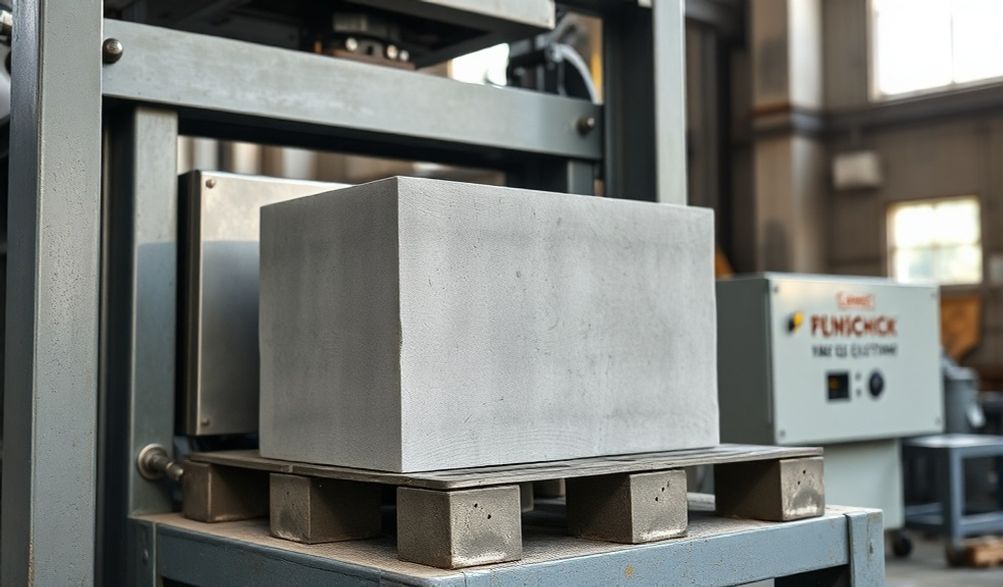
Jagorar Cikakke don Injin Tubalin 4 Inch: Daga Siyayya zuwa Ribar Kuɗi
Gabatarwa
A duniyar ginin gine-gine, daidaito sarki ne. Ko kai ma'aikaci ne mai kula da ƙayyadaddun lokacin aikin ko kuma ɗan kasuwa ne mai kallon kasuwar kayan gini, ikon samar da ingantattun sassa masu dogaro bisa buƙata ya canza yanayin wasa. Shiga cikinna'urar yin tubalin inci 4na'urar da aka ƙera ta musamman don kera ɗaya daga cikin mafi yawan tubalan gini a cikin masana'antu.
Tushen simintin gyare-gyare na inci huɗu daidai gwargwado shi ne babban aikin gini. Ana amfani da shi wajen gina bangon cikin gida, kayan ado na waje, da sauran aikace-aikace masu yawa. Yin waɗannan tubalan da hannu yana da wahala kuma ba shi da daidaito. Koyaya, na'ura mai sadaukar da kai tana canza albarkatun ƙasa zuwa cikakkun sassa tare da ingantacciyar inganci.
Wannan cikakken jagora an gina shi ne bisa ƙwarewar masana'antu. Za mu wuce takaddun tallace-tallace na siyarwa don ba da abin dogaro, ingantaccen bayani game da yadda waɗannan injinan ke aiki, yadda ake zaɓar ɗaya, da kuma yadda ake sarrafa shi don samun matsakaicin riba akan jarin. Ka ɗauki wannan a matsayin tushen tushen ku don yin yanke shawara mai fa'ida a duniyar samar da tubalan.
Fahimtar Injin Tubalin Inch 4
A tsakinsa, na'urar yin tubalin inci 4, injin latsa ne mai madaidaicin ma'auni. An ƙera ta don ɗaukar siminti mai ɗan bushewa, ta hanyar haɗa matsi mai ƙarfi da rawar jiki, don sanya ta zama tubali mai ƙarfi da dorewa, mai faɗin inci 4 (100mm). Wannan mai da hankali kan wani takamaiman girma yana ba da damar ingantaccen injiniyanci, wanda ke haifar da ingantaccen inganci da saurin samarwa fiye da na'urori na gaba ɗaya, masu amfani da yawa.
Yadda Injin Tubalin Inci 4 ke Aiki: Zagayowar Aiki
Tsarin aikin yana da ban mamaki na sauƙin injiniyanci mai inganci. Duk da yake matakan sarrafa kansa sun bambanta, tsarin yanayin aiki na asali ya kasance mai daidaito:
- Ciyarwa:Kayan simintin da aka shirya (siminti, yashi, tsakuwa, ruwa) ana ɗora su cikin ma'ajiyar injin.
- Ma'auni & Gyare-gyare:Ana cika ramin ƙirar inci ɗaya da adadin da aka auna na cakuda.
- Ƙarfafawa:Shugaban ram na injin yana saukowa. A lokaci guda, masu girgiza ƙarfi suna kunna, suna daidaita cakuda kuma suna kawar da iska. Matsin hydraulic—wanda sau da yawa yana tsakanin tan 20 zuwa 100+—yana matsawa kayan zuwa wani siffa mai ƙarfi.
- Fitarwa:Sabon bulkin da aka kera ana tura shi sama daga cikin akwatin mulu zuwa kan pallet ko na'urar motsa jiki da ke jira.
- Maganin Ciwon Ciki:Tushen, a kan gadon sa, ana matsar da shi zuwa wurin bushewa inda yake samun ƙarfi cikin kwanaki kafin a shirya shi don amfani ko siyarwa.
Abubuwan Maɓalli da Ayyukansu Masu Muhimmanci
Kowane sashe yana taka rawa wajen tabbatar da inganci da aiki mai dorewa:
- Hopper:Shigarwar. Dole ne ya kasance da girman da ya dace da saurin samarwar ku kuma ya ba da damar kwararar kayan aiki akai-akai ba tare da cika ko toshewa ba.
- Akwatin Ƙirƙira:Zuciyar na'ura. Wannan ɓangaren ƙarfe mai tauri ne ke ayyana siffar bulo, daɗaɗɗen sa, da daidaiton girma. Ginin ƙira mai inganci, mai jurewa lalacewa ba abin da za a iya sasantawa ba ne.
- Tsarin Girgiza:Yawanci ya ƙunshi injinan lantarki da ma'auni masu karkace, wannan tsarin yana ba da girgizar babban mitar da ke da mahimmanci don matsawa cakuda zuwa kowane kusurwar ƙirar, yana tabbatar da daidaitaccen yawa da ƙarfi.
- Tsarin Ruwa/Matsi:Tsoka. Wannan tsarin (famfo, silinda, bawuloli) yana samar da nauyin da ake bukata don samar da tubalin da ke da ingantaccen tsari. Amintaccensa yana tasiri kai tsaye ga ingancin tubalin.
- Kwamitin Sarrafawa: The brain. From simple manual buttons to programmable logic controllers (PLCs) on automatic models, this governs the machine’s cycle.
- Mai Ciyarwa/Kwakwalwar Pallet: Handles logistics. It automatically positions empty pallets for the new block and removes filled ones, streamlining the workflow.
Types of 4 Inch Block Machines: Matching Technology to Need
Not all machines are created equal. Your choice should be dictated by your production goals.
- Injin Kullewa da Hannu. Operated via hand levers or flywheels. They require significant physical effort and are slow but have a very low upfront cost. Best for extremely small, occasional projects.
- Matsin Injin Mai Ƙaramin Gudanarwa: The sweet spot for many small businesses. The core molding cycle (vibration, compression, ejection) is automated, but tasks like feeding raw mix or placing pallets may be manual. They offer an excellent balance of output, cost, and simplicity.
- Injinoyin Saka Tubali na Cikakken Atomati: Complete production lines. These feature automated mix feeding, pallet circulation, block stacking, and even curing rack handling. They require a higher capital investment and 3-phase power but produce the highest volume with minimal labor.
Benefits of Using a Dedicated 4 Inch Block Machine
Why invest in a machine for just one block size? The advantages over makeshift or manual methods are substantial and tangible.
- Unmatched Precision and Consistency: Every block is identical. This dimensional accuracy is critical for speed and quality in masonry work, as consistent blocks lay faster and create a more professional finish. Structural integrity is also assured.
- Dramatically Enhanced Efficiency: A single operator on a semi-automatic machine can produce in one hour what might take a full crew a day to cast manually. This accelerates project completion or scales commercial output exponentially.
- Direct Material and Cost Savings: The machine’s precise measurement and high compaction reduce waste. You use the optimal amount of cement and aggregate per block, lowering your raw material cost per unit. Less spoilage equals higher margins.
- Inherent Versatility: While designed for 4-inch blocks, most quality machines offer interchangeable molds. With a quick change, the same machine can often produce solid blocks, 6-inch blocks, paving stones, or curb stones, allowing you to diversify your product line.
How to Choose the Right 4 Inch Block Machine
This is the most critical decision you’ll make. Let expertise, not just price, guide you. Ask the right questions.
Step 1: Honestly Assess Your Production Needs
- For a Single Project: A basic manual or small semi-automatic machine may be cost-effective. Focus on durability for the project’s duration.
- For a Startup/Small Business: A robust semi-automatic machine is typically the ideal entry point. Calculate your target daily output (e.g., 800-1500 blocks) and choose a model that exceeds it by 20% to allow for growth.
- For Large-Scale Commercial Production: You need a fully automatic line. Your analysis should focus on output per shift, total cost of ownership, and integration with mixers and material handling systems.
Step 2: Scrutinize Key Machine Specifications
- Lokacin Zagayowar: How many blocks per hour (BPH)? Don’t rely on theoretical maximums; ask for realistic, sustained production rates.
- Ƙarfin Matsawa: Measured in tons. Higher pressure (e.g., 60 tons vs. 30 tons) generally produces denser, stronger blocks suitable for load-bearing applications.
- Bukatar Wutar Lantarki: Most semi-automatic and all automatic machines require 3-phase industrial power. Verify your facility’s electrical capacity.
- Ingancin Gina Look for a heavy, rigid frame made from thick steel plate. The vibration table should be massively built. This reduces wear and ensures stability during operation.
Step 3: Vet the Supplier with a Focus on E-A-T
Your relationship with the manufacturer or distributor is a long-term asset. Evaluate their Expertise, Authoritativeness, and Trustworthiness:
- Ƙwarewa: Do they provide clear, detailed technical documentation? Can they answer deep technical questions about mix design or machine optimization?
- Hukunci: How long have they been in business? Do they have case studies or testimonials from other clients? Are their machines certified to relevant standards?
- Aminci: What does their after-sales support look like? A reliable supplier will offer:
- A clear, comprehensive warranty.
- Readily available spare parts inventory.
- Accessible technical support, ideally with options for remote diagnostics.
- Installation guidance or supervision.
Mafi kyawun Ayyuka da Kulawa
A machine is only as good as its operation. Proper setup and care prevent downtime and ensure consistent quality.
Setting Up for Success
- Foundation is Key: Install the machine on a perfectly level, reinforced concrete pad. This is critical for alignment and proper vibration transfer.
- Master the Mix: The machine can only compact what you feed it. Spend time perfecting your concrete mix ratio (e.g., 1 part cement, 3 parts sand, 2 parts aggregate) and moisture content. The mix should be semi-dry—holding its shape when squeezed but crumbling apart.
- Follow the Manual: Adhere strictly to the manufacturer’s instructions for initial startup, lubrication, and electrical connections.
Essential Maintenance Checklist
Proactive maintenance is cheap; reactive repair is expensive.
- Kullum:
- Clean the mold box, hopper, and pallets thoroughly with water and a brush after the last production cycle. Never let concrete harden on components.
- Visually inspect for loose bolts, nuts, or hydraulic leaks.
- Mako-mako:
- Lubricate all guide rods, bearings, and moving parts with the recommended grease.
- Check hydraulic fluid levels and condition.
- Kowane wata:
- Tighten all motor and vibrator mounting bolts (vibration can loosen them).
- Inspect mold liners for wear and replace if blocks show rounded edges or sticking.
- Check electrical connections for tightness.
Troubleshooting Common Issues
- Blocks Cracking or Breaking on Ejection: The most common cause is a mix that is too dry. Increase water slightly. Secondary causes: worn mold liners or excessive vibration time.
- Poor Surface Finish or “Honeycombing”: Usually caused by a mix that is too wet or insufficient vibration/compaction. Adjust the mix and ensure the vibration system is functioning at full power.
- Machine Jamming or Misalignment: Often due to a foreign object (stone, tool) falling into the mold or a damaged/bent pallet. Stop immediately, clear the obstruction, and inspect for damage.
Economic Analysis: Cost and ROI of a 4 Inch Block Machine
Let’s translate this into practical numbers. Understanding the financials is where real-world Kwarewa pays off.
Initial Investment Breakdown
Your upfront cost is more than the machine’s price tag:
* Machine Cost (varies widely: $5,000 – $50,000+)
* Shipping and Import Duties (if applicable)
* Installation & Foundation Work
* Facility Modifications (3-phase power installation, water supply)
* Initial Stock of Pallets and Spare Parts
Operational Cost Factors (Monthly)
These are your ongoing expenses:
* Kayan Aiki: Cement, sand, aggregate. This is typically 50-70% of your production cost.
* Aiki Wages for machine operators and material handlers.
* Utilities: Electricity for the machine and mixer, water for the mix and cleaning.
* Maintenance Fund: A reserved percentage of revenue for routine parts and unexpected repairs.
Calculating Your Potential Return on Investment (ROI)
This simplified model illustrates the process:
- Monthly Revenue: Blocks Produced/Month × Selling Price/Block.
- Misali: 30,000 blocks × $0.80/block = $24,000
- Monthly Operational Cost: Material Cost + Labor + Utilities + Maintenance.
- Misali: ($0.35/material cost per block × 30,000) + $2,000 labor + $500 utilities = $13,000
- Monthly Gross Profit: Revenue – Operational Cost.
- Misali: $24,000 – $13,000 = $11,000
- ROI Timeframe (Break-Even Point): Total Initial Investment / Monthly Gross Profit.
- Misali: $40,000 investment / $11,000 monthly profit = ~3.6 months.
Note: This is a simplified example. Your local market prices, material costs, and efficiency will vary. A well-run small semi-automatic operation often targets full ROI within 12-18 months.
Tambayoyin da ake yawan yi (FAQ)
Q: What is the typical production capacity of a semi-automatic 4 inch block machine?
A: A standard semi-automatic machine can produce between 800 to 1500 blocks in an 8-hour shift, depending on the model and operator efficiency.
Q: Can I use a 4 inch block machine to produce other sizes?
A: Primarily, it is designed for 4-inch blocks. However, many manufacturers offer interchangeable molds for different block types (e.g., 6-inch, pavers). You must confirm the machine’s compatibility and pressure capacity for other molds.
Q: What is the required compressive strength of blocks made for load-bearing walls?
A: For load-bearing applications, blocks typically need a minimum compressive strength of 1,500 to 2,000 psi (10-14 MPa). This is achieved by using the correct cement mix ratio and proper machine compression. Always consult local building codes.
Q: How much space do I need to install and operate this machine?
A: You need space for the machine itself, raw material storage, a mixing area, and a curing yard. A minimum covered area of 500-1000 sq. ft. is recommended for a small-scale setup, excluding open curing space.
Q: What kind of after-sales support should I expect from a reliable supplier?
A: A trustworthy supplier should provide detailed installation manuals, offer installation supervision or clear guidance, supply a comprehensive parts catalog, and have a responsive technical support team available for troubleshooting.
Ƙarshe
Zuba jari a cikin...na'urar yin tubalin inci 4 is a strategic decision that moves you from being a consumer of building materials to a producer. It’s an investment in autonomy, quality control, and business potential. The journey from selection to profitable operation requires careful planning, grounded in the kind of expert knowledge we’ve outlined here.
Success hinges on choosing a machine built to last, from a supplier who stands behind their product, and committing to the operational discipline that ensures consistent quality. By doing so, you unlock a reliable stream of a fundamental construction component, turning raw materials into both building blocks and a solid foundation for your financial growth. Use this guide as your starting point, conduct thorough due diligence, and build your future—one precise block at a time.
<