
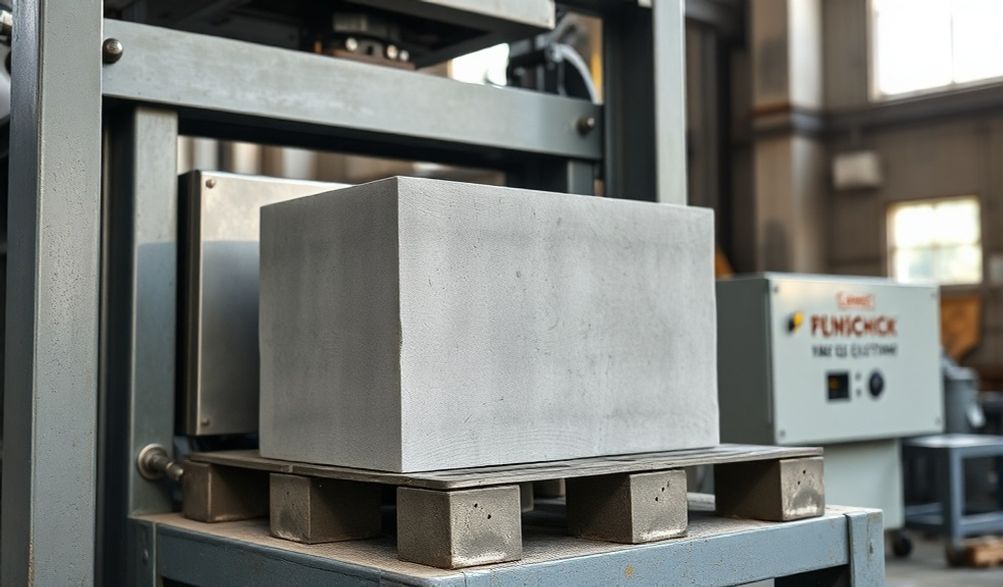
Hướng Dẫn Toàn Diện Về Máy Làm Gạch 4 Inch: Từ Mua Sắm Đến Lợi Nhuận
Giới thiệu
Trong thế giới xây dựng nền tảng, tính nhất quán là yếu tố then chốt. Dù bạn là nhà thầu đang quản lý một dự án với tiến độ chặt chẽ hay một doanh nhân nhắm vào thị trường vật liệu xây dựng, khả năng sản xuất các thành phần chất lượng cao, đáng tin cậy theo yêu cầu chính là yếu tố làm thay đổi cuộc chơi. Và đây là lúcMáy đúc khối 4 inchmột thiết bị chuyên dụng được thiết kế để sản xuất một trong những thành phần cơ bản phổ biến nhất trong ngành công nghiệp.
Khối bê tông tiêu chuẩn 4 inch là một công cụ đa năng. Nó được ưa chuộng cho các vách ngăn nội thất, lớp ốp ngoại thất và vô số ứng dụng khác. Việc sản xuất thủ công những khối này tốn nhiều công sức và thiếu tính đồng nhất. Tuy nhiên, một máy chuyên dụng có thể biến nguyên liệu thô thành các thành phần chính xác với hiệu suất đáng kinh ngạc.
Hướng dẫn toàn diện này được xây dựng dựa trên chuyên môn ngành. Chúng tôi sẽ vượt ra ngoài những tài liệu quảng cáo thông thường để mang đến cái nhìn đáng tin cậy và chuyên sâu về cách thức hoạt động của các máy móc này, cách lựa chọn thiết bị phù hợp và vận hành chúng nhằm tối đa hóa lợi tức đầu tư. Hãy xem đây là nền tảng cốt lõi giúp bạn đưa ra quyết định sáng suốt và sinh lời trong lĩnh vực sản xuất gạch.
Hiểu về Máy Sản Xuất Gạch 4 Inch
Về cốt lõi, máy ép gạch 4 inch là một thiết bị ép chính xác. Nó được thiết kế để tiếp nhận hỗn hợp bê tông bán khô và, thông qua sự kết hợp giữa áp lực cực lớn và rung động, tạo thành một viên gạch đặc chắc, bền bỉ với chiều rộng danh nghĩa 4 inch (100mm). Việc tập trung vào một kích thước cụ thể cho phép tối ưu hóa kỹ thuật, dẫn đến chất lượng tốt hơn và tốc độ sản xuất nhanh hơn so với thiết bị đa năng thông thường.
Cách Máy Sản Xuất Gạch 4 Inch Hoạt Động: Một Chu Kỳ
Quá trình này là một kỳ quan của kỹ thuật đơn giản mà hiệu quả. Mặc dù mức độ tự động hóa có khác nhau, chu trình cốt lõi vẫn luôn nhất quán:
- Cho ăn:Hỗn hợp bê tông đã trộn sẵn (xi măng, cát, đá, nước) được đổ vào phễu của máy.
- Đo lường & Đúc khuôn:Một lượng hỗn hợp đã được đo đạc được đưa vào khoang khuôn 4 inch.
- Nén chặt:Đầu máy ép hạ xuống. Đồng thời, các bộ rung mạnh kích hoạt, giúp hỗn hợp lắng đều và loại bỏ các túi khí. Áp lực thủy lực—thường dao động từ 20 đến hơn 100 tấn—nén vật liệu thành một khối đặc chắc.
- Đẩy ra:Khối mới được tạo ra sẽ được đẩy lên khỏi hộp khuôn và đặt lên pallet hoặc băng chuyền đang chờ sẵn.
- Chữa bệnh:Khối bê tông, vẫn trên pallet, được chuyển đến khu vực bảo dưỡng, nơi nó tích lũy độ bền qua nhiều ngày trước khi sẵn sàng để sử dụng hoặc bán ra.
Các Thành Phần Chính và Chức Năng Quan Trọng của Chúng
Mỗi bộ phận đều đóng vai trò trong việc đảm bảo chất lượng và thời gian hoạt động liên tục.
- Hopper:Điểm nạp liệu. Nó phải được thiết kế kích thước phù hợp với tốc độ sản xuất và đảm bảo dòng nguyên liệu chảy đều mà không bị tắc nghẽn hoặc kẹt cầu.
- Hộp khuôn:Trái tim của cỗ máy. Bộ phận thép cứng này quyết định hình dáng, kết cấu bề mặt và độ chính xác kích thước của khối. Một khuôn chất lượng cao, chống mài mòn là yếu tố bắt buộc không thể thương lượng.
- Hệ thống RungThông thường bao gồm động cơ điện và các tải lệch tâm, hệ thống này cung cấp sự rung lắc tần số cao cần thiết để nén chặt hỗn hợp vào mọi ngóc ngách của khuôn, đảm bảo độ đồng đều về mật độ và độ bền.
- Hệ thống Thủy lực/Áp suấtCơ bắp. Hệ thống này (máy bơm, xi lanh, van) tạo ra lực ép cần thiết để sản xuất một khối bê tông có cấu trúc vững chắc. Độ tin cậy của nó ảnh hưởng trực tiếp đến chất lượng khối.
- Bảng điều khiển: The brain. From simple manual buttons to programmable logic controllers (PLCs) on automatic models, this governs the machine’s cycle.
- Máy cấp/Băng tải Pallet Handles logistics. It automatically positions empty pallets for the new block and removes filled ones, streamlining the workflow.
Types of 4 Inch Block Machines: Matching Technology to Need
Not all machines are created equal. Your choice should be dictated by your production goals.
- Máy Định Hình Khối Thủ Công Operated via hand levers or flywheels. They require significant physical effort and are slow but have a very low upfront cost. Best for extremely small, occasional projects.
- Máy Bán Tự Động: The sweet spot for many small businesses. The core molding cycle (vibration, compression, ejection) is automated, but tasks like feeding raw mix or placing pallets may be manual. They offer an excellent balance of output, cost, and simplicity.
- Máy Đúc Gạch Tự Động Hoàn Toàn: Complete production lines. These feature automated mix feeding, pallet circulation, block stacking, and even curing rack handling. They require a higher capital investment and 3-phase power but produce the highest volume with minimal labor.
Benefits of Using a Dedicated 4 Inch Block Machine
Why invest in a machine for just one block size? The advantages over makeshift or manual methods are substantial and tangible.
- Unmatched Precision and Consistency: Every block is identical. This dimensional accuracy is critical for speed and quality in masonry work, as consistent blocks lay faster and create a more professional finish. Structural integrity is also assured.
- Dramatically Enhanced Efficiency: A single operator on a semi-automatic machine can produce in one hour what might take a full crew a day to cast manually. This accelerates project completion or scales commercial output exponentially.
- Direct Material and Cost Savings: The machine’s precise measurement and high compaction reduce waste. You use the optimal amount of cement and aggregate per block, lowering your raw material cost per unit. Less spoilage equals higher margins.
- Inherent Versatility: While designed for 4-inch blocks, most quality machines offer interchangeable molds. With a quick change, the same machine can often produce solid blocks, 6-inch blocks, paving stones, or curb stones, allowing you to diversify your product line.
How to Choose the Right 4 Inch Block Machine
This is the most critical decision you’ll make. Let expertise, not just price, guide you. Ask the right questions.
Step 1: Honestly Assess Your Production Needs
- For a Single Project: A basic manual or small semi-automatic machine may be cost-effective. Focus on durability for the project’s duration.
- For a Startup/Small Business: A robust semi-automatic machine is typically the ideal entry point. Calculate your target daily output (e.g., 800-1500 blocks) and choose a model that exceeds it by 20% to allow for growth.
- For Large-Scale Commercial Production: You need a fully automatic line. Your analysis should focus on output per shift, total cost of ownership, and integration with mixers and material handling systems.
Step 2: Scrutinize Key Machine Specifications
- Thời gian chu kỳ: How many blocks per hour (BPH)? Don’t rely on theoretical maximums; ask for realistic, sustained production rates.
- Pressure Capacity: Measured in tons. Higher pressure (e.g., 60 tons vs. 30 tons) generally produces denser, stronger blocks suitable for load-bearing applications.
- Yêu cầu về nguồn điện: Most semi-automatic and all automatic machines require 3-phase industrial power. Verify your facility’s electrical capacity.
- Chất Lượng Xây Dựng: Look for a heavy, rigid frame made from thick steel plate. The vibration table should be massively built. This reduces wear and ensures stability during operation.
Step 3: Vet the Supplier with a Focus on E-A-T
Your relationship with the manufacturer or distributor is a long-term asset. Evaluate their Expertise, Authoritativeness, and Trustworthiness:
- Chuyên môn Do they provide clear, detailed technical documentation? Can they answer deep technical questions about mix design or machine optimization?
- Tính thẩm quyền How long have they been in business? Do they have case studies or testimonials from other clients? Are their machines certified to relevant standards?
- Đáng tin cậy: What does their after-sales support look like? A reliable supplier will offer:
- A clear, comprehensive warranty.
- Readily available spare parts inventory.
- Accessible technical support, ideally with options for remote diagnostics.
- Installation guidance or supervision.
Operational Best Practices and Maintenance
A machine is only as good as its operation. Proper setup and care prevent downtime and ensure consistent quality.
Setting Up for Success
- Foundation is Key: Install the machine on a perfectly level, reinforced concrete pad. This is critical for alignment and proper vibration transfer.
- Master the Mix: The machine can only compact what you feed it. Spend time perfecting your concrete mix ratio (e.g., 1 part cement, 3 parts sand, 2 parts aggregate) and moisture content. The mix should be semi-dry—holding its shape when squeezed but crumbling apart.
- Follow the Manual: Adhere strictly to the manufacturer’s instructions for initial startup, lubrication, and electrical connections.
Essential Maintenance Checklist
Proactive maintenance is cheap; reactive repair is expensive.
- Hàng ngày:
- Clean the mold box, hopper, and pallets thoroughly with water and a brush after the last production cycle. Never let concrete harden on components.
- Visually inspect for loose bolts, nuts, or hydraulic leaks.
- Hàng tuần:
- Lubricate all guide rods, bearings, and moving parts with the recommended grease.
- Check hydraulic fluid levels and condition.
- Monthly:
- Tighten all motor and vibrator mounting bolts (vibration can loosen them).
- Inspect mold liners for wear and replace if blocks show rounded edges or sticking.
- Check electrical connections for tightness.
Troubleshooting Common Issues
- Blocks Cracking or Breaking on Ejection: The most common cause is a mix that is too dry. Increase water slightly. Secondary causes: worn mold liners or excessive vibration time.
- Poor Surface Finish or “Honeycombing”: Usually caused by a mix that is too wet or insufficient vibration/compaction. Adjust the mix and ensure the vibration system is functioning at full power.
- Machine Jamming or Misalignment: Often due to a foreign object (stone, tool) falling into the mold or a damaged/bent pallet. Stop immediately, clear the obstruction, and inspect for damage.
Economic Analysis: Cost and ROI of a 4 Inch Block Machine
Let’s translate this into practical numbers. Understanding the financials is where real-world Kinh nghiệm pays off.
Initial Investment Breakdown
Your upfront cost is more than the machine’s price tag:
* Machine Cost (varies widely: $5,000 – $50,000+)
* Shipping and Import Duties (if applicable)
* Installation & Foundation Work
* Facility Modifications (3-phase power installation, water supply)
* Initial Stock of Pallets and Spare Parts
Operational Cost Factors (Monthly)
These are your ongoing expenses:
* Nguyên liệu thô: Cement, sand, aggregate. This is typically 50-70% of your production cost.
* Lao động Wages for machine operators and material handlers.
* Utilities: Electricity for the machine and mixer, water for the mix and cleaning.
* Maintenance Fund: A reserved percentage of revenue for routine parts and unexpected repairs.
Calculating Your Potential Return on Investment (ROI)
This simplified model illustrates the process:
- Monthly Revenue: Blocks Produced/Month × Selling Price/Block.
- Ví dụ: 30,000 blocks × $0.80/block = $24,000
- Monthly Operational Cost: Material Cost + Labor + Utilities + Maintenance.
- Ví dụ: ($0.35/material cost per block × 30,000) + $2,000 labor + $500 utilities = $13,000
- Monthly Gross Profit: Revenue – Operational Cost.
- Ví dụ: $24,000 – $13,000 = $11,000
- ROI Timeframe (Break-Even Point): Total Initial Investment / Monthly Gross Profit.
- Ví dụ: $40,000 investment / $11,000 monthly profit = ~3.6 months.
Note: This is a simplified example. Your local market prices, material costs, and efficiency will vary. A well-run small semi-automatic operation often targets full ROI within 12-18 months.
Các Câu Hỏi Thường Gặp (FAQ)
Q: What is the typical production capacity of a semi-automatic 4 inch block machine?
A: A standard semi-automatic machine can produce between 800 to 1500 blocks in an 8-hour shift, depending on the model and operator efficiency.
Q: Can I use a 4 inch block machine to produce other sizes?
A: Primarily, it is designed for 4-inch blocks. However, many manufacturers offer interchangeable molds for different block types (e.g., 6-inch, pavers). You must confirm the machine’s compatibility and pressure capacity for other molds.
Q: What is the required compressive strength of blocks made for load-bearing walls?
A: For load-bearing applications, blocks typically need a minimum compressive strength of 1,500 to 2,000 psi (10-14 MPa). This is achieved by using the correct cement mix ratio and proper machine compression. Always consult local building codes.
Q: How much space do I need to install and operate this machine?
A: You need space for the machine itself, raw material storage, a mixing area, and a curing yard. A minimum covered area of 500-1000 sq. ft. is recommended for a small-scale setup, excluding open curing space.
Q: What kind of after-sales support should I expect from a reliable supplier?
A: A trustworthy supplier should provide detailed installation manuals, offer installation supervision or clear guidance, supply a comprehensive parts catalog, and have a responsive technical support team available for troubleshooting.
Conclusion
Investing in a Máy đúc khối 4 inch is a strategic decision that moves you from being a consumer of building materials to a producer. It’s an investment in autonomy, quality control, and business potential. The journey from selection to profitable operation requires careful planning, grounded in the kind of expert knowledge we’ve outlined here.
Success hinges on choosing a machine built to last, from a supplier who stands behind their product, and committing to the operational discipline that ensures consistent quality. By doing so, you unlock a reliable stream of a fundamental construction component, turning raw materials into both building blocks and a solid foundation for your financial growth. Use this guide as your starting point, conduct thorough due diligence, and build your future—one precise block at a time.
<