
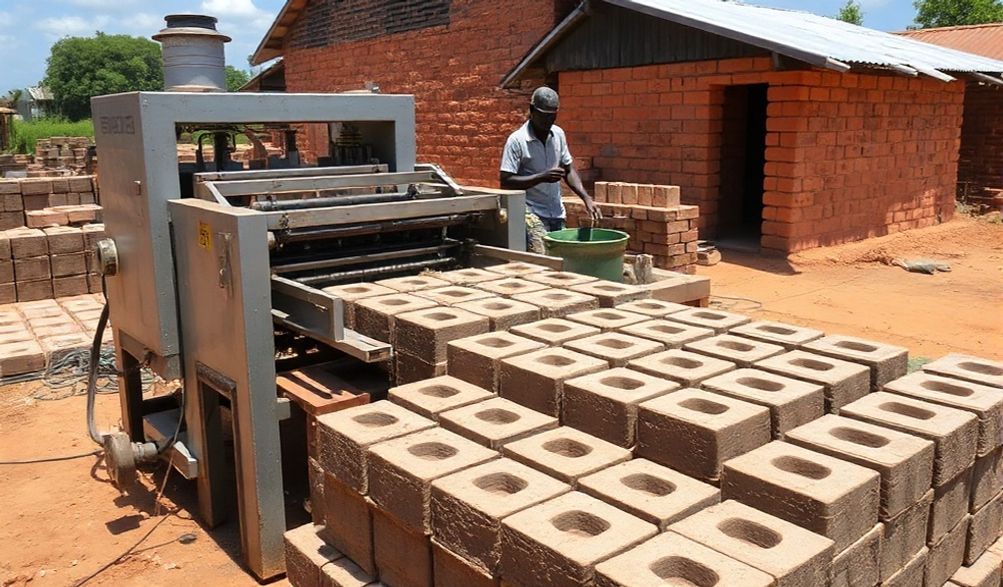
Votre Guide Ultime des Machines à Fabriquer des Briques en Ouganda (2024)
Introduction
L'horizon de l'Ouganda se transforme. De l'expansion animée de Kampala aux nouveaux ensembles résidentiels qui émergent à travers les régions, le pays est au cœur d'un important boom de la construction. Cette croissance est alimentée par une urbanisation rapide, des projets d'infrastructure dirigés par le gouvernement et une augmentation des investissements privés. Au cœur de chaque nouveau bâtiment se trouve un besoin fondamental : des briques de qualité et abordables. Pourtant, pour beaucoup, la méthode traditionnelle de fabrication manuelle des briques—un processus lent, exigeant en main-d'œuvre et produisant des résultats inégaux—reste un goulot d'étranglement majeur pour le progrès et les profits.
C'est là que la technologie moderne offre une solution puissante. Les machines à fabriquer des briques révolutionnent la chaîne d'approvisionnement en construction en Ouganda, transformant les matières premières locales en blocs de construction précis et durables avec une efficacité remarquable. Pour l'entrepreneur en herbe, l'entreprise de construction en croissance ou le projet de développement communautaire, ces machines représentent bien plus qu'un simple équipement ; elles sont une porte d'entrée vers la durabilité, l'évolutivité et d'importantes opportunités financières.
Ce guide est conçu comme votre ressource définitive et fiable. S'appuyant sur une analyse du marché, une expertise technique et des perspectives adaptées au contexte économique et opérationnel unique de l'Ouganda, nous visons à vous offrir la clarté dont vous avez besoin. Notre objectif est de vous doter des connaissances nécessaires pour naviguer sur le marché, éviter les pièges courants et réaliser un investissement éclairé et confiant. Nous explorerons les types de machines disponibles, détaillerons les considérations d'achat essentielles, analyserons les coûts et fournirons des étapes pratiques pour bâtir une entreprise de fabrication de briques prospère en Ouganda.
Comprendre le marché des machines à fabriquer des briques en Ouganda
Pour faire un investissement intelligent, il est essentiel de comprendre les forces qui stimulent la demande et les avantages évidents que la mécanisation offre par rapport aux méthodes traditionnelles.
Les facteurs de demande : La croissance de l'industrie de la construction en Ouganda
Le marché des briques n'a jamais été aussi florissant, grâce à plusieurs tendances simultanées :
- Urbanisation et projets de logement :Avec l'une des populations urbaines à la croissance la plus rapide au monde, la demande en logements dans les villes et les municipalités est insatiable. Cela stimule à la fois les développements à grande échelle et la construction de maisons individuelles.
- Développement des infrastructures gouvernementales :Les projets nationaux de construction de routes, d'écoles, d'hôpitaux et d'autres installations publiques nécessitent des quantités massives de matériaux de construction fiables.
- L'essor de l'immobilier commercial privé :La croissance des centres commerciaux, des parcs de bureaux, des hôtels et des installations industrielles amplifie davantage le besoin d'un approvisionnement en briques à haut volume et constant.
Avantages de l'utilisation d'une machine par rapport aux méthodes manuelles
Passer de la production manuelle à la production automatisée n'est pas simplement une mise à niveau; c'est une transformation complète de vos capacités de production.
- Vitesse et Volume :Les machines peuvent produire des centaines, voire des milliers, de briques par jour, un niveau de production impossible à atteindre avec seulement de la main-d'œuvre manuelle.
- Qualité et constanceChaque brique est identique en taille, forme et densité. Cette uniformité garantit l'intégrité structurelle, simplifie la construction et réduit l'utilisation de mortier.
- Rentabilités :Bien que l'investissement initial soit plus élevé, les économies à long terme sont substantielles. Vous réduisez considérablement les coûts de main-d'œuvre par brique et minimisez le gaspillage de matériaux.
- Polyvalence :De nombreuses machines peuvent être équipées de différents moules pour produire divers types de briques — pleines, creuses, de pavage et, surtout,blocs de verrouillage—vous permettant de répondre aux divers besoins du marché.
- Durabilité :Les machines qui produisent des briques de sol stabilisé (en utilisant du sol local mélangé à une petite quantité de ciment) réduisent les dommages environnementaux causés par la cuisson des briques d'argile (déforestation pour les fours) et favorisent l'utilisation des ressources disponibles localement.
Types de machines de fabrication de briques disponibles en Ouganda
Le marché propose une gamme de machines adaptées à différentes échelles d'exploitation et budgets. Comprendre ces catégories est votre première étape cruciale.
Machines à fabriquer des briques manuelles
- Description :Il s'agit de presses manuelles, utilisant souvent un mécanisme à levier pour comprimer un mélange de terre-ciment dans un moule. Elles sont actionnées par la force humaine, portables et offrent le coût initial le plus bas.
- Idéal pour :Constructeurs individuels pour projets personnels, petites startups à très petite échelle, organismes communautaires, ou comme introduction à faible risque à la production de briques.
- Avantages et inconvénients :
- Avantages :Très abordable, aucune alimentation requise, simple à utiliser et à entretenir, hautement portable.
- Inconvénients :Faible rendement de production (généralement de 300 à 500 briques par jour), exigeant physiquement, qualité fortement dépendante de l'habileté de l'opérateur.
Machines à fabriquer des briques semi-automatiques
- Description :Ces machines utilisent un moteur électrique ou diesel pour alimenter un système de vibration et de compression. Les opérateurs alimentent manuellement la matière première, mais le formage et le compactage sont mécanisés.
- Idéal pour :Petites et moyennes entreprises (PME), cours à blocs en croissance, et entrepreneurs cherchant à approvisionner les marchés locaux de manière constante. Il s'agit de la catégorie la plus populaire pour les entreprises commerciales sérieuses.
- Avantages et inconvénients :
- Avantages :Excellent équilibre entre production et coût, qualité supérieure et plus constante que les machines manuelles, capable de produire différents types de blocs, bonne efficacité.
- Inconvénients :Nécessite une source d'alimentation (réseau ou génératrice), un investissement initial plus élevé que les machines manuelles, nécessite une formation de base en fonctionnement.
Machines à fabriquer des briques entièrement automatiques
- Description :Il s'agit de lignes de production de qualité industrielle. Elles comportent des fonctions automatisées d'alimentation en matériaux, de mélange, de moulage, de durcissement, et parfois même de palettisation. Elles sont contrôlées par des automates programmables (API).
- Idéal pour :Installations commerciales à grande échelle, grandes entreprises de construction approvisionnant des projets nationaux, et investisseurs ciblant le marché à grand volume.
- Avantages et inconvénients :
- Avantages : Extremely high output (thousands of bricks per hour), minimal manual labor required, pinnacle of consistency and quality.
- Inconvénients : Very high capital investment, requires significant space and stable three-phase power, complex maintenance, and technical expertise to operate.
Machines à briques mobiles vs stationnaires
- Machines mobiles : Mounted on a trailer, these can be towed directly to a construction site. Ideal for producing bricks sur place, eliminating transport costs for large projects. Most common in the manual and semi-automatic categories.
- Machines stationnaires : Set up in a fixed location or factory. Suited for establishing a permanent block yard that supplies a surrounding area. Necessary for fully automatic production lines.
Key Factors to Consider Before Buying in Uganda
Choosing the right machine is a strategic decision. Focus on these critical factors tailored to the Ugandan context.
Production Capacity & Scale
Don’t just buy the biggest machine you can afford. Buy the one that matches your realistic business plan.
* Calculez vos besoins : Estimate your current and near-future demand. How many bricks do you need to produce per 8-hour shift? A machine that sits idle is as bad as one that can’t keep up with orders.
* Match to Your Plan: Are you supplying a single project, a local community, or a wider region? Your scale of operation dictates the machine category.
Brick Type and Raw Material Compatibility
The machine must work with the materials you have.
* Soil Testing is Crucial: The quality of your local soil is paramount. Reputable suppliers should offer or recommend soil testing to determine the right cement-to-soil ratio for strong Stabilized Soil Bricks (SSBs).
* Choose Your Output: Decide what you want to produce. Interlocking Stabilized Soil Bricks (ISSBs) are highly recommended for the Ugandan market—they build faster, use less mortar, and create very strong walls. Ensure the machine you choose has the specific mold you need.
* Flexibilité des matériaux : Some machines are designed primarily for soil-cement, while others can handle concrete. Know your primary raw material.
Power Source: Electric, Diesel, or Hybrid?
Uganda’s power reliability must influence this decision.
* Électrique : Cleaner and cheaper to run if you have a reliable grid connection. Vulnerable to outages.
* Diesel: Independent of the grid, essential for sites with no power. Higher fuel and maintenance costs, but offers uninterrupted operation.
* Hybride : Offers the flexibility to switch between grid power and a built-in diesel engine, providing a good balance for areas with intermittent power.
Budget: Initial Investment vs. Total Cost of Ownership
The purchase price is just the beginning.
* Machine Price: Get clear quotes.
* Coûts cachés : Import duties and shipping can add 30-50%+ to the cost of an internationally sourced machine. Always factor this in.
* Total Cost: Consider installation, operator training, maintenance costs, and spare parts availability. A cheaper machine with no local service support can become a very expensive paperweight.
Finding Reliable Suppliers of Brick Machines in Uganda
Your supplier is as important as the machine itself. Strong after-sales support is non-negotiable.
Local Dealers and Distributors
- Avantages : They offer local showrooms for demonstrations, easier communication, and—most importantly—accessible after-sales service, maintenance, and spare parts.
- How to Vet Them: Visit their physical office/workshop. Insist on contacting past clients and, if possible, visit an existing installation to see a machine in operation.
Direct Import from International Manufacturers
- Avantages : Potentially lower unit cost and access to a wider range of models and brands.
- Défis : Navigating shipping logistics, customs clearance (UBRA), and the high risk of receiving zero local technical support. Lead times for spare parts can be months.
- Procurement Tip: If importing, use a reputable freight forwarder, understand all tax implications (VAT, import duty), and budget for a container inspection.
Evaluating Supplier Credibility (E-E-A-T Focus)
Apply these principles to assess any supplier:
* Expérience : How many years have they been operating and servicing machines in Uganda?
* Expertise : Do they provide comprehensive training? Can they advise on soil mix and brick curing? Do they have in-house technicians?
* Autorité : Are they authorized dealers for known brands? Do they have partnerships or certifications?
* Fiabilité : Do they offer a clear, written warranty? Do they have verifiable customer testimonials or case studies? Is their pricing transparent?
The Business Case: Costs and Profitability Analysis
Let’s translate this into financials. (Note: Prices are estimates and can fluctuate.)
Estimated Price Ranges for Machines in Uganda
- Presses manuelles : UGX 1.5 million – UGX 4 million ($400 – $1,000).
- Machines semi-automatiques : UGX 8 million – UGX 40 million ($2,000 – $10,000), depending on size and features.
- Plantes entièrement automatiques : UGX 100 million+ ($25,000+), often much higher.
Calculating Your Return on Investment (ROI)
A simplified model for a semi-automatic machine:
1. Revenue: (Sale Price per Brick) x (Daily Production) x (Working Days).
* Exemple : UGX 500/brick x 800 bricks/day x 22 days/month = UGX 8.8 million monthly revenue.
2. Costs: Add up monthly costs for raw materials (soil, cement), labor, power/fuel, site rent, and machine depreciation/loan repayment.
3. Profit & Break-Even: Subtract total costs from revenue. Your break-even point is when cumulative profit covers the total initial investment. With good management, a semi-automatic machine can often pay for itself within 12-18 months.
Navigating Challenges: Practical Tips for Success
- Secure Raw Materials: Establish reliable, cost-effective sources for soil and cement. Consistency in input quality equals consistency in your bricks.
- Invest in Training: A well-trained operator who can perform basic maintenance will save you thousands in repair costs and downtime.
- Market Your Bricks: Don’t just produce. Build relationships with local builders, contractors, and hardware shops. Showcase samples and the benefits of your machine-made, especially interlocking, bricks.
Frequently Asked Questions (FAQ) About Brick Making Machines in Uganda
Q1: What is the cheapest brick making machine available in Uganda?
A : Basic manual brick presses are the most affordable, with prices starting from approximately UGX 1.5 million. However, carefully assess if its production capacity meets your needs before opting for the lowest-cost solution.
Q2: Can I get training on how to operate and maintain the machine?
A : Any reputable supplier must provide basic operational training upon installation. Inquire about the depth of training and the availability of maintenance workshops or detailed manuals in a language your operators understand.
Q3: Where can I find spare parts if my machine breaks down?
A : This is a critical question before purchase. Prioritize suppliers who stock common spare parts (like moulds, bearings, belts) locally in Uganda, ideally in Kampala or major towns, to ensure quick repairs and minimal downtime.
Q4: Are there financing options available for purchasing a machine?
A : Yes. Some established local suppliers offer installment payment plans. Additionally, explore equipment financing or SME loans from Ugandan banks like Centenary Bank, Stanbic Bank, or microfinance institutions dedicated to supporting small businesses.
Q5: Which type of brick is most marketable in Uganda right now?
A : Interlocking Stabilized Soil Bricks (ISSBs) are seeing rapidly growing demand. They are cost-effective for builders (saving on mortar and construction time), strong, and thermally efficient. Producing ISSBs is a strategically smart choice for market relevance.
Conclusion
Navigating the world of brick making machines in Uganda is a journey that blends technical understanding with sharp business acumen. The opportunity is real and significant, driven by the nation’s unwavering construction growth. The key to unlocking this potential lies not in buying the biggest machine, but in choosing the droite one—a machine that aligns with your production goals, works with your local materials, and is backed by a supplier you can trust for years to come.
Remember, this investment is a partnership. The credibility, experience, and post-sale support of your supplier will be the bedrock of your operation’s success. We have designed this guide to be that trustworthy, expert-backed resource to cut through the noise and empower your decision-making.
Your next step is to move from research to action. Refine your business plan, visit the workshops of shortlisted suppliers in Uganda, see the machines in person, and ask the hard questions about support and spare parts. Request a detailed quotation and a realistic profitability projection for your specific context. The foundation for a successful venture in Uganda’s building industry is ready to be laid—brick by precise, machine-made brick.
<