
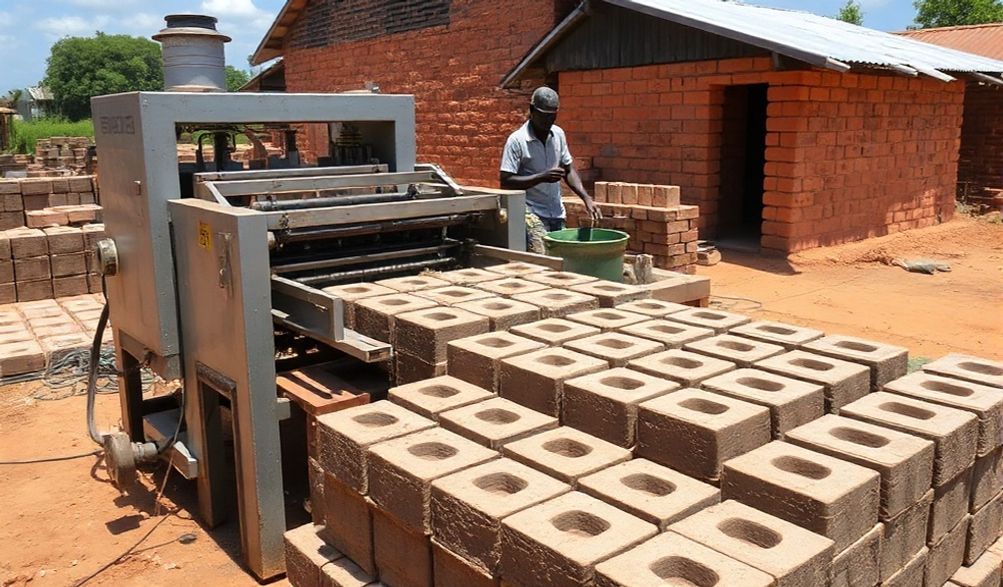
Inshingano Rusange yo Gukora Imashini z’Amatafari mu Uganda (2024)
Intangamarara
Imiterere y'ikirere cy'u Uganda iri guhinduka. Kuva mu kwaguka kw'umujyi wa Kampala kugeza mu mirima misha y'amazu ahagaze mu turere twose, igihugu gifite ubukire bukomeye bwo kubaka. Iyi myuka y'ubukire ishingiye ku kwaguka k'umujyi byihuse, gahunda za leta z'ubaka ibikorwa remezo, hamwe n'umusaruro w'ikiguzi cy'abikorera. Muri buri gishushanyo gishya, hari ikibazo gikomeye: amatafari y'igipimo kizira kandi y'igiciro gito. Nyamara, kuri benshi, uburyo bwa kera bwo gutunganya amatafari mu buryo bwa maboko—uburyo buhagaze, bukoresha abakozi benshi kandi butanga ibisubizo bitanyuze—burakomeza kuba ikibazo gikomeye mu iterambere no mu kuzamura umusaruro.
Aha ni ho ubumenyi bwa kijyambere buha igisubizo cy’ingirakamaro. Imashini zikora amatafari zirimo guhindura uburyo imikorere y’ubwubatsi ikorwa muri Uganda, zihindura ibikoresho byo mu gihugu by’imiterere nk’ibyatsi, amabuye n’ibindi, bigakorwa amatafari y’imikoreshereze y’ubwubatsi ifite ubuziranenge kandi ikomeye, mu buryo bwihuse cyane. Ku muntu ushaka gukora ubucuruzi, isosiyete y’ubwubatsi iri ku nzira yo kugera ku rwego rwo hejuru, cyangwa se umushinga wo guteza imbere umuryango, izi mashini zihariraho ibintu byinshi kuruta gusa ibikoresho; ahubwo zikaba inzira yo kugera ku micungire y’ibidukikije, kwaguka no kugera ku nzego z’ubukungu zihambaye.
Iyi gahunda yateguwe nk'ingamba yawe ishimishije, yizewe. Dufata mu gushushanya isoko, ubumenyi buhanitse, n'ubushishozi buhuzwa n'ibidukikje by'Ubuhinde mu buryo bw'ubukungu n'umurimo, dushaka kuguha uburangare ubikeneye. Intego yacu ni ugushishikariza ubumenyi bwo kugendana mu isoko, kwirinda amakosa asanzwe, no gukora investissement yizere, ifite ubumenyi. Tuzasuzuma ubwoko bw'imashini ziboneka, gusobanura iby'ingenzi bigomba gutekerezwa mu gucuruza, gusuzuma ibiciro, no gutanga inzira zikoreshwa zo kubaka umushinga w'ubwubatsi bw'amatafari mu Buhinde.
Gusobanukirwa Isoko ya Mashini Zokubaka Amatafari mu Uganda
Kugira ngo ujye ufata umwanzuro w’ingengo mw’ishoramari w’ubwenge, ni ngombwa gusobanukirwa ingufu zihindura ubushake bwo kugura no kumenya neza inyungu z’ikoranabuhanga mu buhinzi zigaragariza kuruta uburyo bwa kera.
Abanyamurizi B’ibikorwa: Ubukungu bw’Ubuganda mu Bwubatsi
Isoko ry’amatafari ryitabiriye n’amahirwe menshi bitewe n’ibintu byinshi bikurikira:
- Ubwinjirira mu Mudugudu n’Inganda zo Kubaka AmazuUfite umubare w’abaturage mu mijyi ukura byihuse cyane ku isi, ubukene bw’amazu mu mijyi n’umudugudu ntibushobora guhagarika. Ibi bikurura inganda n’imishinga minini yo kubaka ndetse n’ubwubatsi bw’amazu y’abaturage ubwabo.
- Gutezimbere Imishinga ya Leta:Ibikorwa bya Lete mu gukora imihanda, amashuri, ibitaro, n’ibindi byubaka bya Lete bisaba ibikoresho byinshi by’ubwubatsi bizewe.
- Gukura kwa Mishinga ya Gucuruza ya Kiguzi mu Bikorwa By’Abikorera.Kugwiza kw’amaduka makuru, amabanki y’ibiro, amahoteri, n’ibigo by’ubucuruzagiramo byongera ingorane zo gukenera amatafari menshi kandi yihariye.
Inzira z’ikoranabuhanga zifite inyungu nyinshi kuruta uburyo bwa gakondo mu bikorwa byinshi. Mu gukoresha imashini, umuntu ashobora gukora ibintu byinshi mu gihe gito, kandi akabikora neza. Ibyo biterwa n’ubushobozi bw’imashini gukora ibintu mu buryo butaziguye, butubahiriza ibisabwa by’ubwiza. Uburyo bwa gakondo bushobora kuba bwihuse mu bintu bike, ariko bukaba butanga umwanya wo gukora ibintu mu buryo bwa gakondo, bityo bikaba byongera agaciro k’ibyo umuntu akora. Ariko, mu gihe imashini zihuta kandi zikora neza, uburyo bwa gakondo bushobora kuba butagira uruhare mu bikorwa byihuta.
Guhindura uburyo bwo gukora ibintu ukoresheje imashini ntabwo ari ugutezimbere gusa; ni impinduka nyinshi mu bushobozi bwawe bwo gukora.
- Umuvuduko n'UruvuzeImashini zishobora gukora amabuye ibihumbi n'ibihumbi ku munsi, umusaruro utashoboka kugerwaho hakoreshejwe imirimo y'abantu bonyine.
- Ibiranga & Guhora BihujeBurashi yose iringana mu bunini, mu ishuri, no mu bwinshi. Ubu buryo bumwe butuma inyubako ikomeza kugira ubudahangarwa, byoroshya kubaka, kandi bigabanya ikoreshwa rya mortier.
- Ubushobozi bwo kugabanya ibiciro:Nubwo umutungo wambere ari mwinshi, ububiko bw’igihe kirekire burakomeye. Ugabanya cyane ibiciro by’abakozi ku gitere kimwe kandi ukagabanya imyanda y’ibikoresho.
- Ubushobozi bwo guhindura imikorereImashini nyinshi zirashobora gushyirwaho udushumi dutandukanye kugira ngo zikore amatafari atandukanye—afunze, afite ubusa, yo gucamunda, kandi cyane cyane,ibiti biruziramo—allowing you to cater to diverse market needs.
- Kuzahora mu gihe kirekire: Machines that produce Stabilized Soil Bricks (using local soil mixed with a small amount of cement) reduce the environmental damage caused by firing clay bricks (deforestation for kilns) and promote the use of locally available resources.
Types of Brick Making Machines Available in Uganda
The market offers a range of machines to suit different scales of operation and budgets. Understanding these categories is your first critical step.
Imashini z'ubukoreshazi z'ubukora amatafari
- Ibisobanuro: These are hand-operated presses, often leveraging a lever mechanism to compress soil-cement mix into a mold. They are human-powered, portable, and have the lowest upfront cost.
- Byiza Kuri: Individual builders for personal projects, very small-scale startups, community-based organizations, or as a low-risk introduction to brick production.
- Ibyiza n'ibibi:
- Inziza: Very affordable, no power required, simple to use and maintain, highly portable.
- Ibibi: Low production output (typically 300-500 bricks per day), physically demanding, quality heavily dependent on operator skill.
Imashini zituma amatafari zikora mu buryo bwa kabiri
- Ibisobanuro: These machines use an electric or diesel engine to power a vibration and compression system. Operators manually feed the raw material, but the forming and compaction are mechanized.
- Byiza Kuri: Small to Medium Enterprises (SMEs), growing block yards, and contractors looking to supply local markets consistently. This is the most popular category for serious commercial ventures.
- Ibyiza n'ibibi:
- Inziza: Excellent balance of output and cost, higher and more consistent quality than manual machines, can produce various block types, good efficiency.
- Ibibi: Requires a power source (grid or generator), higher initial investment than manual machines, requires basic operational training.
Imashini z'ikora amatafari zikora mu buryo bwikora
- Ibisobanuro: These are industrial-grade production lines. They feature automated material feeding, mixing, molding, curing, and sometimes even palletizing. They are controlled via programmable logic controllers (PLCs).
- Byiza Kuri: Large-scale commercial plants, major construction companies supplying national projects, and investors targeting the high-volume market.
- Ibyiza n'ibibi:
- Inziza: Extremely high output (thousands of bricks per hour), minimal manual labor required, pinnacle of consistency and quality.
- Ibibi: Very high capital investment, requires significant space and stable three-phase power, complex maintenance, and technical expertise to operate.
Mashini z'ibyatsi z'ingufu n'izigendera
- Imashini Zigendeshwa: Mounted on a trailer, these can be towed directly to a construction site. Ideal for producing bricks mu gace, eliminating transport costs for large projects. Most common in the manual and semi-automatic categories.
- Imashini Zihagaze Set up in a fixed location or factory. Suited for establishing a permanent block yard that supplies a surrounding area. Necessary for fully automatic production lines.
Key Factors to Consider Before Buying in Uganda
Choosing the right machine is a strategic decision. Focus on these critical factors tailored to the Ugandan context.
Production Capacity & Scale
Don’t just buy the biggest machine you can afford. Buy the one that matches your realistic business plan.
* Gerageza Ibisabwa Byawe: Estimate your current and near-future demand. How many bricks do you need to produce per 8-hour shift? A machine that sits idle is as bad as one that can’t keep up with orders.
* Match to Your Plan: Are you supplying a single project, a local community, or a wider region? Your scale of operation dictates the machine category.
Brick Type and Raw Material Compatibility
The machine must work with the materials you have.
* Soil Testing is Crucial: The quality of your local soil is paramount. Reputable suppliers should offer or recommend soil testing to determine the right cement-to-soil ratio for strong Stabilized Soil Bricks (SSBs).
* Choose Your Output: Decide what you want to produce. Interlocking Stabilized Soil Bricks (ISSBs) are highly recommended for the Ugandan market—they build faster, use less mortar, and create very strong walls. Ensure the machine you choose has the specific mold you need.
* Ubusobanuro bw'ibikoresho: Some machines are designed primarily for soil-cement, while others can handle concrete. Know your primary raw material.
Power Source: Electric, Diesel, or Hybrid?
Uganda’s power reliability must influence this decision.
* Umuriro w'amashanyarazi Cleaner and cheaper to run if you have a reliable grid connection. Vulnerable to outages.
* Diesel: Independent of the grid, essential for sites with no power. Higher fuel and maintenance costs, but offers uninterrupted operation.
* Hybrid: Offers the flexibility to switch between grid power and a built-in diesel engine, providing a good balance for areas with intermittent power.
Budget: Initial Investment vs. Total Cost of Ownership
The purchase price is just the beginning.
* Machine Price: Get clear quotes.
* Hidden Costs: Import duties and shipping can add 30-50%+ to the cost of an internationally sourced machine. Always factor this in.
* Total Cost: Consider installation, operator training, maintenance costs, and spare parts availability. A cheaper machine with no local service support can become a very expensive paperweight.
Finding Reliable Suppliers of Brick Machines in Uganda
Your supplier is as important as the machine itself. Strong after-sales support is non-negotiable.
Local Dealers and Distributors
- Inkungu: They offer local showrooms for demonstrations, easier communication, and—most importantly—accessible after-sales service, maintenance, and spare parts.
- How to Vet Them: Visit their physical office/workshop. Insist on contacting past clients and, if possible, visit an existing installation to see a machine in operation.
Direct Import from International Manufacturers
- Inkungu: Potentially lower unit cost and access to a wider range of models and brands.
- Challenges: Navigating shipping logistics, customs clearance (UBRA), and the high risk of receiving zero local technical support. Lead times for spare parts can be months.
- Procurement Tip: If importing, use a reputable freight forwarder, understand all tax implications (VAT, import duty), and budget for a container inspection.
Evaluating Supplier Credibility (E-E-A-T Focus)
Apply these principles to assess any supplier:
* Uburambe: How many years have they been operating and servicing machines in Uganda?
* Ubumenyi Do they provide comprehensive training? Can they advise on soil mix and brick curing? Do they have in-house technicians?
* Ubushobozi bwo kugira uburenganzira: Are they authorized dealers for known brands? Do they have partnerships or certifications?
* Ubushobozi bwo kwiringirwa: Do they offer a clear, written warranty? Do they have verifiable customer testimonials or case studies? Is their pricing transparent?
The Business Case: Costs and Profitability Analysis
Let’s translate this into financials. (Note: Prices are estimates and can fluctuate.)
Estimated Price Ranges for Machines in Uganda
- Imashini z’ibikoresho by’amaboko: UGX 1.5 million – UGX 4 million ($400 – $1,000).
- Imitungo Imigendeshwa n'ikiremwamuntu: UGX 8 million – UGX 40 million ($2,000 – $10,000), depending on size and features.
- Ibiribwa Byikora mu buryo Bwihuse: UGX 100 million+ ($25,000+), often much higher.
Calculating Your Return on Investment (ROI)
A simplified model for a semi-automatic machine:
1. Revenue: (Sale Price per Brick) x (Daily Production) x (Working Days).
* Urugero: UGX 500/brick x 800 bricks/day x 22 days/month = UGX 8.8 million monthly revenue.
2. Costs: Add up monthly costs for raw materials (soil, cement), labor, power/fuel, site rent, and machine depreciation/loan repayment.
3. Profit & Break-Even: Subtract total costs from revenue. Your break-even point is when cumulative profit covers the total initial investment. With good management, a semi-automatic machine can often pay for itself within 12-18 months.
Navigating Challenges: Practical Tips for Success
- Secure Raw Materials: Establish reliable, cost-effective sources for soil and cement. Consistency in input quality equals consistency in your bricks.
- Invest in Training: A well-trained operator who can perform basic maintenance will save you thousands in repair costs and downtime.
- Market Your Bricks: Don’t just produce. Build relationships with local builders, contractors, and hardware shops. Showcase samples and the benefits of your machine-made, especially interlocking, bricks.
Frequently Asked Questions (FAQ) About Brick Making Machines in Uganda
Q1: What is the cheapest brick making machine available in Uganda?
A: Basic manual brick presses are the most affordable, with prices starting from approximately UGX 1.5 million. However, carefully assess if its production capacity meets your needs before opting for the lowest-cost solution.
Q2: Can I get training on how to operate and maintain the machine?
A: Any reputable supplier must provide basic operational training upon installation. Inquire about the depth of training and the availability of maintenance workshops or detailed manuals in a language your operators understand.
Q3: Where can I find spare parts if my machine breaks down?
A: This is a critical question before purchase. Prioritize suppliers who stock common spare parts (like moulds, bearings, belts) locally in Uganda, ideally in Kampala or major towns, to ensure quick repairs and minimal downtime.
Q4: Are there financing options available for purchasing a machine?
A: Yes. Some established local suppliers offer installment payment plans. Additionally, explore equipment financing or SME loans from Ugandan banks like Centenary Bank, Stanbic Bank, or microfinance institutions dedicated to supporting small businesses.
Q5: Which type of brick is most marketable in Uganda right now?
A: Interlocking Stabilized Soil Bricks (ISSBs) are seeing rapidly growing demand. They are cost-effective for builders (saving on mortar and construction time), strong, and thermally efficient. Producing ISSBs is a strategically smart choice for market relevance.
Ibyo byose
Navigating the world of brick making machines in Uganda is a journey that blends technical understanding with sharp business acumen. The opportunity is real and significant, driven by the nation’s unwavering construction growth. The key to unlocking this potential lies not in buying the biggest machine, but in choosing the burya one—a machine that aligns with your production goals, works with your local materials, and is backed by a supplier you can trust for years to come.
Remember, this investment is a partnership. The credibility, experience, and post-sale support of your supplier will be the bedrock of your operation’s success. We have designed this guide to be that trustworthy, expert-backed resource to cut through the noise and empower your decision-making.
Your next step is to move from research to action. Refine your business plan, visit the workshops of shortlisted suppliers in Uganda, see the machines in person, and ask the hard questions about support and spare parts. Request a detailed quotation and a realistic profitability projection for your specific context. The foundation for a successful venture in Uganda’s building industry is ready to be laid—brick by precise, machine-made brick.
<