
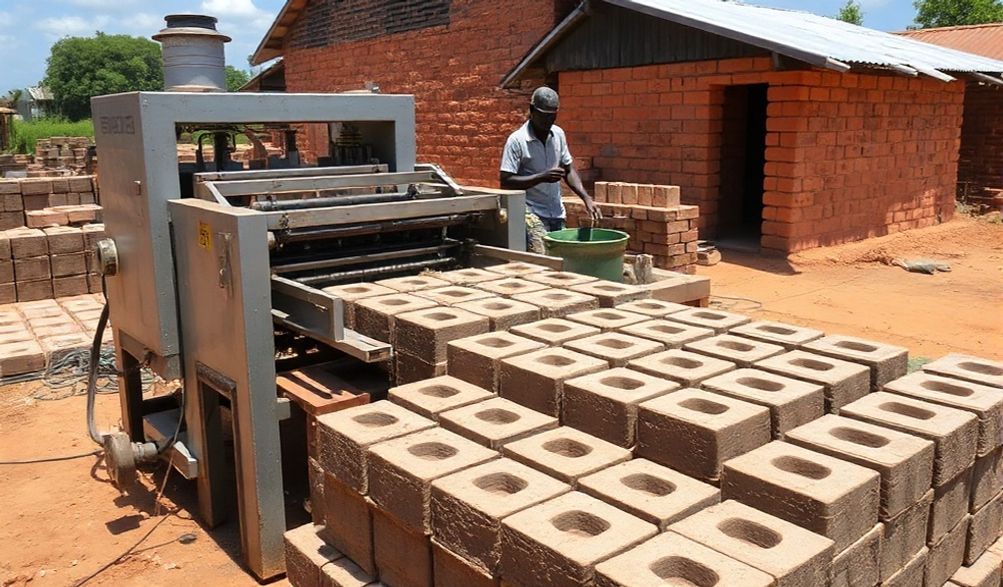
Seu Guia Definitivo para Máquinas de Fabricação de Tijolos em Uganda (2024)
Introdução
O horizonte de Uganda está se transformando. Da expansão agitada de Kampala aos novos conjuntos habitacionais surgindo em todas as regiões, o país está no meio de um significativo boom de construção. Esse crescimento é impulsionado pela rápida urbanização, projetos de infraestrutura liderados pelo governo e um aumento no investimento privado. No centro de cada novo edifício está uma necessidade fundamental: tijolos de qualidade e acessíveis. No entanto, para muitos, o método tradicional de fabricação manual de tijolos — um processo lento e intensivo em mão de obra que produz resultados inconsistentes — continua sendo um grande gargalo para o progresso e o lucro.
É aqui que a tecnologia moderna oferece uma solução poderosa. As máquinas de fabricar tijolos estão revolucionando a cadeia de suprimentos da construção civil em Uganda, transformando matérias-primas locais em blocos de construção precisos e duráveis com eficiência notável. Para o empreendedor em ascensão, a empresa de construção em crescimento ou o projeto de desenvolvimento comunitário, essas máquinas representam mais do que apenas equipamentos; elas são um portal para sustentabilidade, escalabilidade e uma oportunidade financeira significativa.
Este guia foi elaborado como seu recurso definitivo e confiável. Baseando-se em análises de mercado, expertise técnica e insights adaptados ao cenário econômico e operacional único de Uganda, nosso objetivo é oferecer a clareza que você precisa. Buscamos capacitá-lo com o conhecimento necessário para navegar pelo mercado, evitar armadilhas comuns e realizar um investimento confiante e bem-informado. Exploraremos os tipos de máquinas disponíveis, detalharemos as considerações críticas de compra, analisaremos os custos e forneceremos etapas práticas para construir um empreendimento bem-sucedido de fabricação de tijolos em Uganda.
Compreendendo o Mercado de Máquinas de Fabricação de Tijolos em Uganda
Para fazer um investimento inteligente, é essencial entender as forças que impulsionam a demanda e as claras vantagens que a mecanização oferece em relação aos métodos tradicionais.
Os Impulsionadores da Demanda: O Crescimento da Indústria da Construção em Uganda
O mercado de tijolos nunca esteve tão forte, graças a várias tendências simultâneas:
- Urbanização e Projetos Habitacionais:Com uma das populações urbanas de crescimento mais rápido do mundo, a demanda por moradias nas cidades é insaciável. Isso impulsiona tanto grandes empreendimentos quanto a construção de casas individuais.
- Desenvolvimento de Infraestrutura Governamental:Projetos nacionais de construção de estradas, escolas, hospitais e outras instalações públicas exigem quantidades massivas de materiais de construção confiáveis.
- Ascensão do Imobiliário Comercial Privado:O crescimento de shoppings, parques empresariais, hotéis e instalações industriais amplifica ainda mais a necessidade de um fornecimento de tijolos consistente e em grande volume.
Benefícios do Uso de Máquinas vs. Métodos Manuais
Mudar da produção manual para a mecanizada não é apenas uma atualização; é uma transformação completa das suas capacidades produtivas.
- Velocidade e Volume:Máquinas podem produzir centenas, até milhares de tijolos por dia, um nível de produção impossível de ser alcançado apenas com mão de obra manual.
- Qualidade e Consistência:Cada tijolo é idêntico em tamanho, forma e densidade. Essa uniformidade garante a integridade estrutural, simplifica a construção e reduz o uso de argamassa.
- Custo-Eficiência:Embora o investimento inicial seja maior, a economia a longo prazo é substancial. Você reduz drasticamente os custos de mão de obra por tijolo e minimiza o desperdício de material.
- Versatilidade:Muitas máquinas podem ser equipadas com diferentes moldes para produzir vários tipos de tijolos — maciços, ocos, de pavimentação e, mais notavelmente,blocos de encaixe— permitindo que você atenda às diversas necessidades do mercado.
- Sustentabilidade:Máquinas que produzem Tijolos de Solo Estabilizado (utilizando solo local misturado com uma pequena quantidade de cimento) reduzem os danos ambientais causados pela queima de tijolos de argila (desmatamento para fornos) e promovem o uso de recursos disponíveis localmente.
Tipos de Máquinas para Fabricação de Tijolos Disponíveis em Uganda
O mercado oferece uma variedade de máquinas para atender diferentes escalas de operação e orçamentos. Compreender essas categorias é o seu primeiro passo crítico.
Máquinas Manuais para Fabricação de Tijolos
- Descrição:São prensas operadas manualmente, frequentemente utilizando um mecanismo de alavanca para comprimir uma mistura de solo-cimento em um molde. São movidas por força humana, portáteis e têm o menor custo inicial.
- Melhor Para:Construtores individuais para projetos pessoais, startups de escala muito pequena, organizações comunitárias ou como uma introdução de baixo risco à produção de tijolos.
- Prós e Contras:
- Prós: Very affordable, no power required, simple to use and maintain, highly portable.
- Contras: Low production output (typically 300-500 bricks per day), physically demanding, quality heavily dependent on operator skill.
Máquinas Semi-Automáticas para Fabricação de Tijolos
- Descrição: These machines use an electric or diesel engine to power a vibration and compression system. Operators manually feed the raw material, but the forming and compaction are mechanized.
- Melhor Para: Small to Medium Enterprises (SMEs), growing block yards, and contractors looking to supply local markets consistently. This is the most popular category for serious commercial ventures.
- Prós e Contras:
- Prós: Excellent balance of output and cost, higher and more consistent quality than manual machines, can produce various block types, good efficiency.
- Contras: Requires a power source (grid or generator), higher initial investment than manual machines, requires basic operational training.
Máquinas de Fabricação de Tijolos Totalmente Automáticas
- Descrição: These are industrial-grade production lines. They feature automated material feeding, mixing, molding, curing, and sometimes even palletizing. They are controlled via programmable logic controllers (PLCs).
- Melhor Para: Large-scale commercial plants, major construction companies supplying national projects, and investors targeting the high-volume market.
- Prós e Contras:
- Prós: Extremely high output (thousands of bricks per hour), minimal manual labor required, pinnacle of consistency and quality.
- Contras: Very high capital investment, requires significant space and stable three-phase power, complex maintenance, and technical expertise to operate.
Máquinas de Tijolos Móveis vs. Estacionárias
- Máquinas Móveis: Mounted on a trailer, these can be towed directly to a construction site. Ideal for producing bricks no local, eliminating transport costs for large projects. Most common in the manual and semi-automatic categories.
- Máquinas Estacionárias: Set up in a fixed location or factory. Suited for establishing a permanent block yard that supplies a surrounding area. Necessary for fully automatic production lines.
Key Factors to Consider Before Buying in Uganda
Choosing the right machine is a strategic decision. Focus on these critical factors tailored to the Ugandan context.
Production Capacity & Scale
Don’t just buy the biggest machine you can afford. Buy the one that matches your realistic business plan.
* Calcule Suas Necessidades: Estimate your current and near-future demand. How many bricks do you need to produce per 8-hour shift? A machine that sits idle is as bad as one that can’t keep up with orders.
* Match to Your Plan: Are you supplying a single project, a local community, or a wider region? Your scale of operation dictates the machine category.
Brick Type and Raw Material Compatibility
The machine must work with the materials you have.
* Soil Testing is Crucial: The quality of your local soil is paramount. Reputable suppliers should offer or recommend soil testing to determine the right cement-to-soil ratio for strong Stabilized Soil Bricks (SSBs).
* Choose Your Output: Decide what you want to produce. Interlocking Stabilized Soil Bricks (ISSBs) are highly recommended for the Ugandan market—they build faster, use less mortar, and create very strong walls. Ensure the machine you choose has the specific mold you need.
* Flexibilidade do Material Some machines are designed primarily for soil-cement, while others can handle concrete. Know your primary raw material.
Power Source: Electric, Diesel, or Hybrid?
Uganda’s power reliability must influence this decision.
* Elétrico: Cleaner and cheaper to run if you have a reliable grid connection. Vulnerable to outages.
* Diesel: Independent of the grid, essential for sites with no power. Higher fuel and maintenance costs, but offers uninterrupted operation.
* Híbrido: Offers the flexibility to switch between grid power and a built-in diesel engine, providing a good balance for areas with intermittent power.
Budget: Initial Investment vs. Total Cost of Ownership
The purchase price is just the beginning.
* Machine Price: Get clear quotes.
* Custos Ocultos: Import duties and shipping can add 30-50%+ to the cost of an internationally sourced machine. Always factor this in.
* Total Cost: Consider installation, operator training, maintenance costs, and spare parts availability. A cheaper machine with no local service support can become a very expensive paperweight.
Finding Reliable Suppliers of Brick Machines in Uganda
Your supplier is as important as the machine itself. Strong after-sales support is non-negotiable.
Local Dealers and Distributors
- Vantagens: They offer local showrooms for demonstrations, easier communication, and—most importantly—accessible after-sales service, maintenance, and spare parts.
- How to Vet Them: Visit their physical office/workshop. Insist on contacting past clients and, if possible, visit an existing installation to see a machine in operation.
Direct Import from International Manufacturers
- Vantagens: Potentially lower unit cost and access to a wider range of models and brands.
- Desafios: Navigating shipping logistics, customs clearance (UBRA), and the high risk of receiving zero local technical support. Lead times for spare parts can be months.
- Procurement Tip: If importing, use a reputable freight forwarder, understand all tax implications (VAT, import duty), and budget for a container inspection.
Evaluating Supplier Credibility (E-E-A-T Focus)
Apply these principles to assess any supplier:
* Experiência: How many years have they been operating and servicing machines in Uganda?
* Especialização: Do they provide comprehensive training? Can they advise on soil mix and brick curing? Do they have in-house technicians?
* Autoridade: Are they authorized dealers for known brands? Do they have partnerships or certifications?
* Confiança: Do they offer a clear, written warranty? Do they have verifiable customer testimonials or case studies? Is their pricing transparent?
The Business Case: Costs and Profitability Analysis
Let’s translate this into financials. (Note: Prices are estimates and can fluctuate.)
Estimated Price Ranges for Machines in Uganda
- Prensas Manuais: UGX 1.5 million – UGX 4 million ($400 – $1,000).
- Máquinas Semiautomáticas: UGX 8 million – UGX 40 million ($2,000 – $10,000), depending on size and features.
- Plantas Totalmente Automáticas: UGX 100 million+ ($25,000+), often much higher.
Calculating Your Return on Investment (ROI)
A simplified model for a semi-automatic machine:
1. Revenue: (Sale Price per Brick) x (Daily Production) x (Working Days).
* Exemplo: UGX 500/brick x 800 bricks/day x 22 days/month = UGX 8.8 million monthly revenue.
2. Costs: Add up monthly costs for raw materials (soil, cement), labor, power/fuel, site rent, and machine depreciation/loan repayment.
3. Profit & Break-Even: Subtract total costs from revenue. Your break-even point is when cumulative profit covers the total initial investment. With good management, a semi-automatic machine can often pay for itself within 12-18 months.
Navigating Challenges: Practical Tips for Success
- Secure Raw Materials: Establish reliable, cost-effective sources for soil and cement. Consistency in input quality equals consistency in your bricks.
- Invest in Training: A well-trained operator who can perform basic maintenance will save you thousands in repair costs and downtime.
- Market Your Bricks: Don’t just produce. Build relationships with local builders, contractors, and hardware shops. Showcase samples and the benefits of your machine-made, especially interlocking, bricks.
Frequently Asked Questions (FAQ) About Brick Making Machines in Uganda
Q1: What is the cheapest brick making machine available in Uganda?
A: Basic manual brick presses are the most affordable, with prices starting from approximately UGX 1.5 million. However, carefully assess if its production capacity meets your needs before opting for the lowest-cost solution.
Q2: Can I get training on how to operate and maintain the machine?
A: Any reputable supplier must provide basic operational training upon installation. Inquire about the depth of training and the availability of maintenance workshops or detailed manuals in a language your operators understand.
Q3: Where can I find spare parts if my machine breaks down?
A: This is a critical question before purchase. Prioritize suppliers who stock common spare parts (like moulds, bearings, belts) locally in Uganda, ideally in Kampala or major towns, to ensure quick repairs and minimal downtime.
Q4: Are there financing options available for purchasing a machine?
A: Yes. Some established local suppliers offer installment payment plans. Additionally, explore equipment financing or SME loans from Ugandan banks like Centenary Bank, Stanbic Bank, or microfinance institutions dedicated to supporting small businesses.
Q5: Which type of brick is most marketable in Uganda right now?
A: Interlocking Stabilized Soil Bricks (ISSBs) are seeing rapidly growing demand. They are cost-effective for builders (saving on mortar and construction time), strong, and thermally efficient. Producing ISSBs is a strategically smart choice for market relevance.
Conclusão
Navigating the world of brick making machines in Uganda is a journey that blends technical understanding with sharp business acumen. The opportunity is real and significant, driven by the nation’s unwavering construction growth. The key to unlocking this potential lies not in buying the biggest machine, but in choosing the direita one—a machine that aligns with your production goals, works with your local materials, and is backed by a supplier you can trust for years to come.
Remember, this investment is a partnership. The credibility, experience, and post-sale support of your supplier will be the bedrock of your operation’s success. We have designed this guide to be that trustworthy, expert-backed resource to cut through the noise and empower your decision-making.
Your next step is to move from research to action. Refine your business plan, visit the workshops of shortlisted suppliers in Uganda, see the machines in person, and ask the hard questions about support and spare parts. Request a detailed quotation and a realistic profitability projection for your specific context. The foundation for a successful venture in Uganda’s building industry is ready to be laid—brick by precise, machine-made brick.
<