
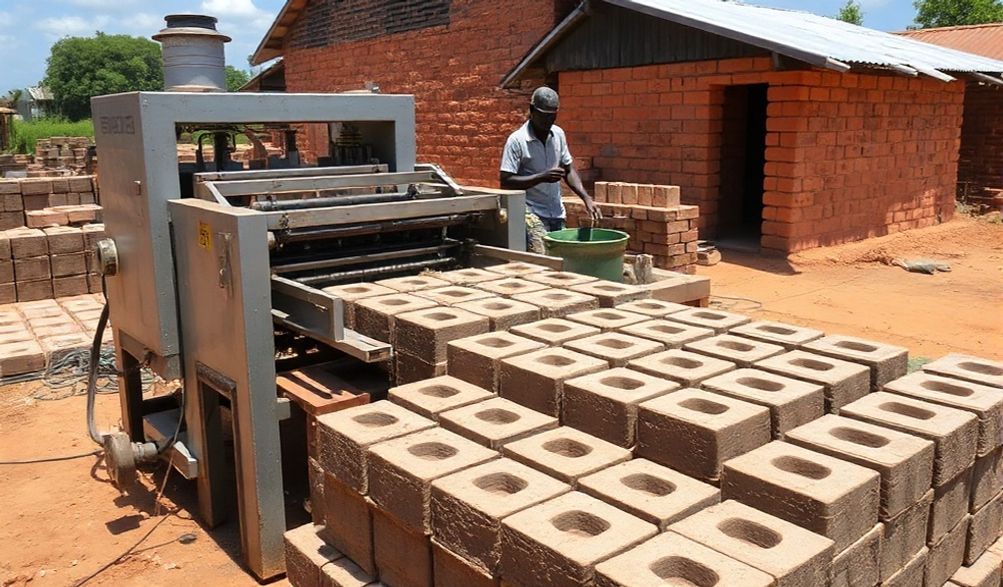
Hướng Dẫn Toàn Diện Về Máy Làm Gạch Tại Uganda (2024)
Giới thiệu
Bầu trời của Uganda đang thay đổi. Từ sự mở rộng sôi động của Kampala đến những khu đô thị mới mọc lên khắp các vùng, đất nước này đang ở giữa cơn bùng nổ xây dựng đáng kể. Sự tăng trưởng này được thúc đẩy bởi quá trình đô thị hóa nhanh chóng, các dự án cơ sở hạ tầng do chính phủ chủ trì và làn sóng đầu tư tư nhân. Trọng tâm của mọi công trình mới là nhu cầu cơ bản: những viên gạch chất lượng, giá cả phải chăng. Tuy nhiên, đối với nhiều người, phương pháp sản xuất gạch thủ công truyền thống - một quy trình chậm chạp, tốn nhiều sức lao động và cho kết quả không đồng đều - vẫn là một nút thắt chính đối với tiến độ và lợi nhuận.
Đây chính là nơi công nghệ hiện đại mang đến một giải pháp mạnh mẽ. Các máy làm gạch đang cách mạng hóa chuỗi cung ứng xây dựng ở Uganda, biến nguyên liệu thô địa phương thành những viên gạch xây dựng chính xác, bền bỉ với hiệu suất đáng kinh ngạc. Đối với doanh nhân khởi nghiệp, công ty xây dựng đang phát triển, hay dự án phát triển cộng đồng, những chiếc máy này không chỉ đơn thuần là thiết bị; chúng là cánh cửa mở ra tính bền vững, khả năng mở rộng và cơ hội tài chính đáng kể.
Hướng dẫn này được xây dựng như một nguồn tài nguyên đáng tin cậy và toàn diện dành cho bạn. Dựa trên phân tích thị trường, chuyên môn kỹ thuật và những hiểu biết sâu sắc được điều chỉnh phù hợp với bối cảnh kinh tế và môi trường hoạt động đặc thù của Uganda, chúng tôi hướng tới mục tiêu mang lại sự rõ ràng mà bạn cần. Mục đích của chúng tôi là trang bị cho bạn kiến thức để tháo gỡ thị trường, tránh những cạm bẫy phổ biến và đưa ra quyết định đầu tư tự tin, sáng suốt. Chúng ta sẽ cùng khám phá các loại máy móc hiện có, phân tích những yếu tố quan trọng khi mua sắm, đánh giá chi phí và cung cấp các bước thực tiễn để xây dựng một doanh nghiệp sản xuất gạch thành công tại Uganda.
Hiểu về Thị trường Máy Sản xuất Gạch tại Uganda
Để có một khoản đầu tư thông minh, điều cốt yếu là phải hiểu rõ các động lực thúc đẩy nhu cầu và những lợi thế rõ ràng mà cơ giới hóa mang lại so với các phương pháp truyền thống.
Các Yếu Tố Thúc Đẩy Nhu Cầu: Sự Tăng Trưởng của Ngành Xây Dựng Uganda
Thị trường gạch chưa bao giờ phát triển mạnh mẽ như hiện nay, nhờ vào một số xu hướng đồng thời:
- Đô thị hóa và các dự án nhà ở:Với một trong những tốc độ đô thị hóa nhanh nhất thế giới, nhu cầu nhà ở tại các thành phố và thị trấn là vô cùng lớn. Điều này thúc đẩy cả các dự án quy mô lớn lẫn việc xây dựng nhà ở cá nhân.
- Phát triển Hạ tầng Chính phủ:Các dự án quốc gia trong xây dựng đường xá, trường học, bệnh viện và các công trình công cộng khác đòi hỏi khối lượng lớn vật liệu xây dựng đáng tin cậy.
- Sự trỗi dậy của Bất động sản Thương mại Tư nhân:Sự phát triển của các trung tâm mua sắm, khu văn phòng, khách sạn và cơ sở công nghiệp càng làm tăng nhu cầu về nguồn cung gạch ổn định với khối lượng lớn.
Lợi ích của việc Sử dụng Máy móc so với Phương pháp Thủ công
Chuyển đổi từ sản xuất thủ công sang sản xuất bằng máy móc không chỉ là một bản nâng cấp; đó là một sự chuyển đổi hoàn toàn năng lực sản xuất của bạn.
- Tốc Độ & Khối Lượng:Máy móc có thể sản xuất hàng trăm, thậm chí hàng nghìn viên gạch mỗi ngày, một mức sản lượng không thể đạt được chỉ bằng lao động thủ công.
- Chất Lượng & Tính Nhất Quán:Mỗi viên gạch đều giống hệt nhau về kích thước, hình dạng và mật độ. Sự đồng nhất này đảm bảo tính toàn vẹn kết cấu, đơn giản hóa quá trình xây dựng và giảm thiểu việc sử dụng vữa.
- Hiệu quả Chi phí:Mặc dù khoản đầu tư ban đầu cao hơn, nhưng tiết kiệm dài hạn là đáng kể. Bạn cắt giảm đáng kể chi phí nhân công cho mỗi viên gạch và tối thiểu hóa lãng phí vật liệu.
- Tính linh hoạt: Many machines can be fitted with different molds to produce various brick types—solid, hollow, paving, and most notably, interlocking blocks—allowing you to cater to diverse market needs.
- Tính bền vững: Machines that produce Stabilized Soil Bricks (using local soil mixed with a small amount of cement) reduce the environmental damage caused by firing clay bricks (deforestation for kilns) and promote the use of locally available resources.
Types of Brick Making Machines Available in Uganda
The market offers a range of machines to suit different scales of operation and budgets. Understanding these categories is your first critical step.
Máy Làm Gạch Thủ Công
- Mô tả: These are hand-operated presses, often leveraging a lever mechanism to compress soil-cement mix into a mold. They are human-powered, portable, and have the lowest upfront cost.
- Tốt Nhất Cho: Individual builders for personal projects, very small-scale startups, community-based organizations, or as a low-risk introduction to brick production.
- Ưu điểm & Nhược điểm:
- Ưu điểm: Very affordable, no power required, simple to use and maintain, highly portable.
- Nhược điểm: Low production output (typically 300-500 bricks per day), physically demanding, quality heavily dependent on operator skill.
Máy Làm Gạch Bán Tự Động
- Mô tả: These machines use an electric or diesel engine to power a vibration and compression system. Operators manually feed the raw material, but the forming and compaction are mechanized.
- Tốt Nhất Cho: Small to Medium Enterprises (SMEs), growing block yards, and contractors looking to supply local markets consistently. This is the most popular category for serious commercial ventures.
- Ưu điểm & Nhược điểm:
- Ưu điểm: Excellent balance of output and cost, higher and more consistent quality than manual machines, can produce various block types, good efficiency.
- Nhược điểm: Requires a power source (grid or generator), higher initial investment than manual machines, requires basic operational training.
Máy Làm Gạch Tự Động Hoàn Toàn
- Mô tả: These are industrial-grade production lines. They feature automated material feeding, mixing, molding, curing, and sometimes even palletizing. They are controlled via programmable logic controllers (PLCs).
- Tốt Nhất Cho: Large-scale commercial plants, major construction companies supplying national projects, and investors targeting the high-volume market.
- Ưu điểm & Nhược điểm:
- Ưu điểm: Extremely high output (thousands of bricks per hour), minimal manual labor required, pinnacle of consistency and quality.
- Nhược điểm: Very high capital investment, requires significant space and stable three-phase power, complex maintenance, and technical expertise to operate.
Máy làm gạch di động so với máy làm gạch cố định
- Máy Móc Di Động: Mounted on a trailer, these can be towed directly to a construction site. Ideal for producing bricks tại chỗ, eliminating transport costs for large projects. Most common in the manual and semi-automatic categories.
- Máy Cố Định Set up in a fixed location or factory. Suited for establishing a permanent block yard that supplies a surrounding area. Necessary for fully automatic production lines.
Key Factors to Consider Before Buying in Uganda
Choosing the right machine is a strategic decision. Focus on these critical factors tailored to the Ugandan context.
Production Capacity & Scale
Don’t just buy the biggest machine you can afford. Buy the one that matches your realistic business plan.
* Tính Toán Nhu Cầu Của Bạn: Estimate your current and near-future demand. How many bricks do you need to produce per 8-hour shift? A machine that sits idle is as bad as one that can’t keep up with orders.
* Match to Your Plan: Are you supplying a single project, a local community, or a wider region? Your scale of operation dictates the machine category.
Brick Type and Raw Material Compatibility
The machine must work with the materials you have.
* Soil Testing is Crucial: The quality of your local soil is paramount. Reputable suppliers should offer or recommend soil testing to determine the right cement-to-soil ratio for strong Stabilized Soil Bricks (SSBs).
* Choose Your Output: Decide what you want to produce. Interlocking Stabilized Soil Bricks (ISSBs) are highly recommended for the Ugandan market—they build faster, use less mortar, and create very strong walls. Ensure the machine you choose has the specific mold you need.
* Tính Linh Hoạt của Vật Liệu Some machines are designed primarily for soil-cement, while others can handle concrete. Know your primary raw material.
Power Source: Electric, Diesel, or Hybrid?
Uganda’s power reliability must influence this decision.
* Điện: Cleaner and cheaper to run if you have a reliable grid connection. Vulnerable to outages.
* Đi-ê-zen Independent of the grid, essential for sites with no power. Higher fuel and maintenance costs, but offers uninterrupted operation.
* Lai tạo: Offers the flexibility to switch between grid power and a built-in diesel engine, providing a good balance for areas with intermittent power.
Budget: Initial Investment vs. Total Cost of Ownership
The purchase price is just the beginning.
* Machine Price: Get clear quotes.
* Chi Phí Ẩn: Import duties and shipping can add 30-50%+ to the cost of an internationally sourced machine. Always factor this in.
* Total Cost: Consider installation, operator training, maintenance costs, and spare parts availability. A cheaper machine with no local service support can become a very expensive paperweight.
Finding Reliable Suppliers of Brick Machines in Uganda
Your supplier is as important as the machine itself. Strong after-sales support is non-negotiable.
Local Dealers and Distributors
- Ưu điểm: They offer local showrooms for demonstrations, easier communication, and—most importantly—accessible after-sales service, maintenance, and spare parts.
- How to Vet Them: Visit their physical office/workshop. Insist on contacting past clients and, if possible, visit an existing installation to see a machine in operation.
Direct Import from International Manufacturers
- Ưu điểm: Potentially lower unit cost and access to a wider range of models and brands.
- Challenges: Navigating shipping logistics, customs clearance (UBRA), and the high risk of receiving zero local technical support. Lead times for spare parts can be months.
- Procurement Tip: If importing, use a reputable freight forwarder, understand all tax implications (VAT, import duty), and budget for a container inspection.
Evaluating Supplier Credibility (E-E-A-T Focus)
Apply these principles to assess any supplier:
* Kinh nghiệm: How many years have they been operating and servicing machines in Uganda?
* Chuyên môn Do they provide comprehensive training? Can they advise on soil mix and brick curing? Do they have in-house technicians?
* Tính thẩm quyền Are they authorized dealers for known brands? Do they have partnerships or certifications?
* Đáng tin cậy: Do they offer a clear, written warranty? Do they have verifiable customer testimonials or case studies? Is their pricing transparent?
The Business Case: Costs and Profitability Analysis
Let’s translate this into financials. (Note: Prices are estimates and can fluctuate.)
Estimated Price Ranges for Machines in Uganda
- Máy Ép Thủ Công: UGX 1.5 million – UGX 4 million ($400 – $1,000).
- Máy Bán Tự Động: UGX 8 million – UGX 40 million ($2,000 – $10,000), depending on size and features.
- Cây Trồng Tự Động Hoàn Toàn: UGX 100 million+ ($25,000+), often much higher.
Calculating Your Return on Investment (ROI)
A simplified model for a semi-automatic machine:
1. Revenue: (Sale Price per Brick) x (Daily Production) x (Working Days).
* Ví dụ: UGX 500/brick x 800 bricks/day x 22 days/month = UGX 8.8 million monthly revenue.
2. Costs: Add up monthly costs for raw materials (soil, cement), labor, power/fuel, site rent, and machine depreciation/loan repayment.
3. Profit & Break-Even: Subtract total costs from revenue. Your break-even point is when cumulative profit covers the total initial investment. With good management, a semi-automatic machine can often pay for itself within 12-18 months.
Navigating Challenges: Practical Tips for Success
- Secure Raw Materials: Establish reliable, cost-effective sources for soil and cement. Consistency in input quality equals consistency in your bricks.
- Invest in Training: A well-trained operator who can perform basic maintenance will save you thousands in repair costs and downtime.
- Market Your Bricks: Don’t just produce. Build relationships with local builders, contractors, and hardware shops. Showcase samples and the benefits of your machine-made, especially interlocking, bricks.
Frequently Asked Questions (FAQ) About Brick Making Machines in Uganda
Q1: What is the cheapest brick making machine available in Uganda?
A: Basic manual brick presses are the most affordable, with prices starting from approximately UGX 1.5 million. However, carefully assess if its production capacity meets your needs before opting for the lowest-cost solution.
Q2: Can I get training on how to operate and maintain the machine?
A: Any reputable supplier must provide basic operational training upon installation. Inquire about the depth of training and the availability of maintenance workshops or detailed manuals in a language your operators understand.
Q3: Where can I find spare parts if my machine breaks down?
A: This is a critical question before purchase. Prioritize suppliers who stock common spare parts (like moulds, bearings, belts) locally in Uganda, ideally in Kampala or major towns, to ensure quick repairs and minimal downtime.
Q4: Are there financing options available for purchasing a machine?
A: Yes. Some established local suppliers offer installment payment plans. Additionally, explore equipment financing or SME loans from Ugandan banks like Centenary Bank, Stanbic Bank, or microfinance institutions dedicated to supporting small businesses.
Q5: Which type of brick is most marketable in Uganda right now?
A: Interlocking Stabilized Soil Bricks (ISSBs) are seeing rapidly growing demand. They are cost-effective for builders (saving on mortar and construction time), strong, and thermally efficient. Producing ISSBs is a strategically smart choice for market relevance.
Conclusion
Navigating the world of brick making machines in Uganda is a journey that blends technical understanding with sharp business acumen. The opportunity is real and significant, driven by the nation’s unwavering construction growth. The key to unlocking this potential lies not in buying the biggest machine, but in choosing the phải one—a machine that aligns with your production goals, works with your local materials, and is backed by a supplier you can trust for years to come.
Remember, this investment is a partnership. The credibility, experience, and post-sale support of your supplier will be the bedrock of your operation’s success. We have designed this guide to be that trustworthy, expert-backed resource to cut through the noise and empower your decision-making.
Your next step is to move from research to action. Refine your business plan, visit the workshops of shortlisted suppliers in Uganda, see the machines in person, and ask the hard questions about support and spare parts. Request a detailed quotation and a realistic profitability projection for your specific context. The foundation for a successful venture in Uganda’s building industry is ready to be laid—brick by precise, machine-made brick.
<