
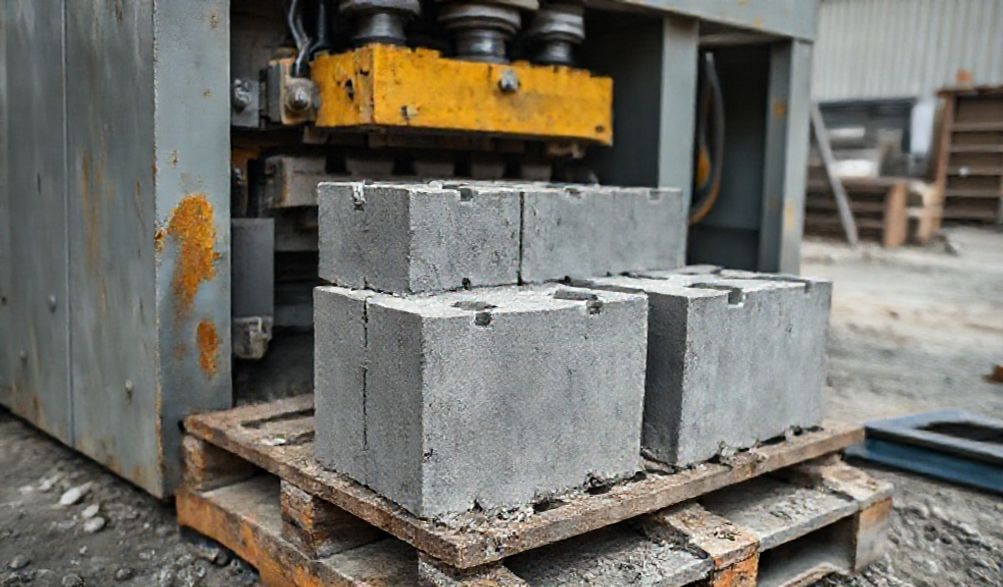
Le Guide Ultime des Machines à Fabriquer les Blocs de Cendre : Types, Coûts et Comment Choisir
Pour les entreprises de construction, les entrepreneurs ou les entrepreneurs cherchant à entrer dans l'industrie des matériaux de construction, le coût et l'approvisionnement en parpaings peuvent constituer un obstacle majeur. Et si vous pouviez produire des blocs de haute qualité à la demande, contrôler votre chaîne d'approvisionnement et débloquer de nouvelles sources de revenus ?
Ce guide complet s'appuie sur des décennies d'expérience dans l'industrie pour démystifier les machines de fabrication de blocs de cendres. Nous allons percer le jargon marketing et vous fournir les informations pratiques et fiables dont vous avez besoin pour faire un investissement éclairé.
Vous découvrirez les différents types de machines (du manuel au entièrement automatique), les facteurs clés comme la capacité de production et les types de blocs, des répartitions de coûts réalistes, ainsi qu'un cadre étape par étape pour choisir la machine parfaite adaptée à votre projet spécifique ou à vos objectifs commerciaux.
Que vous fassiez des recherches surMachines à fabriquer des parpaingspour une petite exploitation familiale ou une grande installation commerciale, ce guide est votre point de départ.
Qu'est-ce qu'une machine à fabriquer des parpaings ? Fonction principale et avantages
Fondamentalement, une machine à fabriquer des blocs de cendres est un dispositif qui automatise le processus de formation d'unités de maçonnerie uniformes et durables à partir d'un mélange de ciment et de granulats. En pratique, le terme «bloc de cendres» est souvent utilisé de manière interchangeable avec «bloc de béton», bien que les cendres traditionnelles (cendres volantes) soient moins courantes aujourd'hui que les granulats de pierre ou de sable.
Comprendre le fonctionnement de ces machines et leurs avantages est la première étape vers un achat intelligent.
Le principe de fonctionnement de base
Le processus, bien que variant selon le niveau d'automatisation, suit un principe mécanique constant :
- Mélange :Le ciment, les granulats (comme le sable, le gravier ou la pierre concassée) et l'eau sont combinés pour former un mélange de béton semi-sec. Le dosage précis est crucial pour la résistance.
- Moulage:Ce mélange est versé dans une cavité de moule, qui définit la forme du bloc (par exemple, à âme creuse, plein).
- Compactage (Vibration) :Des vibrations à haute fréquence sont appliquées. C'est l'étape cruciale qui élimine les poches d'air et comprime le matériau en une forme dense et résistante à l'intérieur du moule.
- Démoulage et durcissement :Le bloc fraîchement formé, ou « vert », est éjecté du moule. Il subit ensuite un processus de durcissement, où il acquiert de la solidité au fil des jours grâce à un contrôle de l'humidité et de la température, souvent dans une chambre ou un rayon de durcissement dédié.
Principaux avantages de la production de blocs sur site
Investir dans votre propre capacité de production offre des avantages tangibles :
- Économies de coûts importantes :Pour les projets en gros volumes, la production de blocs en interne élimine les marges des fournisseurs et peut réduire les coûts des matériaux de 30 à 50 %, selon les prix locaux.
- Contrôle complet de la chaîne d'approvisionnement :Ne subissez plus jamais de retard de projet à cause de pénuries de fournisseurs ou de problèmes de livraison. Produisez exactement ce dont vous avez besoin, au moment où vous en avez besoin.
- Flexibilité de personnalisation :Vous pouvez créer des blocs de dimensions non standard, intégrer des pigments spéciaux pour des blocs colorés, ou ajuster les mélanges pour des propriétés spécifiques de résistance ou d'isolation.
- Réduction des déchets de matériaux :Produisez en lots alignés sur votre rythme, en minimisant les déchets dus aux livraisons endommagées ou aux surcommandes. Certaines opérations peuvent même utiliser des matériaux sur place ou locaux.
- Une opportunité commerciale évidente :Une machine fiable peut devenir un centre de profit à part entière, fournissant des blocs à d'autres entrepreneurs, constructeurs ou détaillants de votre région.
Types de machines à fabriquer des parpaings : du manuel au entièrement automatique
The market offers a spectrum of machines categorized by their level of automation, output, and investment. Choosing the right type is the most critical decision you’ll make.
Manual or Hand-Operated Machines
- Description : These are purely mechanical, lever-operated devices. All actions—filling the mold, compacting via a hand press, and demolding—are performed by human labor.
- Idéal pour : Extremely small-scale, low-budget projects like a personal garden wall, a small shed, or use in off-grid locations with no power access. They are not suitable for commercial production.
- Capacité de sortie : Typically 100 to 500 blocks per day, heavily dependent on operator stamina.
- Perspective d'expert : While low-cost, the physical labor is intense, and achieving consistent block density and quality is challenging. They serve a niche but important role.
Machines semi-automatiques
- Description : This is the most popular category for small to medium businesses. They use an electric motor to power a vibration system for effective compaction. However, feeding raw materials and removing finished blocks are manual operations. Many feature a simple hydraulic system for mold movement.
- Idéal pour : Startup block manufacturing businesses, contractors undertaking several projects a year, and medium-scale housing developments. They offer an excellent balance of productivity and affordability.
- Capacité de sortie : A robust semi-automatic machine can produce between 800 to 3,000+ standard blocks in an 8-hour shift, depending on model and crew efficiency.
- Perspective d'expert : Based on operational data, this tier offers the best return on investment for new entrants. The key is to ensure the vibration motor and frame are robust enough for continuous use.
Machines entièrement automatiques
- Description : These are industrial production lines. They integrate computerized control panels, automatic material batching and feeding systems, conveyor belts, robotic stackers, and palletizers. Human intervention is primarily for monitoring and maintenance.
- Idéal pour : Large-scale commercial block manufacturing plants supplying regional markets, or major infrastructure projects with colossal, predictable demand.
- Capacité de sortie : Production is measured in shifts, with outputs ranging from 10,000 to over 30,000 blocks per 8-hour shift.
- Perspective d'expert : The capital investment is substantial, and they require significant space, stable high-power electrical connections, and skilled technicians. The payoff is unmatched volume and lower per-unit labor cost.
Machines de fabrication de blocs mobiles
- Description : These are production units (often semi- or fully-automatic) mounted on a trailer or truck bed. They can be towed directly to a large job site.
- Idéal pour : Massive infrastructure projects like dams, highways, or remote large-scale construction where transporting thousands of finished blocks would be logistically complex and expensive.
- Capacité de sortie : Varies, but designed for high-volume on-site production.
- Perspective d'expert : A common challenge we see is underestimating the site preparation needed—you still require a flat, stable base and access to bulk raw materials and power/water.
Facteurs critiques à considérer avant d'acheter
Beyond just the machine type, several technical and commercial factors will determine your long-term success. This is where due diligence separates a wise investment from an expensive mistake.
Capacité de production et exigences de rendement
Don’t guess. Calculate.
1. Estimate your average daily or weekly block consumption based on project pipelines.
2. Add a 20-30% buffer for growth or unexpected demand.
3. Match this number to a machine’s Réaliste output, not its theoretical maximum. A machine rated for 2000 blocks/day might average 1600 after accounting for breaks, maintenance, and material loading.
Types et tailles de blocs
- Polyvalence : Can the machine produce hollow blocks, solid blocks, paving stones, and interlocking blocks with simple mold changes? Mold versatility future-proofs your business.
- Mold Changeover Time: How quickly and easily can molds be swapped? In semi-automatic machines, this process should take less than 30 minutes.
- Standard vs. Custom: Ensure the machine can produce blocks meeting relevant regional standards (e.g., ASTM in the US, IS in India) for commercial sales.
Machine Power Source and Specifications
- Electric vs. Diesel/Hydraulic: Electric is most common for stationary plants. Diesel/hydraulic options are vital for sites without grid power.
- Exigences en matière d'alimentation électrique : A semi-automatic machine may require a robust 3-phase electrical connection. Verify your site’s capabilities before purchasing.
- Logistics: Consider the machine’s footprint, weight, and required ancillary space for raw material storage, mixing, and block curing.
Quality of Construction and Key Components
The machine’s build quality dictates its lifespan and uptime. Prioritize:
* Cadre: Heavy-duty steel welding that resists the constant stress of vibration.
* Système de Vibration : The heart of the machine. Look for reputable, branded vibration motors with adjustable frequency. Enclosed motors last longer in dusty environments.
* Moisissures : Hardened, precision-machined steel molds produce smooth, dimensionally accurate blocks and resist wear.
* Warning Sign: Excessively thin steel, poor welds, unmounted or generic “no-name” vibration motors, and loosely fitting molds are red flags for imminent breakdowns.
After-Sales Support: The Deal-Breaker
This factor is non-negotiable. A machine without support is a paperweight.
* Pièces de rechange : Are wear-and-tear parts (mold liners, springs, bolts) readily available? What is the lead time?
* Support technique : Does the supplier offer installation guidance, troubleshooting, and operational training? Is there a service hotline?
* Documentation: Clear, illustrated operation and maintenance manuals in your language are essential.
Understanding the Costs: Investment, Operation, and ROI
Being trustworthy means being transparent about money. Here’s a realistic breakdown.
Initial Purchase Price Ranges
- Machines manuelles : $1,000 – $4,000 USD.
- Machines semi-automatiques : $5,000 – $25,000+ USD. Price scales with capacity, build quality, and level of hydraulic assistance.
- Machines entièrement automatiques : $50,000 – $300,000+ USD, depending on complexity and degree of automation.
- Machines mobiles : $30,000 – $150,000+ USD.
Note: Country of manufacture, brand reputation, and shipping/import duties significantly affect final cost.
Operational and Raw Material Costs
Your ongoing costs per block will include:
* Matériaux bruts : Cement, sand, aggregate. A rough estimate is that raw materials constitute 60-70% of the production cost of a single block.
* Main-d'œuvre : For semi-auto machines, a crew of 2-4 is typical.
* Energy: Electricity for the mixer, vibrator, and (if applicable) hydraulic power pack.
* Entretien : A small but essential budget for replacing wear parts and routine servicing.
Calculating Potential Return on Investment (ROI)
Use this simplified framework:
1. Calculate your total cost per finished, cured block (Materials + Labor + Energy + Maintenance + Machine Depreciation).
2. Research the prevailing market price for a similar quality block in your area.
3. Your gross profit per block is: Market Price - Your Cost.
4. ROI Timeframe: Divide the total machine investment cost by your estimated monthly gross profit from block sales.
Exemple : If you invest $15,000 in a semi-auto machine and profit $0.20 per block, you need to sell 75,000 blocks to break even on the machine. At 2,000 blocks/month, that’s a 37.5-month (just over 3-year) ROI, excluding other business expenses. Volume is key.
Step-by-Step Guide to Choosing the Right Machine
Follow this actionable, expert-guided checklist to navigate your purchase confidently.
Step 1: Precisely Define Your Project Scope and Goals.
Are you supplying a single project, starting a side business, or launching a full-scale plant? Write down clear, measurable objectives for the first 12-24 months.
Step 2: Set a Realistic Budget (Including Hidden Costs).
Account for the machine, shipping, import duties, site preparation (foundation, power hookup), initial raw material stock, and a 10-15% contingency fund.
Step 3: Research and Shortlist Reputable Manufacturers/Suppliers.
Look for companies with a long track record, verifiable customer lists, and a strong online presence of working machines. Industry forums and trade associations are good resources.
Step 4: Request Detailed Quotes and Specifications.
Ask for a comprehensive spec sheet, not just a price. Compare vibration motor power, cycle time, hydraulic pressure, and warranty terms line-by-line.
Step 5: Seek References and, If Possible, Visit a Working Installation.
Talking to an existing user provides unparalleled insight into real-world output, reliability, and support quality. If a supplier discourages this, be wary.
Step 6: Finalize Support and Warranty Terms.
Get all support promises in writing. What does the warranty cover (parts, labor, duration)? How are spare parts priced? Clarify this before the final payment.
Frequently Asked Questions (FAQ) About Cinder Block Machines
What is the difference between a concrete block and a cinder block?
Historically, “cinder blocks” used fly ash or coal cinders as the primary aggregate, making them lighter and less strong. Modern “concrete blocks” use sand, gravel, or crushed stone, offering superior strength and durability. Today, the terms are often used interchangeably, but the material is almost always concrete.
Can I start a business with just one semi-automatic machine?
Absolutely. Many successful block yards began with a single robust semi-automatic machine. It allows you to validate demand, refine your process, and generate revenue to reinvest in scaling up. Focus on quality and reliability in your local market.
What is the curing process, and how long does it take?
Curing is the process where the cement hydrates and gains strength. Blocks must be kept moist and at a stable temperature for a minimum of 7 days to achieve sufficient strength. Full strength (28-day strength) is typically reached after 28 days under proper conditions. Steam curing chambers in automatic plants accelerate this to 24 hours or less.
How much space do I need for a small block-making operation?
For a semi-automatic setup, you need space for:
* The machine itself (~ 10′ x 10′ area).
* Raw material storage (sand, stone piles or silos).
* A mixing area.
* A large, level area for block curing and storage (can be several thousand square feet).
* Plan for at least 5,000 to 10,000 sq. ft. as a starting point.
Are there any safety precautions I should know about?
Yes. Always:
* Wear appropriate PPE: safety glasses, hearing protection (vibration is loud), gloves, and steel-toe boots.
* Ensure all machine guards are in place.
* Lock out/tag out power before performing any maintenance or clearing jams.
* Train all operators on safe material handling (cement dust, heavy molds).
Conclusion and Final Recommendations
Choosing a cinder block making machine is a significant decision that hinges on aligning the machine’s capabilities with your specific scale, budget, and long-term goals.
To reiterate the core principle: prioritize quality machinery and unparalleled after-sales support over the lowest initial price. Your long-term productivity and profitability depend on reliability and uptime.
As a final piece of expert advice: for most first-time buyers and small-to-medium business entrants, a robust, well-supported semi-automatic machine represents the optimal balance of affordability, controllable output, and operational simplicity to successfully launch and grow your venture.
Ready to take the next step? Use the step-by-step checklist in Section 5 to systematically evaluate your options. For personalized guidance, consider consulting with an independent industry expert or reaching out to shortlisted manufacturers with your specific project details and capacity requirements.
<