
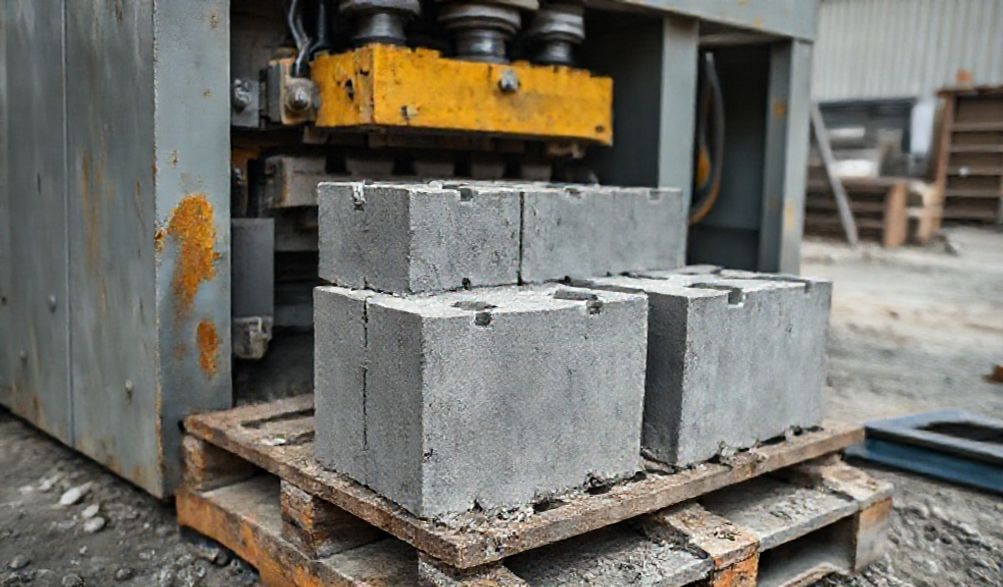
Panduan Muktamad untuk Mesin Pembuat Blok Cinder: Jenis, Kos, dan Cara Memilih
Bagi syarikat pembinaan, kontraktor, atau usahawan yang ingin memasuki industri bahan binaan, kos dan bekalan blok cinder boleh menjadi halangan besar. Bagaimana jika anda boleh menghasilkan blok berkualiti tinggi mengikut permintaan, mengawal rantaian bekalan anda, dan membuka aliran pendapatan baharu?
Panduan komprehensif ini memanfaatkan pengalaman industri selama beberapa dekad untuk menerangkan mesin pembuat blok simen dengan lebih jelas. Kami akan mengelakkan jargon pemasaran dan memberikan maklumat praktikal serta boleh dipercayai yang anda perlukan untuk membuat pelaburan yang termaklum.
Anda akan mempelajari pelbagai jenis mesin (dari manual hingga automatik sepenuhnya), faktor utama seperti kapasiti pengeluaran dan jenis blok, pecahan kos yang realistik, serta rangka kerja langkah demi langkah untuk memilih mesin yang paling sesuai untuk projek atau matlamat perniagaan khusus anda.
Sama ada anda sedang menyelidikmesin membuat blok simenuntuk sebuah tanah kecil atau ladang komersial berskala besar, panduan ini adalah titik permulaan anda.
Apakah itu Mesin Pembuat Blok Cinder? Fungsi Teras dan Manfaatnya
Pada terasnya, mesin pembuat blok simen adalah peranti yang mengautomasikan proses membentuk unit batu yang konsisten dan tahan lama daripada campuran simen dan agregat. Dalam praktiknya, istilah "blok simen" sering digunakan secara bergantian dengan "blok konkrit," walaupun cinder tradisional (abu terbang) kurang lazim digunakan hari ini berbanding agregat batu atau pasir.
Memahami cara mesin ini berfungsi dan manfaatnya adalah langkah pertama ke arah pembelian yang bijak.
Prinsip Asas Kerja
Proses ini, walaupun berbeza mengikut tahap automasi, mengikuti prinsip mekanikal yang konsisten:
- Mencampurkan:Simen, agregat (seperti pasir, batu kelikir, atau batu hancur), dan air digabungkan untuk membentuk campuran konkrit separa kering. Nisbah yang tepat adalah kritikal untuk kekuatan.
- Pembentukan:Campuran ini dimasukkan ke dalam rongga acuan, yang menentukan bentuk blok (contohnya, teras berongga, padat).
- Pemadatan (Getaran):Getaran frekuensi tinggi digunakan. Ini adalah langkah penting yang menghilangkan kantong udara dan memampatkan bahan menjadi bentuk yang padat dan kuat di dalam acuan.
- Nyahcetakan & Pengerasan:Blok yang baru terbentuk, atau "hijau," dikeluarkan dari acuan. Kemudian, ia menjalani proses pematangan, di mana ia memperoleh kekuatan selama beberapa hari melalui kawalan kelembapan dan suhu, sering kali di dalam ruang atau rak pematangan khusus.
Kelebihan Utama Pengeluaran Blok di Tapak
Melabur dalam keupayaan pengeluaran sendiri menawarkan manfaat yang ketara:
- Penjimatan Kos yang Ketara:Untuk projek pukal, menghasilkan blok secara dalaman menghapuskan margin pembekal dan boleh mengurangkan kos bahan sebanyak 30-50%, bergantung pada harga tempatan.
- Kawalan Rantaian Bekalan Lengkap:Jangan pernah hadapi kelewatan projek kerana kekurangan pembekal atau isu penghantaran. Hasilkan tepat apa yang anda perlukan, bila anda memerlukannya.
- Fleksibiliti Penyesuaian:Anda boleh mencipta saiz blok bukan standard, mengintegrasikan pigmen khas untuk blok berwarna, atau menyesuaikan campuran untuk kekuatan atau sifat penebat tertentu.
- Pengurangan Sisa Bahan:Hasilkan dalam kelompok selaras dengan kadar anda, mengurangkan pembaziran daripada penghantaran yang rosak atau pesanan berlebihan. Sesetengah operasi boleh menggunakan bahan di tapak atau tempatan.
- Peluang Perniagaan yang Jelas:Mesin yang boleh dipercayai boleh menjadi pusat keuntungan sendiri, membekalkan blok kepada kontraktor lain, pembina, atau peruncit di kawasan anda.
Jenis Mesin Pembuat Blok Cinder: Dari Manual Hingga Sepenuhnya Automatik
Pasaran menawarkan pelbagai spektrum mesin yang dikategorikan berdasarkan tahap automasi, output, dan pelaburan. Memilih jenis yang tepat adalah keputusan paling kritikal yang akan anda buat.
Mesin Manual atau Dikendalikan Tangan
- Penerangan:Ini adalah peranti mekanikal tulen yang dikendalikan oleh tuas. Semua tindakan—mengisi acuan, memadatkan melalui penekan tangan, dan mengeluarkan acuan—dilakukan oleh tenaga manusia.
- Terbaik Untuk:Projek berskala sangat kecil dan berbelanjawan rendah seperti tembok taman peribadi, pondok kecil, atau digunakan di lokasi luar grid tanpa akses kuasa. Ia tidak sesuai untuk pengeluaran komersial.
- Kapasiti Output:Biasanya 100 hingga 500 blok sehari, sangat bergantung pada stamina pengendali.
- Pandangan Pakar:Walaupun kosnya rendah, buruh fizikalnya sangat intensif, dan mencapai ketumpatan dan kualiti blok yang konsisten adalah mencabar. Mereka memainkan peranan khusus tetapi penting.
Mesin Semi-Automatik
- Penerangan:Ini adalah kategori paling popular untuk perniagaan kecil dan sederhana. Mereka menggunakan motor elektrik untuk menggerakkan sistem getaran bagi pemadatan yang berkesan. Walau bagaimanapun, pengisian bahan mentah dan pengeluaran blok siap adalah operasi manual. Kebanyakan model dilengkapi sistem hidraulik ringkas untuk pergerakan acuan.
- Terbaik Untuk:Perniagaan pembuatan blok permulaan, kontraktor yang menjalankan beberapa projek setahun, dan pembangunan perumahan berskala sederhana. Mereka menawarkan keseimbangan yang sangat baik antara produktiviti dan kemampuan.
- Kapasiti Output: A robust semi-automatic machine can produce between 800 to 3,000+ standard blocks in an 8-hour shift, depending on model and crew efficiency.
- Pandangan Pakar: Based on operational data, this tier offers the best return on investment for new entrants. The key is to ensure the vibration motor and frame are robust enough for continuous use.
Mesin Sepenuhnya Automatik
- Penerangan: These are industrial production lines. They integrate computerized control panels, automatic material batching and feeding systems, conveyor belts, robotic stackers, and palletizers. Human intervention is primarily for monitoring and maintenance.
- Terbaik Untuk: Large-scale commercial block manufacturing plants supplying regional markets, or major infrastructure projects with colossal, predictable demand.
- Kapasiti Output: Production is measured in shifts, with outputs ranging from 10,000 to over 30,000 blocks per 8-hour shift.
- Pandangan Pakar: The capital investment is substantial, and they require significant space, stable high-power electrical connections, and skilled technicians. The payoff is unmatched volume and lower per-unit labor cost.
Mesin Pembuat Blok Mudah Alih
- Penerangan: These are production units (often semi- or fully-automatic) mounted on a trailer or truck bed. They can be towed directly to a large job site.
- Terbaik Untuk: Massive infrastructure projects like dams, highways, or remote large-scale construction where transporting thousands of finished blocks would be logistically complex and expensive.
- Kapasiti Output: Varies, but designed for high-volume on-site production.
- Pandangan Pakar: A common challenge we see is underestimating the site preparation needed—you still require a flat, stable base and access to bulk raw materials and power/water.
Faktor Kritikal yang Perlu Dipertimbangkan Sebelum Anda Membeli
Beyond just the machine type, several technical and commercial factors will determine your long-term success. This is where due diligence separates a wise investment from an expensive mistake.
Kapasiti Pengeluaran & Keperluan Output
Don’t guess. Calculate.
1. Estimate your average daily or weekly block consumption based on project pipelines.
2. Add a 20-30% buffer for growth or unexpected demand.
3. Match this number to a machine’s realistik output, not its theoretical maximum. A machine rated for 2000 blocks/day might average 1600 after accounting for breaks, maintenance, and material loading.
Block Types and Sizes
- Kepelbagaian: Can the machine produce hollow blocks, solid blocks, paving stones, and interlocking blocks with simple mold changes? Mold versatility future-proofs your business.
- Mold Changeover Time: How quickly and easily can molds be swapped? In semi-automatic machines, this process should take less than 30 minutes.
- Standard vs. Custom: Ensure the machine can produce blocks meeting relevant regional standards (e.g., ASTM in the US, IS in India) for commercial sales.
Machine Power Source and Specifications
- Electric vs. Diesel/Hydraulic: Electric is most common for stationary plants. Diesel/hydraulic options are vital for sites without grid power.
- Keperluan Kuasa: A semi-automatic machine may require a robust 3-phase electrical connection. Verify your site’s capabilities before purchasing.
- Logistics: Consider the machine’s footprint, weight, and required ancillary space for raw material storage, mixing, and block curing.
Quality of Construction and Key Components
The machine’s build quality dictates its lifespan and uptime. Prioritize:
* Bingkai: Heavy-duty steel welding that resists the constant stress of vibration.
* Sistem Getaran: The heart of the machine. Look for reputable, branded vibration motors with adjustable frequency. Enclosed motors last longer in dusty environments.
* Kulat: Hardened, precision-machined steel molds produce smooth, dimensionally accurate blocks and resist wear.
* Warning Sign: Excessively thin steel, poor welds, unmounted or generic “no-name” vibration motors, and loosely fitting molds are red flags for imminent breakdowns.
After-Sales Support: The Deal-Breaker
This factor is non-negotiable. A machine without support is a paperweight.
* Alat Ganti: Are wear-and-tear parts (mold liners, springs, bolts) readily available? What is the lead time?
* Sokongan Teknikal: Does the supplier offer installation guidance, troubleshooting, and operational training? Is there a service hotline?
* Documentation: Clear, illustrated operation and maintenance manuals in your language are essential.
Understanding the Costs: Investment, Operation, and ROI
Being trustworthy means being transparent about money. Here’s a realistic breakdown.
Initial Purchase Price Ranges
- Mesin Manual: $1,000 – $4,000 USD.
- Mesin Semi-Automatik: $5,000 – $25,000+ USD. Price scales with capacity, build quality, and level of hydraulic assistance.
- Mesin Sepenuhnya Automatik: $50,000 – $300,000+ USD, depending on complexity and degree of automation.
- Mesin Mudah Alih: $30,000 – $150,000+ USD.
Nota: Country of manufacture, brand reputation, and shipping/import duties significantly affect final cost.
Operational and Raw Material Costs
Your ongoing costs per block will include:
* Bahan Mentah: Cement, sand, aggregate. A rough estimate is that raw materials constitute 60-70% of the production cost of a single block.
* Buruh: For semi-auto machines, a crew of 2-4 is typical.
* Energy: Electricity for the mixer, vibrator, and (if applicable) hydraulic power pack.
* Translation: Penyelenggaraan: A small but essential budget for replacing wear parts and routine servicing.
Calculating Potential Return on Investment (ROI)
Use this simplified framework:
1. Calculate your total cost per finished, cured block (Materials + Labor + Energy + Maintenance + Machine Depreciation).
2. Research the prevailing market price for a similar quality block in your area.
3. Your gross profit per block is: Market Price - Your Cost.
4. ROI Timeframe: Divide the total machine investment cost by your estimated monthly gross profit from block sales.
Contoh: If you invest $15,000 in a semi-auto machine and profit $0.20 per block, you need to sell 75,000 blocks to break even on the machine. At 2,000 blocks/month, that’s a 37.5-month (just over 3-year) ROI, excluding other business expenses. Volume is key.
Step-by-Step Guide to Choosing the Right Machine
Follow this actionable, expert-guided checklist to navigate your purchase confidently.
Step 1: Precisely Define Your Project Scope and Goals.
Are you supplying a single project, starting a side business, or launching a full-scale plant? Write down clear, measurable objectives for the first 12-24 months.
Step 2: Set a Realistic Budget (Including Hidden Costs).
Account for the machine, shipping, import duties, site preparation (foundation, power hookup), initial raw material stock, and a 10-15% contingency fund.
Step 3: Research and Shortlist Reputable Manufacturers/Suppliers.
Look for companies with a long track record, verifiable customer lists, and a strong online presence of working machines. Industry forums and trade associations are good resources.
Step 4: Request Detailed Quotes and Specifications.
Ask for a comprehensive spec sheet, not just a price. Compare vibration motor power, cycle time, hydraulic pressure, and warranty terms line-by-line.
Step 5: Seek References and, If Possible, Visit a Working Installation.
Talking to an existing user provides unparalleled insight into real-world output, reliability, and support quality. If a supplier discourages this, be wary.
Step 6: Finalize Support and Warranty Terms.
Get all support promises in writing. What does the warranty cover (parts, labor, duration)? How are spare parts priced? Clarify this before the final payment.
Frequently Asked Questions (FAQ) About Cinder Block Machines
What is the difference between a concrete block and a cinder block?
Historically, “cinder blocks” used fly ash or coal cinders as the primary aggregate, making them lighter and less strong. Modern “concrete blocks” use sand, gravel, or crushed stone, offering superior strength and durability. Today, the terms are often used interchangeably, but the material is almost always concrete.
Can I start a business with just one semi-automatic machine?
Absolutely. Many successful block yards began with a single robust semi-automatic machine. It allows you to validate demand, refine your process, and generate revenue to reinvest in scaling up. Focus on quality and reliability in your local market.
What is the curing process, and how long does it take?
Curing is the process where the cement hydrates and gains strength. Blocks must be kept moist and at a stable temperature for a minimum of 7 days to achieve sufficient strength. Full strength (28-day strength) is typically reached after 28 days under proper conditions. Steam curing chambers in automatic plants accelerate this to 24 hours or less.
How much space do I need for a small block-making operation?
For a semi-automatic setup, you need space for:
* The machine itself (~ 10′ x 10′ area).
* Raw material storage (sand, stone piles or silos).
* A mixing area.
* A large, level area for block curing and storage (can be several thousand square feet).
* Plan for at least 5,000 to 10,000 sq. ft. as a starting point.
Are there any safety precautions I should know about?
Yes. Always:
* Wear appropriate PPE: safety glasses, hearing protection (vibration is loud), gloves, and steel-toe boots.
* Ensure all machine guards are in place.
* Lock out/tag out power before performing any maintenance or clearing jams.
* Train all operators on safe material handling (cement dust, heavy molds).
Conclusion and Final Recommendations
Choosing a cinder block making machine is a significant decision that hinges on aligning the machine’s capabilities with your specific scale, budget, and long-term goals.
To reiterate the core principle: prioritize quality machinery and unparalleled after-sales support over the lowest initial price. Your long-term productivity and profitability depend on reliability and uptime.
As a final piece of expert advice: for most first-time buyers and small-to-medium business entrants, a robust, well-supported semi-automatic machine represents the optimal balance of affordability, controllable output, and operational simplicity to successfully launch and grow your venture.
Ready to take the next step? Use the step-by-step checklist in Section 5 to systematically evaluate your options. For personalized guidance, consider consulting with an independent industry expert or reaching out to shortlisted manufacturers with your specific project details and capacity requirements.
<