
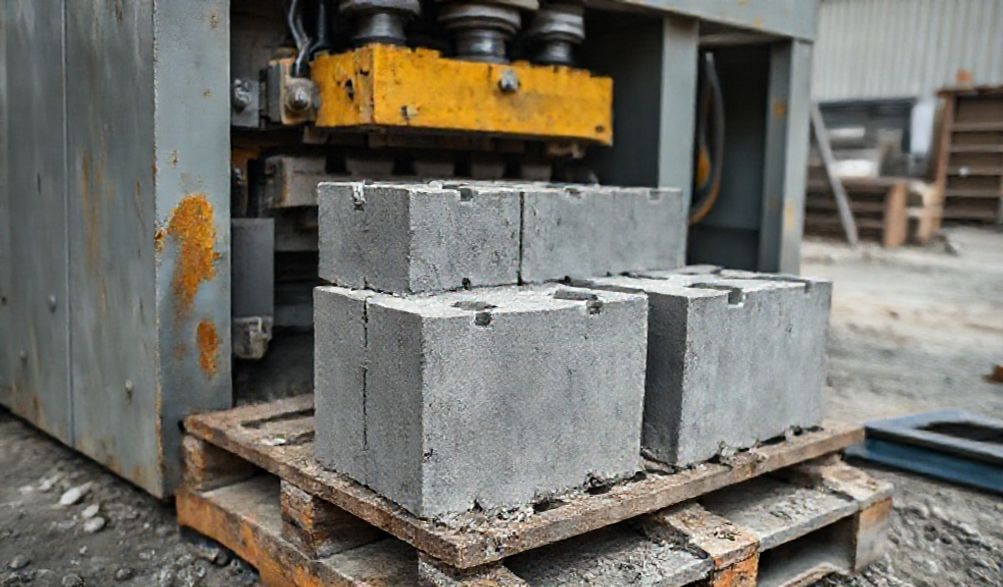
Ang Komprehensibong Gabay sa Mga Makina ng Paggawa ng Cinder Block: Mga Uri, Gastos, at Paano Pumili
Para sa mga kumpanya ng konstruksiyon, kontratista, o negosyanteng nagnanais na pumasok sa industriya ng mga materyales sa paggawa, ang gastos at suplay ng mga bloke ng sinder ay maaaring maging isang malaking hadlang. Paano kung maaari kang gumawa ng de-kalidad na mga bloke ayon sa pangangailangan, kontrolin ang iyong supply chain, at magbukas ng mga bagong pinagkukunan ng kita?
Ang komprehensibong gabay na ito ay batay sa mga dekada ng karanasan sa industriya upang liwanagin ang mga makina ng paggawa ng cinder block. Tatapusin natin ang mga teknikal na terminong pang-marketing at magbibigay ng praktikal, mapagkakatiwalaang impormasyon na kailangan mo para sa isang maalam na pamumuhunan.
Malalaman mo ang tungkol sa iba't ibang uri ng mga makina (mula sa manual hanggang sa ganap na awtomatiko), mahahalagang salik tulad ng kapasidad sa produksyon at mga uri ng bloke, makatotohanang pag-aaral ng gastos, at isang sunud-sunod na balangkas para sa pagpili ng perpektong makina na akma sa iyong partikular na proyekto o layunin sa negosyo.
Kung ikaw ay nagsasaliksikmga makina ng paggawa ng cinder blockPara sa isang maliit na tahanang sakahan o isang malakihang komersyal na halaman, ang gabay na ito ang iyong panimulang punto.
Ano ang Cinder Block Making Machine? Pangunahing Tungkulin at Mga Pakinabang
Sa puso nito, ang isang makina ng paggawa ng cinder block ay isang aparato na nag-aaplay ng otomasyon sa proseso ng paghubog ng pare-pareho at matibay na mga yunit ng masonerya mula sa pinaghalong semento at mga agregado. Sa praktikal na paggamit, ang terminong "cinder block" ay kadalasang ginagamit na kapalit ng "concrete block," bagaman ang tradisyonal na mga cinder (fly ash) ay mas bihira ngayon kumpara sa mga agregadong bato o buhangin.
Ang pag-unawa kung paano gumagana ang mga makinaryang ito at ang kanilang mga benepisyo ay ang unang hakbang tungo sa matalinong pagbili.
Ang Pangunahing Prinsipyo ng Pagtatrabaho
Ang proseso, bagama't nag-iiba ayon sa antas ng awtomasyon, ay sumusunod sa isang pare-parehong prinsipyong mekanikal:
- Paghahalo:Ang semento, mga pinagsama-sama (tulad ng buhangin, graba, o durog na bato), at tubig ay pinagsasama upang makabuo ng isang semi-dryong kongkretong timpla. Ang tumpak na proporsyon ay mahalaga para sa lakas nito.
- Paghuhulma:Ang halo ay ipinapasok sa isang hulmahan, na tumutukoy sa hugis ng bloke (halimbawa, may butas sa gitna, solid).
- Pagpiga (Pagyanig):Ang mataas na dalas ng panginginig ay inilalapat. Ito ang mahalagang hakbang na nag-aalis ng mga bulsa ng hangin at nagpapatibay ng materyal sa isang siksik at matibay na anyo sa loob ng molde.
- Pag-alis sa Molde at Pagpapatigas:Ang sariwang nabuong, o "berde," na bloke ay itinatapon mula sa hulma. Pagkatapos, ito ay sumasailalim sa proseso ng pagpapatibay, kung saan ito ay nakakakuha ng lakas sa loob ng ilang araw sa pamamagitan ng kontroladong halumigmig at temperatura, kadalasan sa isang dedikadong silid o istante ng pagpapatibay.
Mga Pangunahing Bentahe ng Produksyon ng Bloke sa Lugar
Ang pag-iinvest sa iyong sariling kakayahan sa produksyon ay nag-aalok ng mga tunay na benyepisyo:
- Malaking Pagtitipid sa Gastos:Para sa mga malalaking proyekto, ang paggawa ng mga bloke sa loob ng negosyo ay nag-aalis ng mga dagdag-presyo ng supplier at maaaring magbawas ng gastos sa materyales ng 30-50%, depende sa mga lokal na presyo.
- Buong Kontrol sa Supply Chain: Never face project delays due to supplier shortages or delivery issues. Produce exactly what you need, when you need it.
- Customization Flexibility: You can create non-standard block sizes, integrate special pigments for colored blocks, or adjust mixes for specific strength or insulation properties.
- Reduced Material Waste: Produce in batches aligned with your pace, minimizing waste from damaged deliveries or over-ordering. Some operations can even utilize on-site or local materials.
- A Clear Business Opportunity: A reliable machine can become a profit center itself, supplying blocks to other contractors, builders, or retailers in your area.
Types of Cinder Block Making Machines: From Manual to Fully Automatic
The market offers a spectrum of machines categorized by their level of automation, output, and investment. Choosing the right type is the most critical decision you’ll make.
Mga Makinang Manwal o De-kamay
- Paglalarawan: These are purely mechanical, lever-operated devices. All actions—filling the mold, compacting via a hand press, and demolding—are performed by human labor.
- Pinakamainam Para Sa: Extremely small-scale, low-budget projects like a personal garden wall, a small shed, or use in off-grid locations with no power access. They are not suitable for commercial production.
- Kapasidad ng Output: Typically 100 to 500 blocks per day, heavily dependent on operator stamina.
- Ekspertong Pananaw: While low-cost, the physical labor is intense, and achieving consistent block density and quality is challenging. They serve a niche but important role.
Semi-Automaticong Makina
- Paglalarawan: This is the most popular category for small to medium businesses. They use an electric motor to power a vibration system for effective compaction. However, feeding raw materials and removing finished blocks are manual operations. Many feature a simple hydraulic system for mold movement.
- Pinakamainam Para Sa: Startup block manufacturing businesses, contractors undertaking several projects a year, and medium-scale housing developments. They offer an excellent balance of productivity and affordability.
- Kapasidad ng Output: A robust semi-automatic machine can produce between 800 to 3,000+ standard blocks in an 8-hour shift, depending on model and crew efficiency.
- Ekspertong Pananaw: Based on operational data, this tier offers the best return on investment for new entrants. The key is to ensure the vibration motor and frame are robust enough for continuous use.
Ganap na Awtomatikong Makina
- Paglalarawan: These are industrial production lines. They integrate computerized control panels, automatic material batching and feeding systems, conveyor belts, robotic stackers, and palletizers. Human intervention is primarily for monitoring and maintenance.
- Pinakamainam Para Sa: Large-scale commercial block manufacturing plants supplying regional markets, or major infrastructure projects with colossal, predictable demand.
- Kapasidad ng Output: Production is measured in shifts, with outputs ranging from 10,000 to over 30,000 blocks per 8-hour shift.
- Ekspertong Pananaw: The capital investment is substantial, and they require significant space, stable high-power electrical connections, and skilled technicians. The payoff is unmatched volume and lower per-unit labor cost.
Mobile Block Making Machines
- Paglalarawan: These are production units (often semi- or fully-automatic) mounted on a trailer or truck bed. They can be towed directly to a large job site.
- Pinakamainam Para Sa: Massive infrastructure projects like dams, highways, or remote large-scale construction where transporting thousands of finished blocks would be logistically complex and expensive.
- Kapasidad ng Output: Varies, but designed for high-volume on-site production.
- Ekspertong Pananaw: A common challenge we see is underestimating the site preparation needed—you still require a flat, stable base and access to bulk raw materials and power/water.
Mahahalagang Salik na Dapat Isaalang-alang Bago Ka Bumili
Beyond just the machine type, several technical and commercial factors will determine your long-term success. This is where due diligence separates a wise investment from an expensive mistake.
Kapasidad sa Produksyon at Mga Kinakailangan sa Output
Huwag manghula. Magkalkula.
1. Estimate your average daily or weekly block consumption based on project pipelines.
2. Add a 20-30% buffer for growth or unexpected demand.
3. Match this number to a machine’s makatotohanan output, not its theoretical maximum. A machine rated for 2000 blocks/day might average 1600 after accounting for breaks, maintenance, and material loading.
Block Types and Sizes
- Maraming kakayahan: Can the machine produce hollow blocks, solid blocks, paving stones, and interlocking blocks with simple mold changes? Mold versatility future-proofs your business.
- Mold Changeover Time: How quickly and easily can molds be swapped? In semi-automatic machines, this process should take less than 30 minutes.
- Standard vs. Custom: Ensure the machine can produce blocks meeting relevant regional standards (e.g., ASTM in the US, IS in India) for commercial sales.
Machine Power Source and Specifications
- Electric vs. Diesel/Hydraulic: Electric is most common for stationary plants. Diesel/hydraulic options are vital for sites without grid power.
- Mga Pangangailangan sa Kuryente: A semi-automatic machine may require a robust 3-phase electrical connection. Verify your site’s capabilities before purchasing.
- Logistics: Consider the machine’s footprint, weight, and required ancillary space for raw material storage, mixing, and block curing.
Quality of Construction and Key Components
The machine’s build quality dictates its lifespan and uptime. Prioritize:
* Kuwadro Heavy-duty steel welding that resists the constant stress of vibration.
* Sistema ng Pagyanig: The heart of the machine. Look for reputable, branded vibration motors with adjustable frequency. Enclosed motors last longer in dusty environments.
* Amag: Hardened, precision-machined steel molds produce smooth, dimensionally accurate blocks and resist wear.
* Warning Sign: Excessively thin steel, poor welds, unmounted or generic “no-name” vibration motors, and loosely fitting molds are red flags for imminent breakdowns.
After-Sales Support: The Deal-Breaker
This factor is non-negotiable. A machine without support is a paperweight.
* Piesa ng Ekstrang Bahagi: Are wear-and-tear parts (mold liners, springs, bolts) readily available? What is the lead time?
* Suportang Teknikal: Does the supplier offer installation guidance, troubleshooting, and operational training? Is there a service hotline?
* Documentation: Clear, illustrated operation and maintenance manuals in your language are essential.
Understanding the Costs: Investment, Operation, and ROI
Being trustworthy means being transparent about money. Here’s a realistic breakdown.
Initial Purchase Price Ranges
- Manual na Makina: $1,000 – $4,000 USD.
- Semi-Automatikong Makina: $5,000 – $25,000+ USD. Price scales with capacity, build quality, and level of hydraulic assistance.
- Ganap na Awtomatikong Makina: $50,000 – $300,000+ USD, depending on complexity and degree of automation.
- Mga Makinang Mobile: $30,000 – $150,000+ USD.
Paalala: Country of manufacture, brand reputation, and shipping/import duties significantly affect final cost.
Operational and Raw Material Costs
Your ongoing costs per block will include:
* Mga Hilaw na Materyales: Cement, sand, aggregate. A rough estimate is that raw materials constitute 60-70% of the production cost of a single block.
* Paggawa: For semi-auto machines, a crew of 2-4 is typical.
* Energy: Electricity for the mixer, vibrator, and (if applicable) hydraulic power pack.
* Maintenance: A small but essential budget for replacing wear parts and routine servicing.
Calculating Potential Return on Investment (ROI)
Use this simplified framework:
1. Calculate your total cost per finished, cured block (Materials + Labor + Energy + Maintenance + Machine Depreciation).
2. Research the prevailing market price for a similar quality block in your area.
3. Your gross profit per block is: Market Price - Your Cost.
4. ROI Timeframe: Divide the total machine investment cost by your estimated monthly gross profit from block sales.
Halimbawa: If you invest $15,000 in a semi-auto machine and profit $0.20 per block, you need to sell 75,000 blocks to break even on the machine. At 2,000 blocks/month, that’s a 37.5-month (just over 3-year) ROI, excluding other business expenses. Volume is key.
Step-by-Step Guide to Choosing the Right Machine
Follow this actionable, expert-guided checklist to navigate your purchase confidently.
Step 1: Precisely Define Your Project Scope and Goals.
Are you supplying a single project, starting a side business, or launching a full-scale plant? Write down clear, measurable objectives for the first 12-24 months.
Step 2: Set a Realistic Budget (Including Hidden Costs).
Account for the machine, shipping, import duties, site preparation (foundation, power hookup), initial raw material stock, and a 10-15% contingency fund.
Step 3: Research and Shortlist Reputable Manufacturers/Suppliers.
Look for companies with a long track record, verifiable customer lists, and a strong online presence of working machines. Industry forums and trade associations are good resources.
Step 4: Request Detailed Quotes and Specifications.
Ask for a comprehensive spec sheet, not just a price. Compare vibration motor power, cycle time, hydraulic pressure, and warranty terms line-by-line.
Step 5: Seek References and, If Possible, Visit a Working Installation.
Talking to an existing user provides unparalleled insight into real-world output, reliability, and support quality. If a supplier discourages this, be wary.
Step 6: Finalize Support and Warranty Terms.
Get all support promises in writing. What does the warranty cover (parts, labor, duration)? How are spare parts priced? Clarify this before the final payment.
Frequently Asked Questions (FAQ) About Cinder Block Machines
What is the difference between a concrete block and a cinder block?
Historically, “cinder blocks” used fly ash or coal cinders as the primary aggregate, making them lighter and less strong. Modern “concrete blocks” use sand, gravel, or crushed stone, offering superior strength and durability. Today, the terms are often used interchangeably, but the material is almost always concrete.
Can I start a business with just one semi-automatic machine?
Absolutely. Many successful block yards began with a single robust semi-automatic machine. It allows you to validate demand, refine your process, and generate revenue to reinvest in scaling up. Focus on quality and reliability in your local market.
What is the curing process, and how long does it take?
Curing is the process where the cement hydrates and gains strength. Blocks must be kept moist and at a stable temperature for a minimum of 7 days to achieve sufficient strength. Full strength (28-day strength) is typically reached after 28 days under proper conditions. Steam curing chambers in automatic plants accelerate this to 24 hours or less.
How much space do I need for a small block-making operation?
For a semi-automatic setup, you need space for:
* The machine itself (~ 10′ x 10′ area).
* Raw material storage (sand, stone piles or silos).
* A mixing area.
* A large, level area for block curing and storage (can be several thousand square feet).
* Plan for at least 5,000 to 10,000 sq. ft. as a starting point.
Are there any safety precautions I should know about?
Yes. Always:
* Wear appropriate PPE: safety glasses, hearing protection (vibration is loud), gloves, and steel-toe boots.
* Ensure all machine guards are in place.
* Lock out/tag out power before performing any maintenance or clearing jams.
* Train all operators on safe material handling (cement dust, heavy molds).
Conclusion and Final Recommendations
Choosing a cinder block making machine is a significant decision that hinges on aligning the machine’s capabilities with your specific scale, budget, and long-term goals.
To reiterate the core principle: prioritize quality machinery and unparalleled after-sales support over the lowest initial price. Your long-term productivity and profitability depend on reliability and uptime.
As a final piece of expert advice: for most first-time buyers and small-to-medium business entrants, a robust, well-supported semi-automatic machine represents the optimal balance of affordability, controllable output, and operational simplicity to successfully launch and grow your venture.
Ready to take the next step? Use the step-by-step checklist in Section 5 to systematically evaluate your options. For personalized guidance, consider consulting with an independent industry expert or reaching out to shortlisted manufacturers with your specific project details and capacity requirements.
<