
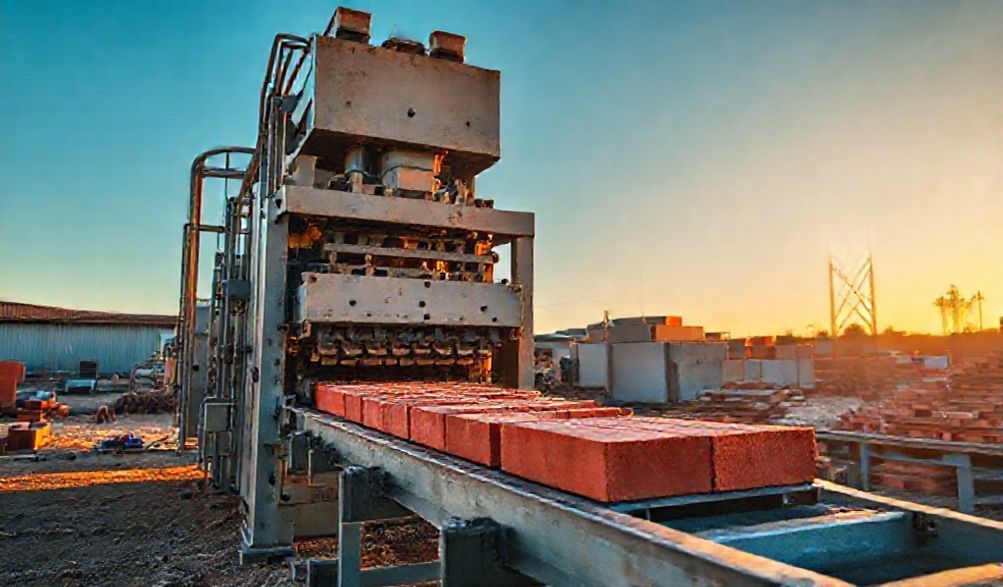
Prix des machines à fabriquer des briques en Australie 2026 : Un guide complet pour l'acheteur
Introduction
Imaginez ceci : vous êtes au milieu d’un projet d’aménagement paysager ou vous planifiez un petit développement, et vous recevez un autre devis pour des briques qui vous fait grimacer. Les retards dans la chaîne d’approvisionnement repoussent votre calendrier, et le coût des matières premières semble toujours fluctuant. Pour un nombre croissant de constructeurs, d’entrepreneurs et même de bricoleurs ambitieux en Australie, l’idée de prendre le contrôle en produisant des briques sur place est passée d’une curiosité à une option sérieusement envisagée.
Mais par où commencer ? Une recherche rapide pour « prix des machines à fabriquer des briques en Australie » révèle un éventail vertigineux d'options, allant de quelques milliers de dollars au prix d'une maison de luxe. Ce guide dissipe la confusion. Notre objectif est de vous fournir une analyse de prix transparente, détaillée et spécifique à l'Australie, vous permettant de réaliser un investissement véritablement éclairé. Ces informations reposent sur des données de marché actuelles, les spécifications des fabricants et une compréhension approfondie du paysage opérationnel et réglementaire unique à l'Australie.
À la fin de ce guide, vous disposerez d’une analyse claire des types de machines et de leurs fourchettes de prix, des facteurs clés qui influencent les coûts, des dépenses « cachées » souvent négligées, et des conseils pratiques pour naviguer sur le marché des fournisseurs. Une remarque importante : bien que nous fournissions des fourchettes de prix indicatives basées sur des projections pour 2026, les coûts sont susceptibles de varier en fonction des fluctuations monétaires, des coûts des matériaux et des facteurs liés à la chaîne d’approvisionnement. Demandez toujours des devis directs et détaillés. Plus important encore, nous soulignons qu’il est essentiel de choisir des équipements auprès de fournisseurs qui comprennent et respectentNormes australiennes (AS)n'est pas facultatif – c'est essentiel pour la sécurité, la qualité et la durabilité de votre investissement.
Comprendre les types de machines à fabriquer des briques et leurs fourchettes de prix
Le marché est largement segmenté selon le niveau d'automatisation, qui est directement corrélé à la production, aux besoins en main-d'œuvre et, bien sûr, au prix. Comprendre ces catégories est la première étape pour aligner une machine sur vos besoins réels.
1. Machines manuelles et semi-automatiques (Niveau d'entrée et petite échelle)
- Gamme de prix :1 000 $ CA – 15 000 $ CA
- Idéal pour :Projets de propriétaires (par exemple, murs de jardin, patios), petits travaux d'aménagement paysager, fabricants de briques de type boutique ou artisanaux, et ateliers communautaires.
- Caractéristiques principales et exemples :Cette gamme comprend des presses simples à commande manuelle (comme le populaire modèle « pondeuse ») où les briques sont moulées sur place, ainsi que de petites machines vibrantes électriques ou à moteur diesel. Elles nécessitent souvent un chargement manuel des matériaux et un retrait manuel des briques.
- Avantages et inconvénients :
- Avantages :Investissement initial très faible, grande portabilité, infrastructure minimale nécessaire, faible consommation d'énergie.
- Inconvénients :Faible production (50 à 300 briques par heure), physiquement exigeant, qualité inconstante si l'opération n'est pas soigneuse, limité à des conceptions de briques et pavés plus simples.
2. Machines Automatiques Stationnaires (Production à Moyenne Échelle)
- Gamme de prix :15 000 $ CA – 80 000 $ CA et plus
- Idéal pour :Les petites et moyennes entreprises (PME), les chantiers de blocs établis, les fabricants de pavés spécialisés et les projets de logement ou d'infrastructure dédiés nécessitant un approvisionnement régulier et sur site.
- Caractéristiques principales et exemples :Ce sont des machines stationnaires équipées d'une trémie dédiée pour l'alimentation automatique des matériaux. Elles utilisent des systèmes intégrés de vibration et de compression, et incluent souvent un convoyeur ou un empileur pour déplacer les produits finis. Beaucoup sont dotées de systèmes de contrôleur logique programmable (CLP) pour un fonctionnement régulier.
- Avantages et inconvénients :
- Avantages :Excellent équilibre entre la production et les coûts, augmentation significative de la production (300 à 2 000+ blocs par heure), qualité de produit constante, réduction de la main-d'œuvre par unité produite.
- Inconvénients :Nécessite une installation permanente ou semi-permanente avec une fondation solide, a besoin d'une alimentation électrique triphasée dans la plupart des cas, coût initial plus élevé que les options manuelles.
3. Lignes de production végétales entièrement automatiques (à grande échelle industrielle)
- Gamme de prix : AUD $80,000 – $500,000+
- Idéal pour : Large commercial brick and block manufacturing plants, major suppliers to the construction industry, and government infrastructure projects.
- Caractéristiques principales : These are complete systems, not just a single machine. They feature computerized touch-screen controls, robotic handling for raw materials and finished products, integrated curing racks or chambers, and automated palletizing and wrapping systems. Production is measured in thousands of blocks per hour.
- Avantages et inconvénients :
- Avantages : Maximum production efficiency, unparalleled consistency, minimal manual labour required, ability to produce a wide variety of complex products seamlessly.
- Inconvénients : Very high capital investment, requires significant factory space and complex infrastructure (heavy power, water recycling systems), needs specialised technical staff for operation and maintenance.
Key Factors Influencing Brick Machine Prices in Australia
The price tag is a sum of its parts and capabilities. Here are the core engineering and commercial factors that determine where a machine falls within those broad ranges.
1. Capacité de production et rendement
The single biggest price driver is output, measured in Bricks or Blocks Per Hour (BPH). A machine rated for 500 BPH will be priced significantly lower than one rated for 2,000 BPH, even from the same brand. It’s crucial to calculate your realistic needs:
* Project Basis: How many bricks do you need total, and over what timeframe?
* Business Basis: What are your daily/weekly sales targets? Always factor in a buffer for growth.
2. Machine Automation Level
Automation adds cost in tiers. Each step reduces labour but increases the machine’s complexity and price:
* Basic Vibration & Compression: Core function.
* Alimentation Automatique des Matériaux : Adds conveyor or loader systems.
* PLC Control & Touchscreen Interface: Adds precision and repeatability.
* Robotic Palletizing & Handling: Adds significant cost for end-of-line automation.
3. Mold Types & Customization
The mold is what defines your final product. Costs vary accordingly:
* Moules standards : For common bricks, hollow blocks, or pavers are usually included.
* Moules sur mesure : For interlocking blocks, special textures, or unique sizes are engineered to order and add $500 – $5,000+ per mold.
* Systèmes de Changement Rapide : The ability to switch molds in minutes (vs. hours) is a premium feature that increases machine cost but boosts operational flexibility.
4. Brand & Country of Origin
- European Brands (e.g., Germany, Italy): Synonymous with high engineering quality, durability, and advanced technology. Command premium prices and often have established Australian distributors.
- Chinese Manufacturers: Offer the most competitive pricing. Quality can vary dramatically from exceptional to poor. The key is vetting the manufacturer rigorously.
- Local Australian Assemblers/Suppliers: Some businesses import key components and assemble or tailor machines locally. This can offer a good middle ground—competitive pricing with easier access to support.
The trade-off is between upfront cost and long-term reliability, parts availability, and technical support. A cheaper machine with no local support network can become a very expensive paperweight if it breaks down.
5. Power Source & Specifications
The required power supply directly impacts both machine cost and your setup expenses:
* 3-Phase Electrical: Most automatic machines require 3-phase power (415V). If your site only has single-phase (240V), you’ll need to factor in the cost of a phase converter or a generator, adding thousands to your project.
* Hydraulic vs. Electric Vibration: Hydraulic systems are powerful and robust but can be more expensive and require maintenance. All-electric systems are cleaner and can be more energy-efficient.
Beyond the Sticker Price: Calculating Total Cost of Ownership
The purchase price is just the entry fee. A savvy buyer budgets for the Total Cost of Ownership (TCO) to avoid nasty surprises.
1. Initial Purchase & Delivery
- For Imported Machines: The “FOB” price does not include:
- Expédition internationale et assurance.
- Australian import duties (varies by classification).
- Goods and Services Tax (GST).
- Port fees and customs brokerage charges.
- For Local Purchases: Always clarify if the quote includes GST and delivery to your site. On-site unloading may require a hired crane or forklift.
2. Setup & Infrastructure Costs
Your machine needs a proper home:
* Foundation: A reinforced concrete slab is non-negotiable for stationary machines.
* Electrical Work: Getting 3-phase power to the location can involve significant cabling and electrician costs.
* Water Supply & Management: You need a reliable water source for mixing and may need a drainage or recycling system.
* Shelter/Shed: Protecting your investment from the sun and rain is essential for longevity.
3. Operational & Raw Material Costs
The ongoing expense of making each brick:
* Matériaux bruts : Cement, sand, aggregate, and any pigments. Prices fluctuate locally; source quotes from nearby suppliers.
* Utilities: Estimate electricity consumption (based on motor kW) and water usage.
* Travail : Even for automatic machines, factor in costs for operation, raw material handling, and product removal.
4. Maintenance, Parts, & Long-Term Support
C'est là oùE-E-A-T (Experience, Expertise, Authoritativeness, Trustworthiness) becomes critical in your supplier choice.
* A machine from a reputable supplier with a local warehouse for spare parts might have a 10-20% higher sticker price than a direct import.
* However, if the direct import machine breaks down and you wait 8 weeks for a $500 part, your lost production could cost tens of thousands.
* Key Questions: What is the warranty? What common wear parts (molds, vibrator motors, hydraulic seals) need replacing and how much do they cost? Is there a local technician, or do you rely on video calls overseas?
Where to Buy: Navigating the Australian Supplier Landscape
1. Local Australian Distributors & Dealers
- Avantages : This is often the lowest-risk path. You get local warranty support, faster access to spare parts, and technicians who understand Australian conditions and standards (AS/NZS 4455 for masonry units). They handle import complexities for you.
- How to Vet Them: Check their business history. Ask for references from past clients, preferably in a similar industry. If possible, visit their showroom or a client’s site to see a machine in operation.
2. Direct Import from Overseas Manufacturers
- Avantages : Potentially the lowest purchase price (ex-factory).
- Risks & Hidden Costs: You become the importer, responsible for shipping, customs, and compliance. Technical support can be delayed due to time zones. Ensure the machine is certified for Australian electrical standards (AS/NZS 3000). Due diligence is paramount: request factory audit reports, contact their other Australian clients, and verify international certifications (CE, ISO).
3. The Used & Second-Hand Market
- Can offer tremendous value but is “buyer beware.”
- Inspection Checklist:
- Total operational hours (like a car’s odometer).
- Condition of the mold cavity—wear here affects brick quality.
- Full service and maintenance history.
- Reason for sale.
- Crucialement : Request a demonstration where you see it produce a batch of bricks under full load.
Foire aux questions (FAQ)
Q1: What is the cheapest brick making machine available in Australia?
A : Basic manual presses can start as low as AUD $1,000 to $3,000. While affordable, be realistic about the physical labour required and the low output. They are tools for specific, small-scale tasks, not for commercial production.
Q2: Can I make bricks for my own house construction with these machines?
A : Yes, technically you can. However, for structural bricks, you doit ensure they meet the relevant Australian Standards (AS/NZS 4455) for compressive strength, dimensions, and durability. Your local council will require certification and likely testing from a registered engineer. Always consult a structural engineer before proceeding.
Q3: Are Chinese brick making machines a good option for Australia?
A : Many are excellent and offer great value. The focus shouldn’t be on the country of origin, but on the manufacturer’s reputation. Choose a supplier with a proven export history to markets with high standards, clear international certifications, and who can provide references in Australia. Confirm electrical compliance for Australia.
Q4: How much can I save by making my own bricks vs. buying them?
A : Savings are not automatic and are scale-dependent. For a one-off garden wall, buying bricks is almost certainly cheaper. Savings become significant when you have ongoing, high-volume needs. You must calculate: (Machine Depreciation + Raw Materials + Labour + Utilities) vs. (Delivered Brick Cost x Quantity). The machine cost is amortised over thousands of bricks.
Q5: What is the most important thing to look for in a supplier?
A: After-sales service and local technical support. The machine will need maintenance and parts. A supplier who can provide a prompt, competent service response is worth a premium. Downtime in a production environment is your biggest cost.
Conclusion
Navigating the brick making machine market in Australia reveals a spectrum of prices directly tied to scale, automation, and supplier provenance. From a $1,500 manual press for your backyard to a $300,000 fully-automated plant, the “right” machine is defined entirely by your specific project scope, output requirements, and total budget—including all those hidden setup and operational costs.
Our final recommendation is this: invest time before you invest money. Use this guide as a framework to clearly define your needs. Then, approach 3-4 reputable suppliers—prioritising those with a physical presence and service network in Australia—for detailed quotes. Ask them the tough questions about warranty response times, parts inventory, and compliance documentation.
Remember, you’re not just buying a machine; you’re investing in the quality, efficiency, and future of your building projects or business. Choosing a trustworthy partner who stands behind their equipment is the surest way to ensure that investment pays dividends for years to come.
<