
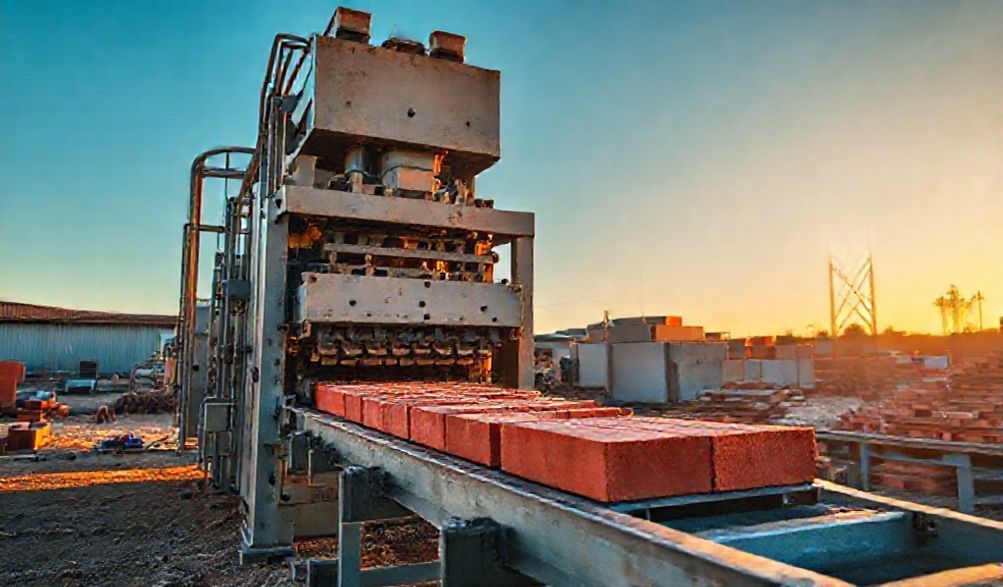
Harga Mesin Pembuat Bata di Australia 2026: Panduan Lengkap untuk Pembeli
Pengenalan
Bayangkan: anda sedang separuh jalan dalam projek landskap atau merancang pembangunan berskala kecil, dan anda dihantui lagi dengan sebut harga bata yang membuat anda mengerang. Kelewatan rantaian bekalan menolak jadual anda, dan kos bahan mentah terasa seperti sasaran yang sentiasa berubah. Bagi semakin ramai pembina, kontraktor, dan malah penggemar DIY bercita-cita tinggi di Australia, idea untuk mengawal dengan menghasilkan bata di tapak telah beralih dari suatu perkara baru kepada pertimbangan serius.
Tetapi di mana anda bermula? Carian pantas untuk "harga mesin pembuatan bata di Australia" mendedahkan pelbagai pilihan yang memeningkan, daripada beberapa ribu dolar sehingga harga sebuah rumah mewah. Panduan ini memotong kekeliruan tersebut. Tujuan kami adalah untuk memberikan anda analisis harga yang telus, terperinci dan khusus untuk Australia, membolehkan anda membuat pelaburan yang benar-benar berinformasi. Maklumat ini dibina berdasarkan data pasaran semasa, spesifikasi pengeluar, dan pemahaman mendalam tentang landskap operasi dan peraturan yang unik di Australia.
Menjelang akhir panduan ini, anda akan mendapat pecahan jelas mengenai jenis mesin dan julat harganya, faktor utama yang mendorong kos, perbelanjaan "tersembunyi" yang sering diabaikan, serta pandangan praktikal untuk mengemudi pasaran pembekal. Nota penting: walaupun kami memberikan anggaran julat harga berdasarkan unjuran 2026, kos boleh berubah bergantung pada turun naik mata wang, kos bahan, dan faktor rantaian bekalan. Sentiasa dapatkan sebut harga terus dan terperinci. Yang paling penting, kami menekankan bahawa pemilihan peralatan daripada pembekal yang memahami dan mematuhiPiawaian Australia (AS)tidak boleh dipilih—ia penting untuk keselamatan, kualiti, dan jangka hayat pelaburan anda.
Memahami Jenis Mesin Pembuat Batu Bata & Julat Harganya
Pasaran secara luas disegmentasikan mengikut tahap automasi, yang secara langsung berkaitan dengan output, keperluan tenaga kerja, dan sudah tentu, harga. Memahami kategori-kategori ini adalah langkah pertama untuk menyelaraskan mesin dengan keperluan sebenar anda.
1. Mesin Manual & Semi-Automatik (Peringkat Permulaan & Skala Kecil)
- Julat Harga:AUD $1,000 – $15,000
- Terbaik Untuk:Projek pemilik rumah (contohnya, tembok taman, patio), kerja-kerja landskap kecil, pengeluar bata butik atau artisanal, dan bengkel komuniti.
- Ciri-ciri Utama & Contoh:Julat ini merangkumi mesin penekan tangan mudah (seperti gaya "pengeram telur" yang popular) di mana bata dibentuk di tempat, dan mesin penggetar kecil berkuasa elektrik atau diesel. Ia sering memerlukan pengisian bahan dan pengeluaran bata dilakukan secara manual.
- Kebaikan & Keburukan:
- Kelebihan:Pelaburan awal yang sangat rendah, mudah alih tinggi, infrastruktur minima diperlukan, penggunaan tenaga rendah.
- Keburukan:Pengeluaran rendah (50-300 bata sejam), memerlukan tenaga fizikal yang tinggi, kualiti tidak konsisten jika tidak dikendalikan dengan teliti, terhad kepada reka bentuk batu bata dan pavar yang lebih ringkas.
Mesin Automatik Stesen (Pengeluaran Skala Sederhana)
- Julat Harga:AUD $15,000 – $80,000+
- Terbaik Untuk:Perniagaan kecil hingga sederhana (PKS), kawasan blok yang ditubuhkan, pengeluar pakar pembuat batu pavar, dan projek perumahan atau infrastruktur khusus yang memerlukan bekalan berterusan di tapak.
- Ciri-ciri Utama & Contoh:Ini adalah mesin pegun dengan corong khusus untuk pemakanan bahan automatik. Mereka menggunakan sistem getaran dan mampatan bersepadu, dan sering dilengkapi dengan tali sawat atau penimbun untuk menggerakkan produk siap. Kebanyakan mempunyai sistem pengawal logik boleh aturcara (PLC) untuk operasi yang konsisten.
- Kebaikan & Keburukan:
- Kelebihan:Keseimbangan yang sangat baik antara output dan kos, pengeluaran yang jauh lebih tinggi (300-2,000+ blok sejam), kualiti produk yang konsisten, pengurangan tenaga buruh per unit yang dihasilkan.
- Keburukan:Memerlukan persediaan kekal atau separa kekal dengan asas yang kukuh, memerlukan bekalan kuasa elektrik 3 fasa dalam kebanyakan kes, kos permulaan lebih tinggi berbanding pilihan manual.
3. Talian Tumbuhan Sepenuhnya Automatik (Skala Industri Besar)
- Julat Harga: AUD $80,000 – $500,000+
- Terbaik Untuk: Large commercial brick and block manufacturing plants, major suppliers to the construction industry, and government infrastructure projects.
- Ciri-ciri Utama: These are complete systems, not just a single machine. They feature computerized touch-screen controls, robotic handling for raw materials and finished products, integrated curing racks or chambers, and automated palletizing and wrapping systems. Production is measured in thousands of blocks per hour.
- Kebaikan & Keburukan:
- Kelebihan: Maximum production efficiency, unparalleled consistency, minimal manual labour required, ability to produce a wide variety of complex products seamlessly.
- Keburukan: Very high capital investment, requires significant factory space and complex infrastructure (heavy power, water recycling systems), needs specialised technical staff for operation and maintenance.
Key Factors Influencing Brick Machine Prices in Australia
The price tag is a sum of its parts and capabilities. Here are the core engineering and commercial factors that determine where a machine falls within those broad ranges.
1. Kapasiti Pengeluaran & Output
The single biggest price driver is output, measured in Bricks or Blocks Per Hour (BPH). A machine rated for 500 BPH will be priced significantly lower than one rated for 2,000 BPH, even from the same brand. It’s crucial to calculate your realistic needs:
* Project Basis: How many bricks do you need total, and over what timeframe?
* Business Basis: What are your daily/weekly sales targets? Always factor in a buffer for growth.
2. Machine Automation Level
Automation adds cost in tiers. Each step reduces labour but increases the machine’s complexity and price:
* Basic Vibration & Compression: Core function.
* Pemberian Bahan Automatik: Adds conveyor or loader systems.
* PLC Control & Touchscreen Interface: Adds precision and repeatability.
* Robotic Palletizing & Handling: Adds significant cost for end-of-line automation.
3. Mold Types & Customization
The mold is what defines your final product. Costs vary accordingly:
* Acuan Standard: For common bricks, hollow blocks, or pavers are usually included.
* Acuan Khas: For interlocking blocks, special textures, or unique sizes are engineered to order and add $500 – $5,000+ per mold.
* Sistem Tukar-Cepat: The ability to switch molds in minutes (vs. hours) is a premium feature that increases machine cost but boosts operational flexibility.
4. Brand & Country of Origin
- European Brands (e.g., Germany, Italy): Synonymous with high engineering quality, durability, and advanced technology. Command premium prices and often have established Australian distributors.
- Chinese Manufacturers: Offer the most competitive pricing. Quality can vary dramatically from exceptional to poor. The key is vetting the manufacturer rigorously.
- Local Australian Assemblers/Suppliers: Some businesses import key components and assemble or tailor machines locally. This can offer a good middle ground—competitive pricing with easier access to support.
The trade-off is between upfront cost and long-term reliability, parts availability, and technical support. A cheaper machine with no local support network can become a very expensive paperweight if it breaks down.
5. Power Source & Specifications
The required power supply directly impacts both machine cost and your setup expenses:
* 3-Phase Electrical: Most automatic machines require 3-phase power (415V). If your site only has single-phase (240V), you’ll need to factor in the cost of a phase converter or a generator, adding thousands to your project.
* Hydraulic vs. Electric Vibration: Hydraulic systems are powerful and robust but can be more expensive and require maintenance. All-electric systems are cleaner and can be more energy-efficient.
Beyond the Sticker Price: Calculating Total Cost of Ownership
The purchase price is just the entry fee. A savvy buyer budgets for the Total Cost of Ownership (TCO) to avoid nasty surprises.
1. Initial Purchase & Delivery
- For Imported Machines: The “FOB” price does not include:
- Penghantaran dan insurans antarabangsa.
- Australian import duties (varies by classification).
- Goods and Services Tax (GST).
- Port fees and customs brokerage charges.
- For Local Purchases: Always clarify if the quote includes GST and delivery to your site. On-site unloading may require a hired crane or forklift.
2. Setup & Infrastructure Costs
Your machine needs a proper home:
* Foundation: A reinforced concrete slab is non-negotiable for stationary machines.
* Electrical Work: Getting 3-phase power to the location can involve significant cabling and electrician costs.
* Water Supply & Management: You need a reliable water source for mixing and may need a drainage or recycling system.
* Shelter/Shed: Protecting your investment from the sun and rain is essential for longevity.
3. Operational & Raw Material Costs
The ongoing expense of making each brick:
* Bahan Mentah: Cement, sand, aggregate, and any pigments. Prices fluctuate locally; source quotes from nearby suppliers.
* Utilities: Estimate electricity consumption (based on motor kW) and water usage.
* Buruh: Even for automatic machines, factor in costs for operation, raw material handling, and product removal.
4. Maintenance, Parts, & Long-Term Support
Di sinilahE-E-A-T (Experience, Expertise, Authoritativeness, Trustworthiness) becomes critical in your supplier choice.
* A machine from a reputable supplier with a local warehouse for spare parts might have a 10-20% higher sticker price than a direct import.
* However, if the direct import machine breaks down and you wait 8 weeks for a $500 part, your lost production could cost tens of thousands.
* Key Questions: What is the warranty? What common wear parts (molds, vibrator motors, hydraulic seals) need replacing and how much do they cost? Is there a local technician, or do you rely on video calls overseas?
Where to Buy: Navigating the Australian Supplier Landscape
1. Local Australian Distributors & Dealers
- Kelebihan: This is often the lowest-risk path. You get local warranty support, faster access to spare parts, and technicians who understand Australian conditions and standards (AS/NZS 4455 for masonry units). They handle import complexities for you.
- How to Vet Them: Check their business history. Ask for references from past clients, preferably in a similar industry. If possible, visit their showroom or a client’s site to see a machine in operation.
2. Direct Import from Overseas Manufacturers
- Kelebihan: Potentially the lowest purchase price (ex-factory).
- Risks & Hidden Costs: You become the importer, responsible for shipping, customs, and compliance. Technical support can be delayed due to time zones. Ensure the machine is certified for Australian electrical standards (AS/NZS 3000). Due diligence is paramount: request factory audit reports, contact their other Australian clients, and verify international certifications (CE, ISO).
3. The Used & Second-Hand Market
- Can offer tremendous value but is “buyer beware.”
- Inspection Checklist:
- Total operational hours (like a car’s odometer).
- Condition of the mold cavity—wear here affects brick quality.
- Full service and maintenance history.
- Reason for sale.
- Crucially: Request a demonstration where you see it produce a batch of bricks under full load.
Soalan Lazim (FAQ)
Q1: What is the cheapest brick making machine available in Australia?
A: Basic manual presses can start as low as AUD $1,000 to $3,000. While affordable, be realistic about the physical labour required and the low output. They are tools for specific, small-scale tasks, not for commercial production.
Q2: Can I make bricks for my own house construction with these machines?
A: Yes, technically you can. However, for structural bricks, you mesti ensure they meet the relevant Australian Standards (AS/NZS 4455) for compressive strength, dimensions, and durability. Your local council will require certification and likely testing from a registered engineer. Always consult a structural engineer before proceeding.
Q3: Are Chinese brick making machines a good option for Australia?
A: Many are excellent and offer great value. The focus shouldn’t be on the country of origin, but on the manufacturer’s reputation. Choose a supplier with a proven export history to markets with high standards, clear international certifications, and who can provide references in Australia. Confirm electrical compliance for Australia.
Q4: How much can I save by making my own bricks vs. buying them?
A: Savings are not automatic and are scale-dependent. For a one-off garden wall, buying bricks is almost certainly cheaper. Savings become significant when you have ongoing, high-volume needs. You must calculate: (Machine Depreciation + Raw Materials + Labour + Utilities) vs. (Delivered Brick Cost x Quantity). The machine cost is amortised over thousands of bricks.
Q5: What is the most important thing to look for in a supplier?
A: After-sales service and local technical support. The machine will need maintenance and parts. A supplier who can provide a prompt, competent service response is worth a premium. Downtime in a production environment is your biggest cost.
Kesimpulan
Navigating the brick making machine market in Australia reveals a spectrum of prices directly tied to scale, automation, and supplier provenance. From a $1,500 manual press for your backyard to a $300,000 fully-automated plant, the “right” machine is defined entirely by your specific project scope, output requirements, and total budget—including all those hidden setup and operational costs.
Our final recommendation is this: invest time before you invest money. Use this guide as a framework to clearly define your needs. Then, approach 3-4 reputable suppliers—prioritising those with a physical presence and service network in Australia—for detailed quotes. Ask them the tough questions about warranty response times, parts inventory, and compliance documentation.
Remember, you’re not just buying a machine; you’re investing in the quality, efficiency, and future of your building projects or business. Choosing a trustworthy partner who stands behind their equipment is the surest way to ensure that investment pays dividends for years to come.
<