
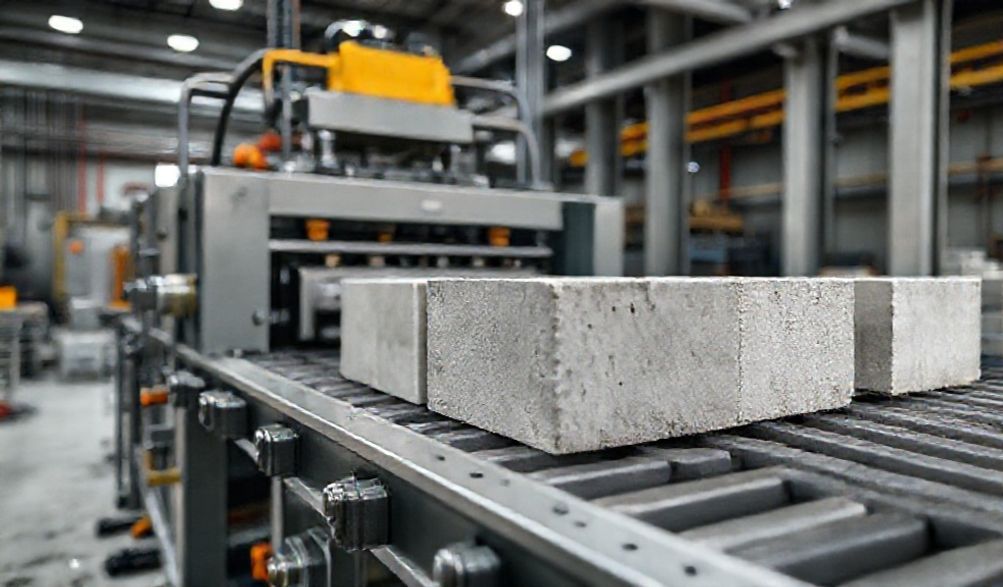
Liste des Prix des Machines à Blocs 2024 : Un Guide d'Achat Complet
Naviguer sur le marché des machines à fabriquer des blocs peut sembler comme déchiffrer un code secret. Vous voyez une large gamme de prix en ligne, allant de choquamment bas à vertigineusement élevés, avec peu d'explications sur ces écarts. Cette incohérence laisse de nombreux entrepreneurs et chefs d'entreprise dans l'incertitude, inquiets de payer trop cher ou, pire, d'investir dans une machine qui ne tient pas ses promesses. Si vous essayez de déterminer une option fiable...Liste des prix des machines à fabriquer des blocsVous avez probablement déjà ressenti cette même frustration.
Ce guide est conçu pour dissiper toute confusion. Notre objectif est de fournir un cadre transparent et expert, qui va au-delà des simples étiquettes de prix. Nous analyserons les facteurs clés qui déterminent le coût, du type de machine et du niveau d'automatisation aux dépenses opérationnelles cachées, en nous appuyant sur les normes du secteur et des considérations d'achat pratiques. Vous découvrirez non seulement combien coûtent les machines, mais aussiPourquoiils coûtent ce qu'ils coûtent, vous permettant d'évaluer la véritable valeur et de budgéter efficacement pour votre projet spécifique.
Que vous soyez un petit entrepreneur, un fabricant de blocs en démarrage ou une entreprise de construction cherchant à internaliser la production, cette ressource complète vous fournira les connaissances nécessaires pour réaliser un investissement éclairé et en toute confiance.
Comprendre les Types de Machines à Fabriquer des Blocs et Leurs Fourchettes de Prix
La première étape pour comprendre les prix consiste à catégoriser les machines elles-mêmes. Le niveau d'automatisation et l'échelle de production prévue sont les principaux facteurs de différenciation, créant des segments de marché distincts avec des fourchettes de prix correspondantes.
Machines à blocs manuelles et semi-automatiques (Investissement de niveau débutant)
Ces machines représentent le point d'entrée le plus accessible dans la production de blocs. Leur fonctionnement implique un travail manuel important : alimenter le mélange de béton, actionner la machine (souvent par levier ou bouton), et retirer manuellement les blocs durcis.
- Cas d'utilisation idéal :Idéal pour les projets de très petite envergure, la construction rurale, les startups avec un capital limité, ou la production de blocs pour un usage personnel. Leur production se mesure en centaines de blocs par poste, et non par heure.
- Gamme de prix : 1 000 $ – 15 000 $
- Qu'est-ce qui explique la variance ?L'éventail des prix est large ici. Une presse manuelle basique, à un seul bloc, peut coûter moins de 2 000 $. En passant à des modèles semi-automatiques avec une plus grande capacité de moule (par exemple, 4 à 6 blocs par cycle), des systèmes de vibration mécanique et un fonctionnement un peu plus rationalisé, les prix s'élèvent vers la fourchette de 10 000 à 15 000 $.
Machines à blocs stationnaires entièrement automatiques (Chevaux de bataille de gamme moyenne)
Cette catégorie constitue l'épine dorsale des chantiers de blocs commerciaux de petite à moyenne échelle. Ces machines sont alimentées électriquement, intègrent des convoyeurs à bande pour le déchargement automatique des produits, et sont souvent équipées de systèmes de contrôleurs logiques programmables (PLC) pour un fonctionnement régulier.
- Cas d'utilisation idéal :Conçues pour les entreprises établies fournissant les marchés de la construction locaux. Elles offrent un excellent équilibre entre la production (généralement de 1 000 à 5 000 blocs par poste de 8 heures) et l'automatisation, nécessitant une intervention manuelle minimale au-delà de la surveillance et de l'alimentation en matières premières.
- Gamme de prix : 25 000 $ – 100 000 $
- Qu'est-ce qui explique la variance ?Les facteurs clés comprennent la capacité de production horaire, la sophistication des systèmes automates et hydrauliques, le nombre de postes de moulage, et la réputation de la marque. Une machine produisant 1 500 blocs par heure se situera dans le bas de gamme, tandis qu'un modèle à haute capacité doté d'une technologie de vibration avancée et de composants premium atteindra un prix proche du sommet de cette fourchette.
Machines de Fabrication de Blocs Mobiles Entièrement Automatiques (Solutions Premium à Haut Rendement)
Également appelées usines à blocs, ces installations représentent des solutions haut de gamme pour la production à grande échelle ou sur site. Montées sur une remorque, elles peuvent être transportées directement sur un chantier de construction, éliminant ainsi les coûts de transport des blocs finis. Elles sont hautement automatisées, intégrant souvent une manutention robotisée des palettes, des systèmes de mélange en continu et des panneaux de contrôle sophistiqués.
- Cas d'utilisation idéal :Grands projets d'infrastructure, fabricants de blocs commerciaux à très haut volume, et contrats gouvernementaux où la production sur site constitue un avantage stratégique. La production peut dépasser 10 000 blocs par jour.
- Gamme de prix : 80 000 $ – 300 000 $ et plus
- Qu'est-ce qui explique la variance ?La limite supérieure est essentiellement "le ciel est la limite". Le prix augmente considérablement avec la capacité de production, l'inclusion d'un malaxeur intégré, le niveau d'automatisation robotique, et la qualité du châssis et des composants. Les configurations personnalisées pour des types de blocs spécifiques ajoutent également des coûts.
Machines Spécialisées : Fabricants de Blocs Creux, Pavés et Blocs à Emboîtement
Le produit final influence directement la conception des machines. Bien que de nombreuses machines soient polyvalentes avec des moules interchangeables, certaines sont conçues pour une production optimale d'un produit spécifique.
- Machines à Blocs Creux :Exiger une conception précise du moule et des vibrations pour former des cavités uniformes. Les machines standard peuvent souvent les produire, mais il existe des machines dédiées à haute production pour les blocs creux.
- Pavés et Fabricants de Blocs à Emboîtement :Cela exige une pression de compactage plus élevée et des conceptions de moules plus complexes pour créer les faces de verrouillage détaillées et les surfaces texturées. Cette spécialisation entraîne souvent unPrime de prix de 10 à 25 %en raison de l'ingénierie plus complexe et des moules en acier trempé requis.
Voici les principaux facteurs qui déterminent le prix des machines à blocs.
Deux machines affichant des revendications similaires de "blocs par heure" peuvent avoir des prix radicalement différents. Voici une analyse des facteurs d'ingénierie et commerciaux clés qui expliquent pourquoi.
Capacité de production (blocs par heure)
C’est le principal facteur de coût le plus significatif. La pratique industrielle montre que le prix n’évolue pas de manière linéaire avec la production ; doubler la capacité double souvent plus que le prix. Cela est dû à la nécessité d’un moteur plus puissant, d’un châssis plus grand et plus robuste, de systèmes hydrauliques à plus grande capacité et de tables vibrantes plus sophistiquées.
| Capacité approximative (blocs/heure)* | Type de machine typique | Implication générale du prix |
| :— | :— | :— |
| 200 – 800 | Manuel / Semi-Automatique | Entrée de gamme (1 000 – 15 000 $) |
| 1 000 – 2 500 | Automatique stationnaire | Gamme moyenne (25 000 $ – 60 000 $) |
| 3 000 – 6 000 | Automatique fixe | Milieu de gamme supérieur (60 000 $ – 100 000 $) |
8 000 + | Installations mobiles | Premium (80 000 $ +)
*Basé sur un bloc creux standard de 8 pouces. Le rendement varie selon le type de bloc.
Level of Automation & Technology
The journey from manual operation to full automation involves layers of technology, each adding cost but also efficiency and consistency.
* Manual Feed vs. Automatic Feed: An automated conveyor feeding the hopper reduces labor and improves mix consistency.
* Systèmes de Contrôle : A basic relay system is cheaper than a PLC (Programmable Logic Controller), but a PLC allows for precise control over vibration time, pressure, and cycle sequence, leading to higher quality blocks and easier troubleshooting.
* Technologie des Vibrations : The heart of compaction. Machines with multiple high-frequency vibrators (often mounted on the mold head et the table) ensure denser, stronger blocks but are more expensive to manufacture.
Machine Build Quality & Component Branding
The adage “you get what you pay for” is profoundly true here. The quality of materials and components dictates longevity and reliability.
* Structure et Charpente en Acier : Heavy-duty, reinforced steel withstands the constant stress of vibration and pressure far better than lighter-gauge materials.
* Systèmes Hydrauliques : A machine using imported pumps and valves from brands like Bosch Rexroth or Kawasaki will be more expensive than one using generic or local hydraulic parts. The premium buys smoother operation, precise pressure control, and much greater durability.
* Motors & Electricals: Reputable brands (e.g., Siemens, ABB) for motors and electrical components reduce the risk of failure and are often more energy-efficient.
Réputation de la Marque & Service Après-Vente
An established brand with a global or strong regional presence commands a higher price. This premium is not just for the name; it’s for risk mitigation. It covers:
* Proven Engineering: A track record of reliable machines.
* Garantie : A meaningful, enforceable warranty.
* Disponibilité des pièces détachées : Quick access to genuine parts, minimizing downtime.
* Assistance technique : Access to engineers who can help with setup, maintenance, and troubleshooting.
Investing in a reputable brand is essentially buying insurance for your business’s productivity.
Au-delà du prix affiché : Calculer votre investissement total
The invoice from the manufacturer is just the beginning. A realistic budget accounts for the total cost of ownership (TCO). Based on buyer reports and industry experience, failing to plan for these expenses is a common pitfall.
Hidden Costs to Budget For
These are one-time or initial costs that can add 15-40% to your base machine price.
* Shipping, Customs, and Insurance: For international purchases, freight (FOB vs. CIF), import duties, taxes, and insurance can be substantial. Always get a clear “landed cost” quote.
* Fondation & Installation : Most stationary machines require a solid, level concrete foundation. Mobile plants need a prepared, stable site. Factor in civil work costs.
* Power Setup: Most automatic machines require a robust, three-phase electrical supply. Upgrading your facility’s electrical panel or running new lines is a significant cost.
* Initial Raw Material Stock: You’ll need to purchase cement, aggregates, and pigments to begin production.
Operational Costs & ROI Considerations
Your ongoing expenses directly impact profitability.
* Travail : Even automatic machines require operators, maintenance personnel, and material handlers.
* Maintenance & Pièces de Rechange : Regular servicing and a budget for wear items (mold liners, hydraulic seals, vibrator motors) are essential.
* Mold Changes: Additional molds for different block types are a capital expense.
* Calcul du retour sur investissement : A simple framework: Estimate your monthly production volume. Subtract your total monthly costs (raw materials, labor, power, machine depreciation, maintenance). Compare the net profit to your total initial investment. A quality machine for a stable market should typically aim for an ROI period of 1.5 to 3 years.
Le vrai coût d'une machine "bon marché"
The allure of a low upfront price is strong, but the long-term economics are often poor. The true cost of a cheap machine may include:
* Pannes fréquentes : Low-quality components fail, leading to costly production halts.
* Service Après-Vente Médiocre : Getting support or spare parts becomes a nightmare.
* Low-Quality Blocks: Inconsistent vibration or pressure produces weak or misshapen blocks you cannot sell.
* Risques pour la sécurité : Compromised build quality can pose risks to operators.
* Higher Long-Term Cost: When you factor in lost production, repair bills, and early replacement, the “cheap” machine often becomes the most expensive option.
How to Get an Accurate Quote & Negotiate Effectively
Approaching suppliers with clarity puts you in a position of strength and ensures you get comparable, meaningful quotes.
Preparing Your Requirements for Suppliers
Create a brief specification sheet to send to potential suppliers:
* Desired block type(s) and dimensions.
* Target daily or monthly output (in blocks).
* Available factory space and ceiling height.
* Available power supply (Voltage, Phase).
* Preferred level of automation.
* Your overall budget range (be realistic).
Evaluating Quotes: A Comparison Checklist
Don’t just compare the bottom-line price. Create a spreadsheet to compare:
* Technical Specifications: Capacity (verify block type), motor power, vibration frequency.
* Inclusions: How many molds are included? Is the control panel in your language? Are spare parts kits offered?
* Garantie : Duration and what it covers (parts, labor, travel?).
* Delivery & Payment Terms: FOB Port? CIF Your Port? Payment schedule?
* Support après-vente : Is installation supervision or operator training included?
Smart Questions to Ask Before You Buy
- “Can you provide contact information for 2-3 customers in my region who have purchased a similar model in the last 2 years?”
- “What is the guaranteed lead time for critical spare parts (like a hydraulic pump or main vibrator motor)?”
- “Do you have a service technician who can travel to my country if needed, and what are those terms?”
- “Can the machine be easily upgraded in the future (e.g., adding an automatic feeder)?”
FAQ: Block Making Machine Price List
Q1: What is the cheapest block making machine available?
A: Small, manual block presses can be found for as low as $1,000 to $3,000. However, it’s critical to understand their severe limitations in output and labor requirement. They are only “cheap” if your production needs are extremely minimal. Always prioritize a machine that is “fit for purpose” over the absolute lowest price.
Q2: How much does a fully automatic block making machine cost?
A: As detailed in the guide, “fully automatic” covers a broad spectrum. A stationary model for a small business can start around $25,000, while high-output mobile plants begin around $80,000 and can exceed $300,000. The final price is entirely dependent on your required production capacity and feature set.
Q3: Are used block making machines a good option to save money?
A: They can be, but caution is paramount. A used machine is only a good deal if it comes from a known brand, has a verifiable service history, and you can confirm the ongoing availability of spare parts. Factor in the cost of a thorough inspection by a mechanic and potential refurbishment. The risk of buying someone else’s problem is high.
Q4: Does the price include molds and installation?
A: This varies drastically by supplier. Some quotes are for the base machine only; others include a set of standard molds. Installation is rarely included for international sales but may be offered as a paid service. Always, always clarify what is included in the quoted price (FOB, EXW, CIF) and request a detailed breakdown in writing.
Q5: Which brand offers the best value for money?
A: Rather than naming one brand, we advise a strategic approach. The best value comes from a supplier that demonstrates transparency, has verifiable customer testimonials for your region, and offers a strong balance of three things: 1) Machine specifications that meet (not vastly exceed) your needs, 2) A fair price for those specs, and 3) Reliable after-sales support accessible to you. Focus on finding that balance.
Conclusion
Navigating the Liste des prix des machines à fabriquer des blocs requires looking beyond the initial number. As we’ve explored, the final price is a direct reflection of machine type, production capacity, level of automation, and the quality of its components and support network. Remember, you are not just purchasing a piece of equipment; you are making a capital investment in the productivity and future of your business.
Therefore, the most trustworthy advice we can offer is this: shift your focus from seeking the lowest price to understanding the lowest total cost of ownership. A slightly higher initial investment in a reliable machine from a reputable supplier will almost always yield greater profitability and less stress over its lifespan.
Use this guide as your framework. Prepare your project specifications, consult with multiple suppliers using the checklist provided, and ask the hard questions about support and service. By doing so, you’ll move forward with the confidence needed to make an informed decision that fuels your business growth for years to come.
<