
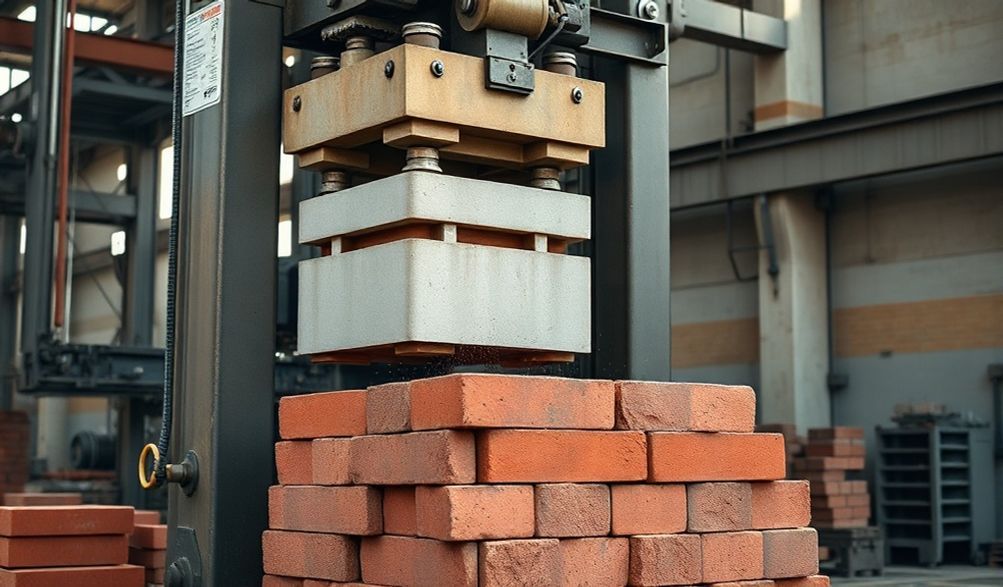
Le Guide Ultime pour Choisir la Meilleuse Machine à Moulurer les Briques pour Votre Projet
Introduction
Des murailles antiques aux gratte-ciel modernes, la modeste brique constitue depuis des millénaires un pilier fondamental de la construction humaine. Mais derrière chaque mur durable se cache une question cruciale : comment ces briques ont-elles été fabriquées ? Dans l'environnement de construction actuel, rapide, soucieux des coûts et axé sur la qualité, la méthode de production n'est pas un simple détail : c'est un facteur décisif pour le succès. Et si une machine inadaptée pouvait compromettre le budget, le calendrier et l'intégrité structurelle de tout votre projet ?
Pour les petits constructeurs, les entreprises en croissance et les grands entrepreneurs, la production de briques est semée d’embûches. Les méthodes manuelles entraînent une qualité inégale, où des tailles et densités variables compromettent les joints de mortier et la résistance structurelle. Compter sur une main-d’œuvre coûteuse et imprévisible ralentit les progrès et gonfle les budgets. Augmenter la production pour répondre aux exigences des projets semble souvent un obstacle insurmontable. Ces points de friction créent un goulot d’étranglement capable de freiner même l’entreprise de construction ou de fabrication la mieux planifiée.
Voici la machine moderne de moulage de briques : la solution ingénierée qui transforme des matériaux bruts et peu coûteux en blocs de construction précis, durables et uniformes, avec une efficacité remarquable. Ce guide est conçu pour percer le bruit du marché et le jargon technique. Son but est de servir de manuel complet et impartial, fondé sur l'expertise du secteur, les principes d'ingénierie et les expériences réelles des utilisateurs. Nous synthétiserons les spécifications techniques, les données des fabricants et le savoir-faire pratique pour vous permettre de prendre une décision d'investissement éclairée, confiante et fiable, adaptée à vos besoins spécifiques.
Qu'est-ce qu'une Machine à Mouler les Briques ? Fonction Principale et Types
Au cœur de son fonctionnement, une machine à mouler les briques automatise et industrialise le processus ancestral de fabrication des briques. Elle constitue la pierre angulaire de la production moderne et évolutive de briques.
Principe de fonctionnement central expliqué
Bien que les modèles varient, le processus fondamental reste le même pour la plupart des machines. Imaginez-le comme une grande presse à biscuits, puissante et précise, mais pour des matériaux de construction. Le cycle central comprend quatre étapes clés :
- Alimentation :Un mélange préparé (comme du béton, de l'argile ou du sol-ciment) est chargé dans une trémie.
- Compactage :Le matériau est introduit dans la cavité du moule. Ici, une combinaison d'immensesforce de compression hydraulique(dans les presses) et/ou haute fréquencevibrationélimine les poches d'air et comprime le matériau jusqu'à une densité critique.
- Moulage :Le matériau prend la forme exacte du moule—qu'il s'agisse d'un bloc plein, d'un bloc creux, d'un pavé ou d'une brique à emboîtement.
- Éjection :La brique fraîchement formée et compactée est poussée hors du moule sur une palette, un convoyeur ou le sol pour le séchage.
Ce cycle mécanisé garantit que chaque brique issue du même moule est pratiquement identique, un exploit quasiment impossible à réaliser de manière constante à la main.
Machines Manuelles vs. Semi-Automatiques vs. Entièrement Automatiques
Votre choix ici définit votre stratégie de main-d'œuvre, votre production et votre investissement initial.
- Machines manuelles :Fonctionnant entièrement grâce à la force humaine (systèmes à levier). Ils sont peu coûteux, portables et parfaits pour des projets de très petite envergure sur site, comme un mur de jardin dans une arrière-cour. La production est faible (50 à 200 blocs/jour), et la régularité dépend fortement de la compétence de l'opérateur.
- Machines semi-automatiques :Ce sont les chevaux de bataille pour les petites et moyennes entreprises (PME). Ils utilisent un moteur électrique ou diesel pour entraîner le processus de compactage et de vibration, mais nécessitent des opérateurs pour alimenter en matériaux et retirer les briques finies. Ils offrent un excellent équilibre, fournissant une production plus élevée (1 000 à 5 000 blocs/jour) avec un investissement et une main-d'œuvre modérés.
- Machines entièrement automatiques :Ce sont des lignes de production contrôlées par ordinateur. Elles intègrent l'alimentation automatique des matériaux, le moulage, l'empilage et parfois même des systèmes de retour des palettes. La main-d'œuvre est principalement dédiée à la supervision et à la maintenance. Elles sont conçues pour les usines industrielles à grande échelle nécessitant une production massive et régulière (plus de 10 000 blocs/jour) avec une intervention humaine minimale.
Types de Clés par Sortie et Processus
La technologie utilisée définit le type de brique et la matière première optimale.
- Presses à emboutissage statiques : Utilize a high-tonnage hydraulic ram to compress material into a fixed mould. Industry practice shows they are ideal for producing high-density, high-precision bricks like:
- Fly Ash Bricks (using thermal power plant waste).
- Solid Concrete Blocks.
- Interlocking Stabilized Soil Blocks (ISSB).
- Tables vibrantes : The mould is filled and then subjected to intense vibration on a shaking table, consolidating the concrete mix. This process is best for:
- Hollow Concrete Blocks.
- Paving Slabs & Kerbstones.
- Lightweight blocks with lower pressure requirements.
- Machines d'extrusion : Primarily used for clay brick production. A continuous column (or “slug”) of wet clay is forced through a die of the desired profile, then cut into individual bricks by wires. This allows for continuous, high-volume production of traditional solid clay bricks.
Facteurs Critiques à Considérer Avant d'Acheter
Selecting a machine is a strategic decision. Rushing in based on price alone is a common and costly mistake. A deep, honest assessment of your needs is paramount.
Évaluer vos besoins de production
- Output Capacity (Blocks/Hour/Day): Don’t guess. Calculate based on your project size or sales forecast. For a construction project, estimate total bricks needed and your timeline. For a business, start with market demand. A machine operating at 80% capacity is more efficient and lasts longer than one constantly running at 110% strain.
- Type de brique et taille : Machines are often optimized. Are you making standard 6″ hollow blocks for housing, heavy-duty pavers for driveways, or innovative interlocking bricks for dry-stack construction? Your product catalog dictates the machine type and the moisissures you’ll need.
- Compatibilité des Matières Premières : This is non-negotiable. The wrong machine for your material will fail.
- Argile : Requires an extruder or a very specific type of press.
- Concrete (Cement-Sand-Aggregate): Works well with both vibrating table and hydraulic press machines.
- Fly Ash/Lime/Gypsum: Typically requires a high-pressure hydraulic press for proper chemical bonding.
- Stabilized Earth (Soil + small cement percentage): Needs a press capable of compacting the material to a waterproof state.
Machine Specifications & Features Deep Dive
Look beyond the sales brochure. These specs determine long-term performance.
- Motor Power & Operation: Is it electric (consistent power, lower noise, requires grid connection), diesel (portable, for sites without power), or a hybrid? Match the power (HP/kW) to the machine’s compression force or vibration needs. Underpowered motors burn out quickly.
- Mould Quality & Interchangeability: The mould is the heart of the machine. Look for:
- Grade d'acier : High-carbon, hardened steel lasts exponentially longer than mild steel.
- Processus de durcissement : Induction or heat-treated moulds resist wear.
- Interchangeability: A quick-change mould system (using standard bolts vs. specialized fittings) allows you to switch product types in minutes, maximizing machine versatility and ROI.
- Cycle Time & Automation Level: How many bricks per minute/hour can it produce? Higher automation (auto-feeding, auto-stacking) drastically increases output and consistency while reducing labor costs and physical strain on workers.
- Build Quality & Durability: Inspect the frame (reinforced steel is best), the thickness of metal plates, and the quality of hydraulic hoses or vibrator mounts. A heavier, well-welded frame absorbs vibration and stress, leading to a longer lifespan and less downtime.
Total Cost of Ownership (TCO) Analysis
The purchase price is just the entry ticket. A true financial assessment includes:
- Installation & Foundation: Some heavy machines require a leveled concrete foundation.
- Formation : Will operators be properly trained to use and maintain it?
- Coûts de maintenance : Regular lubrication, part replacement (like wear plates in the mould). Ask for a recommended maintenance schedule and spare parts price list.
- Consommation d'énergie : The motor’s power rating directly impacts your electricity or diesel bill.
- Parts Availability & Supplier Support: Can you get a replacement hydraulic seal or vibrator motor locally, or must it be shipped from overseas at great cost and delay? A reliable local supplier with a parts inventory is invaluable.
Top Applications & Benefits of Modern Brick Moulding Machines
The right machine isn’t just a tool; it’s a transformative asset for different players in the construction ecosystem.
For Construction Companies & Large Projects
- Production sur site : Eliminate supply chain delays and transport costs for bulk projects. Produce bricks exactly where they are needed.
- Cost & Quality Control: Lock in material costs and ensure every brick meets your project’s specific strength and dimensional standards.
- Custom Specifications: Need a unique size, color, or texture? With a custom mould, you can produce bespoke bricks unavailable on the open market.
For Brick Manufacturing Businesses (MSMEs)
- Fondation d'Entreprise A semi-automatic machine is a viable entry point to start a profitable manufacturing unit, serving local builders and contractors.
- Scalable Growth: Start with one machine and one product. As demand grows, add moulds for new products or upgrade to a more automated system.
- Market Competitiveness: Consistent quality and reliable supply build a strong reputation, allowing you to compete effectively and command better prices.
Principaux avantages par rapport aux méthodes traditionnelles
- Qualité supérieure et uniformité : Precise dimensions ensure perfect mortar joints and easier laying. Consistent density guarantees uniform compressive strength, a critical factor for structural integrity and compliance with standards like ASTM C90 for concrete masonry units.
- High Efficiency & Speed: Multiply production rates by 10x, 50x, or even 100x compared to manual labor, dramatically accelerating project timelines.
- Réduction significative des coûts : Reduce dependency on large, skilled labor crews. Minimize material waste through precise compaction.
- Polyvalence Inégalée : One machine platform can produce bricks, blocks, pavers, and landscape products, allowing you to respond to diverse market demands.
- Eco-Friendly Potential: Many modern machines are designed to use industrial waste streams (like fly ash) or locally sourced stabilized earth, reducing the environmental footprint of construction.
Operation, Maintenance & Safety Best Practices
Owning a machine is a commitment to proper operation and care. Neglect here is the primary cause of premature failure.
Step-by-Step Operational Guide
- Site Prep: Ensure a level, solid base (often concrete) and adequate space for material storage and brick curing.
- Machine Setup: Follow the manufacturer’s manual to assemble, level, and secure the machine. Connect to a power source with correct voltage and safety breakers.
- Material Mixing: Achieve the correct ratio (e.g., 1:6 cement/sand for concrete) and consistency (usually a “semi-dry” mix). A consistent mix is vital for consistent bricks.
- Test Batch: Run a small batch to check brick formation, density, and surface finish. Adjust material moisture or machine settings as needed before full production.
Essential Routine Maintenance Checklist
Based on field performance reviews, a disciplined maintenance routine prevents 90% of major breakdowns.
- Daily: Clean all material residue from the mould, hopper, and press head. Check hydraulic oil levels and for leaks. Inspect electrical connections.
- Weekly: Lubricate all moving parts (pivots, guide rods) as per the manual. Check and tighten all bolts and nuts, which can loosen from constant vibration.
- Monthly: Conduct a thorough inspection of wear parts: the mould interior, wear plates, and vibration mounts. Replace as necessary. Keeping a detailed maintenance log helps track part life and schedule proactive replacements.
Operator Safety Protocols
Safety is non-negotiable. Enforce these protocols strictly:
- Mandatory PPE: Safety goggles, heavy-duty gloves, steel-toe boots, and hearing protection (especially around loud vibrators).
- Sécurité des Machines : Never operate with safety guards removed. Ensure emergency stop buttons are functional and easily accessible. Lock out/tag out power during maintenance.
- Component Handling: Moulds and bricks are heavy. Train operators on proper lifting techniques and use mechanical aids where possible.
Foire aux Questions (FAQ)
Q1: What is the average production capacity of a standard brick moulding machine?
A: There is no single “standard.” Capacity ranges dramatically from about 500 blocks per 8-hour shift for a small manual press to over 10,000 blocks for a fully automatic line. The key variables are machine type, level of automation, cycle time, and operator efficiency.
Q2: Can one machine produce different types and sizes of bricks?
A: Yes, absolutely. This is achieved through interchangeable moulds. This versatility is a major advantage. However, you must verify with the supplier that the machine is designed for quick mould changes and that the moulds you want are compatible with its press head or table size.
Q3: What is the typical lead time for delivery and installation?
A: For standard models from local or regional suppliers, lead time can be 2-6 weeks. For custom-configured machines or imports, it can extend to 3-6 months. Always clarify this before ordering and factor it into your project plan.
Q4: How do I choose between a new and a used brick moulding machine?
A: A used machine offers a lower upfront cost but carries risk. Pros: cost savings. Cons: potential hidden wear, outdated technology, and lack of warranty. If considering used, it is essential to have it inspected by a qualified technician, review its maintenance history, and ensure spare parts are still available.
Q5: What kind of after-sales support should I expect from a reputable supplier?
A: A trustworthy supplier provides a comprehensive package: a detailed operation & maintenance manual, installation guidance (onsite or remote), basic operator training, a clear warranty (specifying parts and labor coverage), and most importantly, reliable access to a spare parts inventory or supply chain.
Conclusion
Choosing the right brick moulding machine is a strategic investment that impacts your productivity, profitability, and product quality for years to come. It is not merely a purchase but a partnership with a piece of technology that will form the literal building blocks of your projects or business.
The path to the right decision is clear. First, define your requirements with precision—output, brick type, and raw material. Second, research suppliers not just on price, but on their proven expertise, technical support, and service track record. Request customer references. Third, whenever possible, request a live demonstration or visit an existing installation to see the machine in action. Finally, make your decision based on a thorough Total Cost of Ownership analysis, considering all long-term operational and support costs.
This guide was created to empower you with expert, experience-based knowledge, elevating your conversation with suppliers from a simple price inquiry to a technical discussion. It aims to build the trustworthiness you need to make a confident choice. For large-scale industrial projects, we always recommend consulting with a civil engineer or production expert to finalize specifications.
Ready to take the next step? [Download our free Brick Machine Comparison Checklist] to systematically evaluate your options and ensure you don’t overlook a critical detail in your selection process.
<