
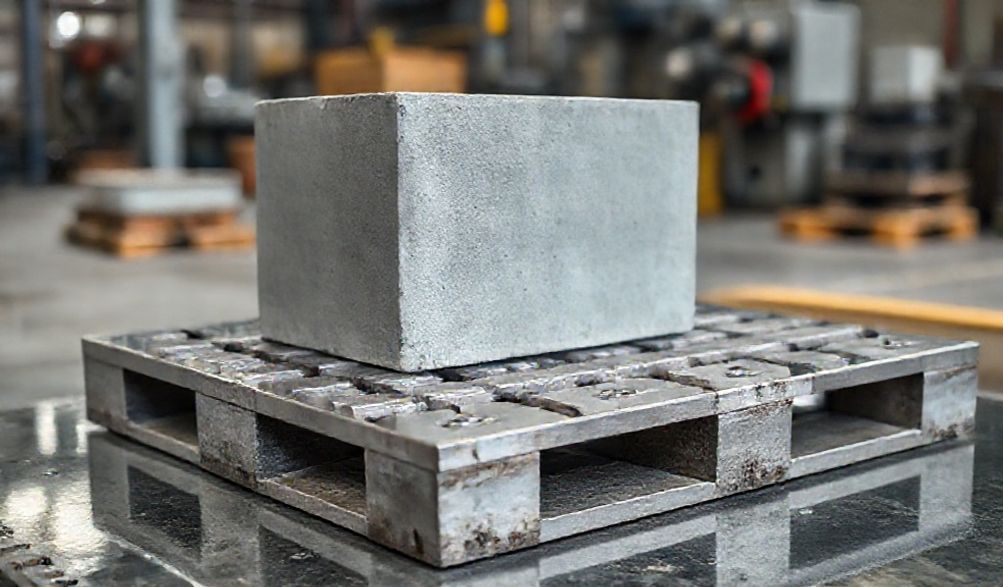
Gid Komplè sou Palèt pou Machin Fè Blòk: Selekison, Itilizasyon ak Antretyen
Entwodiksyon
Ou te optimize melanj beton ou, kalibre vibrasyon ou, ak fè sèvis sou sistèm idwolik ou. Men, ou toujou ap fè fas ak pwoblèm pwodiksyon ki fè ou fache: blòk ki gen wotè ki pa konsistan, defo sou sifas ki mennen nan rejè, oswa chire inatandi sou mwazi ou. Anvan ou blame machin nan tèt li, gade anba. Koupab la souvan se platfòm san pretansyon ki chita anba chak blòk ou pwodui—palèt la.
Souvan trete kòm yon konsomab senp, palèt machin blòk la se, an reyalite, yon eleman fondamantal presizyon. Gid sa a distile soti nan plizyè dizèn ane eksperyans kolektif endistri, enkòpore konesans difisil pou genyen nan men manifakti machin yo, veteran atelye pwodiksyon yo, ak enjenyè materyèl yo. Nou la pou chanje pèspektiv ou.
Yon palèt machin blòk se plak asye mobil enpòtan an kote yo fòme, konpakte, epi inisyalman trete beton an. Li fòme fondasyon pwodwi ou a, li deplase nan sik machin nan pou ranpli, konpaksyon, ak ejeksyon anvan li transpòte blòk fre a nan zòn trete a.
Chwazi epi kenbe bon palèt la se pa yon travay pwokire segondè; se yon envestisman dirèk nan pwofitabilite plant ou a, kalite pwodwi, ak dire lavi machin yo. Yon move chwa palèt tou dousman diminye marge yo atravè gaspiyaj, tan mòt, ak dechire akselere. Gid definitif sa a bay apèsi aksyonab pou transfòme palèt ou yo soti nan yon sant depans pou vin yon poto pwodiksyon serye. Si ou se yon pwopriyetè plant blòk, yon manadjè pwodiksyon, yon sipèvizè antretyen, oswa yon ofisye pwokire, enfòmasyon ki vin apre a se pou ou.
Poukwa Chwa Palèt Machin Blòk Ou a Enpòtan anpil pou Pwofi
Neglije pale ou yo se tankou yon ekip Fòmil 1 ki neglije kawotchou yo. Yo se sèl pwen kontak ant machin ou a ak pwodwi ou a, e kondisyon yo detèmine pèfòmans. Espesifikasyon pale ou yo gen konsekans dirèk ak mezirab sou rezilta finansye ou yo.
Enpak sou Kalite ak Konsistans Pwodwi
Kalite blòk ou yo depann de sifas kote yo fòme yo.
- Presizyon Dimansyonèl:Platite palèt la se yon bagay ki enpòtan anpil. Yon palèt ki defòme oswa ki gen yon kwochi ap pwodwi blòk ki gen wotè varye ak dimansyon ki pa respekte espesifikasyon yo. Sa mennen nan echèk nan kontwòl kalite, plent kliyan sou difikilte nan poze blòk yo, ak pwodwi ki gaspiye.
- Fini Sifas ak Lage:Tèks sifas palèt la (tè teren lis, tèks lejè) afekte dirèkteman jan blòk la lage pwòp apre ejeksyon. Yon sifas ki gen twou oswa ki graj ka lakòz kole, ki mennen nan domaj blòk oswa enpèfeksyon sifas ki vizib nan pwodwi final la.
- Pou Prevni Defo:Fann oswa defo yo ka soti nan pale a. Yon sifas ki fin kraze nèt oswa akimilasyon beton ki rasanble kreye yon sipò inegal pandan faz konpresyon an gwo presyon, sa ki pwovoke pwen tansyon ki parèt kòm fann.
Enfliyans Dirèk sou Sante Machin ak Tan Fonksyònman
Palèt ou yo pwoteje byen ki pi valab ou a—machin blòk la li menm.
- Pòte Akselere:Yon palèt chire, ki pa egal, aji tankou papye sab kont anba moul la ak tèt pres la. Li lakòz mete twò bonè sou eleman sa yo ki chè ak presizyon. Li ogmante tou fwotman sou chèn konvwayè yo ak woulèt yo.
- Dezaliyman ak Blokaj.Deformasyon palèt la oswa domaj sou kwen an se yon kòz prensipal blokaj nan magazen palèt, manje, oswa sistèm transfè yo. Blokaj sa yo ki pa planifye sispann tout liy pwodiksyon ou, sa lakòz gwo pèt nan pwodiksyon ak depannaj presse.
Depans Kache ki Soti nan Move Palèt la
Premye ekonomi ki soti nan yon palèt ki pi bon mache ak ki pa bon kalite disparèt rapidman lè yo egzamine fonksyonman an.
- Dechaj ogmante.Kole ak erè dimansyonal yo tradwi dirèkteman an blòk kase oswa ki pa nan spesifikasyon yo ki dwe jete.
- Depans antretyen pi wo yo:Ranplasman souvan mwazi, tèt presse, ak pati konveyè akòz mete akselere vin tounen yon depans renouvlab.
- Sik Rènouvlo Souvan A pallet that wears out in 6 months has a much higher total cost than a premium pallet that lasts 3 years, when you factor in downtime for changeovers and procurement overhead.
- Enèji Pèdi In steam curing environments, a warped pallet has poor contact with the curing bed, reducing heat transfer efficiency and potentially leading to uneven curing.
Types of Pallets for Block Making Machines: Materials & Specifications
Not all steel plates are created equal. Understanding the material science behind pallet options allows you to specify the right tool for your job.
Standard Steel Pallets: The Workhorse
These are the most common pallets, made from durable, abrasion-resistant steel plate.
- Typical Specs: Made from grades like Hardox 400 or AR400, with thicknesses typically ranging from 6mm to 12mm, depending on machine size and block weight.
- Avantaj: Excellent balance of durability and cost-effectiveness. They offer good impact resistance and heat transfer properties, making them suitable for high-volume production of standard blocks.
- Desavantaj: While abrasion-resistant, they are not immune to wear and will gradually lose flatness. They are also susceptible to corrosion if exposed to moisture and the alkaline environment of concrete without protection.
Hardened & Ground Steel Pallets: For Precision & Longevity
This is the premium choice for operations focused on minimal downtime and superior product finish.
- Pwosesis la: After being cut to size, these pallets undergo a heat treatment (hardening) process, followed by precision grinding on large surface grinders. This creates an exceptionally hard, flat, and smooth surface.
- Avantaj Kle Yo:
- Superior Wear Resistance: The hardened surface withstands abrasion far longer than standard steel, drastically extending service life.
- Exceptional Flatness Retention: They resist warping and dishing under cyclic loading, maintaining dimensional accuracy for your blocks over time.
- Smooth Block Release: The mirror-like ground finish provides an almost non-stick surface, reducing release agent needs and improving block bottom finish.
- Ideal Use: Essential for producing high-tolerance products like interlocking paving stones, architectural masonry, and any application where a perfect bottom finish is required.
Specialty & Coated Pallets
For specific environmental or production challenges, specialized pallets offer solutions.
- Galvanized or Painted Pallets: A zinc coating (galvanizing) or a robust industrial paint system provides a barrier against corrosion. This is crucial for plants in coastal/humid regions or those using accelerants or mix designs that are particularly corrosive.
- Non-Stick Coatings: Applied over steel, coatings like PTFE (Teflon) or specialized polymers create a surface to which concrete minimally adheres. These are valuable for intricate mold designs with deep ribs or for mixes that are prone to sticking, though they may wear over time and require re-coating.
Key Specifications to Specify When Ordering
Never just order a “steel plate.” Provide a detailed specification sheet to your supplier.
- Dimansyon: Exact length, width, and thickness. Include permissible tolerances (e.g., ±0.2mm on thickness).
- Flatness Tolerance: The most critical spec. Usually expressed as a deviation over a length (e.g., “±0.5mm over any 1-meter span”).
- Fini Sifas: Specify “Precision Ground,” “Milled,” or “As-rolled.” For ground pallets, you may specify a surface roughness (Ra) value.
- Hardness: Define the Brinell Hardness Number (BHN). For example, AR400 has a nominal hardness of 400 BHN.
- Edge Preparation: Require all edges to be deburred, beveled, or radiused. Sharp edges are a safety hazard, damage conveyor guides, and can chip easily.
How to Select the Right Pallet for Your Machine and Product Mix
Selecting a pallet is a three-part equation: your machine’s requirements, your product’s demands, and your plant’s environment.
Matching Pallet to Machine Model
This is non-negotiable. Your block machine is engineered for a specific pallet profile.
- Consult the Manual: The manufacturer’s manual provides the exact dimensions, thickness, and maximum weight specifications. Deviating from these can void warranties and cause mechanical failure.
- Weight Matters: The machine’s pallet feeder, elevator, and turnover systems are designed for a specific weight range. A pallet that is too heavy can overload drives and cause misalignment.
Matching Pallet to Your Block Products
Different products exert different stresses on a pallet.
- Blòk Kreyon Estanda: Create a concentrated wear pattern along the outer edges of the mold. A durable, abrasion-resistant steel is key.
- Dense Pavers or Solid Blocks: Apply pressure more evenly across the entire pallet surface. Flatness retention under full-area compression is the critical factor here.
- Abrasive Mixes: If your mix contains industrial by-products like slag or certain manufactured aggregates, the abrasiveness skyrockets. This is a strong case for investing in the hardest, most wear-resistant pallet you can justify.
Evaluating Your Production Environment
The atmosphere in your plant plays a role in pallet longevity.
- Humidity & Corrosion Risk: Assess your climate and indoor humidity. If rust is a frequent sight, prioritize coated or galvanized pallets, or commit to a rigorous protective maintenance routine.
- Cleaning Processes: Do you use high-pressure water jets for cleaning? This forceful, concentrated water can accelerate corrosion if pallets are not dried and treated afterward. It can also damage non-stick coatings.
Best Practices for Pallet Maintenance & Maximizing Lifespan
A premium pallet is an investment; proper maintenance is the insurance policy. A simple, consistent routine can double or triple a pallet’s service life.
Daily & Weekly Inspection Routines
Catch problems early, before they damage blocks or the machine.
- Visual Checklist: Each shift, operators should quickly look for:
- Warping/Bowing: Sight down the length of the pallet.
- Edge Damage: Dings, curls, or cracks on the edges.
- Surface Pitting: Signs of corrosion or impact damage.
- Concrete Buildup: Residual “packing” on the surface.
- The Straightedge Test: Weekly, use a precision straightedge and a feeler gauge to check flatness. Document any pallets exceeding your flatness tolerance (e.g., >1mm gap).
Proper Cleaning Techniques
Remove concrete residue without damaging the pallet.
- Immediate Removal: Scrape off wet concrete buildup promptly before it cures.
- For Cured Residue: Use a plastic or nylon scraper. Avoid aggressive steel wire brushes, which score the surface and create grooves that promote sticking.
- Chemical Cleaners: If needed, use a mild, acidic concrete dissolver, but ensure it is compatible with your pallet’s material/coating and rinse thoroughly.
Correct Handling & Storage
Most physical damage occurs off the machine.
- Never Drop or Drag: Use designated pallet carts. Dropping pallets onto concrete floors is a surefire way to cause warping and edge damage.
- Flat, Dry Storage: When not in use, store pallets in a clean, dry area. Stack them flat on a level surface with support across their full area to prevent sagging.
When to Repair vs. Replace
Knowing when to retire a pallet saves money in the long run.
- Signs for Replacement:
- Excessive warping that cannot be corrected in a press (>3mm deviation).
- Deep grooves or scoring that affects block release.
- Severe corrosion that has pitted through the material, compromising structural integrity.
- Consider Repair/Refurbishment: For high-quality hardened pallets that have lost flatness or surface finish but are not deeply worn, professional re-grinding by a specialized workshop can be a cost-effective way to restore them to like-new condition, extending their life significantly.
Frequently Asked Questions (FAQ) About Block Machine Pallets
Q1: How often should I replace my block machine pallets?
A: There is no universal timeline. Replacement should be driven by condition, not calendar. A well-maintained hardened pallet in a low-abrasion environment could last 5+ years. A standard pallet in high-volume, abrasive production might need replacement in 12-18 months. Let your weekly inspection and flatness tests dictate the schedule.
Q2: Can I use a thicker pallet than what my machine manual specifies?
A: It is strongly discouraged without explicit written approval from the machine manufacturer. A thicker pallet may not fit in the magazine, can overload the elevator and drive mechanisms, and critically, it can alter the compression stroke distance, leading to under-compacted blocks or machine damage.
Q3: Why are my blocks sticking to the pallet?
A: Sticking is a common symptom with multiple potential causes. Diagnose in this order:
1. Pallet Surface: Is it pitted, rough, or contaminated with old buildup? Refurbish or replace.
2. Melanj konsepsyon an Is the mix too wet or has a high fines content? Adjust the water-cement ratio.
3. Release Agent: Are you using one? Is it applied correctly and at the right dosage?
4. Machine Process: Is the vibration time and pressure sufficient for proper compaction and release?
Q4: Is it worth investing in more expensive hardened pallets?
A: Analyze it through Pri Total Posesesyon (TCO). While hardened pallets can cost 2-3x more upfront, consider:
* They last 3-5x longer than standard pallets.
* They drastically reduce downtime for pallet changes and machine wear.
* They improve product quality and reduce waste.
For high-volume or precision-focused plants, the math almost always favors hardened pallets in the long run.
Q5: How can I prevent my steel pallets from rusting?
A: A proactive approach is key:
1. Clean Thoroughly & Dry: After washing, ensure pallets are completely dry before storage.
2. Apply a Protective Film: During weekend shutdowns or extended inactivity, lightly spray or wipe pallet surfaces with a thin layer of a water-displacing, rust-inhibitive oil (ensure it’s compatible with concrete and won’t affect curing).
3. Control Storage Environment: Keep spare pallets in a dry, covered area off damp floors.
Konklizyon
The pallet for your block making machine is far more than a simple slab of steel. It is a precision-engineered component that sits at the heart of your production quality, efficiency, and cost control. Treating it as a disposable commodity is one of the most common and costly oversights in block manufacturing.
The strategic choice is clear: prioritize quality, correct specifications, and a partnership with a reputable supplier who understands the demands of block production over the temptation of the lowest upfront cost. Your pallets should be an asset you manage, not an expense you dread.
Your Call to Action: This week, conduct a pallet audit. Pull 10-20 pallets from your line at random. Perform the straightedge test. Inspect for wear and damage. You may uncover the root cause of persistent production issues. For specific guidance, contact your machine’s OEM or consult with a trusted, specialized pallet manufacturer for a professional assessment of your needs.
By mastering the selection, use, and maintenance of your pallets, you pave the way for a smoother, more profitable, and sustainable block production operation for years to come.
<