
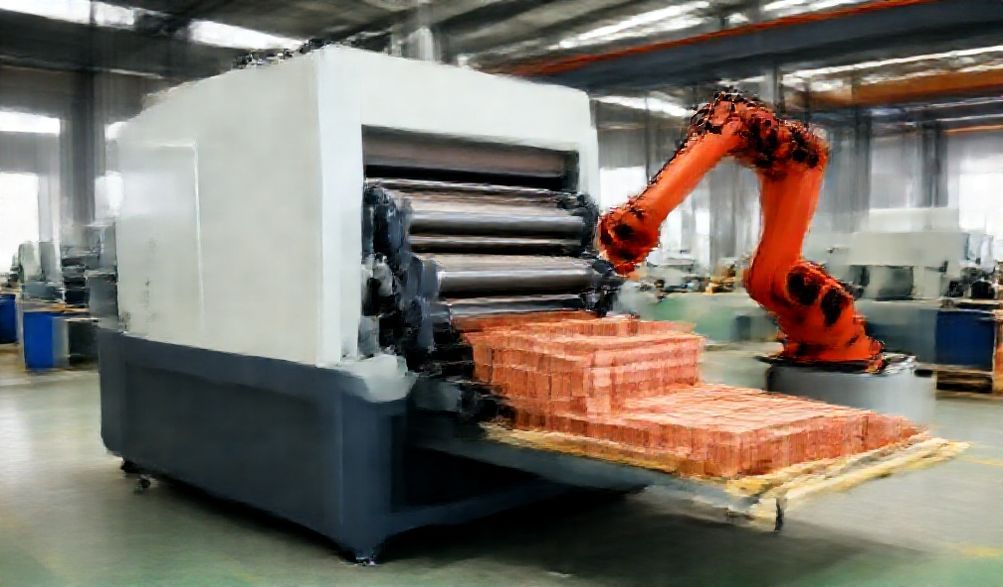
Gid Definitiv Ou Pou Jwenn Yon Founisè Machin Chinwa Pou Fè Brik Ki Serye
Entwodiksyon
Endistri konstriksyon mondyal la fonksyone anpil sou brik, ak demann pou machin pou fè brik ki bon mache ak bon jan kalite a pa janm te pi wo. Nan kontèks sa a, Lachin te konsolide wòl li kòm sant fabrikasyon mondyal san diskisyon, ki pwodui pi fò nan machin pou blòk ak brik yo itilize atravè kontinan yo. Pou pwopriyetè biznis ak manadjè pwojè, apwovizyone nan Lachin prezante yon opòtinite eksepsyonèl pou valè ak kapasite.
Sepandan, opòtinite sa a souvan kache nan konpleksite. Defi yo komen yo byen reyèl: navige nan yon lanmè akablan nan founisè sou entènèt sou platfòm B2B, verifye kalite fabrikasyon aktyèl la de lwen, jere lojistik entènasyonal konplike, epi asire sipò siyifikatif apre lavant atravè lang ak zòn tan. Yon desizyon ki pa bon ka mennen nan pèt tan koute chè, pwodiksyon ki pa bon, ak kòkenn lojistik.
Gid sa a fèt pou se resous definitif ou a. Li pa baze sou teyori, men sou ane eksperyans endistri dirèk, odit sou plan faktori, ak konesans teknik pwofon sou pwosesis fabrikasyon brik. Objektif nou se ankouraje konfyans ak transparans. Nou pral ekipe ou ak apèsi aksyonab ki nesesè pou koupe bwi a, idantifye patnè ki vrèman fyab, epi fè yon envestisman ki enfòme ak konfyan nan avni biznis ou an. Ann kòmanse vwayaj la pou transfòme rechèch pou yon "founisè machin Chinwa pou fè brik" soti nan yon travay redoutab nan yon siksè estratejik.
Poukisa ou ta dwe achte machin pou fè brik nan peyi Lachin?
Chwazi yon destinasyon pou apwovizyone se yon desizyon biznis estratejik. Pou machin pou fè brik, Lachin ofri yon konbinezon de avantaj ki difisil pou lòt rejyon yo egalize, sa ki fè li premye pòs apèl pou achtè atravè lemond.
Pri Efikasite ak Pri Konpetitif
Prensipal atiran an se valè ki pa ka nye. Avantaj pri Lachin nan soti nan plizyè faktè kle:
- Ekonomi echèl:Volim enòm machin yo pwodui fè pri inite yo desann.
- Chèn Ekipman Entegre:Pwoksimite ak sous materyo anvan trete (asye, idwolik, elektwonik) diminye depans pou pwokire materyo yo.
- Ekosistè Manifakti Ki Devlope:Yon fòs travay ki gen anpil konpetans, men ki toujou konpetitif nan pri, ansanm ak pwosesis pwodiksyon ki optimize, kontribye nan rediksyon depans jeneral nan fabrikasyon.
Sa pa vle di "bon mache" nan yon sans negatif. Li vle di ou kapab jwenn teknoloji avanse ak yon bon jan kalite konstriksyon nan yon pri ki souvan pèmèt yon retou sou envèstisman (ROI) pi rapid.
Varyete Ekstansif ak Ranj Teknolojik
Kòm ou se yon ti antreprenè k ap lanse yon blòk yad oswa yon gwo konpayi k ap konstwi yon plant otomatize, Lachin gen yon machin pou ou. Seri a san parèy:
- Pa Operasyon:Soti nan machin senp manyèl ak semi-otomatik rive nan liy pwodiksyon konplètman otomatik ak konplètman enfòmatize.
- Pa tradwi tèks sa a.Machin ki pwodui soti nan 1,000 a plis pase 30,000 brik oswa blòk pa jou.
- Pa Kalite:Machin estasyonè (tankou seri QT popilè pou blòk kre), machin pou fè blòk mobil, machin pou fè brik antrebloke, ak machin espesyalize pou pave, wòch bò wout, ak plis ankò.
- Pa Teknoloji:Founisè yo ofri diferan nivo sofistikasyon nan sistèm vibrasyon, presyon idwolik, panno kontwòl (PLC kont manuel), ak efikasite enèjik.
Echèl Manifakti ak Maturite Chèn Ekipman
Chin pa sèlman gen faktori endividyèl; li gen gwoup endistriyèl antye ki konsakre nan fabrikasyon machin. Vil tankou Quanzhou, Guangzhou, ak Zhengzhou gen rezo dans nan fonderi, founisè konpozan, ak plant asanblaj. Maturite sa a vle di:
- Sous-traitans Pi Rapid pou Konpozan Yo:Si yon pati enpòtan tankou yon ponp idwolik oswa yon motè tonbe an pann, ranplasman yo souvan disponib fasilman.
- Inovasyon Kontinyèl:Konpetisyon nan gwoup sa yo pouse pou amelyorasyon teknolojik rapid ak adaptasyon ak bezwen mache mondyal la.
- Efikasite Lojistik:Pò ak fòwadè kago yo gen anpil eksperyans nan jere ekspòtasyon machin lou yo, sa ki fè pwosesis anbakman an pi efikas.
Faktè Kle Lè W Ap Evalye Yon Founisè Chinwa
Avèk dè milye opsyon, evalyasyon se kle. Gade pi lwen pase sit entènèt la ak brochi a esansyèl pou jwenn yon patnè vrè.
Verifye Manifaktirè kont Konpayi Komèsyal
Sa se premye ak pi enpòtan filtre a. Yon konpayi komèsyal aji kòm yon entèmèdyè, pandan yon manifakti kontwole pwosesis pwodiksyon an.
- Kouman pou Distenge:
- Manifaktirè:Yo pral bay detay espesifik sou atelye yo, kapasite pwodiksyon yo, ak jeni entèn yo. Yo kapab fasilman òganize vwayaj videyo an dirèk nan atelye fabrik la.
- Konpayi Komèsyal:Souvan reprezante plizyè faktori, pafwa chanjan. Kominikasyon yo ka mwens teknik detaye, epi yo ka ezite bay kontak dirèk ak faktori oswa vize san script.
- Avantaj ak Dezavantaj:Yon konpayi komès ki gen bon repitasyon ka senplifye kominikasyon ak okipe detay ekspòtasyon yo. Sepandan, fè afè dirèkteman ak faktori a anjeneral ofri pi bon kontwòl sou pri yo, sipò teknik dirèk, ak pi gwo transparans sou bon jan kalite konstriksyon an ak delè pwodiksyon an.
Evalyasyon Ekspètiz Teknik ak Kapasite R&D
Yon bon kalite machin soti nan konpetans jeni. Sonde nan pwofondè teknik yo:
- Ekip Enjenyeri Anndan Kay la:Èske yo konsepsyon ak itere pwòp machin yo, oswa tou senpleman asanble pati yo achte?
- Customization Ability: Can they modify standard models to suit your specific raw materials (e.g., fly ash, clay, concrete mix) or brick size requirements?
- Konsantre sou Sistèm Debaz yo: Ask detailed questions about their vibration system (frequency, amplitude), hydraulic system (brand of pumps and valves, pressure settings), and control logic. Their ability to explain these clearly signals expertise.
Quality Control Processes and Certifications
Certificates are a baseline, but processes are what guarantee quality.
- Critical Certifications:ChècheCE (mandatory for the European market, indicating safety compliance), ISO 9001 (a framework for quality management systems), and other relevant machinery safety standards.
- Estanda Materyèl: Inquire about the grade of steel used for the frame and mold, the specification of hydraulic cylinders, and the brand of electrical components (e.g., Siemens, Schneider for premium machines).
- Audit and QC Plans: A trustworthy supplier will provide a Factory Audit Report or a detailed Quality Control Plan outlining inspection points at each production stage (from welding to assembly to testing).
Production Capacity and Lead Times
Realistic scheduling prevents project delays.
- Ask for a Breakdown: A typical lead time isn’t just “30 days.” It should include: raw material procurement, machining, assembly, painting, factory testing, and crating.
- Understand Capacity: Can they handle your order alongside others without quality suffering? Ask about their current production schedule.
- Buffer for Logistics: Factor in shipping time (sea freight is common for machinery) and potential customs clearance delays at your port.
The Complete Sourcing Process: From Inquiry to Delivery
A structured approach minimizes risk at every stage.
Step 1: Effective Supplier Discovery and Shortlisting
Move beyond a simple Alibaba search.
- Use Precise Keywords: Searches like “china qt6 brick making machine manufacturer” or “fully automatic block machine factory” yield more targeted results than generic terms.
- Leverage Industry Directories: Specialized B2B platforms for construction machinery can have more vetted lists.
- Research Trade Shows: Suppliers who exhibit at major international fairs like the China Import and Export Fair (Canton Fair) or BAUMA China often have stronger export experience.
Step 2: The Art of Technical Communication and Quotation
Clarity here prevents costly misunderstandings. Provide a clear specification sheet:
- Kalite brik ak gwosè: (e.g., 400x200x200mm hollow block).
- Kapasite Pwodiksyon: Bricks per shift or per day.
- Nivo Otomatizasyon: Manual, semi-auto, or fully automatic with robotic pallet handling.
- Egzijans Pouvwa: Voltage and phase (e.g., 380V/3Phase/50Hz).
- Matyè Premye: Composition of your concrete or clay mix.
When quotes arrive, understand the Incoterms:
* EXW (Soti nan faktori a): You own the goods at their factory gate. You handle all shipping, insurance, and customs.
* FOB (Free On Board): They deliver and load the machine onto the ship. You handle sea freight and destination costs.
* CIF (Cost, Insurance, Freight): They pay for the machine, insurance, and freight to your nearest port. You handle customs and inland transport.
Step 3: Due Diligence: Factory Audit and Sample Inspection
Never skip this step.
- Virtual/On-Site Audit Checklist:
- Workshop organization and cleanliness.
- Quality of welding and fabrication.
- Inventory of raw materials and components.
- Testing area for finished machines.
- Interview with engineers or production managers.
- Request Evidence: Ask for a production video of a machine similar to your order or a sample test report from their quality lab.
Step 4: Navigating Contracts, Payment, and Logistics
Protect your investment with clear documentation.
- Key Contract Clauses: Ensure it covers detailed machine specifications, warranty terms (duration, coverage, exclusions), spare parts list with part numbers, and intellectual property if customizations are made.
- Secure Payment Terms: Avoid 100% upfront payments. Common secure terms are:
- 30% T/T deposit, 70% against copy of Bill of Lading.
- Letter of Credit (L/C): A bank-guaranteed payment, safer but more complex.
- Shipping and Customs: Work with a reputable freight forwarder experienced in heavy machinery. They will guide you on crating requirements, HS codes, and necessary import documentation for your country.
Avoiding Common Pitfalls and Red Flags
Forewarned is forearmed. Watch for these warning signs.
Price Traps and “Too Good to Be True” Offers
An offer significantly lower than the market average is a major red flag. This often indicates:
- The use of inferior, non-standard materials that will fail prematurely.
- Hidden costs that will appear later for “essential” components or documentation.
- A complete lack of after-sales service.
Poor Communication and Vague Documentation
A reliable partner is a communicative partner. Be wary of:
- Inconsistent or evasive answers to technical questions.
- Lack of detailed, English operation and maintenance manuals.
- Slow response times, which often predict poor after-sales support.
- Unwillingness to provide any form of verifiable reference or contact.
Weak or Non-Existent After-Sales Service
The machine’s life begins after delivery. A supplier that doesn’t prioritize after-sales is a liability.
- Drapo Wouj: No clear warranty policy, no spare parts catalog, no plan for installation guidance or operator training.
- Critical Parts: Ensure they commit to supplying key wear-and-tear parts like molds, hydraulic seals, vibration motors, and control system components for the long term.
Maximizing Your Investment: After-Sales and Long-Term Partnership
View your supplier as a long-term partner for your business growth.
Installation, Commissioning, and Operator Training
A reputable supplier will support you through startup:
- Detailed Installation Manuals: With clear diagrams and steps.
- Remote Commissioning Support: Via video call to guide your technicians through setup and calibration.
- On-Site Training (Optional): For larger lines, you can often contract a factory engineer to travel to your site for hands-on training, ensuring optimal machine performance from day one.
Sourcing and Managing Spare Parts Inventory
Proactive planning prevents prolonged downtime.
- Request a Critical Spare Parts List from the supplier upon purchase.
- Initial Inventory: Consider purchasing a starter kit of the most common wear parts (filters, seals, gaskets) with your machine order.
- Verify Parts Availability: Confirm that parts will be available for purchase separately for years to come.
Building a Relationship for Future Upgrades and Support
A good supplier relationship pays ongoing dividends. They can become your advisor for:
- Production Line Expansion: Adding capacity or new product lines.
- Technology Upgrades: Retrofitting newer control systems or more efficient components.
- Market Advice: Sharing insights on successful brick types or production techniques used by other clients globally.
Kesyon yo poze souvan (FAQ)
Q1: What is the typical price range for a brick making machine from China?
A: Prices vary dramatically. A small manual or semi-automatic machine can start from $3,000 to $15,000 USD. A standard stationary block machine like a QT4 might range from $25,000 to $45,000. Large, fully automated production lines with robotic handling can cost $150,000 to $500,000+. An accurate quote requires your detailed specifications.
Q2: How can I verify if a supplier is a real manufacturer and not just a middleman?
A: Request a live, unscripted video tour of their production workshop via video call. Ask specific questions about their laser cutting, welding, and assembly processes. Check their business license and compare the registered factory address with the location shown in the video and on mapping apps.
Q3: What are the most important certifications to look for?
A:ACE Mark is critical for safety and EU market access. ISO 9001:2015 certification indicates a managed quality system. For electrical components, look for mentions of international standards. Always ask for copies of the certificates and verify their authenticity if possible.
Q4: What is the standard warranty period, and what does it usually cover?
A:Yon garanti estanda se tipikman12 months from the date of shipment or commissioning. It covers defects in materials and workmanship under normal use. It generally does pa cover wear-and-tear parts (like mold liners), damage from improper operation, lack of maintenance, or force majeure events.
Q5: How do I handle machine breakdowns and technical support from overseas?
A: A professional supplier will offer remote video support to diagnose issues. Ensure you receive comprehensive English manuals with troubleshooting guides. Maintain the provided spare parts list. For critical failures, discuss the possibility and cost of dispatching a technician beforehand, so you have a plan in place.
Konklizyon
Sourcing a brick making machine from China is a significant investment that, when done correctly, can propel your business forward for years. The path to success is built on thorough supplier vetting, crystal-clear technical communication, rigorous due diligence, and strategic planning for after-sales support. Remember, the goal is not to find the cheapest supplier, but the most reliable and expert partner—one whose engineering capability, quality commitment, and service ethos align with your business’s long-term vision.
A trustworthy “china machine for making bricks supplier” is more than a vendor; they are an integral part of your production ecosystem. Use this guide as your actionable checklist. Approach your sourcing journey with confidence, armed with the right questions and a clear process. Your ideal manufacturing partner is out there, ready to help you build a stronger foundation, one brick at a time.
<