
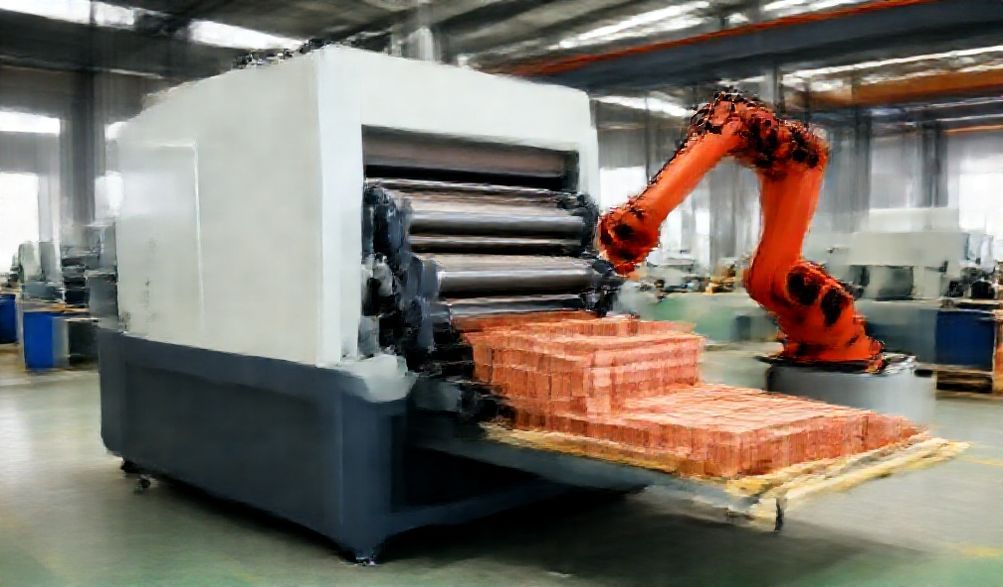
Ваше полное руководство по поиску надежного поставщика оборудования для производства кирпича в Китае
Введение
Глобальная строительная отрасль держится на кирпичах, и спрос на доступное, высококачественное оборудование для их производства как никогда высок. В этих условиях Китай укрепил свою роль как бесспорный мировой производственный центр, выпуская подавляющее большинство машин для производства блоков и кирпичей, используемых на разных континентах. Для владельцев бизнеса и руководителей проектов закупки из Китая представляют собой феноменальную возможность с точки зрения ценности и возможностей.
Однако эта возможность часто окутана сложностями. Типичные трудности вполне реальны: необходимость ориентироваться в безбрежном море онлайн-поставщиков на B2B-платформах, проверка реального качества производства на расстоянии, управление запутанной международной логистикой и обеспечение эффективной послепродажной поддержки с учётом языковых барьеров и разницы часовых поясов. Ошибочное решение может привести к дорогостоящим простоям, некачественному производству и логистическим кошмарам.
Это руководство создано как ваш исчерпывающий ресурс. Основанное не на теории, а на многолетнем непосредственном опыте работы в отрасли, аудитах производственных цехов и глубоких технических знаниях процессов изготовления кирпича, наша цель — способствовать укреплению доверия и прозрачности. Мы вооружим вас практическими знаниями, необходимыми для того, чтобы отсеять второстепенное, выявить по-настоящему надежных партнеров и сделать осознанные, уверенные инвестиции в будущее вашего бизнеса. Давайте начнем путь превращения поиска «поставщика оборудования для производства кирпича из Китая» из пугающей задачи в стратегический успех.
为什么从中国采购制砖机?
Выбор страны для закупок — это стратегическое бизнес-решение. В случае оборудования для производства кирпича Китай предлагает совокупность преимуществ, с которыми трудно соперничать другим регионам, что делает его первым портом захода для покупателей по всему миру.
Экономическая эффективность и конкурентоспособные цены
Основная привлекательность заключается в неоспоримой выгоде. Ценовое преимущество Китая обусловлено несколькими ключевыми факторами:
- Эффект масштаба:Огромный объем производимой техники снижает удельные затраты.
- Интегрированные цепочки поставок:Близость к источникам сырья (сталь, гидравлика, электроника) снижает затраты на закупку материалов.
- Зрелая производственная экосистема:Высококвалифицированная, но при этом конкурентоспособная по стоимости рабочая сила и оптимизированные производственные процессы способствуют снижению общих производственных затрат.
Это не означает "дешевый" в негативном смысле. Это значит, что вы получаете доступ к передовым технологиям и надежному качеству сборки по цене, которая часто обеспечивает более быструю окупаемость инвестиций (ROI).
Обширный ассортимент и технологический диапазон
Будь вы мелким предпринимателем, открывающим площадку для хранения блоков, или крупной корпорацией, строящей автоматизированный завод, в Китае найдётся оборудование именно для вас. Ассортимент не имеет себе равных:
- По операции:От простых ручных и полуавтоматических станков до полностью компьютеризированных, полностью автоматизированных производственных линий.
- Вывод:Машины производят от 1 000 до более 30 000 кирпичей или блоков в день.
- По типу:Стационарные машины (например, популярная серия QT для пустотелых блоков), мобильные установки для производства блоков, машины для производства блоков с замковым соединением, а также специализированные машины для тротуарной плитки, бордюрного камня и других изделий.
- По технологиям:Поставщики предлагают различные уровни сложности систем вибрации, гидравлического давления, панелей управления (ПЛК против ручного управления) и энергоэффективности.
Масштаб производства и зрелость цепочки поставок
中国拥有的不仅是单个工厂,而是专注于机械制造的完整产业集群。泉州、广州、郑州等城市聚集了密集的铸造厂、零部件供应商和组装厂网络。这种成熟性意味着:
- Более быстрый поиск компонентов:Если критически важная деталь, такая как гидравлический насос или двигатель, выходит из строя, запасные части часто легко доступны.
- Постоянное внедрение инноваций:在这些集群内的竞争推动了技术的快速进步以及对全球市场需求的适应。
- Логистическая эффективность:Порты и грузовые экспедиторы обладают большим опытом в обработке экспорта тяжелой техники, оптимизируя процесс отгрузки.
评估中国供应商时的关键因素
Среди тысяч вариантов оценка имеет решающее значение. Необходимо смотреть дальше веб-сайта и брошюры, чтобы найти настоящего партнёра.
Проверка производителя и торговой компании
Это первый и самый важный фильтр. Торговая компания выступает в роли посредника, в то время как производитель контролирует производственный процесс.
- 如何区分:
- Производитель: Will provide specific details about their workshop, production capacity, and in-house engineering. They can easily arrange live video tours of the factory floor.
- Торговая компания: Often represents multiple, sometimes shifting, factories. Their communication may be less technically detailed, and they may be reluctant to provide direct factory contact or unscripted tours.
- Pros and Cons: A reputable trading company can simplify communication and handle export details. However, dealing factory-direct typically offers better price control, direct technical support, and greater transparency into the build quality and production timeline.
Assessing Technical Expertise and R&D Capability
A quality machine is born from engineering prowess. Probe into their technical depth:
- In-House Engineering Team: Do they design and iterate their own machines, or simply assemble purchased parts?
- Customization Ability: Can they modify standard models to suit your specific raw materials (e.g., fly ash, clay, concrete mix) or brick size requirements?
- Сосредоточьтесь на основных системах: Ask detailed questions about their vibration system (frequency, amplitude), hydraulic system (brand of pumps and valves, pressure settings), and control logic. Their ability to explain these clearly signals expertise.
Quality Control Processes and Certifications
Certificates are a baseline, but processes are what guarantee quality.
- Critical Certifications: Look for CE (mandatory for the European market, indicating safety compliance), ИСО 9001 (a framework for quality management systems), and other relevant machinery safety standards.
- Материальные стандарты: Inquire about the grade of steel used for the frame and mold, the specification of hydraulic cylinders, and the brand of electrical components (e.g., Siemens, Schneider for premium machines).
- Audit and QC Plans: A trustworthy supplier will provide a Factory Audit Report or a detailed Quality Control Plan outlining inspection points at each production stage (from welding to assembly to testing).
Production Capacity and Lead Times
Realistic scheduling prevents project delays.
- Ask for a Breakdown: A typical lead time isn’t just “30 days.” It should include: raw material procurement, machining, assembly, painting, factory testing, and crating.
- Understand Capacity: Can they handle your order alongside others without quality suffering? Ask about their current production schedule.
- Buffer for Logistics: Factor in shipping time (sea freight is common for machinery) and potential customs clearance delays at your port.
The Complete Sourcing Process: From Inquiry to Delivery
A structured approach minimizes risk at every stage.
Step 1: Effective Supplier Discovery and Shortlisting
Move beyond a simple Alibaba search.
- Use Precise Keywords: Searches like “china qt6 brick making machine manufacturer” or “fully automatic block machine factory” yield more targeted results than generic terms.
- Leverage Industry Directories: Specialized B2B platforms for construction machinery can have more vetted lists.
- Research Trade Shows: Suppliers who exhibit at major international fairs like the China Import and Export Fair (Canton Fair) or BAUMA China often have stronger export experience.
Step 2: The Art of Technical Communication and Quotation
Clarity here prevents costly misunderstandings. Provide a clear specification sheet:
- Тип и размер кирпича: (e.g., 400x200x200mm hollow block).
- Выходная мощность: Bricks per shift or per day.
- Уровень автоматизации: Manual, semi-auto, or fully automatic with robotic pallet handling.
- Требования к питанию: Voltage and phase (e.g., 380V/3Phase/50Hz).
- Сырье: Composition of your concrete or clay mix.
When quotes arrive, understand the Incoterms:
* EXW (Ex-Works) – Франко-завод. You own the goods at their factory gate. You handle all shipping, insurance, and customs.
* ФОБ (Франко Борт): They deliver and load the machine onto the ship. You handle sea freight and destination costs.
* CIF (Cost, Insurance, Freight): They pay for the machine, insurance, and freight to your nearest port. You handle customs and inland transport.
Step 3: Due Diligence: Factory Audit and Sample Inspection
Never skip this step.
- Virtual/On-Site Audit Checklist:
- Workshop organization and cleanliness.
- Quality of welding and fabrication.
- Inventory of raw materials and components.
- Testing area for finished machines.
- Interview with engineers or production managers.
- Request Evidence: Ask for a production video of a machine similar to your order or a sample test report from their quality lab.
Step 4: Navigating Contracts, Payment, and Logistics
Protect your investment with clear documentation.
- Key Contract Clauses: Ensure it covers detailed machine specifications, warranty terms (duration, coverage, exclusions), spare parts list with part numbers, and intellectual property if customizations are made.
- Secure Payment Terms: Avoid 100% upfront payments. Common secure terms are:
- 30% T/T deposit, 70% against copy of Bill of Lading.
- Letter of Credit (L/C): A bank-guaranteed payment, safer but more complex.
- Shipping and Customs: Work with a reputable freight forwarder experienced in heavy machinery. They will guide you on crating requirements, HS codes, and necessary import documentation for your country.
Avoiding Common Pitfalls and Red Flags
Forewarned is forearmed. Watch for these warning signs.
Price Traps and “Too Good to Be True” Offers
An offer significantly lower than the market average is a major red flag. This often indicates:
- The use of inferior, non-standard materials that will fail prematurely.
- Hidden costs that will appear later for “essential” components or documentation.
- A complete lack of after-sales service.
Poor Communication and Vague Documentation
A reliable partner is a communicative partner. Be wary of:
- Inconsistent or evasive answers to technical questions.
- Lack of detailed, English operation and maintenance manuals.
- Slow response times, which often predict poor after-sales support.
- Unwillingness to provide any form of verifiable reference or contact.
Weak or Non-Existent After-Sales Service
The machine’s life begins after delivery. A supplier that doesn’t prioritize after-sales is a liability.
- Red Flags: No clear warranty policy, no spare parts catalog, no plan for installation guidance or operator training.
- Critical Parts: Ensure they commit to supplying key wear-and-tear parts like molds, hydraulic seals, vibration motors, and control system components for the long term.
Maximizing Your Investment: After-Sales and Long-Term Partnership
View your supplier as a long-term partner for your business growth.
Installation, Commissioning, and Operator Training
A reputable supplier will support you through startup:
- Detailed Installation Manuals: With clear diagrams and steps.
- Remote Commissioning Support: Via video call to guide your technicians through setup and calibration.
- On-Site Training (Optional): For larger lines, you can often contract a factory engineer to travel to your site for hands-on training, ensuring optimal machine performance from day one.
Sourcing and Managing Spare Parts Inventory
Proactive planning prevents prolonged downtime.
- Request a Critical Spare Parts List from the supplier upon purchase.
- Initial Inventory: Consider purchasing a starter kit of the most common wear parts (filters, seals, gaskets) with your machine order.
- Verify Parts Availability: Confirm that parts will be available for purchase separately for years to come.
Building a Relationship for Future Upgrades and Support
A good supplier relationship pays ongoing dividends. They can become your advisor for:
- Production Line Expansion: Adding capacity or new product lines.
- Technology Upgrades: Retrofitting newer control systems or more efficient components.
- Market Advice: Sharing insights on successful brick types or production techniques used by other clients globally.
Frequently Asked Questions (FAQ)
Q1: What is the typical price range for a brick making machine from China?
А: Prices vary dramatically. A small manual or semi-automatic machine can start from $3,000 to $15,000 USD. A standard stationary block machine like a QT4 might range from $25,000 to $45,000. Large, fully automated production lines with robotic handling can cost $150,000 to $500,000+. An accurate quote requires your detailed specifications.
Q2: How can I verify if a supplier is a real manufacturer and not just a middleman?
А: Request a live, unscripted video tour of their production workshop via video call. Ask specific questions about their laser cutting, welding, and assembly processes. Check their business license and compare the registered factory address with the location shown in the video and on mapping apps.
Q3: What are the most important certifications to look for?
А:TheCE Mark is critical for safety and EU market access. ISO 9001:2015 certification indicates a managed quality system. For electrical components, look for mentions of international standards. Always ask for copies of the certificates and verify their authenticity if possible.
Q4: What is the standard warranty period, and what does it usually cover?
А: A standard warranty is typically 12 months from the date of shipment or commissioning. It covers defects in materials and workmanship under normal use. It generally does не cover wear-and-tear parts (like mold liners), damage from improper operation, lack of maintenance, or force majeure events.
Q5: How do I handle machine breakdowns and technical support from overseas?
А: A professional supplier will offer remote video support to diagnose issues. Ensure you receive comprehensive English manuals with troubleshooting guides. Maintain the provided spare parts list. For critical failures, discuss the possibility and cost of dispatching a technician beforehand, so you have a plan in place.
Заключение
Sourcing a brick making machine from China is a significant investment that, when done correctly, can propel your business forward for years. The path to success is built on thorough supplier vetting, crystal-clear technical communication, rigorous due diligence, and strategic planning for after-sales support. Remember, the goal is not to find the cheapest supplier, but the most reliable and expert partner—one whose engineering capability, quality commitment, and service ethos align with your business’s long-term vision.
A trustworthy “china machine for making bricks supplier” is more than a vendor; they are an integral part of your production ecosystem. Use this guide as your actionable checklist. Approach your sourcing journey with confidence, armed with the right questions and a clear process. Your ideal manufacturing partner is out there, ready to help you build a stronger foundation, one brick at a time.
<