
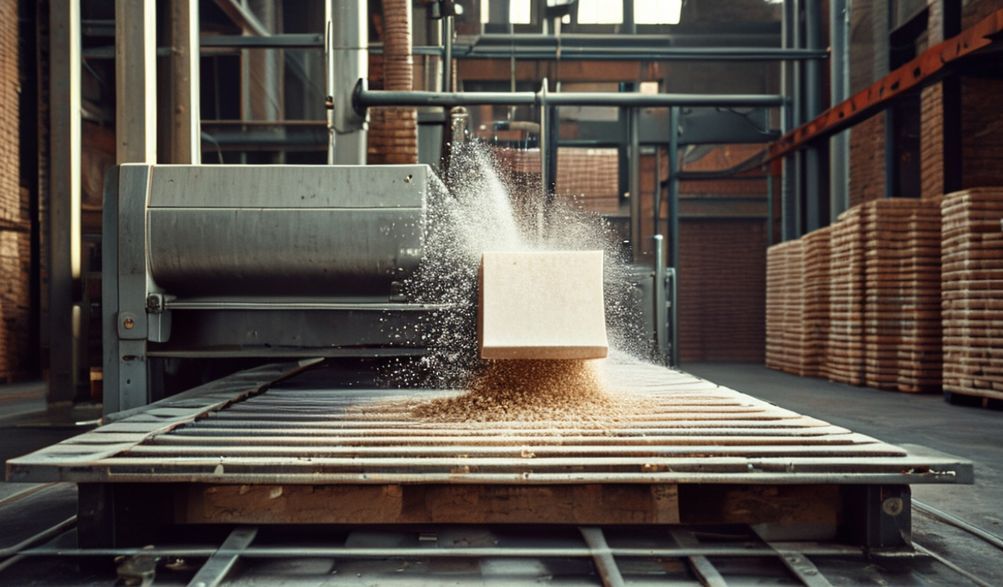
Merevolusi Produksi Batu Bata: Mesin Cetak Blok di Pabrik Pembuatan Batu Bata FUDA
Selama berabad-abad, industri konstruksi telah bergulat dengan tantangan mendasar: mencari bata yang konsisten, berkualitas tinggi, dan terjangkau. Ukuran yang tidak seragam, kekuatan yang bervariasi, dan produksi yang padat karya telah menghantui proyek-proyek, menyebabkan penundaan, pembengkakan biaya, dan integritas struktural yang terganggu. Kini, sebuah solusi teknologi sedang membentuk ulang lanskap manufaktur bata—mesin cetak blok.
Di garis depan evolusi industri ini adalah Pabrik Pembuatan Batu Bata FUDA. Terkenal sebagai pemimpin industri, FUDA telah membangun reputasinya atas komitmen teguh dalam mengadopsi teknologi canggih, bukan sekadar peningkatan, melainkan sebagai filosofi inti untuk mendorong efisiensi, meningkatkan kualitas produk, dan memenuhi tuntutan besar konstruksi modern.
Artikel ini memberikan eksplorasi mendalam tentang mesin cetak blok yang diterapkan di FUDA. Kami akan menguraikan cara kerjanya, mengukur manfaat nyatanya, dan menunjukkan bagaimana mesin ini mewakili standar emas dalam pembuatan bata modern yang andal. Dengan memanfaatkan wawasan yang didasarkan pada praktik industri dan spesifikasi teknis, panduan ini menjadi sumber tepercaya bagi pembangun, kontraktor, pengembang, dan profesional manufaktur yang ingin memahami mesin yang membangun dunia kita.
Apa itu Mesin Cetak Blok? Teknologi Inti Dijelaskan
Untuk menghargai dampaknya, seseorang harus terlebih dahulu memahami mesin itu sendiri. Dalam konteks pembuatan bata, istilah "block print" melampaui asosiasinya dengan tekstil. Di sini, istilah tersebut mewakili proses canggih dari pencetakan presisi dan pemadatan kepadatan tinggi, di mana bahan baku "dicetak" menjadi bata yang terbentuk sempurna, seragam, dengan konsistensi yang luar biasa.
Mendefinisikan Proses Cetak Blok dalam Pembuatan Batu Bata
Proses pencetakan blok adalah metode pembuatan batu bata atau blok beton menggunakan mesin yang memanfaatkan pemadatan bertekanan tinggi dalam cetakan kaku atau "die." Sejumlah bahan baku yang diukur dengan presisi—biasanya berupa campuran beton basah (semen, pasir, agregat) atau tanah yang distabilkan—dimasukkan ke dalam ruang cetak. Kemudian, sebuah ram hidrolik atau mekanik memberikan tekanan yang sangat besar, memadatkan bahan tersebut menjadi bentuk cetakan. Tindakan ini tidak hanya membentuk blok tetapi juga memadatkan partikel-partikel secara rapat, yang sangat penting untuk kekuatan produk akhir. Blok yang baru terbentuk kemudian dikeluarkan ke palet, siap untuk proses pengawetan.
Komponen Utama Mesin Cetak Blok Modern
Sebuah mesin cetak blok modern adalah sistem terintegrasi dari beberapa komponen kritis:
- Sistem Hopper & Feeder:Ini adalah titik awal. Hopper menyimpan campuran bahan baku, dan sistem pengumpan, yang sering berupa konveyor atau pengaduk, memastikan aliran yang konsisten dan terkendali ke dalam ruang cetakan.
- Ruang Cetakan & Dies:Jantung mesin. Ruang ini menampung cetakan baja yang dapat dipertukarkan untuk menentukan bentuk dan ukuran bata. Di FUDA, perpustakaan cetakan memungkinkan produksi berbagai jenis bata.
- Balok Padat:Untuk dinding penahan beban maksimum.
- Bata Ringan:Lebih ringan, dengan sifat insulasi yang lebih baik.
- Bata Interlock:Dirancang untuk saling menyambung tanpa semen, mempercepat konstruksi.
- Batu Paving & Blok Dekoratif:Untuk aplikasi lanskap dan estetika.
- Sistem Kompresi Hidrolik atau Mekanik:Ini memberikan gaya. Sistem hidrolik dihargai karena tekanan yang halus, dapat dikendalikan, dan sangat besar, yang dapat dikalibrasi secara tepat untuk berbagai campuran material dan kepadatan bata yang diinginkan.
- Sistem Pengeluaran dan Palletizing:Setelah dipadatkan, sistem dengan lembut mengeluarkan blok hijau (belum mengeras) ke atas palet atau pelat baja. Penumpuk otomatis sering kali melapiskan beberapa blok pada satu palet untuk perpindahan yang efisien ke area pengawetan.
Mesin Cetak Blok vs. Metode Pembuatan Bata Tradisional
Kontrasnya dengan metode lama sangat mencolok:
- Pencetakan Manual: Relies entirely on skilled labor, resulting in significant variations in size, density, and finish. Output is low, and the process is physically demanding.
- Mesin Ekstrusi These machines force material through a die to form a continuous column, which is then cut into bricks. While faster than manual methods, extrusion can sometimes produce bricks with less uniform density compared to the direct, omnidirectional pressure of a block print machine.
- The Block Print Advantage: It combines high automation with precision engineering. Every cycle produces a brick with near-identical dimensions and density. It dramatically reduces labor dependency, increases output exponentially, and ensures a product that meets strict engineering specifications.
Inside the FUDA Brick Making Factory: A Case Study in Efficiency
FUDA Brick Making Factory operates as a living testament to the power of strategic technological investment. Their facility is not just a collection of machines; it’s a synchronized ecosystem designed for peak performance.
FUDA’s Commitment to Technological Investment
FUDA’s philosophy is clear: consistency and scale are non-negotiable for serving large-scale commercial, industrial, and infrastructure projects. They view machinery like the block print machine not as an expense, but as the foundational investment for customer trust. By automating the core forming process, they eliminate human error from the equation, ensuring that every brick bearing the FUDA name meets an unwavering standard.
Integrasi ke dalam Jalur Produksi
The block print machine is the pivotal component in a streamlined workflow:
- Persiapan Bahan Baku: Carefully selected sand, aggregate, and cement are batched and mixed with precise water content to achieve the optimal consistency for compaction.
- Pemberian Makan: The homogeneous mix is conveyed to the block print machine’s hopper.
- Printing/Compaction: The machine cycles automatically—filling, compacting, and ejecting bricks at a rapid, consistent pace.
- Menyembuhkan: Pallets of green blocks are moved to a controlled curing chamber, where heat and humidity are managed to allow the cement to hydrate fully, achieving its designed strength.
- Drying & Stacking: After curing, bricks are dried and then automatically stacked or packaged for shipment.
Quality Control and Output Specifications
This integrated system allows FUDA to enforce rigorous quality control. Bricks produced by their block print machines are characterized by:
- Akurasi Dimensi: Tolerances within ±1-2mm, ensuring straight walls and simplified bricklaying.
- Kekuatan Tekan Tinggi: The high-pressure compaction results in densities often exceeding 1500 kg/m³, with compressive strength reliably meeting or exceeding standards like IS 2185 (Part 1) for concrete blocks or relevant ASTM standards.
- Keseragaman: Consistent color, texture, and weight across the entire production batch.
Top Advantages of Using a Block Print Machine for Brick Manufacturing
The adoption of block print technology delivers a compelling array of benefits that directly address the core challenges of construction.
Unmatched Product Consistency and Quality
This is the paramount advantage. Automated, cycle-after-cycle compression guarantees that every single brick has identical size, shape, and density. For architects, engineers, and masons, this consistency translates to predictable material usage, smoother construction processes, and structurally sound results.
High Production Speed and Scalability
While manual methods might produce a few hundred bricks per day, a single modern block print machine can produce 2,000 to 5,000 bricks per hour. This scalability is essential for FUDA to fulfill large orders and meet tight project deadlines without compromising on quality.
Significant Reduction in Labor Costs and Physical Strain
The machine shifts the role of personnel from strenuous manual labor to skilled machine operation, monitoring, and maintenance supervision. This improves worker safety, reduces long-term physical strain, and optimizes labor costs for the factory.
Material Efficiency and Waste Reduction
The precision feeding and molding process minimizes spillage and overuse. Furthermore, because the bricks are so consistent, the rejection rate due to defects plummets. This leads to direct cost savings on raw materials and promotes more sustainable manufacturing practices.
Versatility in Brick Design and Type
With a simple change of the mold die, the same block print machine can switch production from standard solid blocks to decorative pavers or interlocking landscaping bricks. This flexibility allows a factory like FUDA to cater to diverse market segments without capital investment in multiple dedicated production lines.
Key Considerations When Operating a Block Print Machine
Maximizing the return on this advanced technology requires attention to several operational factors.
Raw Material Preparation is Crucial
The block print machine is a precision tool, and its performance is directly tied to its input. Critical factors include:
* Proper Grading: Well-graded aggregates ensure optimal packing and strength.
* Accurate Ratios: Cement-sand-aggregate ratios must be strictly followed.
* Kandungan Kelembaban: This is vital. Too dry, and the brick won’t compact properly; too wet, and it may deform upon ejection. FUDA’s automated batching systems meticulously control this variable.
Machine Maintenance for Longevity
Preventive maintenance is key to avoiding costly downtime. A basic schedule includes:
* Harian: Cleaning of the mold, hopper, and feed system; checking hydraulic fluid levels and for leaks.
* Mingguan: Inspecting and tightening bolts, checking wear parts like mold liners and ram seals.
* Monthly/Annually: More thorough inspections, hydraulic fluid analysis and changes, and replacement of high-wear components as per the manufacturer’s manual.
Operator Training and Safety Protocols
A well-trained operator is the most important safety and efficiency feature. Training should cover:
* Machine startup/shutdown procedures.
* Safe operation, including lockout/tagout protocols.
* Basic troubleshooting and identification of common issues.
* Understanding the relationship between material input and machine output.
FAQ: Your Questions About Block Print Machines and FUDA Answered
Q1: What types of bricks can a block print machine at a factory like FUDA produce?
A: FUDA’s machines, through interchangeable molds, can produce a wide range, including: Solid Concrete Blocks (for foundations, load-bearing walls), Hollow Blocks (for partition walls, offering thermal/acoustic benefits), Paving Stones (for driveways, walkways), and Interlocking Bricks (for retaining walls, quick-assembly structures).
Q2: How does the block print process affect the final strength of the brick?
A: The high-pressure compaction (often measured in tons per square inch) forces particles closer together, eliminating voids and air pockets. This dense microstructure directly translates to higher compressive strength, making block-printed bricks ideal for structural applications.
Q3: Is the block print machine suitable for small-scale or startup brick yards?
A: The significant initial investment makes it most suitable for medium to large-scale production like FUDA’s. For small yards, the volume may not justify the cost. The decision hinges on a long-term ROI calculation, balancing capital expenditure against labor savings, material efficiency, and the ability to command a premium for consistent, high-quality products.
Q4: Can FUDA’s block print machines use recycled materials?
A: Yes, absolutely. Many modern block print machines are compatible with mixes incorporating industrial by-products like abu terbang (a pozzolan) or crushed recycled concrete as partial aggregate replacements. This aligns with global trends toward sustainable construction and can improve certain properties of the final block.
Q5: How does FUDA ensure the reliability of its brick-making machinery?
A: FUDA employs a multi-pronged approach: 1) Procurement: Sourcing robust machines from reputable manufacturers known for durability. 2) Pemeliharaan Preventif: Adhering to a strict, scheduled maintenance regimen. 3) Keahlian Teknis: Employing trained in-house technicians and maintaining relationships with equipment suppliers for specialized support. 4) Quality Inputs: Using high-grade components and raw materials to reduce machine wear.
Kesimpulan
The block print machine has unequivocally established itself as a cornerstone of efficient, high-quality brick production. As demonstrated by industry leaders like the FUDA Brick Making Factory, this technology is the bridge between raw material and reliable building component, ensuring consistency, strength, and scalability that manual or semi-automated methods cannot match.
Looking ahead, the evolution continues. We can expect further integration of the Internet of Things (IoT) for real-time machine monitoring and predictive maintenance, even greater automation in material handling, and continued innovation in sustainable material recipes for block printing.
For construction professionals, the lesson is clear: the integrity of a project begins with the quality of its most basic materials. Investing in—or sourcing from—manufacturers who utilize proven, precision technology like the block print machine is not just a procurement decision; it is a fundamental risk mitigation strategy. It ensures that the foundations of our buildings, homes, and infrastructure are as reliable as the engineering that designs them.
Call to Action: For your next project, specify machine-pressed, block-printed bricks to guarantee dimensional consistency and structural performance. When evaluating suppliers, prioritize those who, like FUDA, invest in advanced manufacturing technology—it is the most reliable indicator of a commitment to quality that will stand the test of time.
<