
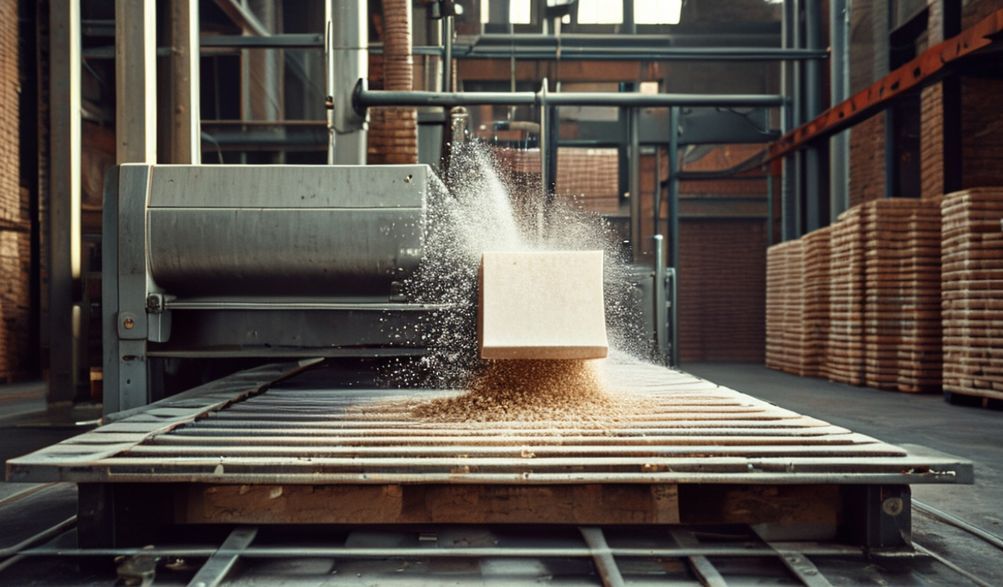
Hagaajinta Soo-saarista Lebi: Makiinada Daabacaadda Blookada ee Warshada Lebiga FUDA
Qarniyo badan, warshada dhismaha waxay la dagaallantay caqabad aasaasiga ah: soo uruurinta lebiska iskudhafsan, tayo sare leh, iyo qiimo jaban. Cabbir aan isku mid ahayn, xoog kala duwan, iyo wax soo saar ku tiirsan shaqaalaha ayaa caasiyay mashruucyada, taas oo keentay dib u dhac, kharash ka badan qiyaasta, iyo dhismaha aan hufnaan lahayn. Maanta, xal teknoolojiyadeed ayaa dib u qurxiyaya dhismaha warshada wax soo saarka lebiska—mashiinka daabacaada blookada.
Hoggaanka hore ee isbeddelka warshadeedkan waxaa ka mid ah Warshada Qorista FUDA. Loo yaqaan sida hoggaamiyaha warshadeed, FUDA waxay ku dhistay magaceeda ku salaysan sida ay ugu dabaqday ugu dambaynta farsamada, aan loo eegin inay tahay kor u qaadis kaliya, laakiin aragti dhexe oo loogu talagalay kor u qaadista wax soo saarka, tayada alaabta, iyo buuxinta baahida weyn ee dhismaha casriga ah.
Maqaalkan wuxuu si qoto dheer uga hadlayaa makiinadaha daabacaada laamiyada ee loo isticmaalo FUDA. Waxaan si faahfaahsan uga eegi doonnaa sida ay u shaqeeyaan, waxaan qiimeyn doonnaa faa'iidooyinkooda la tixgeli karo, waxaanan muujin doonnaa sida ay ugu fiican tahay tijaabada caanka ah ee warshadaha laamiyada casriga ah ee lagu kalsoonaan karo. Iyadoo la adeegsanayo aragtiyo ku saleysan dhaqamada warshadeed iyo qeexitaannada farsamada, hagahan wuxuu noqon karaa ilo lagu kalsoonaan karo dhismayaasha, qandaraasyada, horumariyayaasha, iyo xirfadlayaasha warshadeed ee raba inay fahmaan makiinadaha duniyeena dhisa.
Waa Maxay Makiinada Daabacaadda Block? Farsamada Aasaasiga ah ee La Sharaxay
Si aad u qiimeyso saamayntiisa, waa in marka hore la fahmo makiinadii. Dhanka sameynta lebbiska, ereyga "daabacaadda blookada" wuxuu ka baxayaa isku xirnaantii uu lahaa dharka. Halkan, waxay u taagan tahay hab hufan oo loogu talagalay qaab-dhismeedka iyo adkaysiga xoogga leh, halkaas oo alaabta la soo saaro loogu "daabaco" lebbis qumman oo isku mid ah si aan kala duwanaansho lahayn.
Qeexista Habka Daabacaadda Block-ka ee Sameynta Lebiska
Habka daabacaada gudaha ee dhagaxa waxaa loo isticmaalaa si loo sameeyo dhagax ama dhagaxa simenti iyadoo la adeegsanayo makiinad ka faa'iidaysa cadaadis sare oo ku jirta qalab adag, ama "dhisme." Qiyaas sax ah oo ka mid ah alaabta asalka ah—guud ahaan waa isku dhisyo simenti oo qoyan (simenti, ciid, xabag) ama dhul la xakameeyay—ayaa loo geliyaa qol. Ka dib, ramka haydrolik ama makiinad ayaa cadaadis weyn ku kordhiya, isku dhigaya alaabta si ay u noqoto qaabka qalabka. Tallaabadaan ma aahan oo keliya in ay sameyso dhagaxa, laakiin sidoo kale waxay si qoto dheer ugu dheggan tahay xubnaha, taas oo muhiim u ah xoogga alaabta dambe. Dhagaxa cusub ee la sameeyay ayaa markaa laga saaraa palet, diyaar u ah in la daweeyo.
Qaybaha Muhiimka ah ee Makiinada Daabacaada Blookiga Casriga ah
Makiinada daabacaada ee casriga ah waa nidaam is-dhexgalka ah oo ka kooban qaybo muhiim ah oo kala duwan:
- Nidaamka Hopper & Feeder:Tani waa barta bilowga. Hoortu waxay kaydisaa isku darka alaabta ee aan la shaqeyn, halka nidaamka quudinta, oo inta badan ah conveyor ama dhagdhagaaq, uu hubiyo socod joogto ah oo la maamulo oo loo geliyo qolka qaabista.
- Qolka Dhalista & Qalabka Dhalista:Wadnaha mashiniinka. Qolkuu wuxuu ku hayaa qalabka birta ah ee is-beddelka leh ee qaabka iyo cabbirka lebiska qeexa. FUDA, wuxuu leeyahay maktabada qalabkan oo furo kala duwan samaynta.
- Goobooyaan Adag:Dhigidda derbiyada ugu xoogga badan.
- Qeybaha Dusha sare ee Dhismaha (Hollow Blocks): Lighter, with better insulation properties.
- Brikiyo Isku-xidhan: Designed to fit together without mortar, speeding up construction.
- Paving Stones & Decorative Blocks: For landscaping and aesthetic applications.
- Hydraulic or Mechanical Compression System: This provides the force. Hydraulic systems are prized for their smooth, controllable, and immense pressure, which can be precisely calibrated for different material mixes and desired brick densities.
- Ejection and Palletizing System: Once compacted, the system gently ejects the green (uncured) block onto a pallet or steel plate. An automated stacker often layers multiple blocks on a single pallet for efficient movement to the curing area.
Block Print Machine vs. Traditional Brick Making Methods
The contrast with older methods is stark:
- Qalabka Gacanta: Relies entirely on skilled labor, resulting in significant variations in size, density, and finish. Output is low, and the process is physically demanding.
- Extrusion Machines: These machines force material through a die to form a continuous column, which is then cut into bricks. While faster than manual methods, extrusion can sometimes produce bricks with less uniform density compared to the direct, omnidirectional pressure of a block print machine.
- The Block Print Advantage: It combines high automation with precision engineering. Every cycle produces a brick with near-identical dimensions and density. It dramatically reduces labor dependency, increases output exponentially, and ensures a product that meets strict engineering specifications.
Inside the FUDA Brick Making Factory: A Case Study in Efficiency
FUDA Brick Making Factory operates as a living testament to the power of strategic technological investment. Their facility is not just a collection of machines; it’s a synchronized ecosystem designed for peak performance.
FUDA’s Commitment to Technological Investment
FUDA’s philosophy is clear: consistency and scale are non-negotiable for serving large-scale commercial, industrial, and infrastructure projects. They view machinery like the block print machine not as an expense, but as the foundational investment for customer trust. By automating the core forming process, they eliminate human error from the equation, ensuring that every brick bearing the FUDA name meets an unwavering standard.
Integration into the Production Line
The block print machine is the pivotal component in a streamlined workflow:
- Diyaarinta Alaabta Asalka ah Carefully selected sand, aggregate, and cement are batched and mixed with precise water content to achieve the optimal consistency for compaction.
- Cunto-siin: The homogeneous mix is conveyed to the block print machine’s hopper.
- Printing/Compaction: The machine cycles automatically—filling, compacting, and ejecting bricks at a rapid, consistent pace.
- Daweynta: Pallets of green blocks are moved to a controlled curing chamber, where heat and humidity are managed to allow the cement to hydrate fully, achieving its designed strength.
- Drying & Stacking: After curing, bricks are dried and then automatically stacked or packaged for shipment.
Quality Control and Output Specifications
This integrated system allows FUDA to enforce rigorous quality control. Bricks produced by their block print machines are characterized by:
- Qeybinta Cabbirka: Tolerances within ±1-2mm, ensuring straight walls and simplified bricklaying.
- Qodobka Xoogga Culeyska sare. The high-pressure compaction results in densities often exceeding 1500 kg/m³, with compressive strength reliably meeting or exceeding standards like IS 2185 (Part 1) for concrete blocks or relevant ASTM standards.
- Isku mid ah: Consistent color, texture, and weight across the entire production batch.
Top Advantages of Using a Block Print Machine for Brick Manufacturing
The adoption of block print technology delivers a compelling array of benefits that directly address the core challenges of construction.
Unmatched Product Consistency and Quality
This is the paramount advantage. Automated, cycle-after-cycle compression guarantees that every single brick has identical size, shape, and density. For architects, engineers, and masons, this consistency translates to predictable material usage, smoother construction processes, and structurally sound results.
High Production Speed and Scalability
While manual methods might produce a few hundred bricks per day, a single modern block print machine can produce 2,000 to 5,000 bricks per hour. This scalability is essential for FUDA to fulfill large orders and meet tight project deadlines without compromising on quality.
Significant Reduction in Labor Costs and Physical Strain
The machine shifts the role of personnel from strenuous manual labor to skilled machine operation, monitoring, and maintenance supervision. This improves worker safety, reduces long-term physical strain, and optimizes labor costs for the factory.
Material Efficiency and Waste Reduction
The precision feeding and molding process minimizes spillage and overuse. Furthermore, because the bricks are so consistent, the rejection rate due to defects plummets. This leads to direct cost savings on raw materials and promotes more sustainable manufacturing practices.
Versatility in Brick Design and Type
With a simple change of the mold die, the same block print machine can switch production from standard solid blocks to decorative pavers or interlocking landscaping bricks. This flexibility allows a factory like FUDA to cater to diverse market segments without capital investment in multiple dedicated production lines.
Key Considerations When Operating a Block Print Machine
Maximizing the return on this advanced technology requires attention to several operational factors.
Raw Material Preparation is Crucial
The block print machine is a precision tool, and its performance is directly tied to its input. Critical factors include:
* Proper Grading: Well-graded aggregates ensure optimal packing and strength.
* Accurate Ratios: Cement-sand-aggregate ratios must be strictly followed.
* Qaddaca Qoyaanka This is vital. Too dry, and the brick won’t compact properly; too wet, and it may deform upon ejection. FUDA’s automated batching systems meticulously control this variable.
Machine Maintenance for Longevity
Preventive maintenance is key to avoiding costly downtime. A basic schedule includes:
* Daily: Cleaning of the mold, hopper, and feed system; checking hydraulic fluid levels and for leaks.
* Weekly: Inspecting and tightening bolts, checking wear parts like mold liners and ram seals.
* Monthly/Annually: More thorough inspections, hydraulic fluid analysis and changes, and replacement of high-wear components as per the manufacturer’s manual.
Operator Training and Safety Protocols
A well-trained operator is the most important safety and efficiency feature. Training should cover:
* Machine startup/shutdown procedures.
* Safe operation, including lockout/tagout protocols.
* Basic troubleshooting and identification of common issues.
* Understanding the relationship between material input and machine output.
FAQ: Your Questions About Block Print Machines and FUDA Answered
Q1: What types of bricks can a block print machine at a factory like FUDA produce?
A: FUDA’s machines, through interchangeable molds, can produce a wide range, including: Solid Concrete Blocks (for foundations, load-bearing walls), Hollow Blocks (for partition walls, offering thermal/acoustic benefits), Paving Stones (for driveways, walkways), and Interlocking Bricks (for retaining walls, quick-assembly structures).
Q2: How does the block print process affect the final strength of the brick?
A: The high-pressure compaction (often measured in tons per square inch) forces particles closer together, eliminating voids and air pockets. This dense microstructure directly translates to higher compressive strength, making block-printed bricks ideal for structural applications.
Q3: Is the block print machine suitable for small-scale or startup brick yards?
A: The significant initial investment makes it most suitable for medium to large-scale production like FUDA’s. For small yards, the volume may not justify the cost. The decision hinges on a long-term ROI calculation, balancing capital expenditure against labor savings, material efficiency, and the ability to command a premium for consistent, high-quality products.
Q4: Can FUDA’s block print machines use recycled materials?
A: Yes, absolutely. Many modern block print machines are compatible with mixes incorporating industrial by-products like fly ash (a pozzolan) or crushed recycled concrete as partial aggregate replacements. This aligns with global trends toward sustainable construction and can improve certain properties of the final block.
Q5: How does FUDA ensure the reliability of its brick-making machinery?
A: FUDA employs a multi-pronged approach: 1) Procurement: Sourcing robust machines from reputable manufacturers known for durability. 2) Preventive Maintenance: Adhering to a strict, scheduled maintenance regimen. 3) Khibradda Teknikooleedka: Employing trained in-house technicians and maintaining relationships with equipment suppliers for specialized support. 4) Quality Inputs: Using high-grade components and raw materials to reduce machine wear.
Gabagabo
The block print machine has unequivocally established itself as a cornerstone of efficient, high-quality brick production. As demonstrated by industry leaders like the FUDA Brick Making Factory, this technology is the bridge between raw material and reliable building component, ensuring consistency, strength, and scalability that manual or semi-automated methods cannot match.
Looking ahead, the evolution continues. We can expect further integration of the Internet of Things (IoT) for real-time machine monitoring and predictive maintenance, even greater automation in material handling, and continued innovation in sustainable material recipes for block printing.
For construction professionals, the lesson is clear: the integrity of a project begins with the quality of its most basic materials. Investing in—or sourcing from—manufacturers who utilize proven, precision technology like the block print machine is not just a procurement decision; it is a fundamental risk mitigation strategy. It ensures that the foundations of our buildings, homes, and infrastructure are as reliable as the engineering that designs them.
Call to Action: For your next project, specify machine-pressed, block-printed bricks to guarantee dimensional consistency and structural performance. When evaluating suppliers, prioritize those who, like FUDA, invest in advanced manufacturing technology—it is the most reliable indicator of a commitment to quality that will stand the test of time.
<